The Soufflé That Changed My Mind About Dessert
Here’s a confession: I used to be terrified of soufflés. The word itself sounded intimidating — like something only a chef in a white coat with ten years of training could attempt. And then I actually made one, and I nearly laughed out loud at how simple the whole thing is.
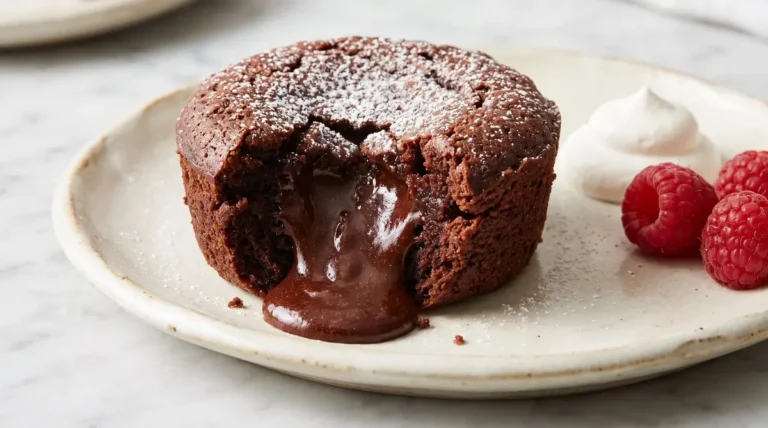
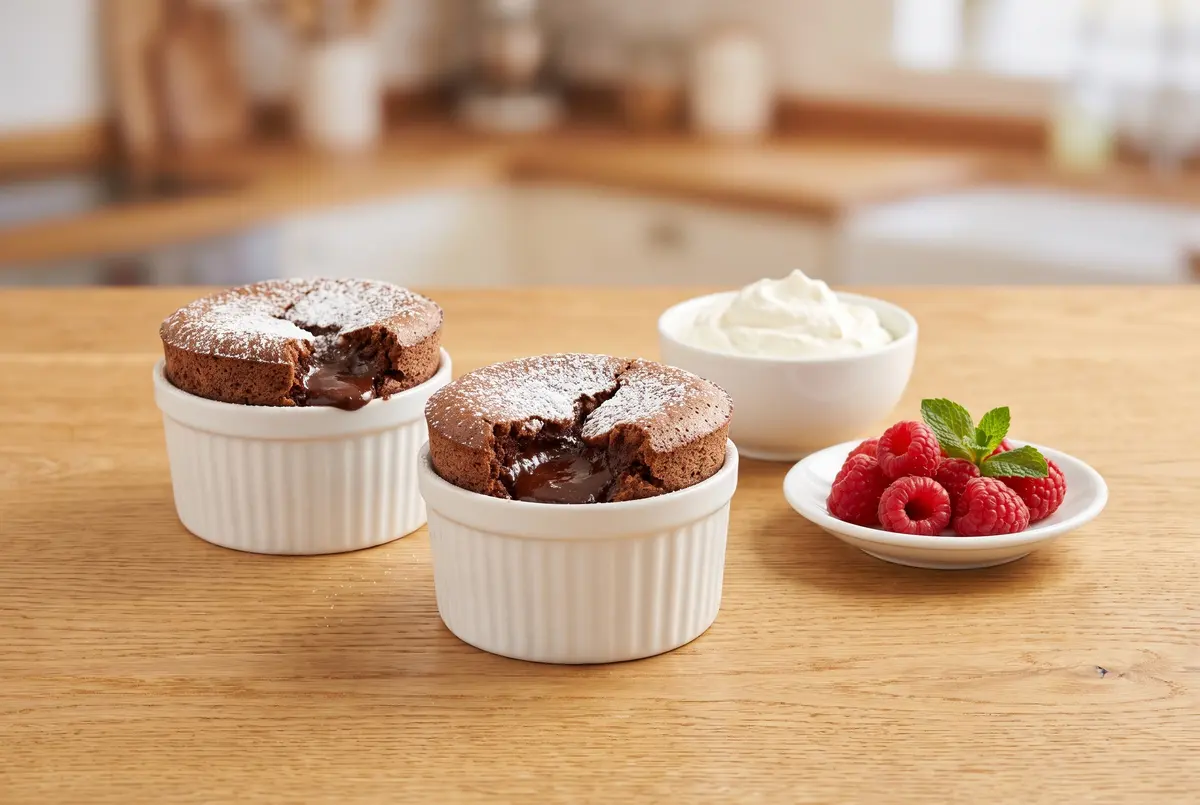
A chocolate soufflé is essentially just chocolate + egg yolks + stiffly beaten egg whites folded together and baked until puffed. That’s it. The “secret” is really just technique — and the most important part of that technique is don’t open the oven door. Beyond that? You’re golden. Literally. The tops caramelize to this gorgeous golden-brown crust while the center stays gloriously jiggly.
The One Rule That Guarantees Success Every Time
The ramekins matter more than you think. Heavily butter and sugar-coat each ramekin — the sugar creates a sealed, slightly caramelized layer that helps the soufflé climb the walls as it rises. And don’t skip running your thumb around the rim between the batter and the edge — that little channel is what gives the soufflé a clean edge to rise against.
Temperature matters for folding too. If your chocolate mixture is too warm, it deflates the egg whites. Let it cool for 3–5 minutes until it’s barely warm. The batter should be thick and glossy before you add the whites.
From Bowl to Oven — Here’s How I Do It
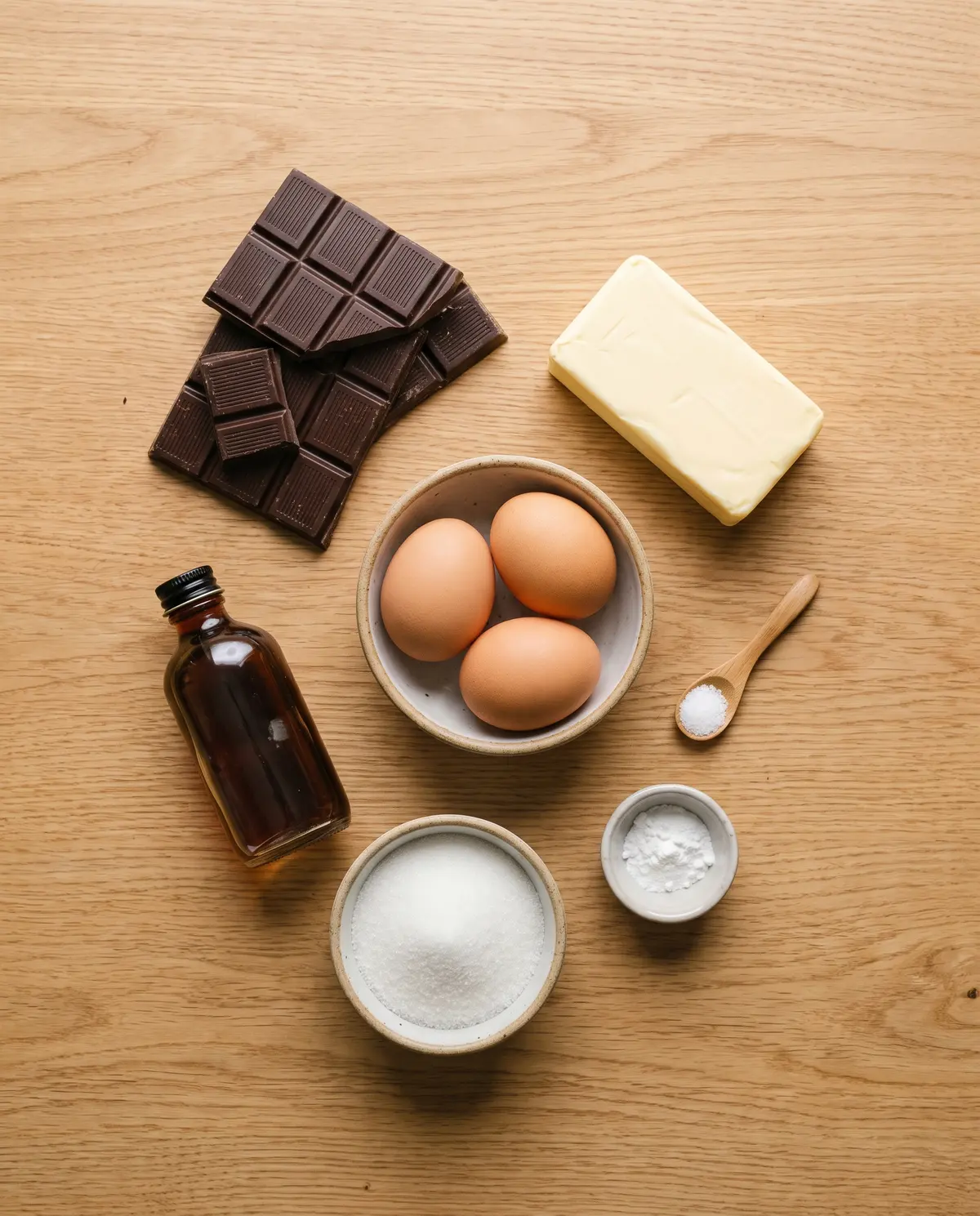
- Butter: 4 tbsp unsalted, plus 1 tbsp extra soft for ramekins
- Chocolate: 4 oz semi-sweet bar, coarsely chopped
- Eggs: 3 large, separated
- Vanilla: 1 tsp extract
- Salt: 1/8 tsp
- Cream of tartar: 1/8 tsp
- Sugar: 3 tbsp for batter, 4 tsp for ramekins
Step 1: Melt butter and chocolate together in the microwave in 20-second bursts, stirring between each, until completely smooth. It should take about 40 seconds total. Cool 3–5 minutes.
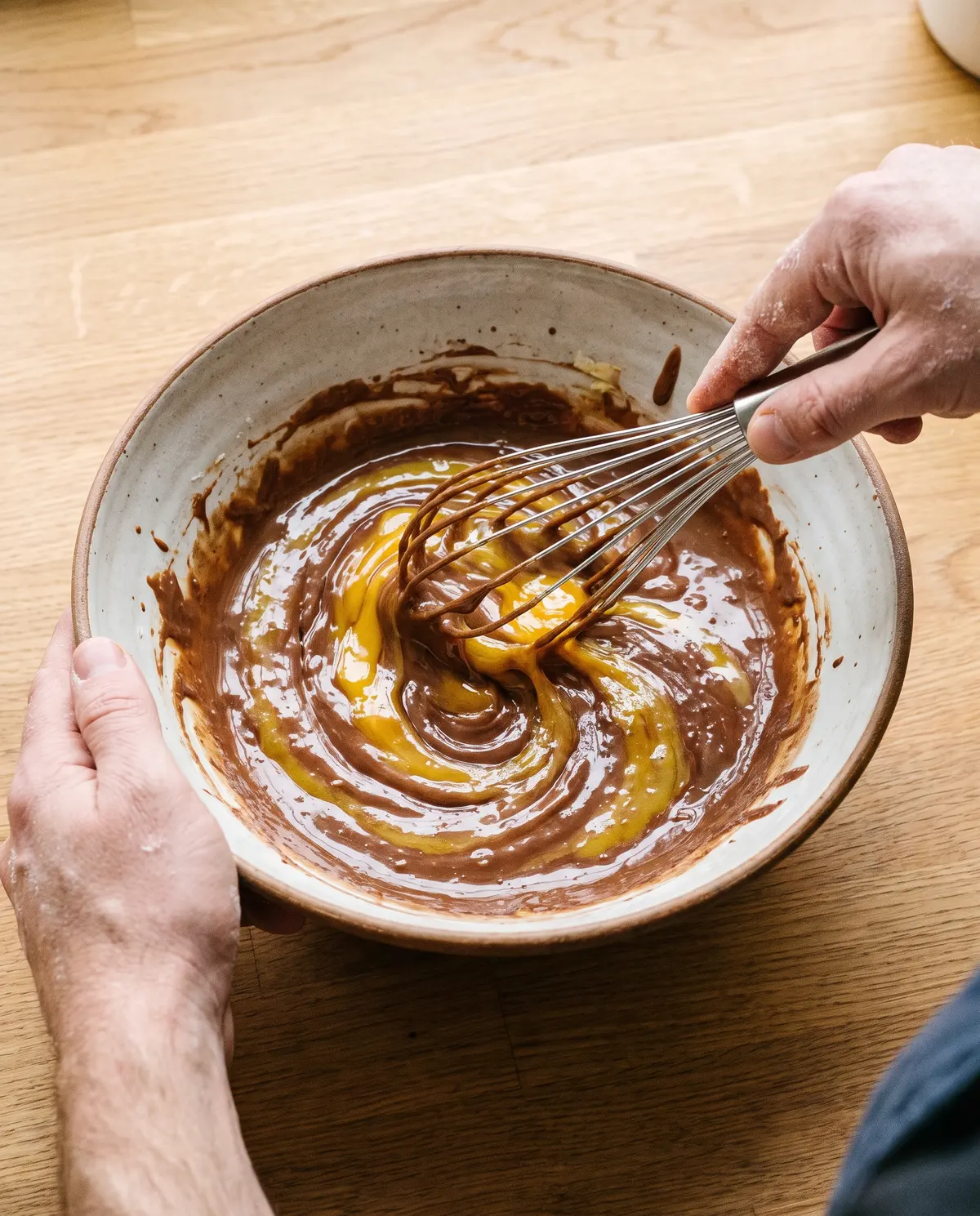
Step 2: Whisk the egg yolks, vanilla, and salt directly into the chocolate mixture. The mixture will look thick and almost curdled at first — keep whisking and it’ll come together into a smooth, glossy batter.
Step 3: In a clean, dry bowl — and I cannot stress clean and dry enough — beat the egg whites and cream of tartar on high speed until soft peaks form. Add the 3 tablespoons of sugar one tablespoon at a time, then continue beating until stiff, glossy peaks form. This takes about 4 minutes total.
Step 4: Fold the egg whites into the chocolate in three additions. The first addition — about a third — is the riskiest. Add it and mix quickly to loosen the batter. Then gently fold in the remaining whites in two more additions. The goal is a fully combined batter with no white streaks, but you want to preserve as much air as possible. Think of it like folding clouds into chocolate.
Step 5: While the batter chills for 5–10 minutes, preheat your oven to 400°F. Generously butter four 6-oz ramekins, then coat with the 4 teaspoons of sugar, tapping out the excess. Run your thumb around the inside rim of each ramekin to create that channel.
Step 6: Divide the batter evenly among the ramekins. Place them on a baking sheet — the sheet helps conduct heat more evenly. Slide into the oven and immediately reduce the temperature to 375°F. Bake 13–14 minutes. The edges should be set and the center should jiggle just slightly when you shake the pan.
Step 7: Serve immediately. Soufflés wait for no one — they start to deflate the moment the oven door opens, and within 5 minutes they’re no longer puffy. Have your plates ready, dusted with powdered sugar if you like, and get them to the table while they’re still magnificent.
Creative Twists Worth Trying
- Add 1 tablespoon of espresso powder to the chocolate mixture for an intense mocha version that pairs perfectly with vanilla gelato.
- Swirl in 2 tablespoons of raspberry preserves before folding the whites for a marbled chocolate-raspberry soufflé that’s absolutely stunning.
- Use dark chocolate (70%+) and reduce sugar to 2 tablespoons for a barely-sweet, intensely chocolatey version that dark chocolate lovers will rave about.
- Add a tablespoon of Grand Marnier to the batter for a sophisticated orange-chocolate soufflé — perfect for a dinner party.
- Make it dairy-free: swap the butter for coconut oil and use full-fat coconut milk in place of the egg yolk addition.
Serving and Pairing Ideas
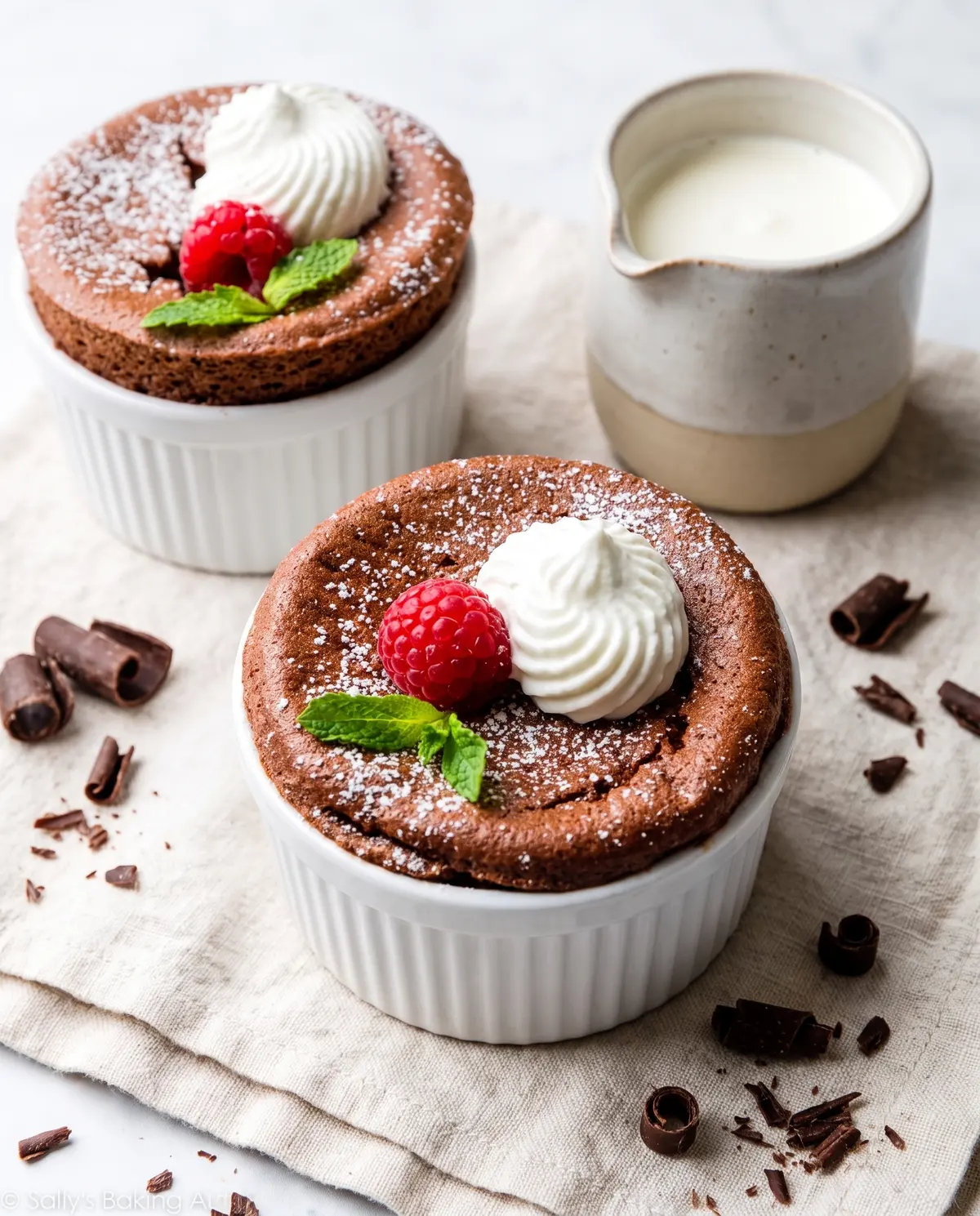
The most classic pairing is simply a dusting of powdered sugar and a small bowl of lightly sweetened whipped cream on the side. The cool cream against the warm, just-baked soufflé is one of those combinations that’s hard to improve upon.
For a more dramatic presentation, try this: dust the ramekins with cocoa powder instead of just sugar before baking. When it rises, the cocoa creates a gorgeous dark edge. Then serve with a small pool of crème anglaise poured into the center at the table — it collapses the soufflé in the most delicious way.
Which toppings would you go for — the classic powdered sugar, or are you more of a fresh berries person? Either way, you’ll win.
Storage and Make-Ahead Tips
Soufflés are genuinely best the moment they come out of the oven — they cannot be made ahead and held. BUT, you can prep the batter! Make it up to the point of folding in the egg whites, cover, and refrigerate for up to 2 hours. When you’re ready, beat the whites, fold them in, and bake. The baked batter method isn’t recommended, but the unbaked batter can wait.
If you want individual soufflés prepped ahead for a dinner party, you can butter and sugar the ramekins and fill them with batter, then refrigerate for up to 2 hours. Bake directly from the fridge — you may need an extra minute of oven time. This is a total game-changer for entertaining.
Leftover baked soufflé? Honestly, they’re not great the next day — they’ll be dense and eggy. But you can crumble them into ice cream or fold them into chocolate pudding for a second life.
Common Mistakes and Easy Fixes
Problem: The soufflé sank immediately after baking. This is totally normal! Soufflés always deflate within minutes of leaving the oven. What matters is that it rose beautifully in the first place. If it didn’t rise at all, check whether your egg whites were properly stiff, or if the oven temperature was too low.
Problem: The centers are still liquid after 14 minutes. Every oven is different. Next time, start checking at 12 minutes. The center should jiggle like set gelatin, not slosh like raw egg. If it’s still liquid, give them 1–2 more minutes.
Problem: The soufflé stuck to the ramekins. You didn’t butter and sugar generously enough. The sugar layer is essential — it creates a non-stick coating and helps the soufflé climb. Be very thorough with the butter, and use a upward stroke when coating with sugar.
Problem: The tops burned before the centers were done. Your oven runs hot. Next time, set it to 360°F and add 2 minutes to the bake time. Placing the ramekins on a baking sheet also helps moderate the heat from the bottom.
Your Chocolate Soufflé Questions, Answered
Do I really need cream of tartar in the egg whites? Yes — cream of tartar stabilizes the egg whites and prevents them from collapsing. You can substitute 1/2 teaspoon of lemon juice, but don’t skip it entirely unless you’re confident your whites are very fresh.
Can I make one large soufflé instead of four small ones? You can! Use a 1.5-quart soufflé dish and increase the baking time to about 25–28 minutes. The bigger the soufflé, the trickier it is to get the center done without overbaking the edges.
My egg whites won’t whip no matter what I try. Make absolutely sure your bowl and whisk are completely clean and completely dry. Even a trace of grease from a previous recipe will prevent whipping. Use a copper bowl if you have one, or add a pinch of salt after the cream of tartar to help stabilize.
Can soufflé be frozen? Baked soufflés don’t freeze well — the texture becomes grainy and dense. However, unbaked batter in buttered ramekins can go straight from the freezer to the oven. Add 3–5 minutes to the bake time and skip the resting step.
Is soufflé safe to eat if the center is soft? Yes! The egg whites are fully cooked by the time the edges set, and the chocolate is just warm. As long as your oven temperature is accurate and you baked to the right time, a jiggly center is exactly what you want.
What causes a cracked top on a soufflé? Cracking is usually caused by overmixing the batter (deflating the whites) or baking at too high a temperature. It doesn’t affect taste at all — just aesthetics. For a perfectly smooth top, fold the whites more gently and check your oven temperature with an oven thermometer.
A Little Goodbye from My Kitchen
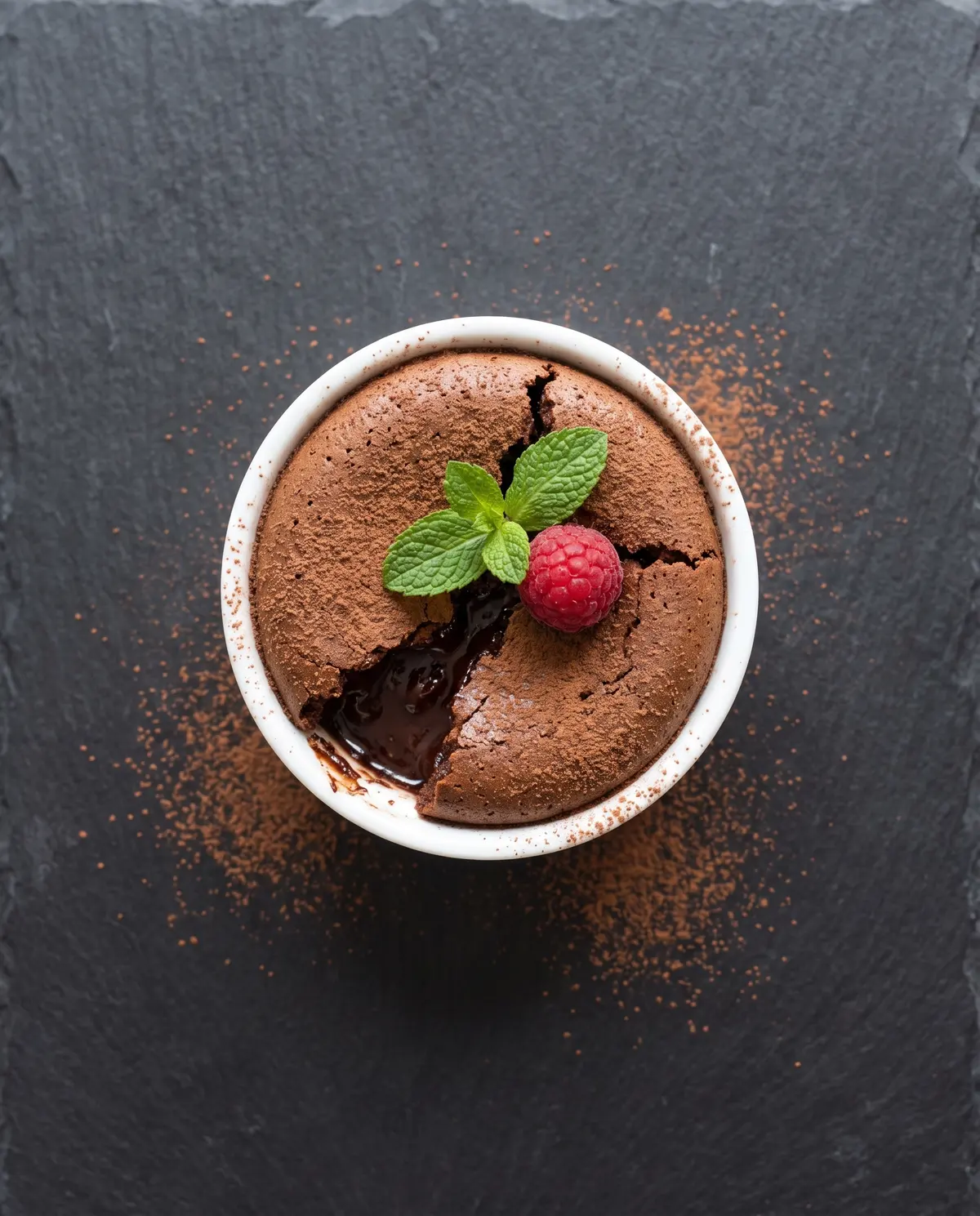
I know soufflés have a reputation for being high-maintenance, but I hope this recipe has shown you how genuinely approachable they are. The technique is straightforward, the ingredients are simple, and the result — that dramatic rise, that jiggly center, that molten chocolate at the heart of it all — is one of the most rewarding things you can pull out of your oven.
Make this for someone you love. Or make it for yourself on a quiet evening. Either way, do yourself a favor and eat it the second it comes out of the oven — that first bite, when it’s at its most magnificent, is absolutely worth every minute of the wait.
Let me know how yours turn out — and whether you went for the powdered sugar or the crème anglaise! 🍫
Chocolate Soufflé
- 4 tbsp unsalted butter, plus 1 tbsp extra soft for ramekins
- 4 oz semi-sweet chocolate bar, coarsely chopped
- 3 large eggs, separated
- 1 tsp vanilla extract
- 1/8 tsp salt
- 1/8 tsp cream of tartar
- 3 tbsp granulated sugar (for batter)
- 4 tsp granulated sugar (for ramekins)
- Melt 4 tbsp butter and chopped chocolate in the microwave in 20-second bursts, stirring between each, until smooth. Cool 3–5 minutes.
- Whisk egg yolks, vanilla, and salt into the chocolate mixture until smooth and glossy.
- Beat egg whites and cream of tartar on high speed until soft peaks form. Add 3 tbsp sugar one tablespoon at a time, then beat to stiff, glossy peaks, about 4 minutes total.
- Fold egg whites into the chocolate mixture in three additions, being careful not to deflate. Refrigerate batter 5–10 minutes while preheating oven to 400°F.
- Brush four 6-oz ramekins generously with soft butter, coat with 4 tsp sugar, tapping out excess. Run thumb around the rim to create a channel.
- Divide batter among ramekins. Place on a baking sheet, slide into oven, reduce temperature to 375°F. Bake 13–14 minutes until edges are set and center jiggles slightly.
- Serve immediately with powdered sugar, whipped cream, or crème anglaise.