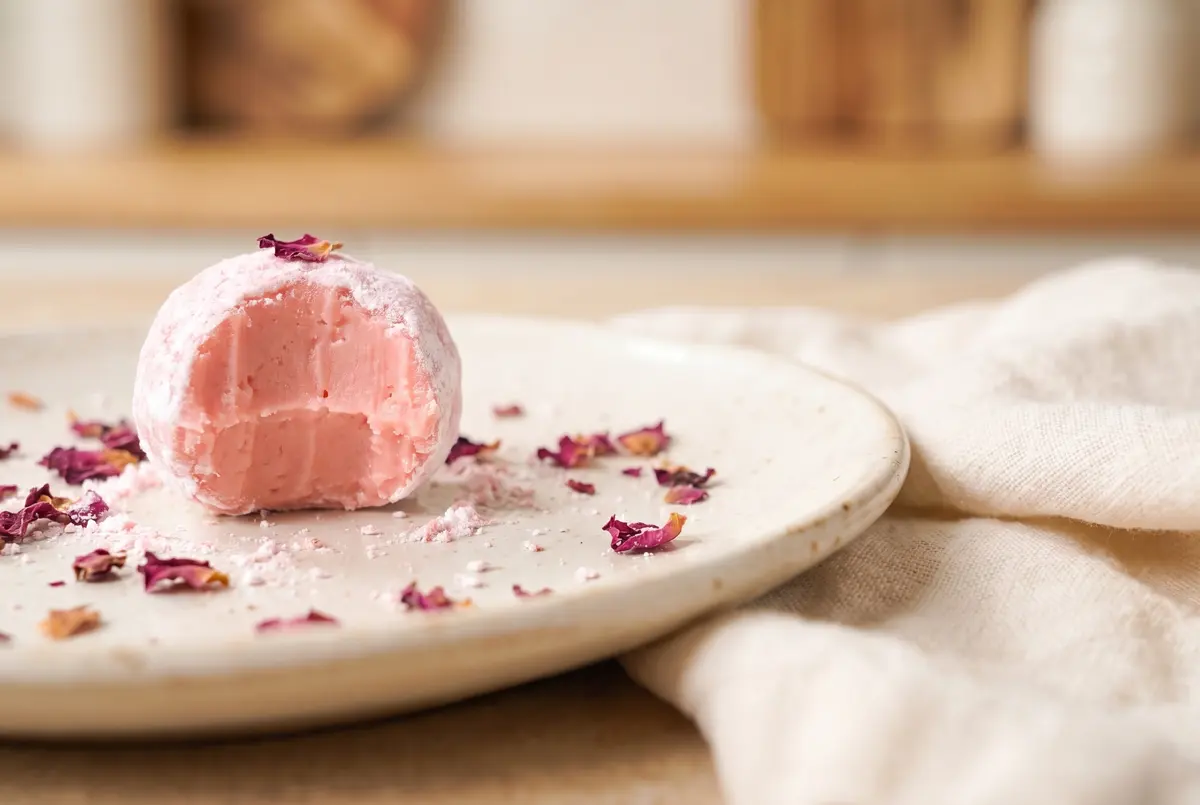
Have you ever bitten into a truffle and thought, “oh, this is what spring tastes like”? That’s the exact moment I started chasing a recipe that married floral rose, juicy lychee, and creamy white chocolate into one little bite. These chocolate rose lychee truffles are the result — a homemade truffle that tastes like a perfume aisle in the best possible way, with a soft pink center that surprises everyone who takes a bite.
I’m Marina, by the way, and I make a lot of truffles in my tiny kitchen. I have tested ganaches that crack, ganaches that weep, and ganaches that refuse to set. This one? It sets up silky and sliceable every single time, and the rose-lychee combo is a flavor I’ve been quietly obsessed with since a trip to a Persian sweet shop a few years ago. Let me show you the small tricks that make this recipe foolproof.
The Trick Behind Silky, Snap-Clean Truffles
The secret to a glossy ganache that rolls into perfect balls is steeping, not boiling. You bring the cream just to steaming with the dried rose petals inside, then kill the heat and let the petals sit for a full 30 minutes. Boiling scaldes the cream and dulls the floral flavor; a slow steep pulls out the rose oils gently and gives the ganache that almost-transparent pink hue you see in the photos. The second trick is the white chocolate — use a high-quality bar you actually like eating, not the chalky baking chips. The chocolate is the entire body of the truffle, so if it tastes flat on its own, the truffle will too.
One more thing before we start: the lychee. I’m using canned lychees in light syrup for convenience, but fresh ones are wonderful when they’re in season. The trick is to drain them very well and pat them dry with paper towels, then pulse them into a smooth puree. That puree gets stirred into the ganache at the end, and it gives each truffle that unmistakable floral-fruity whisper without making the chocolate seize. Trust me — once you try this combo, you’ll never go back to plain vanilla truffles.
Ingredients
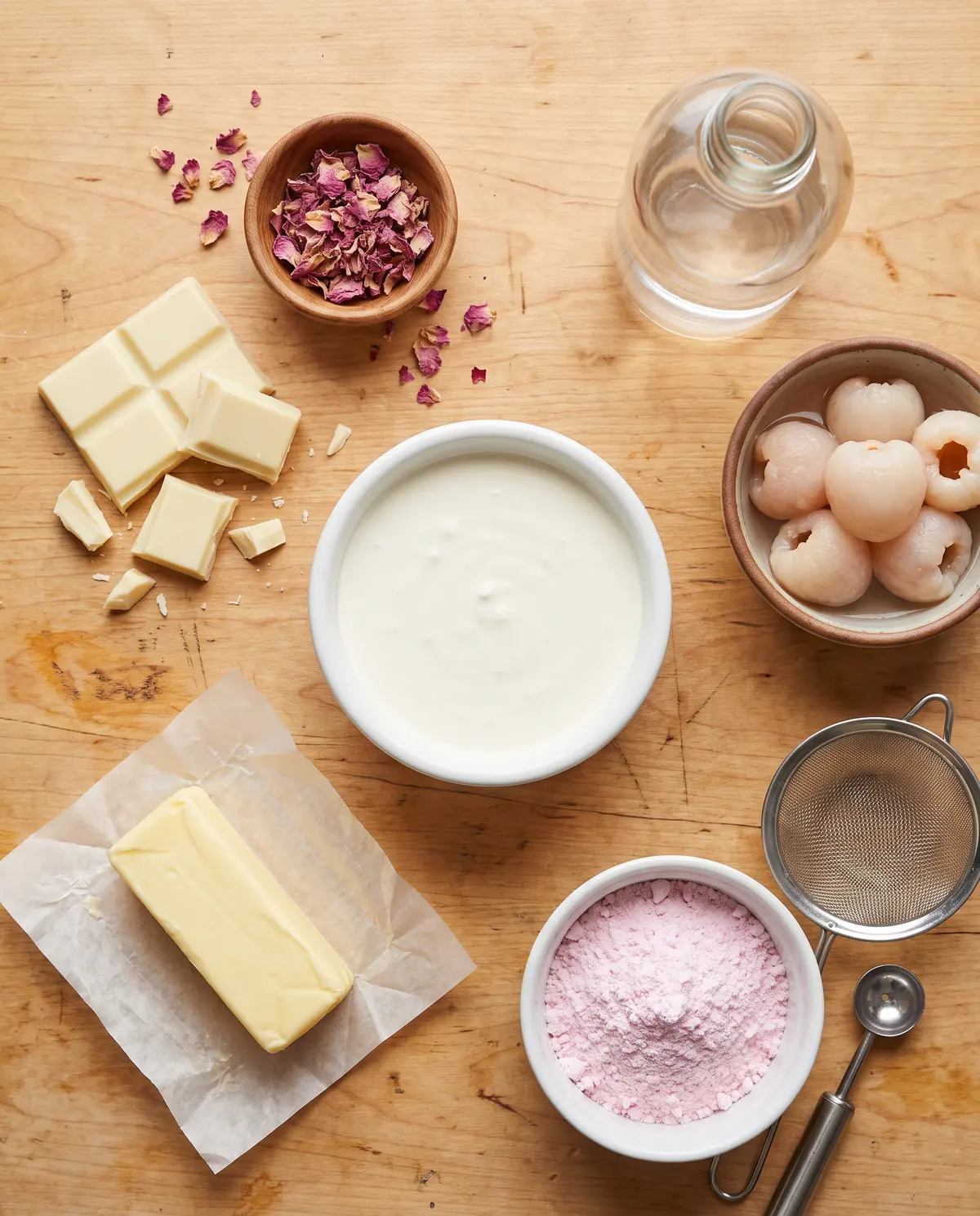
- 125 ml (½ cup) heavy whipping cream, plus extra if needed
- 2 tablespoons dried culinary rose petals (about 2 g)
- 200 g (7 oz) good-quality white chocolate, finely chopped
- 15 g (1 tablespoon) unsalted butter, softened
- ½ teaspoon rosewater (start with ¼ tsp if you’re rose-shy)
- 1–2 drops pink gel food coloring, optional
- 8–10 canned lychees in light syrup, very well drained and patted dry
- Confectioners’ sugar, for rolling
- A pinch of dried rose petals, crushed, for rolling (optional)
Putting It All Together, From Petal to Truffle
Step 1: Steep the cream with rose petals. In a small saucepan, combine the cream and dried rose petals. Warm over low heat just until you see the first wisp of steam — do not let it boil. Pull the pan off the heat, cover it, and let the petals steep in the cream for 30 minutes (or up to an hour if you want a stronger floral note). I usually set a timer and walk away to do the dishes.
Step 2: Strain and re-weigh the cream. Pour the rose cream through a fine-mesh strainer into a small bowl, pressing gently on the petals to release all that flavor. Discard the petals. You want about 60 ml (¼ cup) of infused cream — if you’ve lost a little to the petals, top it up with fresh cream to hit that mark. This is the part everyone skips and then wonders why their ganache is too soft.
Step 3: Melt the white chocolate. While the cream steeps, finely chop the white chocolate and place it in a heatproof bowl. Set the bowl over a saucepan of barely simmering water (the bottom of the bowl should not touch the water) and stir gently until completely smooth. If you have a microwave, you can do this in 20-second bursts at 50% power, stirring between each. Either way, low and slow is the way.
Step 4: Whisk the cream and butter into the chocolate. Rewarm the rose cream just until steaming again, then pour it over the melted white chocolate in a slow, steady stream, whisking the whole time. Add the softened butter and whisk until the ganache is glossy and completely smooth. Take the bowl off the heat, stir in the rosewater and the pink gel color (if using), and give it a taste. Want more floral? Add another drop of rosewater. Easy does it — rosewater is powerful stuff.
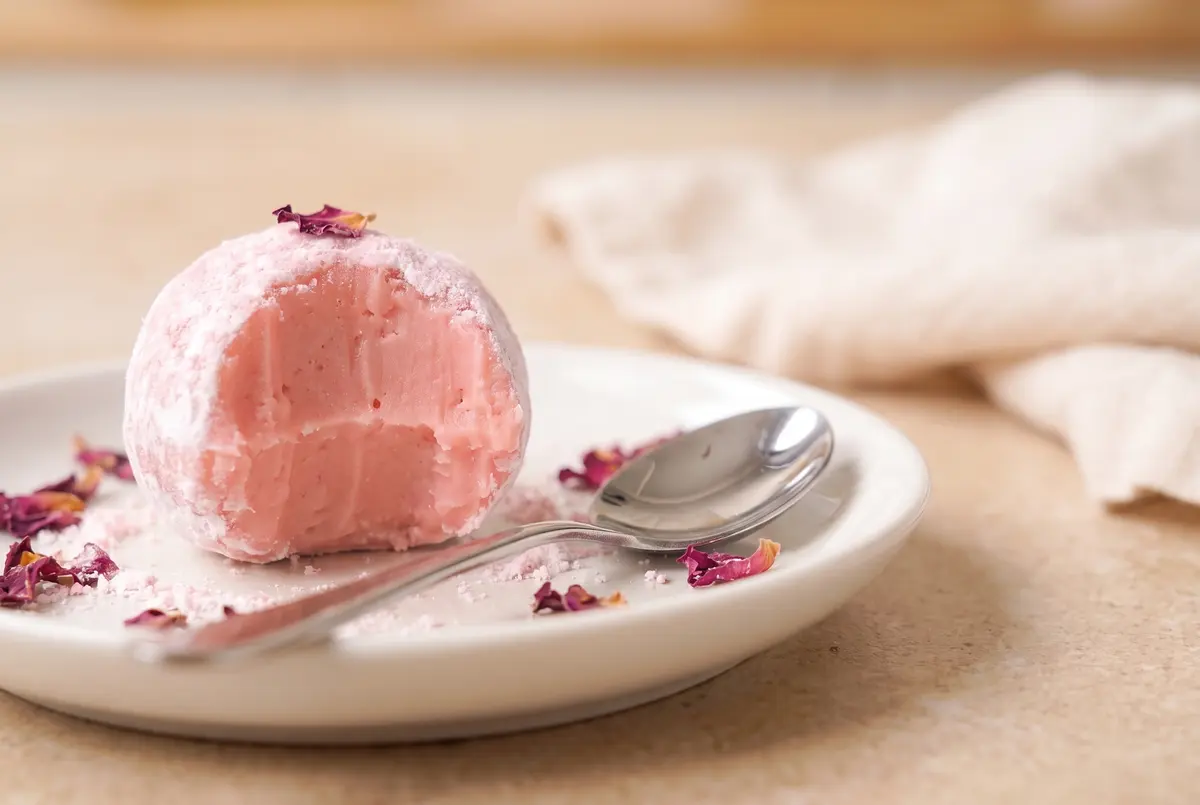
Step 5: Stir in the lychee puree. Pulse the drained lychees in a small food processor or with an immersion blender until completely smooth. Pat the puree with a paper towel to soak up any extra syrup (this is the move that keeps your ganache from breaking). Whisk 2 tablespoons of the lychee puree into the ganache until fully combined. Cover the bowl with plastic wrap pressed directly onto the surface (so a skin doesn’t form) and refrigerate for at least 2 hours, or until firm enough to scoop.
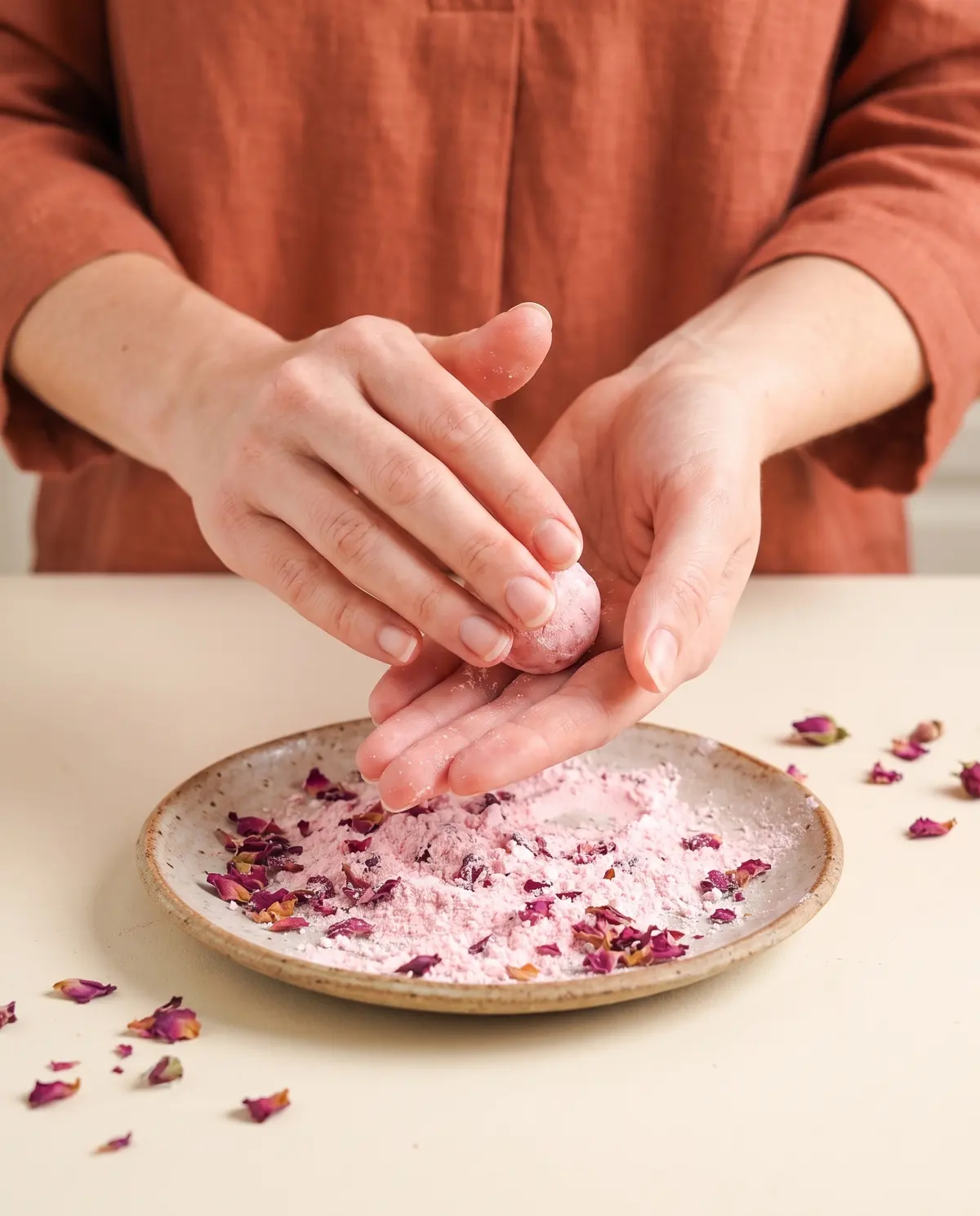
Step 6: Scoop and roll. Line a small tray with parchment. Use a teaspoon or a small cookie scoop to portion the chilled ganache into 18 equal mounds. Roll each mound quickly between the palms of your hands into a smooth ball — work fast, because the warmth of your hands will soften the ganache. Place each ball on the prepared tray and pop the tray back into the fridge for 15 minutes to firm up before coating.
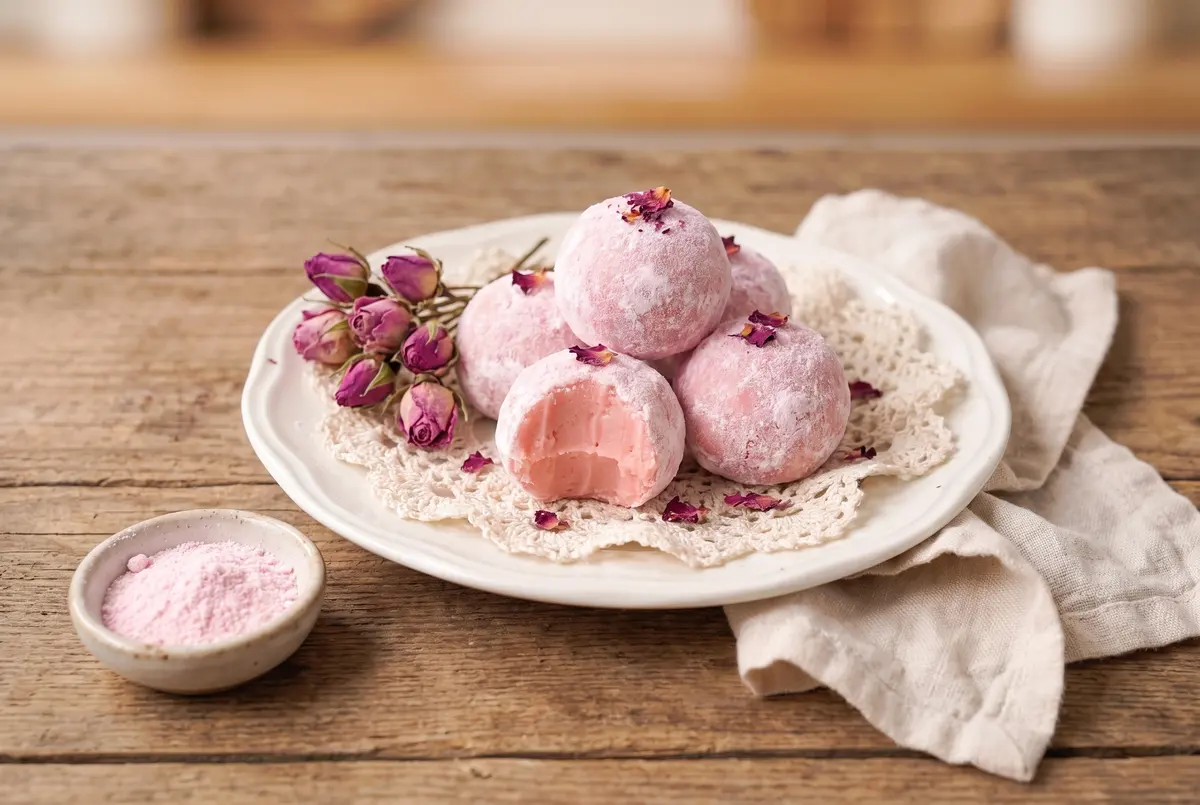
Step 7: Coat and store. Sift confectioners’ sugar into a shallow bowl and stir in a tablespoon of crushed dried rose petals if you want extra romance. Roll each chilled truffle in the sugar until completely coated, then place it back on the tray. Chill the finished truffles for 20 minutes before serving so the coating sets. Store leftovers in an airtight container in the fridge for up to a week; bring them out 10–15 minutes before serving so the centers soften back to that melt-on-your-tongue texture.
Creative Twists Worth Trying
- Dark chocolate lovers: swap the white chocolate for a 70% dark chocolate bar and reduce the rosewater to ¼ teaspoon — the contrast is gorgeous.
- Strawberry-rose: replace the lychee puree with 2 tablespoons of thick strawberry jam (strained to remove seeds) for a Valentine’s Day vibe.
- Pistachio crunch: roll the finished truffles in finely chopped pistachios instead of sugar for a Persian-inspired finish.
- Coconut rose: swap the heavy cream for full-fat coconut cream and roll the truffles in toasted shredded coconut.
- Earl Grey tea: add a teaspoon of loose Earl Grey to the cream while it steeps for a bergamot-rose pairing that smells like a London tea room.
- Liqueur splash: stir a teaspoon of rose liqueur or Chambord into the ganache along with the rosewater for a grown-up dinner-party version.
Serving & Pairing Ideas
These little truffles shine on a dessert board with fresh berries, a few squares of dark chocolate, and a small glass of dessert wine. I love them with a cup of Earl Grey or a cold glass of sparkling rosé. For Valentine’s Day or Mother’s Day, stack four of them in a small parchment-lined box tied with kitchen twine — they make the prettiest homemade gift, and they look like they came from a fancy chocolatier.
For a dinner party, serve them on a marble slab with a few fresh raspberries and a small bowl of extra rosewater for brushing onto the tops. The scent alone is half the experience.
Storage & Make-Ahead Tips
The ganache can be made up to 3 days ahead and kept covered in the fridge — in fact, an overnight rest deepens the rose flavor. The rolled, uncoated truffles can be frozen on a parchment-lined tray until solid, then transferred to a freezer bag for up to 2 months. Thaw in the fridge overnight, then roll in sugar just before serving. Once coated, keep them refrigerated and eat within a week.
One word on condensation: if you take the truffles straight from a very cold fridge into a warm room, they’ll “sweat” and the sugar coating will look damp. Just let them sit at room temperature for 10–15 minutes before serving, and the centers will soften to that perfect silky texture while the outside stays pretty.
Common Mistakes & Easy Fixes
- Ganache won’t set: you probably added too much liquid (lychee puree or extra cream). Pop it back in the fridge for another hour, or stir in a few extra tablespoons of chopped white chocolate to firm it up.
- Truffles are too soft to roll: your hands are warm or the ganache isn’t cold enough. Chill the scooped portions on the tray for 20 minutes first, and rinse your hands under cold water between rolling each truffle.
- Ganache looks grainy or split: the cream was probably too hot or the chocolate was cold. Add a tablespoon of cold cream and whisk vigorously — it usually comes back together.
- Flavor is too perfumy: rosewater is potent. Start with ¼ teaspoon, taste, and only add more if you want a stronger floral note. You can always add, you can’t take away.
- Coating melts off: the truffles aren’t cold enough. Pop them back in the freezer for 10 minutes, then re-roll.
Your Truffle Questions, Answered
Can I use fresh rose petals instead of dried? Only if they are confirmed culinary-grade and unsprayed. Fresh petals have more water content, so steep them for just 15 minutes to avoid diluting the cream. Dried culinary petals are more reliable and easier to find online.
Can I make these without a candy thermometer? Absolutely — this recipe uses no thermometer at all. You’re just heating the cream to steaming and letting the chocolate do the rest. The only temperature that matters is the chill time for the ganache to firm up.
Why is my ganache gray instead of pink? The white chocolate you used may be a lower-cocoa-butter brand that resists coloring. Add a tiny bit more pink gel (a drop at a time) until you hit the shade you want, or skip the color entirely — the natural hue is already a soft blush.
Can I use frozen lychees? Yes! Thaw them completely in the fridge overnight, then drain very well and pat dry before pureeing. The flavor is actually a little more concentrated after freezing.
How far in advance can I make these for a party? The ganache can be made 3 days ahead, the rolled truffles 2 days ahead, and the coated truffles 1 day ahead. For the freshest look and best texture, coat them the morning of your event.
What’s the best white chocolate for truffles? Look for a bar that lists cocoa butter (not palm oil) as the first or second ingredient. Couverture like Valrhona, Callebaut, or Ghirardelli are all excellent. Avoid “white baking chips” — they don’t melt as smoothly.
A Little Goodbye from My Kitchen
If you’ve been wanting to make truffles but felt intimidated, this is the recipe to start with. There’s no tempering, no fancy equipment, and the flavor combination feels luxurious even though it takes less than 30 minutes of active time. I’ve made these for bridal showers, birthday dinners, and one very sleepy Tuesday night when I needed a small something-sweet to end the day.
Have you ever made homemade truffles before, or are you a truffle-from-the-box loyalist? I’d love to know which one of the twists you’re going to try first — the Earl Grey version is my current favorite. Drop a comment and let me know how yours turn out, and tell me what flavor combinations you’re dreaming up. Until next time, keep your chocolate tempered and your pantry stocked with dried rose petals.
—Marina Caldwell
Easy Chocolate Rose Lychee Truffles (3-Ingredient Twist)
Ingredients
- 125 ml (1/2 cup) heavy whipping cream, plus extra if needed
- 2 tablespoons (2 g) dried culinary rose petals
- 200 g (7 oz) good-quality white chocolate, finely chopped
- 15 g (1 tablespoon) unsalted butter, softened
- 1/2 teaspoon rosewater (start with 1/4 tsp if rose-shy)
- 1 to 2 drops pink gel food coloring (optional)
- 8 to 10 canned lychees in light syrup, very well drained and patted dry
- Confectioners’ sugar, for rolling
- Crushed dried rose petals, for rolling (optional)
Instructions
- 1In a small saucepan, stir together the heavy cream and dried rose petals. Warm over low heat just until you see the first wisp of steam; do not let it boil.
- 2Remove from the heat, cover, and let the petals steep in the cream for 30 minutes (up to 1 hour for a stronger floral note).
- 3Strain the cream through a fine-mesh strainer into a small bowl, pressing gently on the petals. You want about 60 ml (1/4 cup); top up with fresh cream if needed.
- 4Meanwhile, melt the chopped white chocolate in a heatproof bowl set over a saucepan of barely simmering water, stirring gently until smooth. Or microwave in 20-second bursts at 50% power, stirring between each.
- 5Rewarm the rose cream until steaming again, then pour it over the melted chocolate in a slow, steady stream, whisking constantly. Add the butter and whisk until the ganache is glossy and smooth.
- 6Stir in the rosewater and the pink gel coloring (if using). Taste and adjust rosewater as desired.
- 7Pulse the drained lychees in a small food processor until completely smooth. Pat the puree with a paper towel to remove excess syrup.
- 8Whisk 2 tablespoons of the lychee puree into the ganache until fully combined.
- 9Cover the bowl with plastic wrap pressed directly onto the surface and refrigerate for at least 2 hours, or until firm enough to scoop.
- 10Line a tray with parchment. Use a teaspoon or small cookie scoop to portion the chilled ganache into 18 equal mounds. Roll each mound between your palms into a smooth ball and place on the tray. Chill for 15 minutes.
- 11Sift confectioners’ sugar into a shallow bowl (stir in crushed rose petals if using). Roll each chilled truffle in the sugar until fully coated.
- 12Return the coated truffles to the tray and chill for 20 minutes before serving. Store leftovers in an airtight container in the fridge for up to 1 week; bring to room temperature 10 to 15 minutes before serving.
Notes
Rosewater is potent — start with 1/4 teaspoon and only add more if you want a stronger floral note. For a darker, more grown-up version, swap the white chocolate for 70% dark chocolate and reduce the rosewater to 1/4 teaspoon. The ganache can be made up to 3 days ahead, and the rolled (uncoated) truffles can be frozen for up to 2 months.