There is something quietly theatrical about a pear poached in red wine. The fruit goes in pale, almost bashful, and comes out wearing a deep ruby coat like it has somewhere fancy to be. Add a little dark chocolate to the reduced syrup, a whisper of cardamom, and a soft quenelle of cream on the side, and the whole thing turns into the kind of dinner-party dessert that looks like you tried much harder than you did. Have you ever wanted a make-ahead dessert that looks elegant on the plate but mostly runs itself while you get dressed? This is that dessert.
I started poaching pears on accident one January when I had a bottle of red I wasn’t going to finish and a bowl of slightly under-ripe Bosc on the counter. I figured the wine would teach the pears a few things, and the pears would teach the wine to slow down. The cardamom showed up because my mother used to drop a pod into everything from rice pudding to hot cider, and a little of that warmth felt right here. Now it is one of those recipes I keep in my back pocket for the entire cold half of the year.
Why This Trick Works
Red wine is mostly water, sugar, and acid, which happens to be the exact trio you need to gently break down a pear without turning it into applesauce. Simmering in wine coaxes the fruit to soak up all that flavor and color, while the acid keeps the flesh from going mushy. The real magic, though, is the second step. After the pears come out, you boil the leftover liquid down to a syrup, then whisk in chopped dark chocolate. The wine, the sugar, and the chocolate collapse into one glossy, grown-up sauce that you could honestly eat with a spoon.
The cardamom is the part people do not expect. Just one or two green pods, cracked open and tucked into the pot, give the syrup a cool, almost citrusy perfume that keeps the chocolate from feeling heavy. If you have ever wondered why some restaurant desserts taste layered while your home desserts taste flat, this is usually why — a single spice, used gently, is doing all the work behind the curtain.
Ingredients
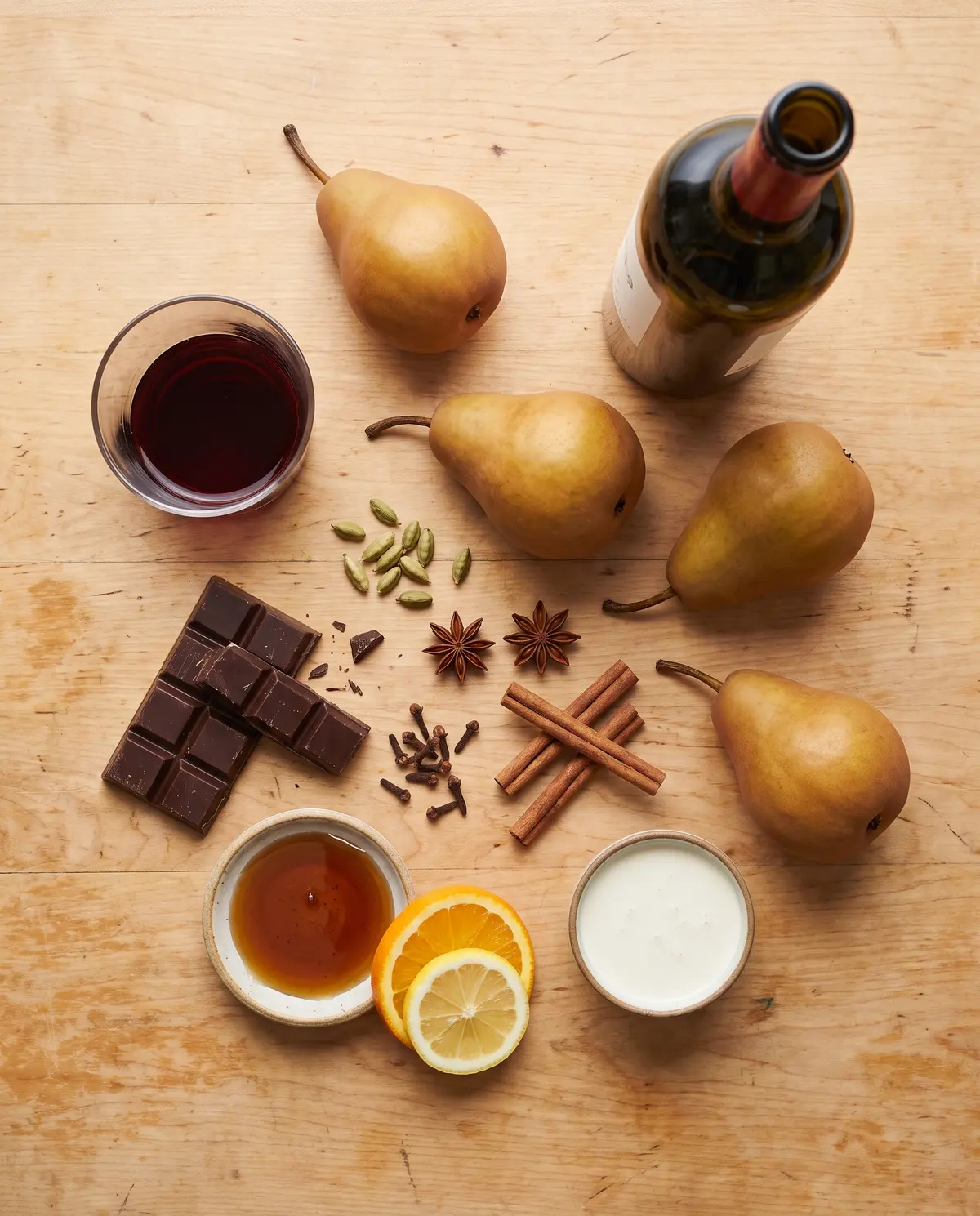
- 4 to 6 firm pears, peeled but with stems left intact (Bosc or Anjou work beautifully)
- 2 cups dry red wine, something fruity and not too tannic — a Merlot or Pinot Noir is ideal
- 1/4 cup maple syrup
- 2 tablespoons light brown sugar
- 1 thin slice of lemon
- 1 thin slice of orange
- 2 cinnamon sticks
- 2 green cardamom pods, lightly cracked
- 1 star anise
- 4 whole cloves
- 1/2 cup heavy cream, for the ganache
- 3 1/2 ounces bittersweet or dark chocolate, finely chopped (about 70 percent cacao)
- 1 cup heavy cream, cold, for the whipped cream
- 1 tablespoon granulated sugar
From Pot to Plate
Step 1: Build the poaching liquid. In a saucepan just wide enough to hold the pears standing up in a single layer, combine the red wine, maple syrup, brown sugar, the slice of lemon, the slice of orange, cinnamon sticks, cracked cardamom pods, star anise, and cloves. Bring it to a gentle boil over medium-high heat, then drop the heat down so the liquid is barely shivering. A hard boil will toughen the pears, so patience is the move here. Have you ever noticed the best desserts are the ones that refuse to be rushed?
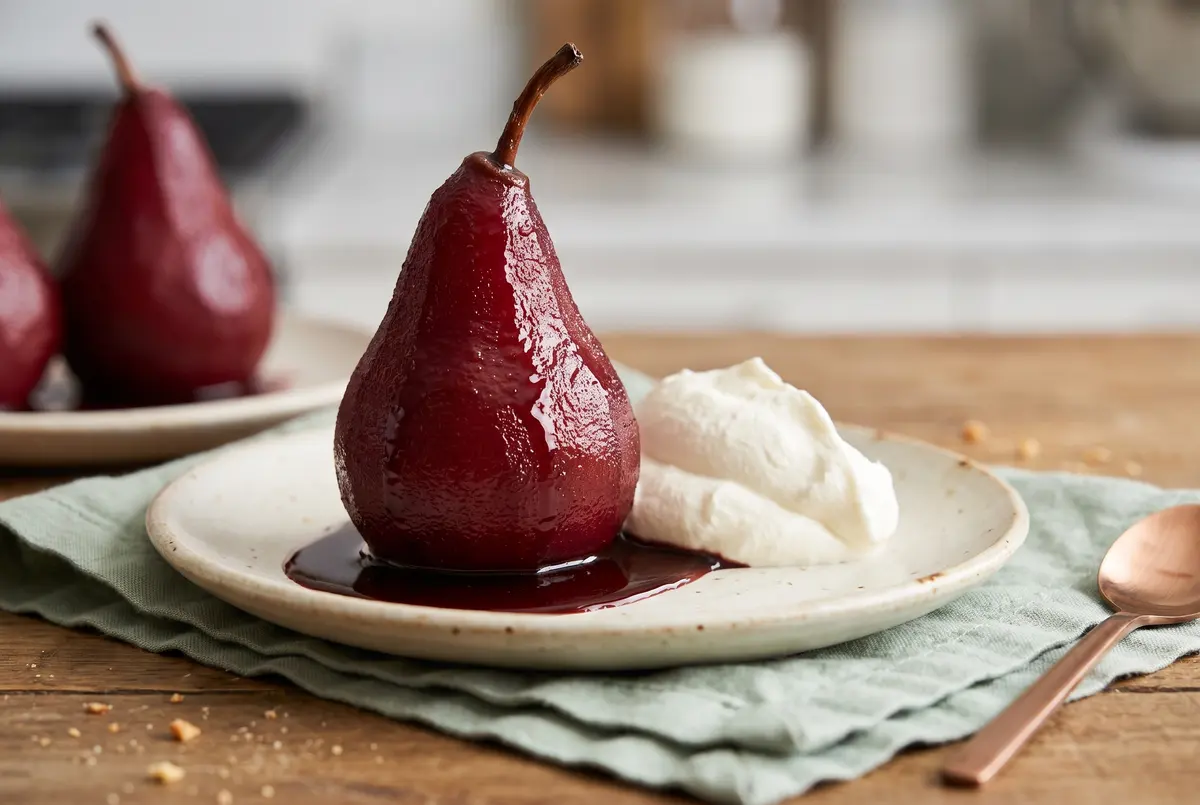
Step 2: Lower the pears in and poach them gently. Stand each pear upright in the pan. If you slice a tiny flat from the bottom of each one first, they will stand up like little ruby-red soldiers and cook evenly. Cover the pot, and let the pears simmer for 15 to 20 minutes, basting the tops with the spiced wine every few minutes so the color stays deep and even. To check for doneness, slide a paring knife into the side of a pear — you want almost no resistance, but the pear should still hold its shape on the spoon.
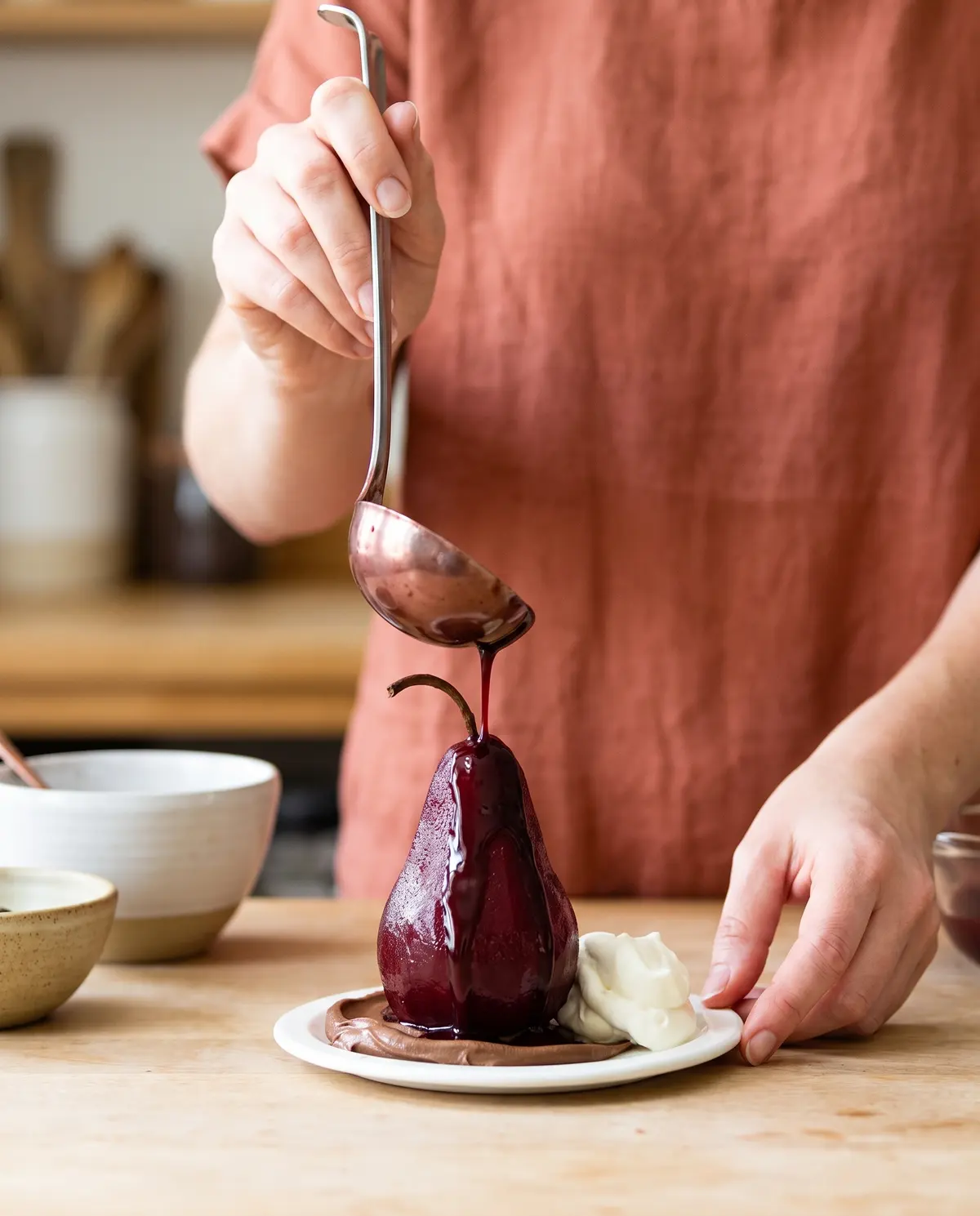
Step 3: Cool the pears and start the ganache. Lift the pears out of the liquid and set them on a plate. Pour the spiced wine back into the pot and crank the heat up to medium-high, letting it boil down to about 1 cup of thick, glossy syrup — that should take roughly 10 to 12 minutes. While it reduces, put the chopped chocolate into a heatproof bowl and warm the half cup of cream in a small saucepan until you see the first lazy bubbles and a little steam. Pour the hot cream over the chocolate, wait a couple of minutes, then whisk until you have a smooth, shiny ganache.
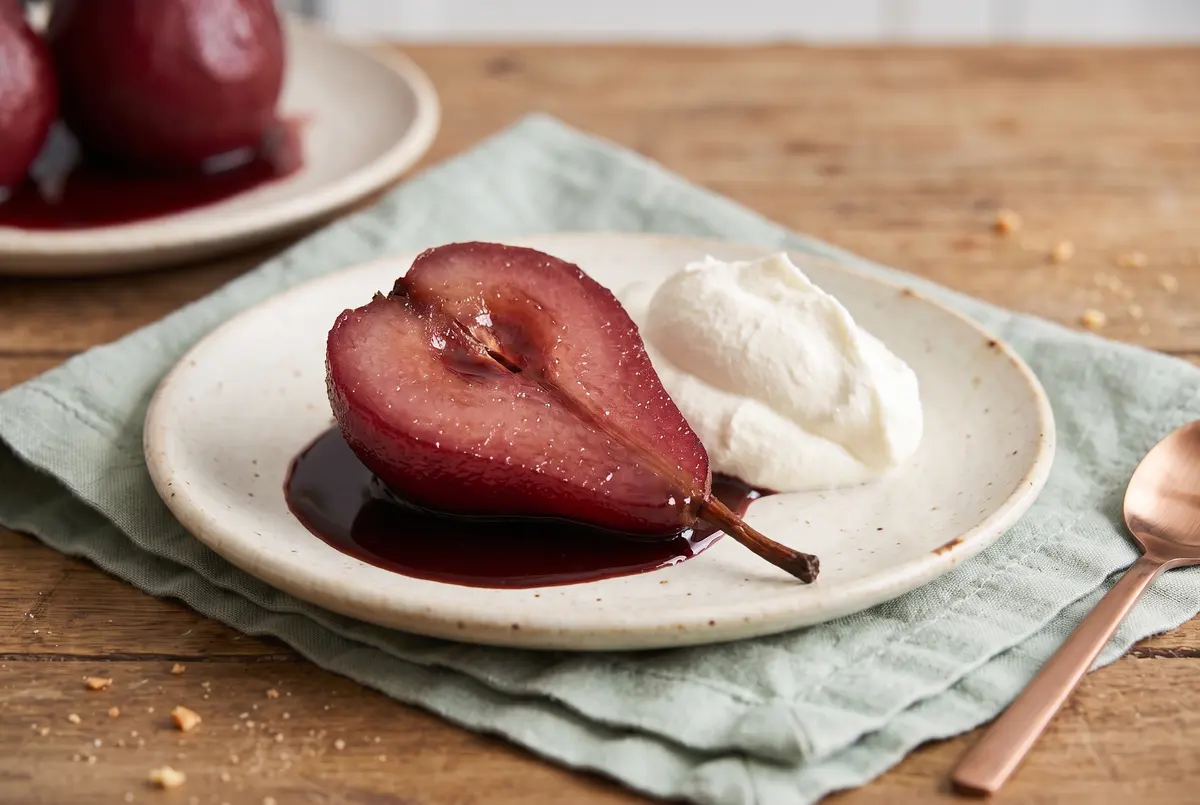
Step 4: Whip the cream and plate up. Whip the cold cup of cream with the tablespoon of granulated sugar until you have soft, billowy peaks — do not walk away and over-whip it, you want pillows, not butter. To plate, halve each pear lengthwise, fan the halves on small plates, spoon a generous stripe of warm chocolate-wine ganache across the plate, and finish with a quenelle of the whipped cream on the side.
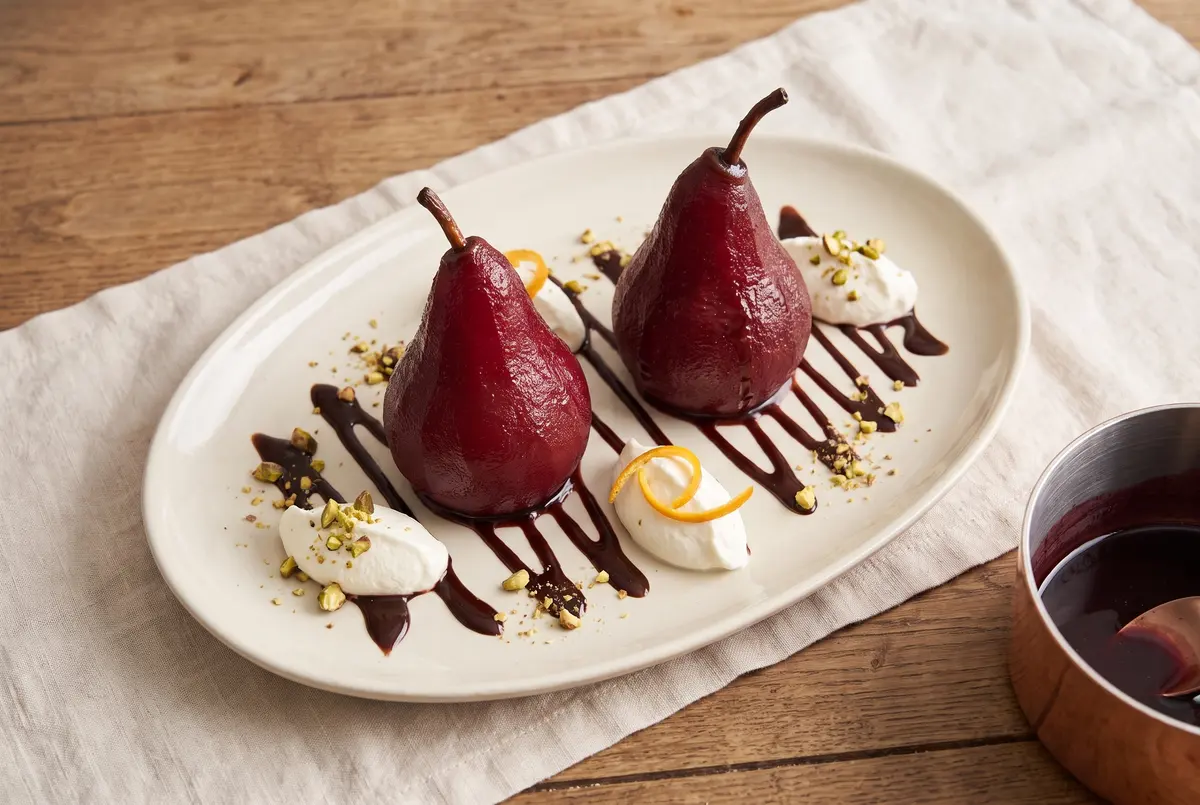
Step 5: Add the finishing flourish. A few curls of orange zest, a scatter of crushed pistachios, or a single shaver of dark chocolate over the cream is the kind of tiny detail that makes a guest pause. Which one would you reach for first?
Creative Twists Worth Trying
- Swap the red wine for a good-quality pomegranate juice and you have a kid-friendly, alcohol-free version that still tastes deep and ruby.
- Use port instead of dry red wine for a richer, sweeter sauce that leans into winter holidays.
- Tuck a split vanilla bean into the poaching liquid for a softer, rounder spice profile.
- Stir a teaspoon of orange blossom water into the ganache at the end for a floral lift.
- Serve the pears over a slice of almond pound cake instead of on their own for a more filling dessert course.
- Skip the cream and use a thick Greek yogurt sweetened with honey for a lighter, tangier finish.
Serving & Pairing Ideas
These pears love being the headline act on a small plate with very little around them. A few toasted hazelnuts or pistachios, a tuile, a single shortbread cookie crumbled over the top — that is really all they need. For a dinner party, pair them with a small glass of the same red wine you poached in, a dessert wine like a ruby port, or an espresso if you want to lean into the chocolate.
They are also wonderful the morning after, sliced over Greek yogurt with a little granola. I have been known to eat the leftover pears cold, straight from the fridge, while standing at the counter. No judgment here.
Storage & Make-Ahead Tips
The pears actually taste better on day two, once the wine has had more time to soak into the flesh. You can poach them up to two days ahead, store them in their poaching liquid in a sealed container in the fridge, and just bring them back to room temperature before serving. The ganache keeps for three days refrigerated; rewarm it gently over a double boiler or in short microwave bursts, whisking until smooth. The whipped cream is best made the same day, but you can stabilize it with a teaspoon of cornstarch per cup of cream if you need to hold it for a few hours.
Common Mistakes & Easy Fixes
- Pears turned out pale, not ruby red. You probably did not baste the tops enough while they simmered. Use a spoon to ladle the hot wine over the exposed parts every five minutes.
- Pears are mushy and falling apart. Either they were too ripe to begin with, or you boiled them instead of simmering. Stick to firm, just-ripe Bosc or Anjou and keep the heat at a gentle shiver.
- The ganache split and looks greasy. The cream was probably too hot or the chocolate was cold. Start over with room-temperature chopped chocolate and cream that is just barely steaming, not boiling.
- The syrup tastes too sharp or too sweet. Adjust at the end with a splash more wine if it is too sweet, or a small spoon of sugar if it is too sharp. Tasting before you plate is always the move.
Your Pears Questions, Answered
What kind of pears should I use? Bosc and Anjou are the most reliable because they hold their shape during a long simmer. Bartlett works in a pinch but goes softer faster, so watch the cook time carefully.
Can I poach the pears a day ahead? Absolutely. In fact, they taste better the next day. Store them in the strained poaching liquid in the fridge and bring them back to room temperature before serving.
Do I have to use alcohol? No. A good-quality grape juice, pomegranate juice, or even a strong black tea with a splash of lemon juice will give you a similar depth. You will lose some complexity, but the pears will still be lovely.
Is cardamom necessary? It is the soul of this recipe for me, but you can leave it out and the dessert will still be delicious. If you love warm spices, a tiny pinch of ground cinnamon added to the ganache is a great swap.
What if I do not have star anise or cloves? Skip them. Cinnamon, cardamom, and a slice of citrus will carry the whole dish on their own. The wine and the chocolate are doing most of the heavy lifting.
Can I make this dairy-free? Yes. Swap the cream for full-fat coconut milk in the ganache, and use a coconut whipped cream or a good oat-based whipped topping to finish.
A Little Goodbye from My Kitchen
These poached pears have saved me from more last-minute dinner panic than I want to admit. They look like something out of a restaurant window, the ingredients are forgiving, and the house smells like the kind of evening you want to come home to. I hope you make them once, then again, then start keeping a bottle of red on the counter just in case. Let me know how yours turn out, and which twist becomes a regular in your kitchen — I am always looking for new excuses to poach another pear.
—Marina Caldwell
Easy Red Wine Poached Pears with Chocolate & Cardamom
Ingredients
- 4 to 6 firm pears (Bosc or Anjou), peeled but with stems left intact
- 2 cups dry red wine (Merlot or Pinot Noir)
- 1/4 cup maple syrup
- 2 tablespoons light brown sugar
- 1 thin slice of lemon
- 1 thin slice of orange
- 2 cinnamon sticks
- 2 green cardamom pods, lightly cracked
- 1 star anise
- 4 whole cloves
- 1/2 cup heavy cream (for the ganache)
- 3 1/2 ounces bittersweet or dark chocolate (about 70 percent cacao), finely chopped
- 1 cup heavy cream, cold (for the whipped cream)
- 1 tablespoon granulated sugar
Instructions
- 1Build the poaching liquid. In a saucepan just wide enough to hold the pears standing up, combine the red wine, maple syrup, brown sugar, the slice of lemon, the slice of orange, cinnamon sticks, cracked cardamom pods, star anise, and cloves. Bring to a gentle boil over medium-high heat, then reduce to a bare simmer.
- 2Stand the pears upright in the pan, cover, and simmer for 15 to 20 minutes, basting the tops with the spiced wine every few minutes so the color stays deep and even. The pears are ready when a paring knife slides in with almost no resistance.
- 3Lift the pears out and set aside. Boil the poaching liquid down to about 1 cup of thick, glossy syrup, roughly 10 to 12 minutes. Meanwhile, place the chopped chocolate in a heatproof bowl, warm the 1/2 cup of cream until you see the first lazy bubbles, pour it over the chocolate, wait 2 minutes, and whisk until smooth and silky.
- 4Whip the cold 1 cup of cream with the tablespoon of granulated sugar until soft peaks form.
- 5Halve each pear lengthwise, fan the halves on small plates, spoon the warm chocolate-wine ganache across the plate, and finish with a quenelle of whipped cream. Garnish with orange zest, crushed pistachios, or a few shavings of dark chocolate if you like.
Notes
The pears actually taste better on day two, once the wine has soaked further into the flesh. Poach them up to 2 days ahead and store in their strained poaching liquid in the fridge. Bring back to room temperature before serving.