There is a specific kind of quiet that settles over my kitchen in the days after the holidays. The cookies are gone, the roasts have been carved, and the table is just… waiting. Last January, on one of those slow, gray Sundays, I made a single tray of chocolate bark with the last of the smoked almonds from a tin my sister had brought back from a trip, and I remember thinking: this is the recipe I should have been making all along. It is fast, it is forgiving, and it tastes like the holidays felt — only quieter, and meant just for you.
Have you ever made homemade chocolate bark before? If you have, you know the magic: a few minutes of stirring, a sprinkle of something salty and crunchy, an hour in the fridge, and you have something that looks and tastes like it came from a fancy chocolatier. If you have not, I promise this is the kind of recipe that will make you feel like you have. The whole thing comes together in under thirty minutes of active time, and the result is honestly better than most of the bark I have bought. Smoky almonds give it that little something you cannot quite put your finger on — a savory depth that makes the chocolate taste rounder, deeper, more grown-up.
Why This Recipe Works
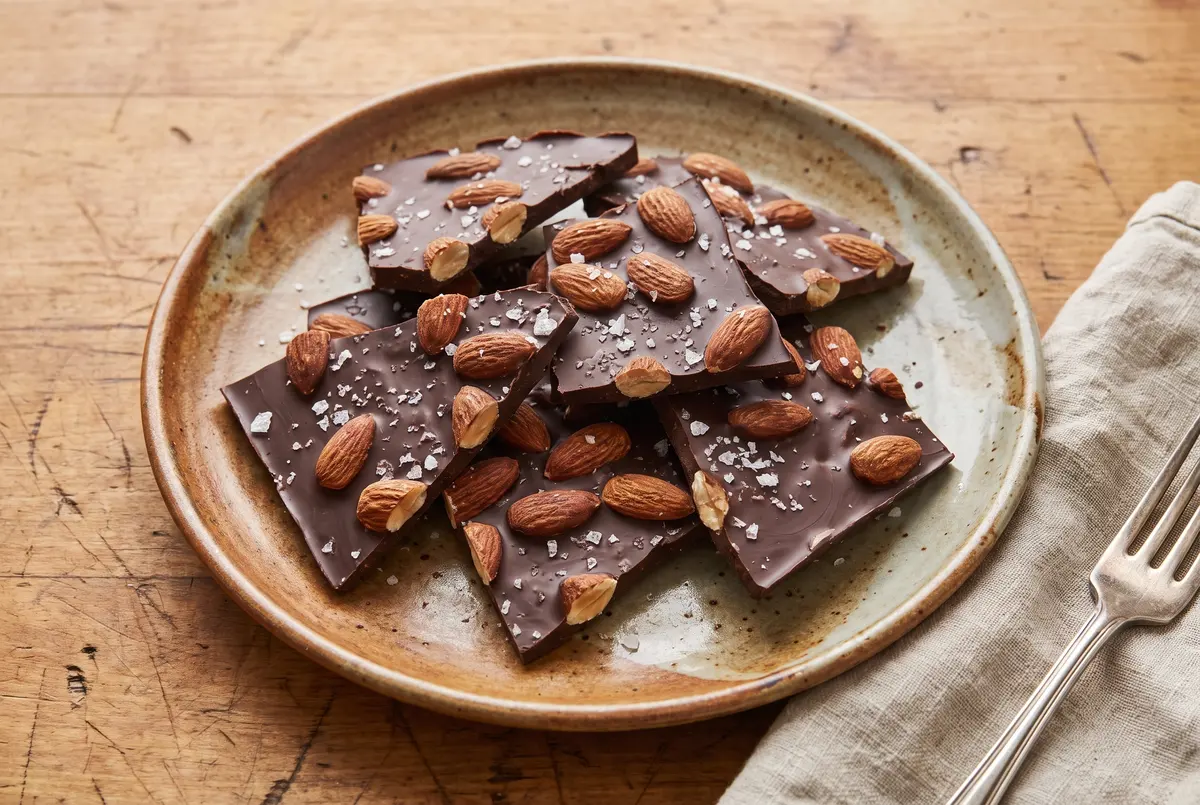
The trick with this bark is not in the chocolate — any good dark chocolate will do. The trick is in the layering. We toast the almonds first so they have real flavor, not just crunch. We melt the chocolate slowly and patiently so it sets with that satisfying snap instead of going soft and chalky. And we finish with flaky sea salt at the very last second, while the chocolate is still wet, so the salt actually sticks in place and gives you little bursts of briny contrast in every bite. Together those three small moves turn a five-ingredient candy into something people ask you about.
Ingredients
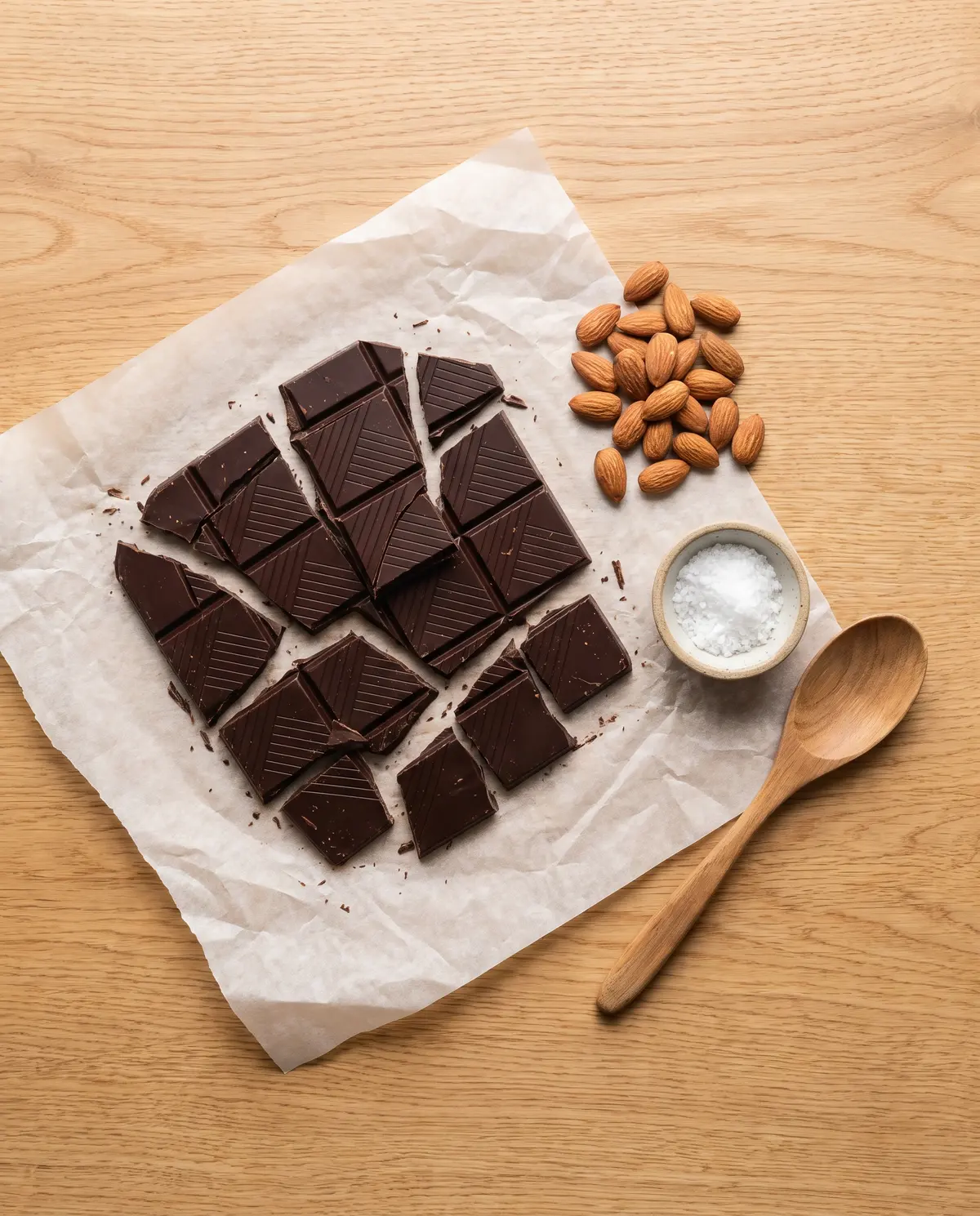
- 1/2 cup whole raw almonds
- 2 cups (16 oz.) dark chocolate (60 to 70 percent cacao), chopped or broken into 1-inch pieces
- 1/2 teaspoon flaky sea salt (Maldon is my favorite), plus a little more for the top
From Bowl to Bark: My Method
Step 1: Toast the almonds. Heat your oven to 300°F and spread the almonds on a rimmed sheet pan in a single layer. Toast for 8 to 10 minutes, until they smell nutty and look just a shade darker. Do not skip this — the difference between raw almonds and toasted almonds in this recipe is the difference between a snack and a treat. Let them cool completely before you stir them into the chocolate, or they will seize it up.
Step 2: Melt the chocolate gently. Line a second sheet pan with parchment paper. Put the chopped chocolate in a medium microwave-safe bowl. Microwave in 30-second bursts, stirring well between each one, until the chocolate is mostly melted with a few small pieces still holding their shape. Then stop microwaving and just keep stirring. The residual heat will finish the job, and you will end up with silkier, glossier chocolate than if you had nuked it into oblivion. If you accidentally melted every last lump, toss in one small unmelted piece to bring the temperature back down — this is the seed that gives the bark its snap.
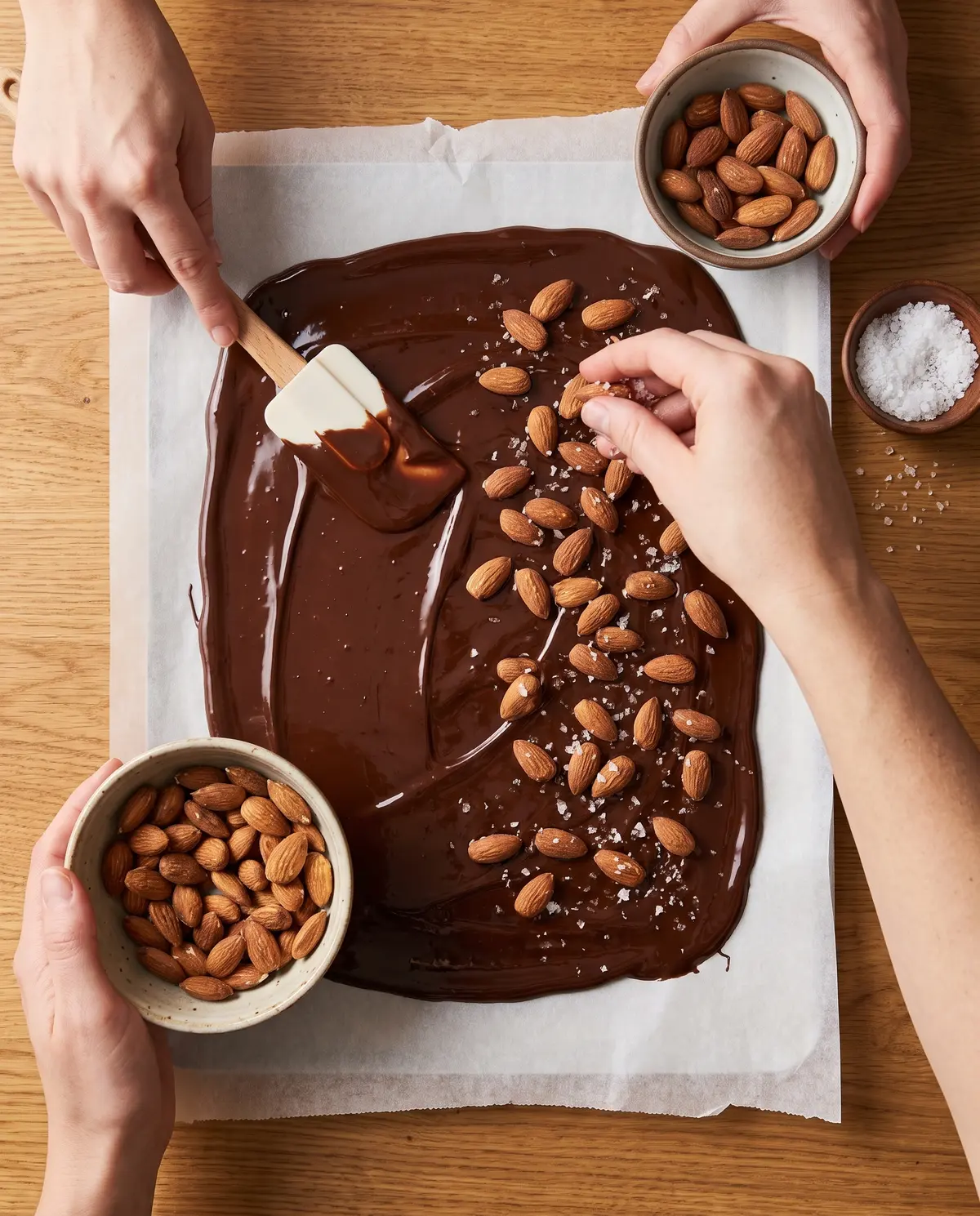
Step 3: Stir in the almonds and spread. Pour the cooled toasted almonds into the melted chocolate and stir until every almond is coated. Scrape the mixture onto your parchment-lined sheet pan and use an offset spatula (or the back of a big spoon) to spread it into an even layer, about a quarter-inch thick. Do not worry about making it pretty — bark is supposed to look rustic. Tap the pan firmly on the counter two or three times to settle the chocolate and pop any air bubbles.
Step 4: Salt and chill. Immediately, while the chocolate is still wet, sprinkle the flaky sea salt generously over the top. I like to use a pinch with my fingers and scatter it unevenly so some bites are saltier than others. Slide the pan into the fridge and let it set for 30 to 45 minutes, or until the chocolate is completely firm and snaps when you press a corner.
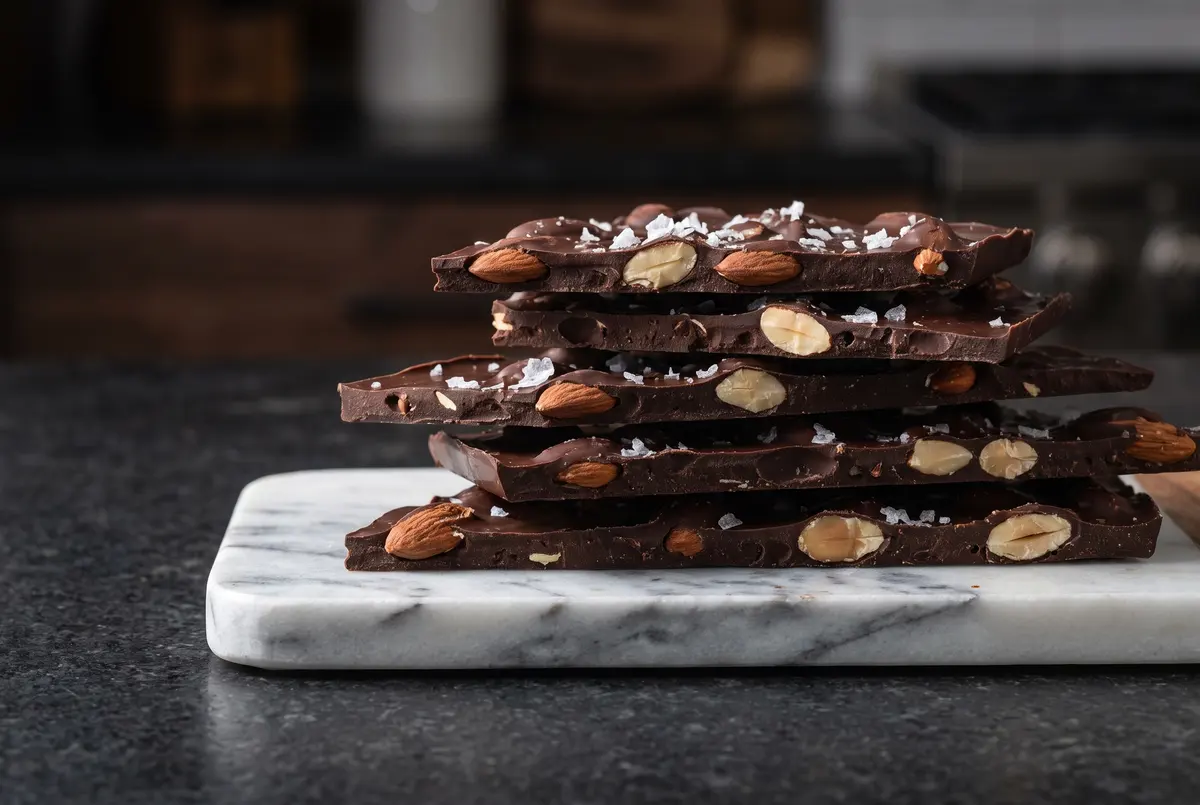
Step 5: Break and store. Lift the parchment off the pan and use your hands (or the back of a knife) to break the bark into irregular shards — about 2 to 3 inches across is the sweet spot. Stack them in a tin or a jar with a tight lid. They will keep in the fridge for a month, but in my house they never last more than a week. Which one would you try first — straight from the fridge, or at room temperature?
Creative Twists Worth Trying
- …use milk chocolate instead of dark for a sweeter, more kid-friendly version — the smoked almonds still give it that grown-up edge.
- …swap the almonds for smoked pecans, hazelnuts, or even macadamias. Each nut changes the personality of the bark entirely.
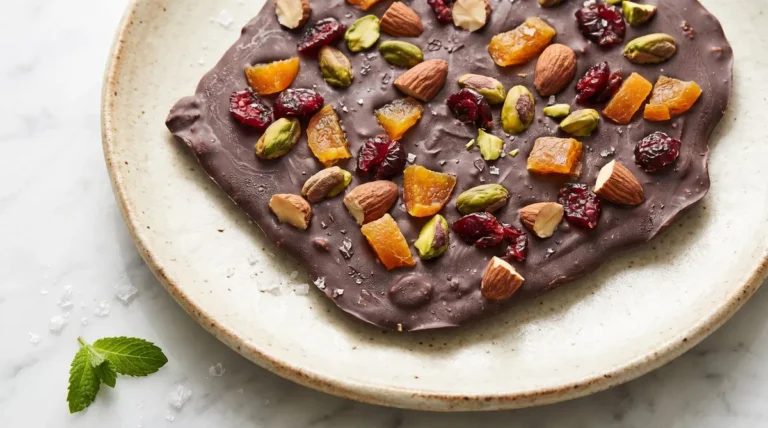
- …add 1/4 cup of dried cranberries, dried cherries, or chopped apricots for a fruity, chewy contrast against the crunch.
- …drizzle the finished bark with a little melted white chocolate in a zigzag for a fancier look (especially good if you are gifting it).
- …stir a pinch of flaky chili or a teaspoon of instant espresso into the melted chocolate for a deeper, almost mocha flavor.
Serving & Pairing Ideas
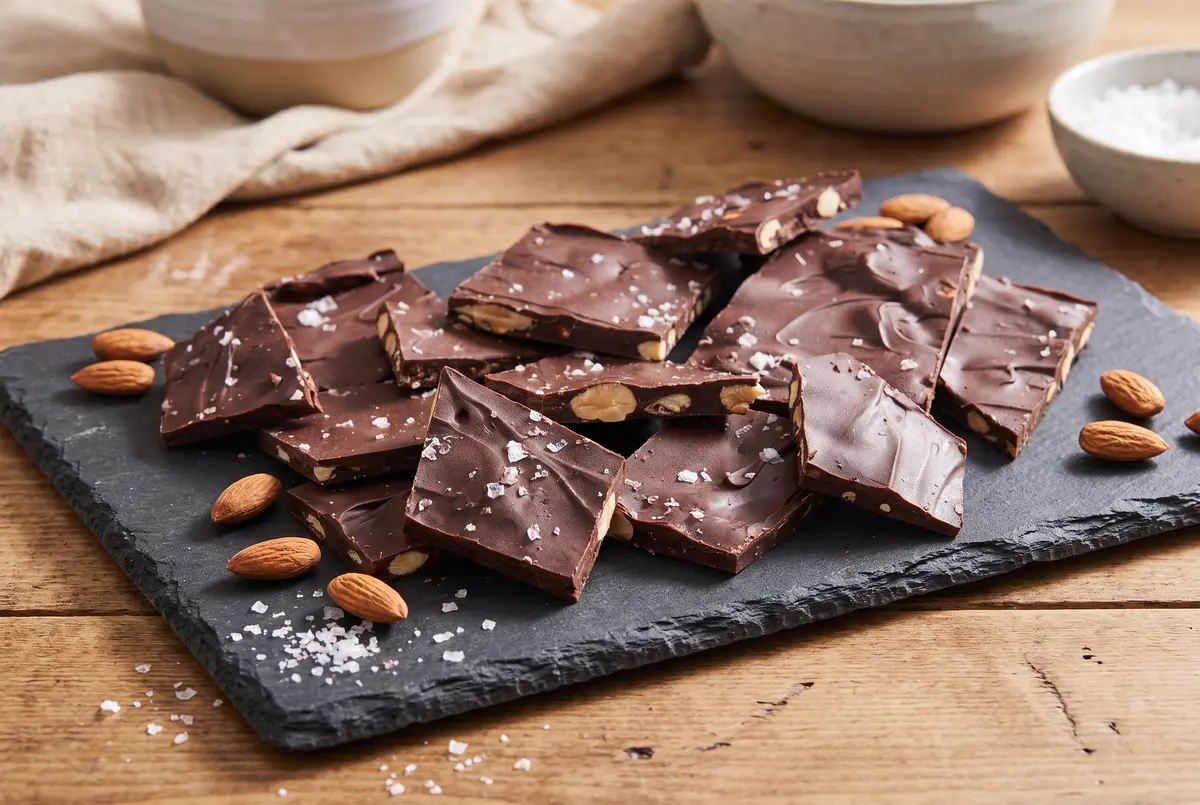
This bark is a natural after-dinner treat — set out a small plate with three or four shards and a demitasse of espresso, and you have an instant grown-up dessert. It is also the best hostess gift I know how to make: stack a few pieces in a cellophane bag, tie it with kitchen twine, and you are done. For a holiday cookie plate, break the bark into smaller pieces and tuck it between the cookies. And if you want to really lean into the smoky almond thing, serve it on a cheese board next to a sharp aged cheddar — the sweet-salty-smoky combo is unreal.
Storage & Make-Ahead Tips
Bark is one of those rare recipes that is genuinely better made ahead. It keeps beautifully in an airtight container in the fridge for up to a month, and you can even freeze it for three months — just layer the pieces between sheets of parchment so they do not stick together. Bring it to room temperature for about 10 minutes before serving so the chocolate softens slightly and the flavors open up. If you live somewhere warm, I would actually recommend keeping it in the fridge right up until serving; chocolate blooms (turns white and chalky) if it goes through temperature swings.
Common Mistakes & Easy Fixes
The most common bark mistake is overheating the chocolate in the microwave. It goes from melted to seized in about ten seconds, and once it seizes there is no coming back. The fix is patience: low power, short bursts, lots of stirring. Another classic blunder is using hot almonds — if you stir warm nuts into melted chocolate, the heat will re-melt the chocolate unevenly and make the texture grainy. Always let the almonds cool to room temperature first. And finally, do not be shy with the salt. It is the whole point.
Your Bark Questions, Answered
Can I use chocolate chips instead of a chocolate bar? You can, but bars melt smoother and taste better. Chocolate chips contain stabilizers that keep them from melting cleanly, so the bark will be a little grainier. If chips are all you have, add a teaspoon of neutral oil or butter to help them melt down.
What if my chocolate seizes? Unfortunately, seized chocolate is a goner for bark — it goes thick, clumpy, and refuses to spread. The good news is you only lost a few minutes and a few dollars. Start over with fresh chocolate and a cleaner bowl (even a drop of water will seize chocolate on contact).
Do I really need to temper the chocolate? For a casual homemade bark, no. Untempered chocolate will look a little duller and may develop a faint white bloom in the fridge, but it will still taste great and snap nicely. If you are giving bark as a gift and want that glossy, professional finish, tempering helps — but I usually skip it for my own kitchen.
Can I make this nut-free? Absolutely. Toasted pumpkin seeds, sunflower seeds, or even crushed pretzels all work beautifully. The key is toasting whatever you use so you still get that deep, roasty flavor.
How do I know the bark is set? Touch a corner gently — it should feel completely firm and cool, not tacky at all. If your finger leaves a print, give it another 10 to 15 minutes.
Can I double the recipe? Yes, just use a larger sheet pan. The bark should still be about a quarter-inch thick, so do not pile it up too high or the center will not set evenly.
A Little Goodbye from My Kitchen
This bark has become one of those quiet staples in my kitchen — the thing I make when I want to feel like I have accomplished something without actually working very hard. It is the recipe I bring to friends who have had a long week, the one I tuck into my husband’s lunch box, the one I make for myself on a Sunday afternoon with a podcast on. I hope it finds a place in your kitchen too. Let me know how yours turn out — and if you try a twist, I would love to hear what you came up with.
—Marina Caldwell
Salted Dark Chocolate Almond Bark (Easy 5-Ingredient Recipe)
Ingredients
- 1/2 cup whole raw almonds
- 2 cups (16 oz.) dark chocolate (60–70% cacao), chopped into 1-inch pieces
- 1/2 teaspoon flaky sea salt (Maldon recommended), plus extra for finishing
Instructions
- 1Preheat oven to 300°F. Spread almonds on a rimmed sheet pan and toast for 8 to 10 minutes until fragrant and lightly golden. Let cool completely.
- 2Line a second sheet pan with parchment paper. Place the chopped chocolate in a medium microwave-safe bowl.
- 3Microwave the chocolate in 30-second intervals, stirring well between each, until the chocolate is mostly melted with a few small pieces still intact.
- 4Remove from the microwave and continue stirring until the residual heat melts the remaining pieces. If needed, add one small unmelted chunk to help seed the chocolate for a better snap.
- 5Stir the cooled toasted almonds into the melted chocolate until evenly coated.
- 6Pour the chocolate-almond mixture onto the parchment-lined sheet pan. Use an offset spatula to spread it into an even layer about 1/4 inch thick. Tap the pan firmly on the counter several times to release air bubbles.
- 7Immediately sprinkle the flaky sea salt generously over the wet chocolate.
- 8Refrigerate for 30 to 45 minutes, until completely firm.
- 9Lift the parchment from the pan and break the bark into irregular 2 to 3-inch shards. Store in an airtight container in the refrigerator for up to 1 month.
Notes
• For glossy, professional-looking bark, temper the chocolate before spreading it.
• For everyday homemade bark, this simple melt-and-stir method produces delicious results with minimal effort.
• Let the bark sit at room temperature for about 10 minutes before serving so the chocolate softens slightly and the flavors fully develop.