I burned the edges last year. Not badly, but enough that I had to trim them off before anyone saw.
The problem was the oven temperature. Most recipes say 150°C, which sounds sensible until you realize every oven runs differently and mine apparently runs hot on the bottom shelf. I didn’t know that then.
This year I dropped it to 140°C and checked it every 45 minutes after the two-hour mark.
The fruit mixture sat overnight.
I know some people soak their dried fruit for weeks. Months, even. I don’t have that kind of planning ability.
What I do have is one night. I toss everything—currants, raisins, sultanas, chopped apricots, all the candied peel—into a bowl with the rum the evening before I bake. Sometimes I add the orange and lemon zest at this stage too, though the recipe doesn’t technically call for it yet.
By morning the fruit has absorbed most of the liquid and smells like Christmas already, if Christmas smelled vaguely alcoholic and slightly sticky.
One time I forgot to cover the bowl and woke up to find the fruit had dried out on top. I added another splash of rum and pretended it was intentional.
Quick tip: If you’re using brandy instead of rum, go with the darker kind. The cheap stuff makes everything taste like cough syrup.
The candied cherries are always the sticking point. They’re too sweet on their own, almost cloying, but they look good in the finished cake so I halve them and try not to think about it too much.
Creaming the butter takes longer than you think.
The recipe says 3-4 minutes. I’ve never had it work in less than 6.
Maybe my butter’s too cold. Maybe I’m impatient and start before it’s properly softened. Either way, I stand there with the mixer running, watching the butter and sugar slowly go from grainy to something that resembles cake batter, and I wonder if this is what my grandmother did every year or if she had some shortcut I don’t know about yet.
The eggs go in one at a time. I learned that the hard way after adding all four at once three years ago and watching the mixture turn into something that looked like it had already curdled.
It hadn’t. But it looked wrong enough that I nearly started over.
Between each egg I scrape down the sides of the bowl with a spatula, even though it feels excessive. The batter climbs up the sides and if you don’t catch it, you end up with dry pockets of flour later that didn’t get properly mixed.
The molasses goes in after the eggs. Two tablespoons sounds like nothing but it darkens the whole mixture immediately and adds this deep, almost bitter edge that balances out all the sweet fruit.
Without it, the cake tastes flat.
Folding in the fruit is where most people quit.
I’m not exaggerating. I’ve watched three different people start this recipe and give up at this exact step because the batter gets so thick it’s almost impossible to stir.
You’re supposed to fold it gently so you don’t break up the fruit. In reality, you’re wrestling with what feels like 2 kilos of sticky dough that doesn’t want to cooperate.
I use a wooden spoon. The silicone spatula bent the first time I tried this.
The trick—and I only figured this out last year—is to toss the fruit with a couple tablespoons of the flour mixture before you add it to the batter. It coats everything lightly and stops the fruit from clumping together in one massive lump at the bottom of the bowl.
It still takes effort. My arm was sore the next day. But at least the fruit distributed somewhat evenly instead of sinking straight to the bottom of the tin like it did the first time I made this.
Once it’s all in, I smooth the top with the back of a spoon dipped in water. This does absolutely nothing for the flavor but it makes me feel like I know what I’m doing.
Quick tip: Line your tin with parchment that goes up the sides by at least 5cm. This cake bakes for hours and without that buffer the edges will char before the center sets.

Step 1: Preheat your oven to 150°C, or 140°C if you know your oven runs hot like mine does. Line a 20cm round tin with parchment paper, making sure it comes up the sides. Grease it even though you’re using parchment, because somehow batter still finds a way to stick.
Step 2: Cream the butter and brown sugar together until it’s light and fluffy. This will take longer than the recipe says. It always does. If it looks grainy after 3 minutes, keep going. You want it pale and smooth, not sandy.
Step 3: Add the eggs one at a time, beating well after each addition. Scrape down the bowl between eggs or you’ll get pockets of unmixed flour later. (I learned this by cutting into a finished cake and finding a dry flour streak running through the middle.)
Step 4: In a separate bowl, sift together the flour, baking powder, cinnamon, nutmeg, and cloves. I know sifting feels old-fashioned but it actually matters here—the spices clump if you don’t.
Step 5: Fold the dry ingredients into the butter mixture, alternating with the milk. Start with flour, end with flour. The batter will look thick and slightly reluctant. That’s normal.
Step 6: Stir in the molasses, vanilla extract, orange zest, and lemon zest. The whole mixture will darken and start to smell like actual Christmas instead of just sugar and butter. This is the moment I usually taste it, even though raw eggs are probably not advisable.
Step 7: Take your soaked fruit mixture and toss it with 2 tablespoons of the flour you already measured out. This coats the fruit and stops it from sinking to the bottom of the tin in one sad, heavy layer.
Step 8: Fold the fruit into the batter. Use a wooden spoon and actual arm strength. It’s going to feel like you’re stirring cement. My sister asked if I was making cake or laying a foundation. Has your batter ever felt this thick? Share below!
Step 9: Scrape the batter into your prepared tin and smooth the top with the back of a wet spoon. I also press down lightly in the center to create a slight dip, which helps the cake bake more evenly, though I can’t prove that actually works.
Step 10: Bake for 3-4 hours, checking after 2.5 hours. If the top is browning too fast, cover it loosely with foil. The cake is done when a skewer inserted in the center comes out clean, though with all the sticky fruit in there, “clean” is relative. Look for batter-free, at least.
Step 11: Let it cool in the tin for 30 minutes, then turn it out onto a wire rack. Don’t skip the cooling time in the tin or it’ll fall apart when you try to move it.
Step 12: If you want to get fancy, brush the top with warmed apricot jam while it’s still slightly warm and press on some extra candied fruit. I did this once and it looked professional for about 20 minutes before someone cut into it.
Ways to Change It Up
Try this: Swap half the rum for amaretto. It adds this almond-cherry flavor that makes people think you did something complicated when you absolutely didn’t.
Try this: Use dried cranberries instead of half the raisins. They’re tart enough to cut through some of the sweetness and they look good when you slice the cake, little red bursts against all the brown.
Try this: Add 50g of chopped crystallized ginger to the fruit mixture. This makes it spicier and less traditionally sweet. My husband thought I’d ruined it. His mother asked for the recipe. Which would you go for? Drop it in the comments.
How to Serve It
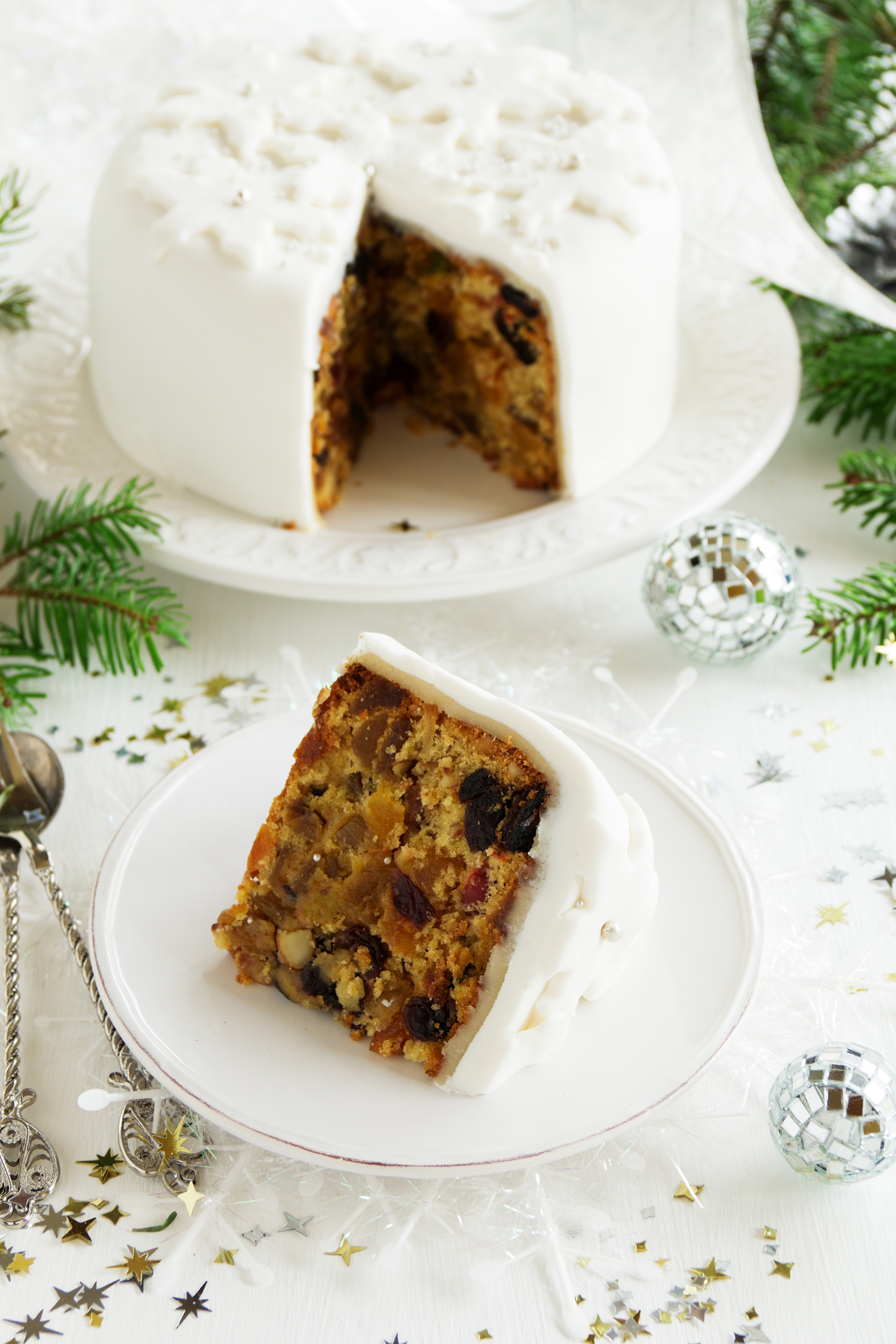
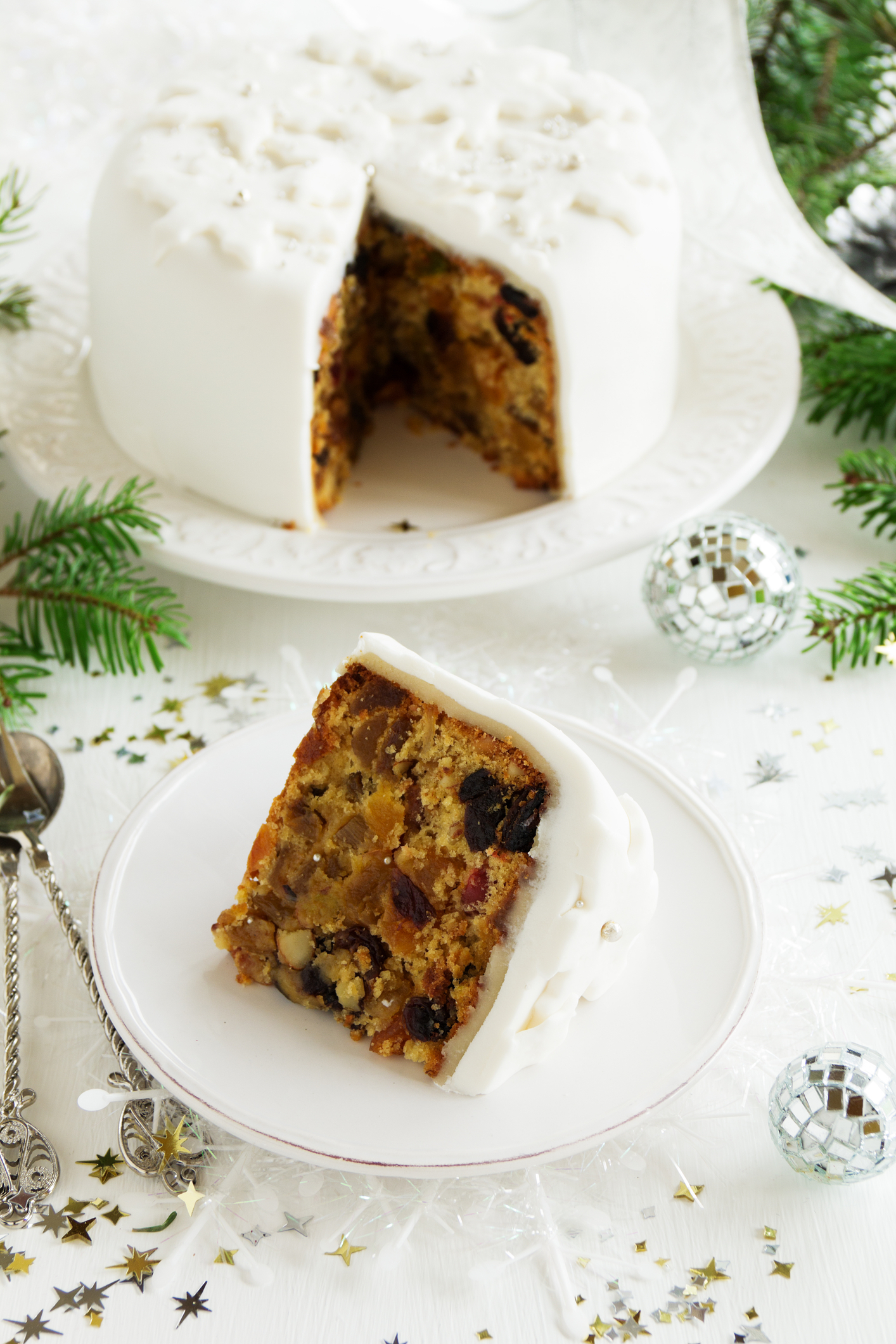
Thin slices. This is rich enough that thick slices feel like a challenge to finish.
I serve it with strong black coffee or a cup of tea that’s almost too hot to drink. The bitterness helps. Some people like it with a small glass of the same rum that went into the cake, which feels thematically appropriate if slightly excessive.
It’s also good with a small wedge of sharp cheddar, though that’s apparently a northern England thing and people either love it or look at you like you’ve committed a crime. What would you pair it with?
Storing It Without Ruining It
Wrap it in parchment paper first, then in foil, then store it in an airtight container. This sounds excessive but it keeps the cake moist without making it soggy.
It’ll last about 4 weeks in a cool, dark cupboard. Some people say longer but I’ve never managed to keep one around that long.
You can freeze it for up to 3 months. Wrap it the same way—parchment, then foil—and defrost it slowly in the fridge overnight before bringing it to room temperature.
Don’t refrigerate it unless you’ve already cut into it. The fridge dries it out faster than leaving it at room temperature does, which seems backwards but it’s true.
If you want to be traditional about it, you can feed the cake with a tablespoon of rum or brandy every week. Poke small holes in the bottom with a skewer and drizzle it in. I did this once and forgot about it for two weeks and the cake was almost alcoholic by the time we ate it. Have you ever saved leftovers like this? Tell me below!
Mistakes I Made So You Don’t Have To
I once forgot to toss the fruit in flour before adding it. Everything sank to the bottom and I ended up with a dense fruit layer and a plain cake layer on top, like some kind of failed trifle situation.
I also overbaked one by a full hour because I was convinced the center wasn’t done. It was done. I just kept testing it in the same spot and hitting a piece of apricot every time, which obviously didn’t come out clean. The edges were nearly charcoal. We ate the middle and pretended the rest didn’t exist.
And I added the molasses to the dry ingredients once instead of the wet. It clumped into these dark, sticky pockets that wouldn’t mix in and I had to start the whole thing over. Molasses does not dissolve into flour. In case you were wondering. Did something like this happen to you?
Questions People Actually Asked Me
Can I make this without alcohol?
You can. Use orange juice or strong black tea instead of the rum. The flavor won’t be as deep and it won’t keep as long, maybe 2 weeks instead of 4, but it’ll still work. I made a non-alcoholic version for my daughter’s school event and it was gone in 20 minutes.
Why does it need to bake for so long?
The fruit. There’s so much moisture in all that dried and candied fruit that the center takes forever to set. If you try to rush it at a higher temperature, the outside burns before the inside cooks. Low and slow is the only way.
Can I skip the candied peel?
Sure, but it won’t taste the same. The peel adds this slightly bitter citrus edge that keeps the cake from being one-note sweet. I tried making it once with just dried fruit and it was fine, but it was also kind of boring. Up to you.
How do I know when it’s actually done?
The skewer test is tricky with this cake because you’ll always hit fruit. What I do is test in three different spots—if they all come out without wet batter clinging to them, it’s done. The top should also feel firm when you press it lightly, not spongy.
Mine cracked on top. Did I do something wrong?
No. This cake cracks sometimes. The batter is thick, it bakes for hours, cracks happen. It doesn’t affect the flavor and you can cover it with decorations if it bothers you. Mine cracked last year and I just brushed extra apricot jam over the whole thing.
Can I make this in a different sized tin?
You can, but you’ll need to adjust the time. A larger, shallower tin will bake faster—start checking around 2 hours. A deeper tin will take longer, maybe 4.5 hours. And honestly, I’d stick with round. I tried a loaf tin once and the center stayed gummy while the ends dried out. Which answer helped you most?
It gets better after a week.
This isn’t one of those recipes you make the day you want to eat it.
The flavors need time to settle into each other. When it’s fresh, the spices taste sharp and the fruit tastes separate from the cake. After a week, everything mellows and starts to taste like it belongs together.
Some people wrap theirs and forget about it for a month. I’ve never made it that far. We usually cut into it after about 10 days because someone in the house gets impatient, and by then it’s good. Dense and sticky and dark enough that a little goes a long way.
I’m not sure I’d make this every week, or even every month. It’s a lot of work for something that takes three hours to bake and another week to reach its full potential.
But once a year? For Christmas? It makes sense.
The house smells like spices and citrus for hours while it bakes. The cake keeps for weeks without going stale. And there’s something about slicing into it that feels like you’ve done something properly old-fashioned and slightly impressive, even if you burned the edges the first time and had to feed it extra rum to hide the dryness.
Will you make this soon?
Happy cooking! —Marina Caldwell
Fun fact: Dried currants aren’t actually currants—they’re small Zante grapes that were originally grown in Greece and have been used in British baking since the 16th century.
A Modern Twist on Classic Christmas Fruit Cake
Ingredients
- 225g butter, softened
- 225g dark brown sugar
- 4 large eggs
- 300g all-purpose flour
- 2 tsp baking powder
- 1 tsp ground cinnamon
- 5 tsp ground nutmeg
- 25 tsp ground cloves
- 2 tbsp molasses
- 150g candied cherries, halved
- 150g candied orange peel, chopped
- 150g candied lemon peel, chopped
- 200g dried currants
- 200g dried raisins
- 150g dried sultanas
- 100g dried apricots, chopped
- 75ml dark rum or brandy
- 50ml milk
- 1 tsp vanilla extract
- Zest of 1 orange
- Zest of 1 lemon
Instructions
- 1Preheat oven to 150°C (300°F). Line a 20cm round cake tin with parchment paper and grease thoroughly.
- 2In a large bowl, cream together butter and brown sugar until light and fluffy, about 3-4 minutes.
- 3Beat in eggs one at a time, ensuring each is fully incorporated before adding the next.
- 4In a separate bowl, sift together flour, baking powder, cinnamon, nutmeg, and cloves.
- 5Fold the dry ingredients into the butter mixture alternately with milk, starting and ending with flour.
- 6Stir in molasses, vanilla extract, orange zest, and lemon zest.
- 7In another bowl, combine candied cherries, candied orange peel, candied lemon peel, currants, raisins, sultanas, and apricots.
- 8Toss the fruit mixture with 2 tbsp of the flour mixture to coat and prevent clumping.
- 9Fold the prepared fruit mixture into the batter until evenly distributed.
- 10Pour batter into prepared tin and smooth the top.
- 11Bake for 3-4 hours, until a skewer inserted in the center comes out clean. Cover with foil after 2.5 hours if browning too quickly.
- 12Remove from oven and cool in the tin for 30 minutes.
- 13Turn out onto a wire rack to cool completely.
- 14Optional: Brush with apricot jam and decorate with additional candied fruits while still slightly warm.
- 15Wrap in parchment paper and store in an airtable container. Flavor improves after 1-2 weeks.
Notes
See full recipe for nutritional information.