I’ve Made This Four Times and I’m Still Not Sure I’m Doing It Right
Curious is the only word for how I felt the first time I strained cottage cheese through a fine sieve at eleven o’clock at night, watching liquid drip slowly into a bowl I’d placed on the wrong shelf. It was taking longer than I expected — about forty minutes just for the straining — and I kept second-guessing whether the texture was smooth enough.
Nobody had told me that paskha smells like nothing until it chills, and then it smells like something entirely different.
I’d found this recipe through my neighbor Oksana, who’d been making it every Easter since she was a child in Kyiv. She mentioned it once, almost in passing, and I asked so many follow-up questions that she eventually just handed me a handwritten card with measurements that didn’t quite add up — her cup sizes were different from mine, and I spent twenty minutes converting before I gave up and estimated.
The first attempt wasn’t a disaster. It also wasn’t what I expected.
The texture came out slightly grainy — not inedible, but not that smooth, dense, almost custard-like consistency I’d seen in photos. I realized afterward that I hadn’t pressed the cottage cheese hard enough through the sieve. I’d been too gentle, worried about making a mess. You have to actually push it.
Quick tip: Press the cottage cheese in small batches, using the back of a large spoon, and scrape the underside of the sieve every few passes — what clings under there is some of the smoothest material and it’s easy to miss.
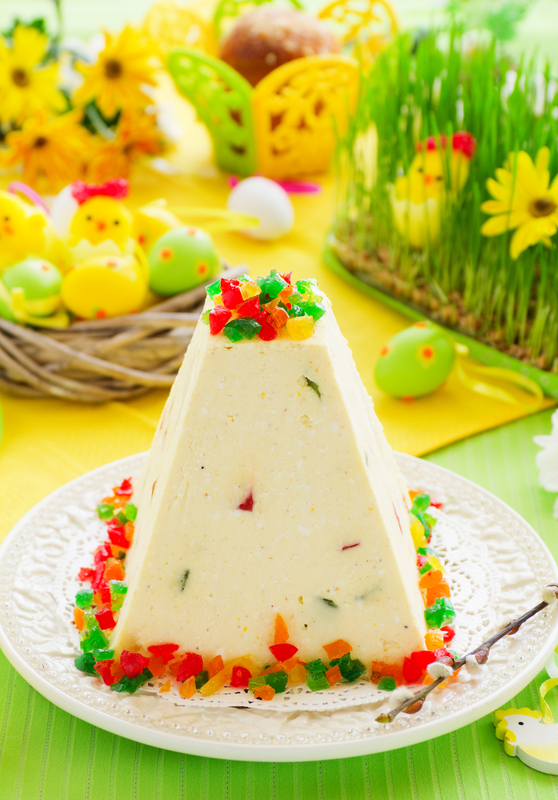
About the Mold — and Why Mine Cracked
Most recipes tell you to use a traditional pyramid-shaped wooden mold. They write it like you have one in your cupboard already. I didn’t.
I used a clean terracotta flowerpot — the small drainage hole at the bottom is actually useful for letting liquid escape during chilling. You line it with dampened cheesecloth, let the edges hang over the sides, and press the mixture in. It works. The shape is slightly less elegant, but nobody is measuring.
The crack happened on my second attempt when I unmolded it too quickly. I inverted the pot onto a plate and tugged at the cheesecloth before the structure had really settled — there was still some give in the mixture, and the top edge split. Horizontally. Right across the middle where I’d been slightly rushed.
I served it with the split facing the back. Nobody noticed, or nobody said anything.
Twelve hours is a minimum, and I’ve found sixteen is better. The mixture needs that time to firm up past the point where it just holds its shape — it needs to actually feel dense when you press on the outside of the cheesecloth. If there’s still movement, it’s not ready.
The cheesecloth should be damp when you line the mold, not dripping. Dry cloth pulls too hard when you peel it away and takes chunks with it.
The Cardamom and the Saffron Question
I thought about skipping the saffron — actually no, I added it on the third attempt and I’m glad I did. It doesn’t make the paskha taste like saffron exactly; it turns the interior this very faint yellow-gold that looks intentional in a way plain white doesn’t.
Dissolve a pinch in a teaspoon of warm water first and add the liquid. Adding dry saffron threads straight into the mixture does nothing useful.
Cardamom is not optional, even though the recipe lists it as a regular ingredient and doesn’t make a fuss about it. Without it, the paskha tastes sweet and flat. With it, there’s something slightly floral and slightly sharp underneath the butter and vanilla that keeps it from being cloying.
Half a teaspoon is enough. More than that and it starts to compete.
What the Fruit Is Actually Doing
The distribution of candied fruit matters more than most recipes acknowledge. If you fold it in lazily, you get clusters — three raisins in one bite, nothing in the next. You want to fold slowly, turning the mixture over itself rather than stirring, and stop the moment everything looks roughly even.
Overmixing at this stage makes the texture suffer. The mixture starts to look slightly wet and loose — it’ll still set, but the final texture is less dense.
Candied citron is hard to find depending on where you are. I’ve used a mix of extra candied orange peel and a small amount of candied lemon peel as a substitute, and it was fine. The flavor profile shifted slightly toward citrus-forward, which I didn’t mind.
The almonds should be sliced thin, not chopped. Thick pieces interrupt the texture in a way that doesn’t feel intentional. Thin slices just become part of it.
Do the fruit and nuts end up evenly distributed in yours, or do they always migrate to one side? I genuinely don’t know if that’s a technique issue or a physics issue.
The Part I Still Find Slightly Tedious
The egg yolks go in one at a time, and you mix well between each one. This is not the kind of instruction you can rush. I’ve tried.
The butter and sugar need to be genuinely light before the yolks go in — pale, almost whitish, noticeably increased in volume. That takes 3 to 4 minutes with a hand mixer on medium-high. Not 90 seconds of halfhearted mixing.
Under-creamed butter produces a denser, slightly greasy base that doesn’t fully absorb the cottage cheese. It still tastes fine. The texture is just less refined.
The cottage cheese folds in last — gently, not beaten in. The mixture will look slightly curdled at first. Keep folding. It smooths out after about thirty seconds of patient turning.
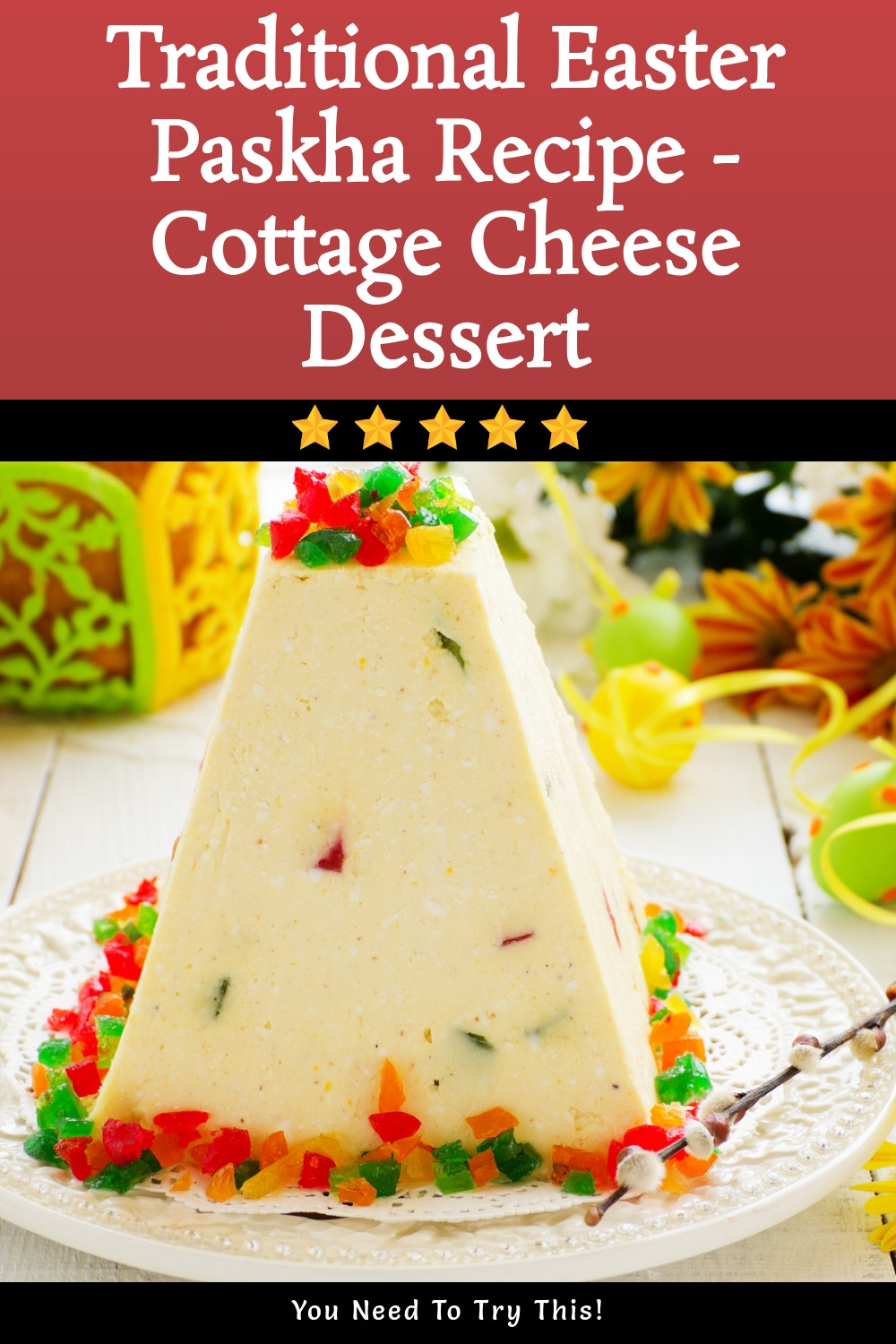
After It Unmolds
Cold. Completely cold. Don’t let it sit out while you arrange the decoration table first.
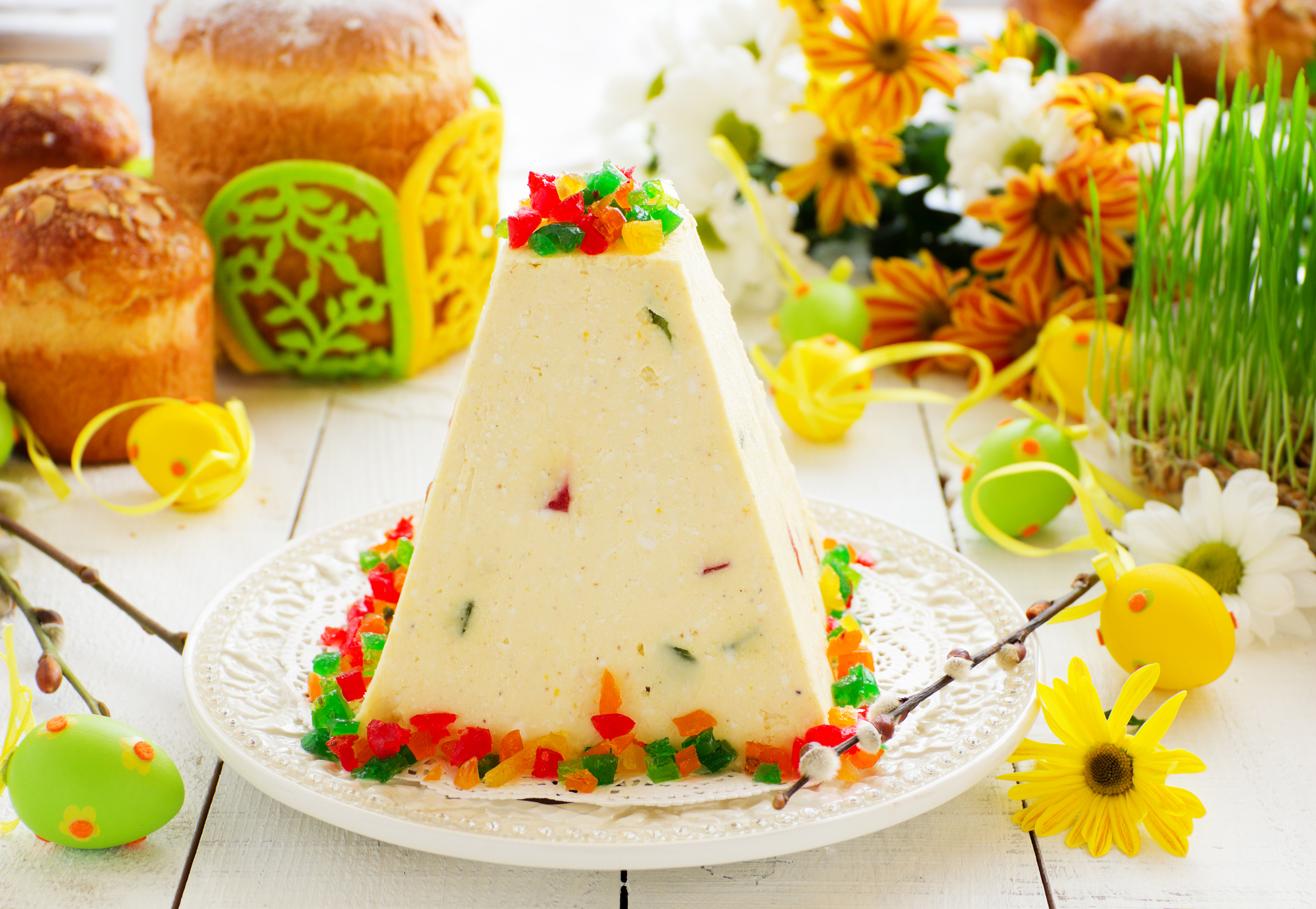
The candied fruit decoration on top is where you can take your time — a few whole pieces of candied cherry, some orange peel curled along the edges. It doesn’t need to be elaborate. It just needs to look like someone thought about it for thirty seconds.
Oksana told me her grandmother always pressed a small cross into the top before the fruit went on. I’ve done that twice now. It takes about ten seconds and the paskha looks noticeably more like itself.
Serve it cold, in slices — thin ones, because it’s rich in a way that creeps up on you. I’ve made worse decisions than going back for a second slice, but the first time I did, I regretted it by the time dessert was fully finished.
—How to Make It, Step by Step
Step 1: Place your cottage cheese in a fine mesh sieve set over a bowl. Using the back of a large spoon, press firmly in small batches until all of it has passed through. Scrape the underside of the sieve periodically — the smoothest material collects there. This step takes longer than you expect, about 30 to 40 minutes if you’re being thorough. (Don’t skip or reduce this step — grainy cottage cheese ruins the final texture no matter what you do afterward.)
Step 2: Beat the softened butter and powdered sugar together with a hand mixer on medium-high until the mixture turns pale and noticeably fluffy. This takes 3 to 4 minutes — you’re looking for a real change in volume, not just combined. Under-mixing here affects the entire base.
Step 3: Add the egg yolks one at a time, mixing well after each one. The mixture may look slightly broken between additions. Keep going — it comes back together as each yolk incorporates. Add the vanilla extract and mix briefly to combine.
Step 4: If you’re using saffron, dissolve a pinch in one teaspoon of warm water first. Then add the saffron water along with the cardamom to the butter mixture. Fold in the strained cottage cheese slowly, turning the mixture over itself rather than stirring. It will look rough at first — keep folding for about 30 seconds and it smooths out. I actually found this part oddly satisfying once I stopped worrying about it.
Step 5: Add the chopped candied fruits, orange peel, raisins, sliced almonds, and candied citron. Fold slowly until the fruit is roughly evenly distributed. Stop as soon as it looks even — overmixing here makes the texture wetter than you want it.
Step 6: Dampen your cheesecloth and use it to line your mold — a traditional pyramid mold if you have one, or a clean terracotta flowerpot with a drainage hole. Let the cheesecloth edges hang well over the sides. Press the mixture into the mold firmly to remove air pockets, pressing in layers rather than all at once. Fold the overhanging cheesecloth over the top.
Step 7: Set the mold on a plate to catch liquid drainage and refrigerate for at least 12 hours. Sixteen hours produces a noticeably firmer result. The outside of the cheesecloth should feel solid and hold its shape under light pressure before you unmold it. Did yours firm up evenly, or did one side stay softer? Share below!
Step 8: To unmold, invert carefully onto a chilled serving platter. Hold the mold and plate together firmly, then slowly lift the mold away. Peel the cheesecloth back gently and in one continuous motion — slow and steady, no tugging. Decorate the top with whole candied fruits and serve cold.
Ways to Change It Up
Try this: Swap the raisins for dried sour cherries and add a teaspoon of dark rum to the mixture. The slight tartness and depth cut through the richness in a way plain raisins don’t.
Try this: Replace the cardamom with a half teaspoon of cinnamon and add a quarter teaspoon of finely grated lemon zest. It shifts the flavor toward something warmer and more straightforwardly familiar — less traditional but genuinely good.
Try this: Use cream cheese blended with the strained cottage cheese in a 1:3 ratio for a denser, richer texture. The final result holds its shape more reliably and has a slightly sharper dairy flavor underneath the sweetness.
Which would you go for? Drop it in the comments.
How to Serve It
Slice it thin and serve alongside kulich — the tall, cylindrical Russian Easter bread. The bread is slightly sweet and the paskha is very sweet, so the pairing works better than it sounds because the bread absorbs some of the richness.
Serve with black tea, unsweetened. The contrast matters. Serving it with anything already sweet turns the whole plate cloying.
On a platter with fresh fruit — particularly sliced strawberries or halved grapes — the acidity does real work. It’s not a garnish, it’s functional.
What would you pair it with?
—Storing It Without Ruining It
Paskha keeps in the refrigerator for about 4 days, covered loosely with plastic wrap. Don’t press the wrap directly against the surface — it pulls the decoration and can leave indentations in the soft top layer.
Freezing is technically possible but I don’t recommend it for this one. The cottage cheese texture changes when frozen and thawed — it becomes slightly grainy in a way that reminds you it was frozen. Serve it fresh or don’t freeze it.
If you have leftover slices — unlikely, but possible — store them flat on a plate covered with an inverted bowl rather than stacking. Stacking compresses the texture and the slices fuse together slightly in a way that’s annoying to undo.
There’s no useful reheating instruction here. This dessert is meant to be cold. If someone brings it to room temperature on purpose I genuinely don’t know what to tell you.
Have you ever saved leftovers like this? Tell me below!
Mistakes I Made So You Don’t Have To
I once skipped the straining step entirely because I’d found a “smooth” cottage cheese at the store and assumed it was equivalent. It wasn’t. The texture was noticeably grainier and there were small wet pockets throughout the finished paskha where liquid had pooled during chilling.
Using dry cheesecloth to line the mold. The cloth stuck to the outside layer of the paskha when I tried to peel it away and took the surface with it — not the whole thing, but enough to leave patches that I tried to cover with extra fruit and mostly failed at disguising.
Adding all four egg yolks at once into the butter mixture to save time. The mixture separated completely and looked like pale scrambled eggs floating in liquid. I kept mixing for another two minutes and it almost came back together — but the final texture had a slightly uneven, slightly greasy quality that wasn’t there in the batches where I’d been patient.
Did something like this happen to you?
Questions That Actually Come Up
Can I make this without a special mold?
A clean terracotta flowerpot with a drainage hole works well — about a 6-inch diameter is close to the traditional size. The shape is slightly more cylindrical than pyramidal but the structure and drainage function the same way. I’ve used this method three times now with no problems.
Is it safe to eat with raw egg yolks in it?
It depends on your comfort level and where you source your eggs. I use pasteurized eggs when I make this. And I’ve made it without pasteurized eggs too, without incident — but that’s a personal decision, not a recommendation. About 12 hours of refrigeration doesn’t cook anything.
Can I reduce the sugar?
You can drop it by about 30 grams without the texture changing noticeably. More than that and the consistency shifts — the sugar isn’t just sweetness here, it plays a structural role in how the butter mixture holds together. I tried reducing it by half once. Too loose.
What if I can’t find candied citron?
Extra candied orange peel with a small amount of candied lemon peel covers it adequately. The flavor is slightly more orange-forward but it’s not a significant departure. Candied citron has a particular floral bitterness that’s genuinely nice if you can find it — but it’s not irreplaceable.
How do I know when it’s ready to unmold?
Press gently on the outside of the cheesecloth. There should be no movement or give — it should feel solid and hold its shape under light pressure. If it still shifts, give it another 2 hours. Rushing unmolding is how cracks happen. I know from experience.
Can I make it a few days ahead?
About 2 days ahead is the sweet spot — it stays firm and the flavors settle into each other nicely by day two. Beyond 4 days in the fridge, the texture starts to suffer slightly and the fruit near the surface begins to look dull. But 48 hours of advance prep is genuinely fine, arguably better than same-day.
Which answer helped you most?
Where I Landed With This One
Four attempts in, I still find the straining step meditative in an irritating way — it takes long enough that I think about stopping, and then it’s suddenly done and I’m glad I didn’t.
The paskha I made most recently was the best one. Better saffron color, better texture, more even fruit distribution. But I also added an extra tablespoon of candied orange peel on impulse and now I don’t know if that’s part of why it was better, or if it just was better.
Will you make this soon?
Oksana came over when I’d made the third version and said it tasted “close.” I’ve been thinking about that word ever since. Close to what, exactly — I didn’t ask.
Fun fact: Cottage cheese has been a staple in Eastern European cooking for centuries — in Russia, the fresh curd variety called “tvorog” is firmer and drier than most Western cottage cheeses, which is precisely why traditional paskha recipes call for thorough straining before use.
I’ll make it again in the spring. I’ll probably still second-guess the saffron.
Happy cooking! —Marina Caldwell
Traditional Easter Paskha Cottage Cheese Delight
Ingredients
- 2 lbs (900g) cottage cheese, strained
- 1 cup (200g) butter, softened
- 1 cup (200g) powdered sugar
- 4 egg yolks
- 1 teaspoon vanilla extract
- 1/2 cup (100g) candied fruits, chopped
- 1/4 cup (50g) candied orange peel, chopped
- 1/4 cup (50g) raisins
- 1/4 cup (50g) blanched almonds, sliced
- 2 tablespoons candied citron, chopped
- 1/2 teaspoon cardamom, ground
- Pinch of saffron (optional)
- Whole candied fruits for decoration
Instructions
- 1Press cottage cheese through a fine sieve to remove excess moisture and achieve a smooth texture.
- 2Cream softened butter with powdered sugar until light and fluffy, about 3-4 minutes.
- 3Beat in egg yolks one at a time, mixing well after each addition.
- 4Add vanilla extract and mix until combined.
- 5Fold in the strained cottage cheese gently until well incorporated.
- 6Mix in cardamom and saffron if using.
- 7Fold in chopped candied fruits, orange peel, raisins, almonds, and citron until evenly distributed.
- 8Line a traditional paskha mold (pyramid-shaped wooden mold) with cheesecloth, or use a clean flowerpot.
- 9Transfer the mixture into the lined mold, pressing gently to remove air pockets.
- 10Cover with overhanging cheesecloth and place on a plate to catch drips.
- 11Refrigerate for at least 12 hours or overnight.
- 12Unmold carefully onto a serving platter by inverting and gently lifting away the mold.
- 13Remove cheesecloth carefully.
- 14Decorate the top with additional whole candied fruits arranged in a decorative pattern.
- 15Serve chilled as part of the Easter feast alongside kulich bread.
Notes
See full recipe for nutritional information.