The Zucchini Situation That Started This
My neighbor dropped off a bag of zucchini in late August — the kind the size of a small baseball bat — and I had maybe four days to do something with it.
I’d made zucchini bread before, but always from whatever recipe I grabbed first. This time I slowed down and actually worked it out the way I wanted it.
Why Two Loaves and Not Just One
This recipe makes two 8×4-inch loaves on purpose. One for now, one to wrap and stash in the freezer.
I’ve brought the second loaf to work twice. Both times it was gone before noon. That’s not me bragging — that’s just a sign the cinnamon-to-walnut ratio is doing something right.
The One Thing That Actually Changes the Texture
Squeeze the zucchini. I know everyone says this, but I didn’t believe it until I skipped it once and ended up with a loaf that was dense and almost gummy in the middle.
Wrap the grated zucchini in a clean kitchen towel and wring it out over the sink. You’ll be surprised how much liquid comes out — sometimes nearly a quarter cup from two small zucchini.
Quick tip: Squeeze the zucchini in two rounds, not one. Twist, release, then twist again. The second round always pulls more moisture out than you’d expect.
What the Batter Tells You
Something I only noticed after making this three or four times: the batter looks almost too thick when you first start folding. Don’t panic.
As the zucchini releases a little moisture into the dry ingredients during folding, it loosens up. Stop the moment no dry streaks remain — not a fold later.
The Time I Overbaked It
First attempt: I skipped the foil tent and checked the loaves at 55 minutes. The tops were dark. Like, really dark.
Inside was fine, but the crust had that slightly bitter edge that makes you wince on the first bite. Now I tent loosely with foil right at 30 minutes, every single time without question.
Have you ever pulled something from the oven that looked fine on top but tasted like a near-miss?
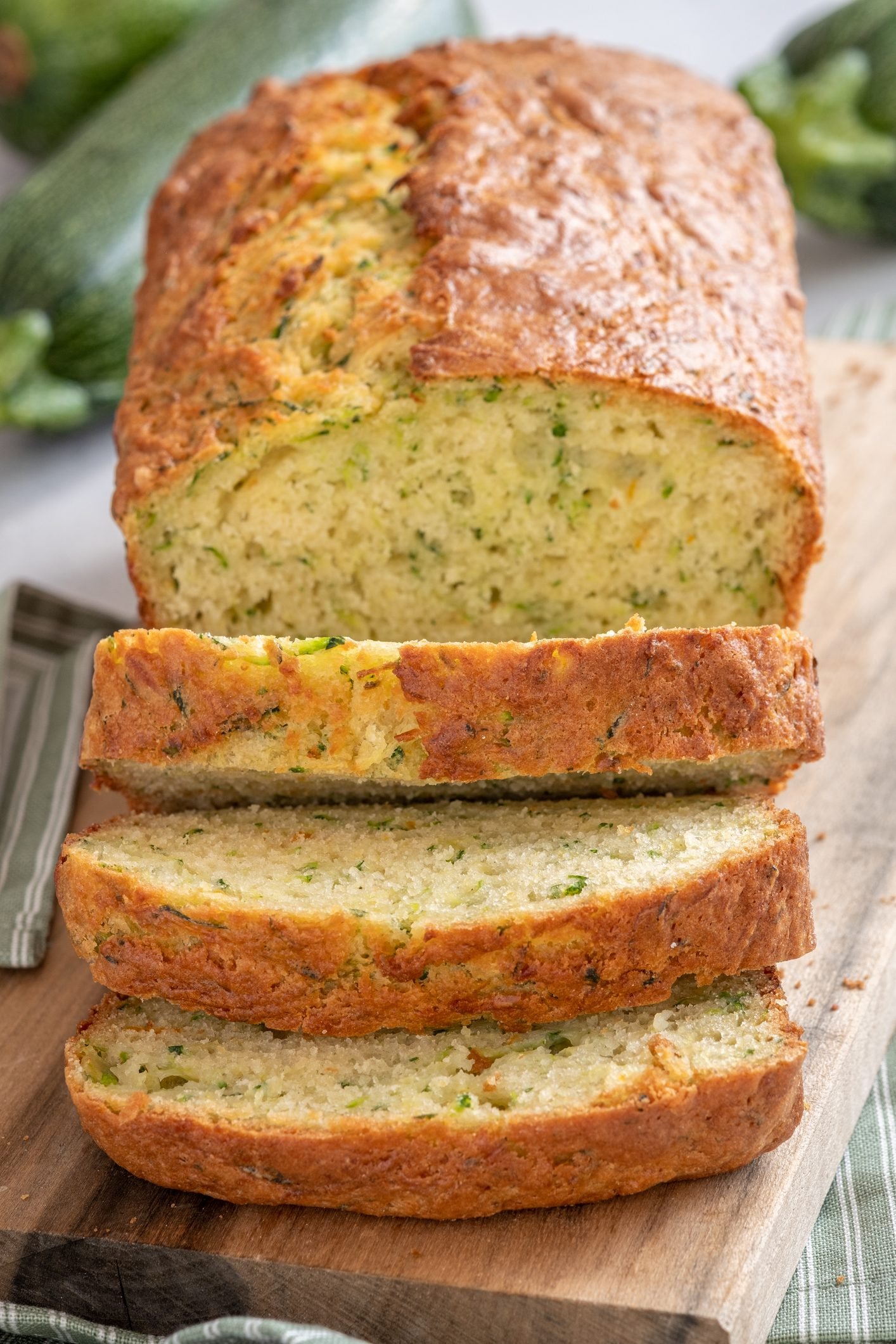
A Loaf Worth Slicing Into
This one smells like fall even in the middle of summer. The cinnamon is real — a full tablespoon — and the walnuts add that slight bitterness that keeps the sweetness from going flat.
It’s the kind of bread you slice at room temperature, eat standing at the counter, and then cut another piece before you’ve fully registered eating the first one.
My mom asked for the recipe after trying a slice and said it reminded her of something her aunt used to make. That landed.
—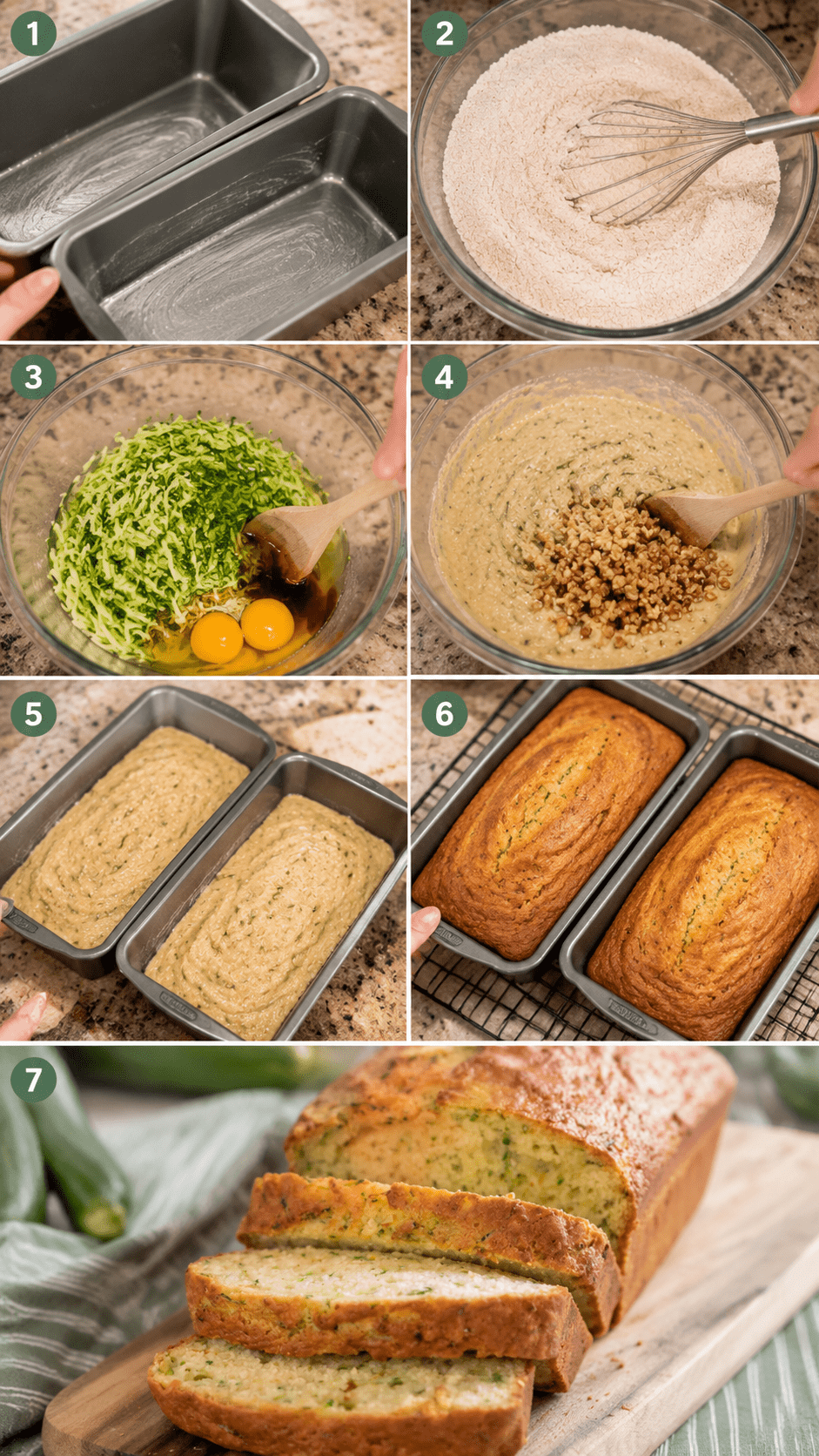
Step 1: Heat your oven to 350°F and grease two 8×4-inch loaf pans thoroughly — get the corners. I use butter and a paper towel and run it along every edge. Don’t rush this part, because a stuck loaf is a heartbreaking loaf.
Step 2: In a medium bowl, whisk together 2 cups all-purpose flour, 1½ cups granulated sugar, 1½ teaspoons baking powder, ½ teaspoon baking soda, 1 tablespoon cinnamon, and 1 teaspoon salt. Whisk until the cinnamon is evenly distributed throughout — no rust-colored clumps hiding at the bottom.
Step 3: In a large bowl, stir together 2 cups freshly grated zucchini (squeezed dry), ¾ cup vegetable oil, 3 large eggs, and 2 teaspoons vanilla extract. (The mixture will look kind of unappealing at this stage — slightly oily and green-flecked — but trust it.) Stir until fully combined.
Step 4: Pour the dry mixture and 1½ cups chopped walnuts into the zucchini bowl. Fold gently with a rubber spatula, and I mean gently — this is where I used to get heavy-handed and then wonder why my loaf was chewy. Stop folding the instant no dry white streaks remain.
Step 5: Divide the batter evenly between your two prepared pans. Slide them into the oven and bake for 50 to 60 minutes. At the 30-minute mark, loosely tent both pans with foil — just lay a sheet lightly over the top, no need to crimp the edges.
Step 6: A toothpick inserted into the center should come out clean or with just a dry crumb or two. Let the loaves rest in the pans for 15 minutes before turning them out onto a wire rack. Slicing before they’re fully cool will leave you with a gummy center — I learned this the impatient way.
What mix-in would you add to make this your own? Share below!
Ways to Change It Up
Try this: Swap the walnuts for dark chocolate chips and reduce the sugar by two tablespoons. The chocolate plays really well against the cinnamon, and the slight bitterness from the cocoa keeps it from tipping into dessert territory.
Try this: Add a teaspoon of ground ginger and half a teaspoon of nutmeg to the dry mix alongside the cinnamon. It turns the loaf into something that tastes genuinely autumnal — my sister made this version and refused to go back to the original.
Try this: Stir in half a cup of golden raisins along with the walnuts. They plump up while baking and add little pockets of sweetness that hit differently than sugar alone.
Which would you go for? Drop it in the comments.
How to Serve It
Slice it at room temperature and spread a thin layer of salted butter on each piece. The salt cuts through the sweetness in a way that makes you keep going back.
Toast a slice in a dry skillet over medium heat for about two minutes per side until the cut face is golden and slightly crisp — then add a smear of cream cheese. It changes the whole experience.
For something more intentional, serve two slices alongside a strong cup of coffee or black tea in the morning. It holds up well and doesn’t need anything else.
What would you pair it with?
—
Storing It Without Ruining It
At room temperature, wrapped tightly in plastic wrap or sealed in an airtight container, this loaf stays good for about three days. After that, it starts to get a little tacky on the surface.
In the fridge it lasts up to a week, but cold bread has a way of tasting drier than it actually is — pull a slice out and let it sit for ten minutes before eating.
For the freezer: wrap individual slices in plastic wrap, then slide them into a zip bag. They hold for up to three months and thaw in about 20 minutes on the counter. I keep a stash specifically for mornings when there’s no time to think about breakfast.
Have you ever saved leftovers like this? Tell me below!
Mistakes I Made So You Don’t Have To
I once used zucchini I’d grated the night before and left in a bowl uncovered in the fridge. It had gone waterlogged by morning, and even after squeezing, the loaf turned out dense and slightly off in flavor. Grate it fresh, right before you mix.
I overmixed the batter on my second attempt because I was impatient and kept folding past the point where the dry streaks were gone. The loaf came out noticeably chewy — not terrible, but not what I wanted. Light hands, minimal folds.
I also skipped the 15-minute resting period once and flipped the loaves out right away. The bottom crumbled on one and the whole thing lost its shape before I could move it to the rack. Now I set a timer and walk away.
Did something like this happen to you?
Questions I Get About This Loaf
Do I really need to squeeze the zucchini? Yes, and I’d say this more firmly than almost any other step in the recipe. Zucchini holds a surprising amount of water — sometimes close to a quarter cup per two small ones — and if that liquid goes into your batter, the loaf won’t set properly in the center. It’ll bake up dense and slightly gummy no matter how long you leave it in the oven. A kitchen towel twist takes thirty seconds and genuinely changes the result.
Can I use whole wheat flour instead of all-purpose? You can swap in up to half whole wheat flour without noticing much difference in texture. Going full whole wheat will make the loaf noticeably denser and a little earthier in flavor — not bad, just different. If you try it, add an extra tablespoon of oil to compensate for how much more liquid whole wheat flour tends to absorb during baking. I haven’t tested it beyond a 50/50 split, so I can’t speak to anything higher than that.
My loaf sank in the middle — what happened? A few things can cause this. Underbaking is the most common culprit — if the center isn’t fully set when it comes out of the oven, it collapses as it cools. Also check that your baking powder isn’t expired; old leavening doesn’t give the loaf enough lift to hold its structure. Overmixing can also weaken the crumb. Test your baking powder by dropping half a teaspoon into hot water — it should bubble immediately and actively.
Can I make this into muffins instead? Yes, it converts well. Fill a greased or lined muffin tin about two-thirds full and bake at 350°F for roughly 20 to 24 minutes. Start checking at 20 minutes with a toothpick — you want it to come out clean or with just a dry crumb. Skip the foil tent for muffins; the shorter bake time means the tops won’t over-brown before the centers are done. You’ll get about 18 muffins from this batter.
Is the cinnamon amount correct? A tablespoon seems like a lot. It is a lot, and it’s intentional. One teaspoon of cinnamon in a two-loaf batch gets completely lost — you end up with bread that smells like it might have cinnamon in it, maybe. A full tablespoon gives you that warm, present spice note in every bite without tipping into overwhelming territory. If you’re sensitive to cinnamon, start with two teaspoons, taste the batter, and adjust from there.
Can I reduce the sugar? You can bring it down to one cup without the loaf noticing much. Going below that starts to affect moisture and texture, not just sweetness — sugar does more structural work in quick breads than people realize. I tried it at three-quarters cup once and the crumb came out noticeably drier. If you’re watching sweetness, the better move is to reduce to one cup and add an extra quarter teaspoon of vanilla to keep the flavor rounded out.
Which answer helped you most?
Make It, Then Tell Me How It Went
This is one of those recipes I keep coming back to without really planning to. It shows up when there’s too much zucchini, when someone needs a hostess gift, when I want something that smells like the oven was worth turning on.
It’s forgiving in most directions. A little more walnut, a little less sugar, a different spice blend — it handles changes well.
The two-loaf yield is part of why I like it. One now, one later. That’s just sensible baking.
Will you make this soon? If you do, let me know what you changed and how it landed.
Fun fact: Zucchini is technically a fruit — botanically speaking, it develops from the flower of the plant and contains seeds, which is the defining characteristic. Most of us will keep calling it a vegetable anyway, and that’s fine.
Baking Spiced Walnut Zucchini Loaf Two Ways
Description
Spiced Walnut Zucchini Loaf Two Ways
Ingredients
Instructions
- 1. Heat oven to 350°F and thoroughly grease two 8×4-inch loaf pans
- 2. Whisk flour, sugar, baking powder, baking soda, cinnamon, and salt together in a medium bowl until evenly combined
- 3. In a separate large bowl, combine grated zucchini, oil, eggs, and vanilla, stirring until fully incorporated
- 4. Pour dry mixture and walnuts into the zucchini bowl, folding gently until just combined — stop the moment no dry streaks remain
- 5. Evenly distribute batter between both prepared pans and bake 50-60 minutes, loosely tenting with foil at the 30-minute mark to prevent over-browning
- 6. Rest loaves in pans for 15 minutes before transferring to a wire rack to cool completely
Notes
- Protein: 3g
- Fat: 12g
- Carbs: 22g ## NOTES: – Squeeze excess moisture from grated zucchini using a clean kitchen towel for a less dense texture – Overmixing develops gluten and creates a tough, rubbery loaf — fold with a light hand – Bread freezes beautifully for up to 3 months; wrap individual slices for easy grab-and-go portions