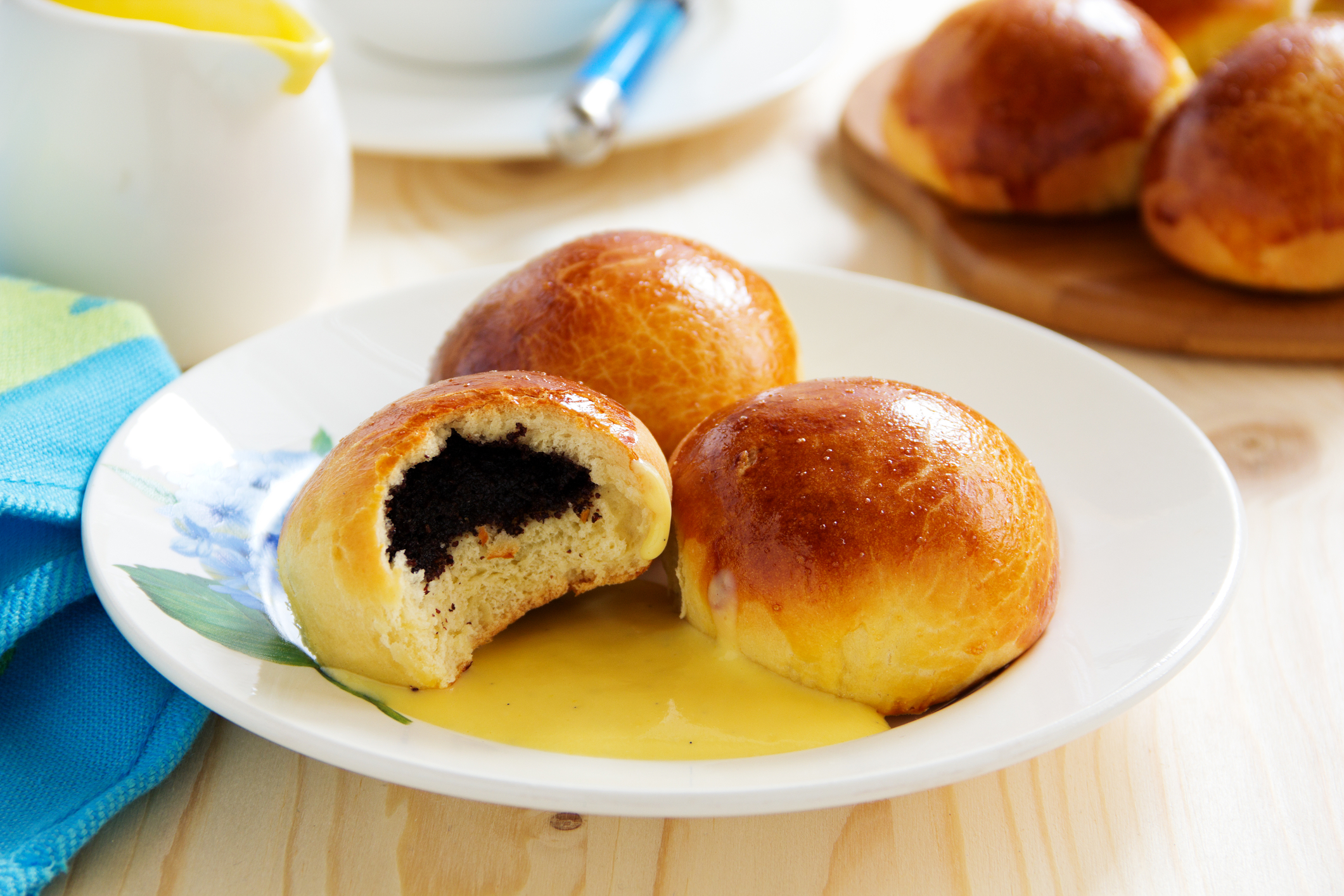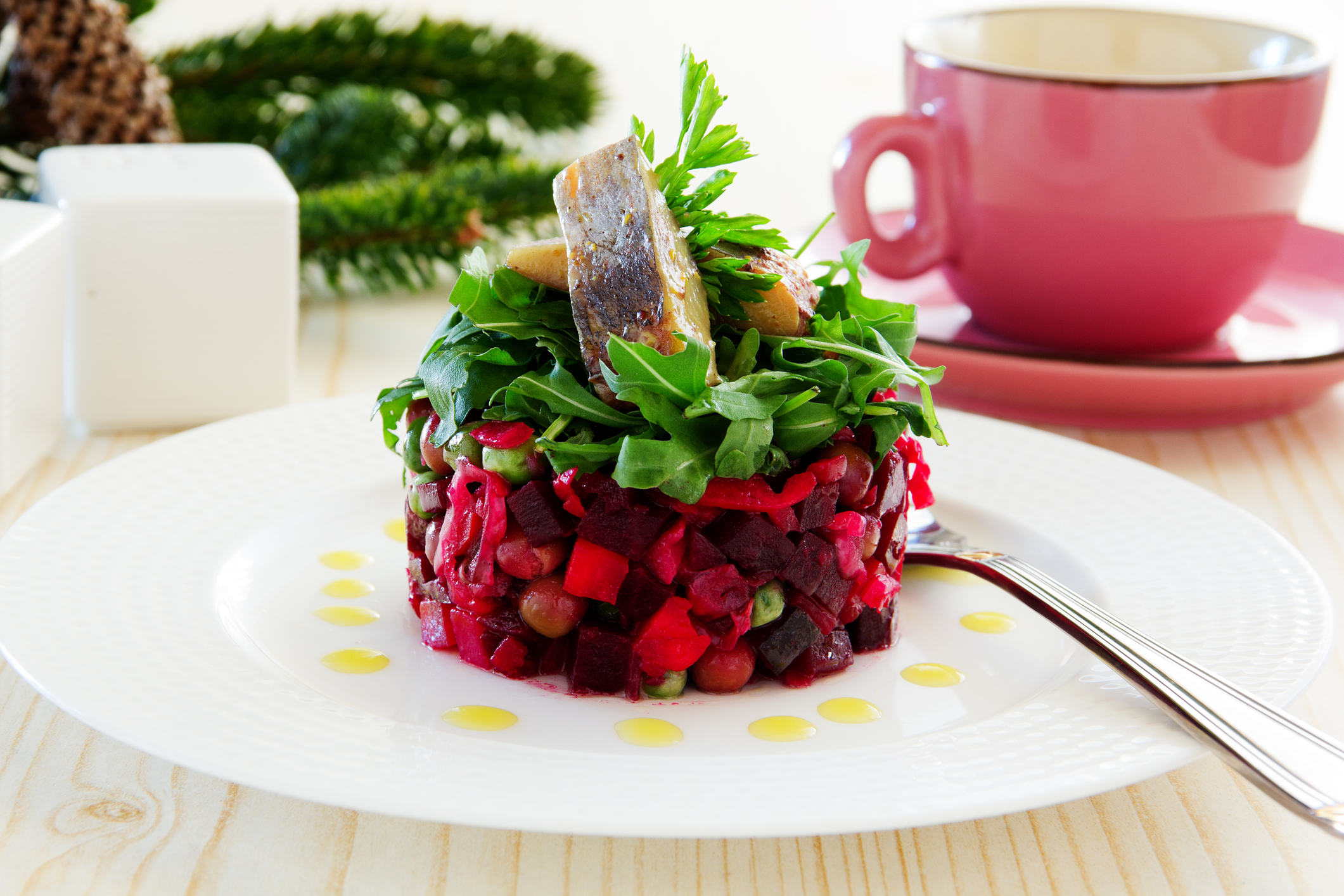
My husband took one bite and didn’t say anything for a full minute.
Then he asked what the pink things were, and I realized I’d never actually explained what I was making.
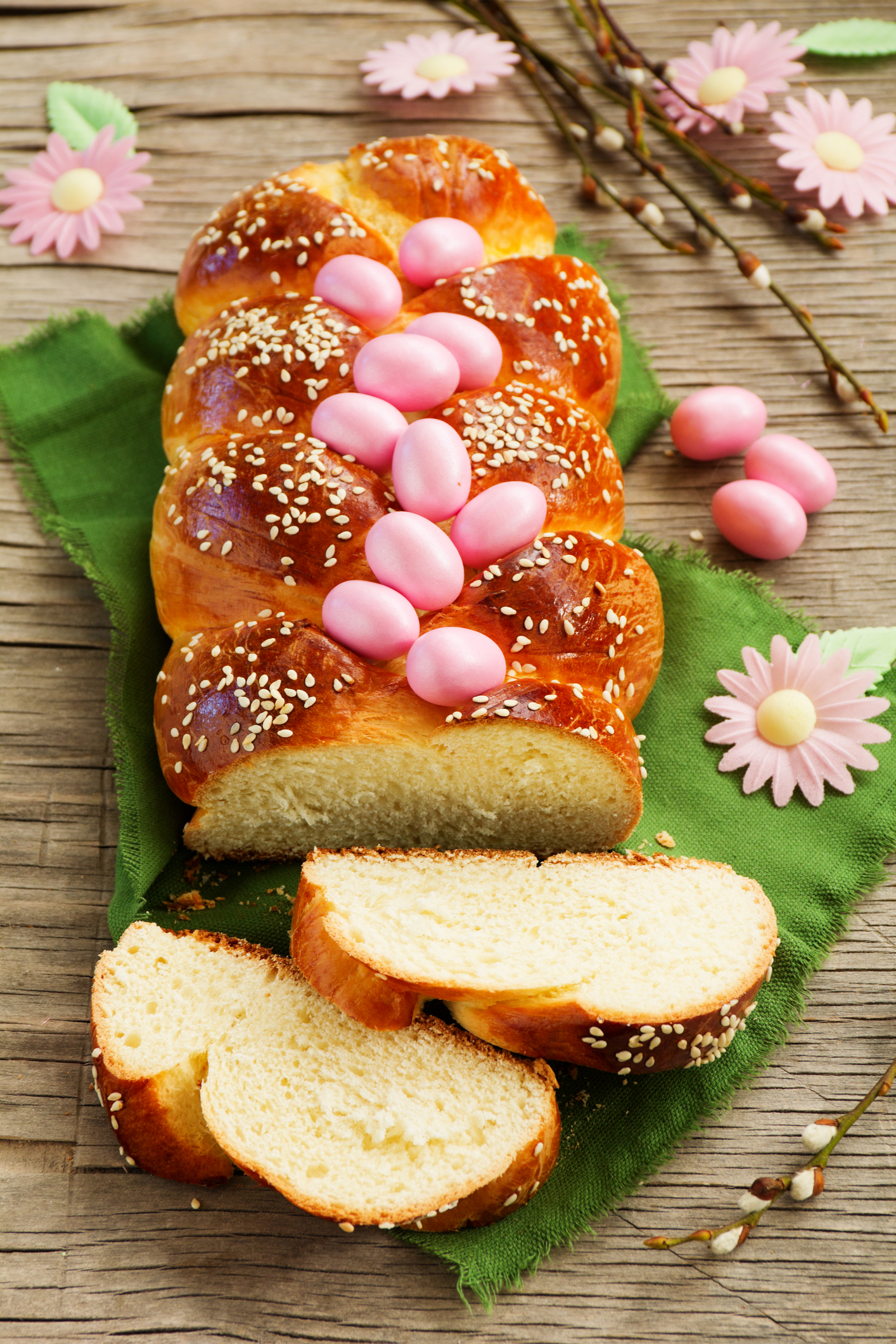
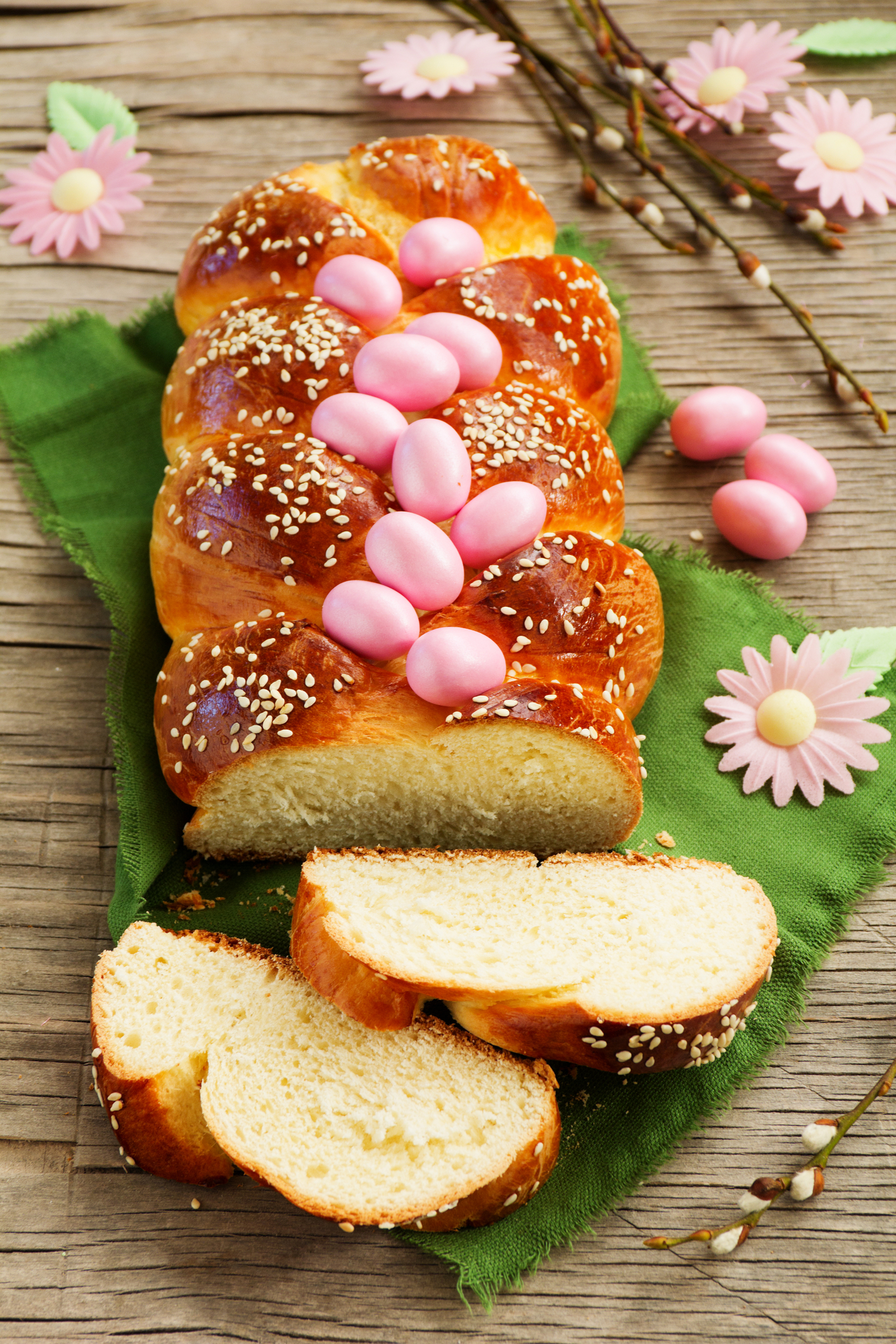
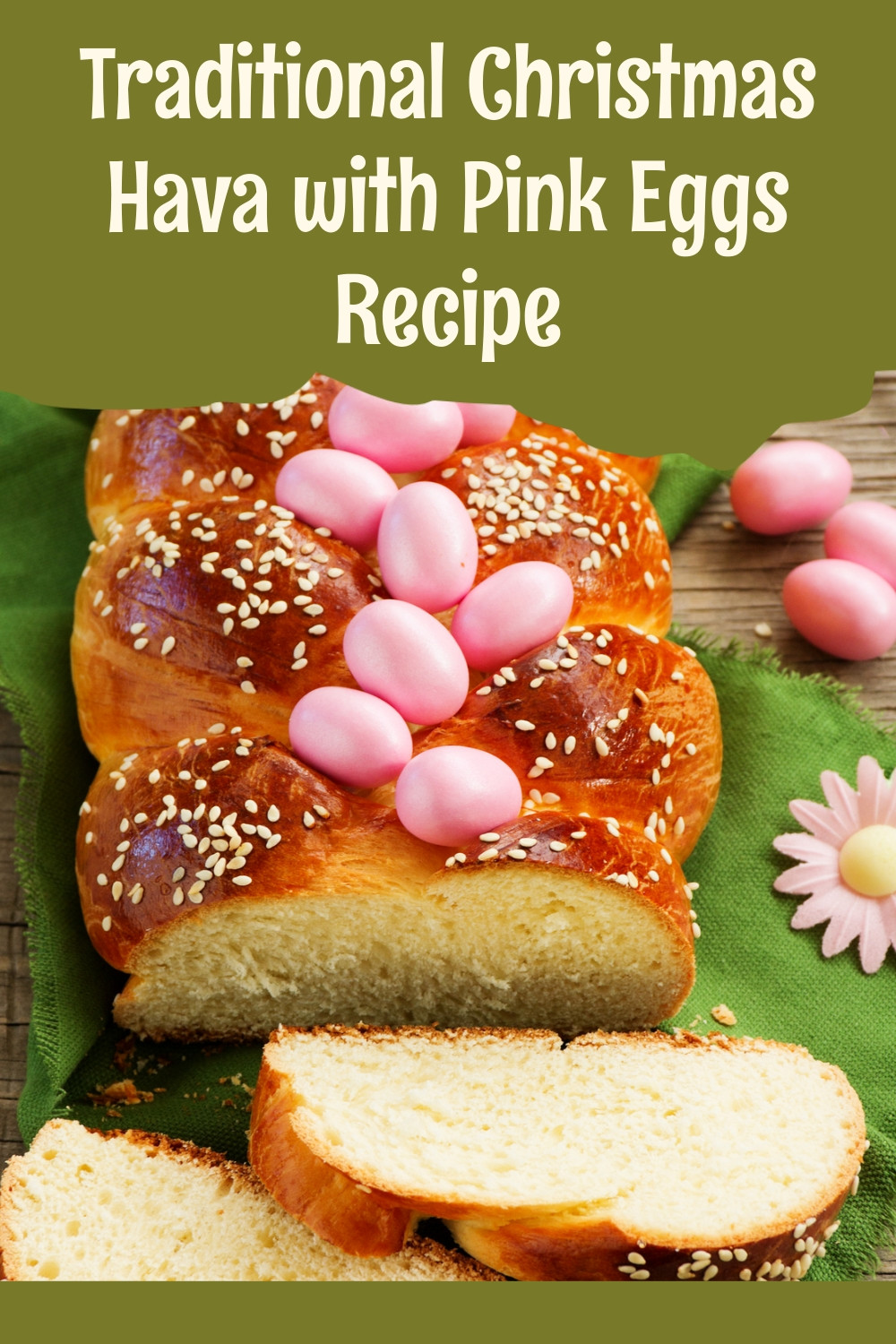
This is a Christmas Hava — a baked dough with hard-boiled eggs pressed into it — and I’d dyed the eggs pink with beetroot juice and rose water because I wanted something that looked different from the version I grew up watching my aunt make in a pan that was slightly too small.
It worked. Mostly.
The dough is saffron-scented and cardamom-forward, which sounds like a lot but bakes down to something quieter than you’d expect. The eggs turn a color that’s somewhere between blush and magenta depending on how long you let them sit in the beetroot mixture. Mine sat about 20 minutes, and they came out closer to dusty rose.
I want to be honest: the first time I made this, the dough was too wet and the eggs sank halfway through baking. Not decorative. Not intentional. Just a problem I didn’t see coming.
Quick tip: Fold the dry ingredients in gently and stop the moment you don’t see flour anymore — overmixing makes the dough spread too thin around the eggs and they’ll sink.
About the saffron.
Most recipes tell you to just add saffron to the batter. That’s not wrong, but it gives you uneven color and almost no flavor. Dissolve it in warm milk for at least 10 minutes — I usually do it first, before I even start creaming the butter.
The milk turns a deep amber. Then yellow. Then a little orange. It smells like something old and good.
I thought about using water instead — actually no, the milk carries the flavor better, and I’ve tested both enough times to stop second-guessing it.
One thing to know: the saffron color fades in the oven. The dough goes from a vivid yellow to a warm golden-brown, and by the time it’s fully baked you’re mostly getting color from the butter and the heat, not the saffron itself. That’s fine. The taste is still there.
The eggs took longer than I expected.
You’re dyeing hard-boiled eggs, not raw ones. The shell absorbs the beetroot and rose water mixture slowly, and if you rush it — less than 15 minutes — you get barely a tint.
I left mine in for 25 minutes once and they went a shade darker than I wanted, but honestly it looked better on the finished dish. The contrast against the golden dough was sharper.
The rose water in the dye mixture is mostly aromatic. It doesn’t change the color, just makes the eggs smell faintly floral when you slice into them. My neighbor Greta thought I’d used some kind of dyed filling. I did not.
You don’t have to use beetroot juice. Red food coloring gets you the same depth of color in about half the time. I prefer beetroot juice because the color is more uneven — which sounds like a flaw but isn’t, on this dish.
Pat the eggs dry before you press them into the dough,
or the moisture transfers and you get a wet ring around each one while it bakes.
I skipped the gold leaf the first time.
I’m going to be blunt: edible gold leaf sounds fussy and unnecessary, and I almost left it out entirely. Don’t. The cocoa powder gives the surface a matte, slightly bitter finish, and the gold leaf breaks that up in a way that nothing else quite does. It’s not about taste. It’s about the ten seconds when you carry it to the table and everyone looks at it before touching it.
The pistachios matter more than I thought they would. They add crunch, yes, but they also add green — and against the pink eggs and golden dough, that color contrast is doing actual work.
I applied the gold leaf with a dry pastry brush, tearing it into irregular pieces first. Trying to lay it flat is a waste of time. It crinkles. Let it.
Dusting with cocoa: do it through a fine sieve, from at least 8 inches above the dish. Too close and you get patches. Too much and the bitterness competes with the cardamom. A light, even layer is all you need — maybe half a tablespoon if the dish is in a 9×13 pan.
The bake itself is mostly uneventful.
350°F. 40 to 45 minutes. Check it at 38 — my oven runs slightly hot and it was done at 41 minutes with the edges just starting to pull away from the sides.
The toothpick test works here. Insert it between two eggs, not under one. The dough directly beneath an egg stays wetter longer and will give you a false reading.
Don’t cut it immediately. I know. Wait the full 10 minutes.
The dough needs that time to set up around the eggs, otherwise the slices pull apart instead of holding their shape. I cut into it at 7 minutes once because someone was impatient, and the middle section crumbled. I served it anyway. It tasted fine. It did not look fine.
The cardamom smell that comes out of the oven is genuinely one of the better smells I’ve gotten from a bake. Not subtle. Not faint. It fills the room in about 20 minutes.
Arrange the eggs before baking — not after, not halfway through. Press them in gently once the dough is in the pan and smoothed. They should sit on top, not buried. About two-thirds of the egg should be above the surface of the dough.
Step-by-step instructions.
Step 1: Preheat your oven to 350°F (175°C) and line a baking tray or dish with parchment paper. Grease the sides. Start dissolving the saffron threads in 2 tablespoons of warm milk right now — you want at least 10 minutes of steep time before it goes into the batter.
Step 2: Combine the beetroot juice or red food coloring with the rose water in a shallow bowl. Submerge the hard-boiled eggs and set a timer for 20 minutes minimum. Pat them dry when you’re ready to use them. (Don’t skip the pat-dry — wet eggs make a soggy ring in the dough.)
Step 3: Cream butter and sugar together until the mixture is pale and noticeably increased in volume, about 3 to 4 minutes. This is not the step to rush. If the butter isn’t fully softened, the sugar won’t incorporate properly and the dough texture will be off.
Step 4: Beat in the eggs one at a time, waiting until each one is fully absorbed before adding the next. Add the vanilla and the saffron milk. The mixture may look slightly curdled at this stage. Keep going — it comes together when the flour goes in.
Step 5: Whisk flour, baking powder, salt, and cardamom together in a separate bowl. Add to the wet mixture and fold — do not beat — until just combined. The moment you stop seeing dry flour, stop mixing. I once kept going for another 30 seconds and regretted it; the dough turned slightly gummy after baking.
Step 6: Transfer the dough to your prepared dish and smooth the surface with a spatula or damp hands. Press the pink eggs into the dough in whatever pattern you like — evenly spaced works, but a slightly offset arrangement looks more interesting when you cut it. Did your eggs hold their position while baking, or did they shift? Share below!
Step 7: Bake for 40 to 45 minutes. The surface should be deep golden and pulling slightly from the edges. Test between eggs with a toothpick. Rest for 10 full minutes before cutting.
Step 8: Dust with cocoa powder through a fine sieve. Scatter chopped pistachios. Add gold leaf pieces torn irregularly and pressed lightly onto the surface. Serve warm or at room temperature.
Ways to Change It Up
Try this: Replace the beetroot dye with turmeric dissolved in water for yellow eggs — the contrast is less dramatic but feels more cohesive with the saffron dough.
Try this: Add 2 tablespoons of orange zest to the dough along with the cardamom. It sharpens the flavor and cuts through the richness of the butter more than you’d expect.
Try this: Swap the cocoa powder dusting for ground cinnamon mixed with a pinch of black pepper. It’s warmer, slightly spicier, and pairs well if you’re serving this alongside something savory.
Which would you go for? Drop it in the comments.
How to Serve It
This cuts well into squares or wedges. Each piece should have at least a slice of pink egg in it — plan your cuts around the egg positions before you start.
Serve it alongside strong black tea or cardamom-spiced coffee. The bitterness of both cuts through the sweetness of the dough without overwhelming the rose water in the eggs.
It also works at room temperature as part of a larger spread — it holds its shape better once fully cooled and doesn’t need reheating to taste good.
What would you pair it with?
Storing It Without Ruining It
Cover it tightly and refrigerate. It keeps well for about 3 days, though the dough firms up significantly after the first day. Not bad — just denser.
I don’t recommend freezing the whole thing once it’s assembled. The eggs become rubbery after thawing and the cocoa dusting completely disappears. If you want to freeze components, freeze the unbaked dough without the eggs, then thaw, press in fresh-dyed eggs, and bake.
To reheat, wrap individual slices in foil and warm at 300°F for about 10 minutes. The microwave works but softens the crust in a way that I find annoying.
Add the pistachios and any remaining gold leaf after reheating, not before. They don’t survive the oven a second time.
Have you ever saved leftovers like this? Tell me below!
Mistakes I Made So You Don’t Have To
I once used cold butter straight from the fridge because I was impatient and thought a few extra minutes of creaming would compensate. It didn’t. The sugar never fully dissolved and there were tiny gritty pockets in the finished dough.
The dye mixture got on my countertop. It stayed there for two days. Beetroot juice is not casual — wipe it immediately or it sets into a stain that requires actual effort.
I placed the eggs too close together on my first attempt and when the dough puffed up during baking, two of them merged into one irregular blob in the center of the dish. They tasted fine. The slices looked strange. Space them at least 2 inches apart.
Did something like this happen to you?
Questions I Actually Got Asked
Can I use salted butter instead of unsalted? You can, but reduce the added salt to a pinch — maybe 1/8 teaspoon. I tried it once with full salt and the cardamom flavor got lost behind the saltiness. And the balance in this recipe is already fairly precise.
How long should the eggs soak in the dye? About 20 minutes for a soft pink. Up to 35 minutes for something deeper. But it depends on the beetroot juice concentration — fresh-pressed juice is more intense than store-bought. Start checking at 15 minutes.
Does it matter what size pan I use? Yes. A 9×13 gives you a thinner dough layer and crispier edges. An 8×8 gives you a taller, softer center. Both work. The bake time can shift by up to 8 minutes depending on which you use — watch the color, not just the clock.
Can I make this a day ahead? Bake it the day before, store covered in the fridge, and add the cocoa, pistachios, and gold leaf the day of. The dough is actually easier to slice cleanly when it’s had overnight rest time.
Is the rose water flavor noticeable in the finished dish? Faintly. It’s mostly in the eggs themselves. If you don’t like floral flavors, use plain water for the dye — you lose nothing but the scent. But I’d try it at least once before deciding it’s not for you.
Can I skip the saffron? Technically yes. The dough still bakes. But without the saffron you have a fairly plain cardamom butter cake, and it doesn’t carry the same weight on the table. It depends on whether the cost feels worth it to you — for this recipe, I think it does.
Which answer helped you most?
A few things before you start.
This is not a recipe you make in 20 minutes. The prep is 30 minutes if you’re organized — longer if you’re also managing the egg dyeing at the same time as the batter. Plan accordingly.
The cardamom and saffron together make this smell like something ceremonial, which is appropriate given the name. It’s a dish that announces itself.
Will you make this soon?
I’m still not sure I’ve landed on the exact right egg spacing. Six eggs in a standard dish can feel either balanced or crowded depending on the pan shape, and I’ve made this four times now with slightly different arrangements each time.
My husband has stopped asking what the pink things are. That’s either a good sign or he’s just given up on understanding what comes out of this kitchen.
Fun fact: Saffron is the world’s most expensive spice by weight — it takes roughly 75,000 saffron flowers to produce a single pound, and each flower must be hand-harvested. The threads you dissolve in warm milk for this recipe cost more per gram than gold.
The gold leaf is decorative. The saffron is the actual gold in this dish — and I keep buying it in small quantities, which means I’m always slightly unsure if I have enough before I start.
Happy cooking! —Marina Caldwell
Pink Eggs Reinvent a Classic Christmas Hava
Ingredients
- 2 cups all-purpose flour
- 1 cup unsalted butter, softened
- 3/4 cup granulated sugar
- 3 large eggs
- 1 teaspoon vanilla extract
- 1 teaspoon baking powder
- 1/4 teaspoon salt
- 1/2 teaspoon ground cardamom
- 1/4 teaspoon saffron threads, dissolved in 2 tablespoons warm milk
- 6 hard-boiled eggs
- 2 tablespoons rose water
- 1 tablespoon beetroot juice or red food coloring
- 1 tablespoon cocoa powder for dusting
- Chopped pistachios for garnish
- Edible gold leaf for decoration
Instructions
- 1Preheat oven to 350°F (175°C). Line a baking tray with parchment paper.
- 2Cream together softened butter and sugar until light and fluffy, about 3-4 minutes.
- 3Beat in eggs one at a time, then add vanilla extract and saffron milk mixture.
- 4In a separate bowl, whisk together flour, baking powder, salt, and ground cardamom.
- 5Fold dry ingredients into wet ingredients until just combined.
- 6Prepare pink eggs by coating hard-boiled eggs with a mixture of rose water and beetroot juice or food coloring.
- 7Transfer dough to a greased baking dish and smooth the surface.
- 8Arrange pink-colored hard-boiled eggs on top of the dough in a decorative pattern.
- 9Bake for 40-45 minutes until golden brown and a toothpick inserted comes out clean.
- 10Remove from oven and let cool for 10 minutes in the pan.
- 11Dust with cocoa powder and sprinkle with chopped pistachios and edible gold leaf.
- 12Cut into portions and serve warm or at room temperature.
Notes
See full recipe for nutritional information.