A Bark That Tastes Like My Childhood Christmas
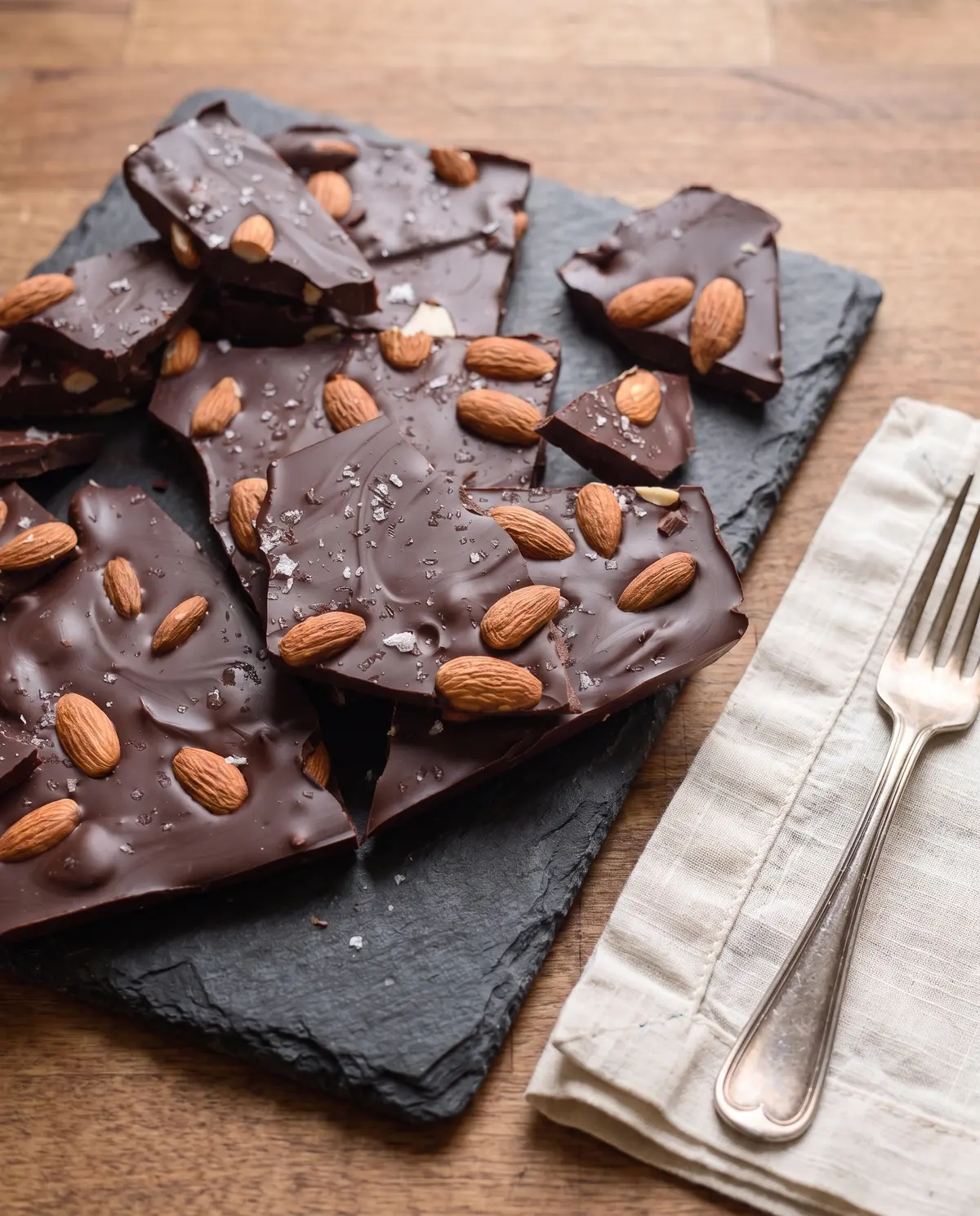
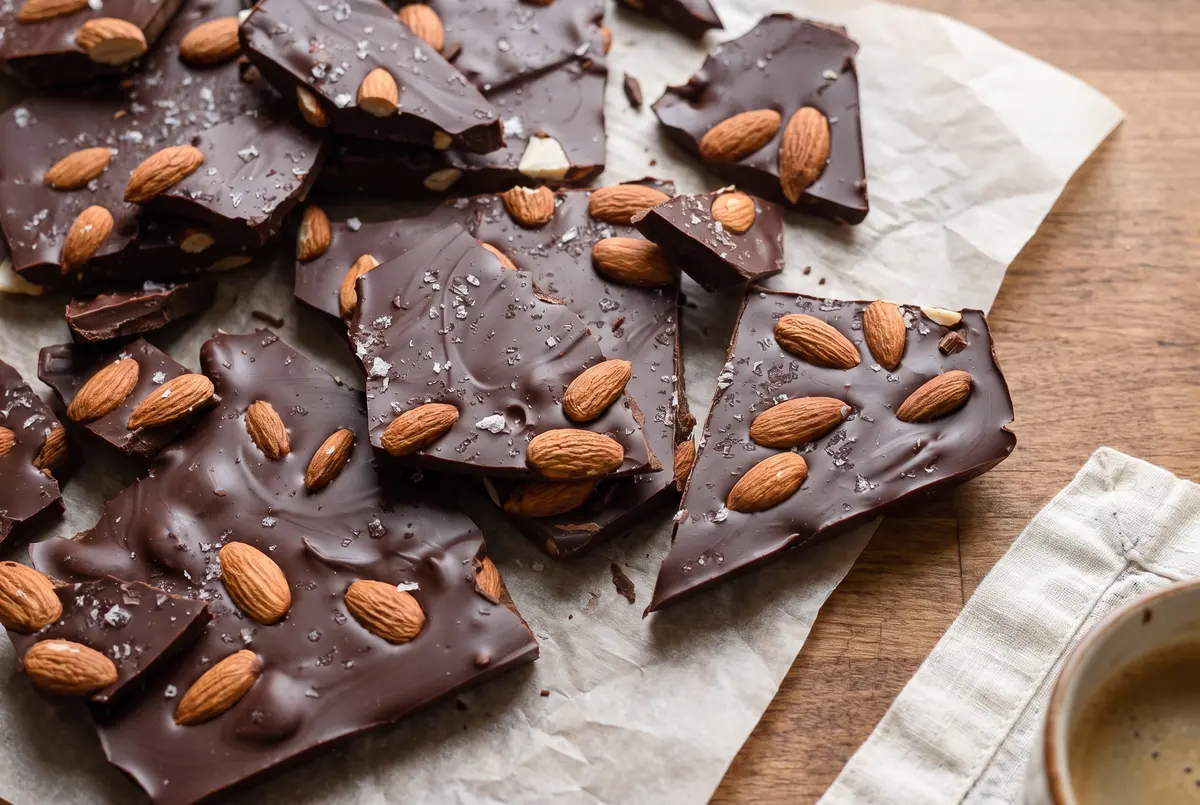
Have you ever made something so simple it almost feels like cheating? That’s how I feel every time I whip up a batch of chocolate almond bark in December. My friend Gina has been making it for twenty years — toasted almonds, dark chocolate, a generous pinch of flaky salt — and the first time I tasted her version, I remember thinking oh, this is what grown-up holiday magic tastes like.
My dad was the candy man in our family. Every December, he’d disappear into the kitchen for an afternoon, and out would come a tupperware tower of fudge and peanut brittle. He never measured anything, and it always worked. This bark is my small homage to him. If you’ve never made candy at home because it feels intimidating, I have great news: there’s no thermometer, no candy stage. You melt chocolate, pour it over almonds, and wait.
Why Toasting the Almonds Changes Everything
Raw almonds in chocolate bark taste fine, but toasted almonds in chocolate bark taste like a totally different dessert. Roasting deepens their flavor from grassy and mild to warm and almost honey-like. You only need eight to ten minutes in a 350°F oven, and you’ll know they’re ready when your kitchen smells nutty. Watch them closely at the end — almonds go from perfect to burnt in about thirty seconds.
The second trick is the flaky salt. I’m talking Maldon, not the table salt in your cupboard. The flakes land on the glossy chocolate, and when you bite in, you get tiny bursts of briny crunch that play off the deep cocoa and the buttery almonds. It’s a beautiful little flavor triangle.
Chocolate Almond Bark
This recipe makes about a pound of bark, enough to fill a small cookie tin or wrap in cellophane bags for last-minute gifts. The whole process takes about fifteen minutes of active time, plus an hour of waiting.
Ingredients
You’ll need just five ingredients, and I bet you have most already. The one splurge is the bittersweet chocolate — go for a bar between 60 and 70% cacao. Sweeter than that and the bark will be cloying; darker and it loses that warm, dessert-y quality.
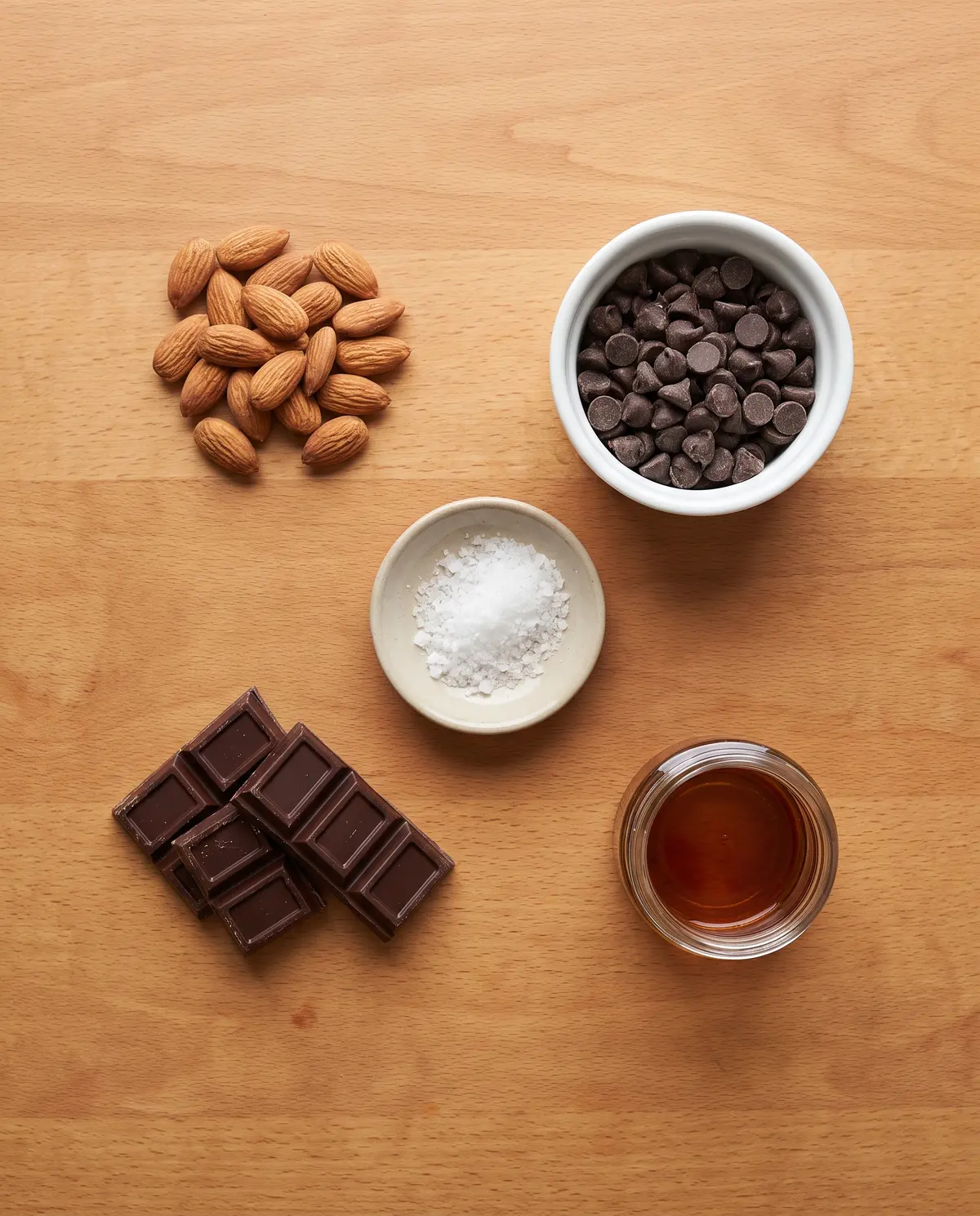
- 1 1/2 cups whole almonds
- 10 oz bittersweet chocolate (60–70% cacao), chips or finely chopped
- 1 Tbsp pure vegetable shortening (optional)
- 1/2 tsp pure vanilla extract (optional)
- Coarse flake sea salt, such as Maldon
From Bowl to Bark — My Method
Toast the nuts first, then melt the chocolate while they cool, then pour, then sprinkle, then wait. Don’t try to multitask — your chocolate will seize or your almonds will scorch, and either way, you’ll be sad.
Step 1: Toast the almonds. Spread the almonds in a single layer on a rimmed baking sheet and slide them into a 350°F oven for 8 to 10 minutes, until fragrant and just golden. Give the pan a shake halfway through. Let them cool on the pan — they’ll keep cooking a little from the residual heat.
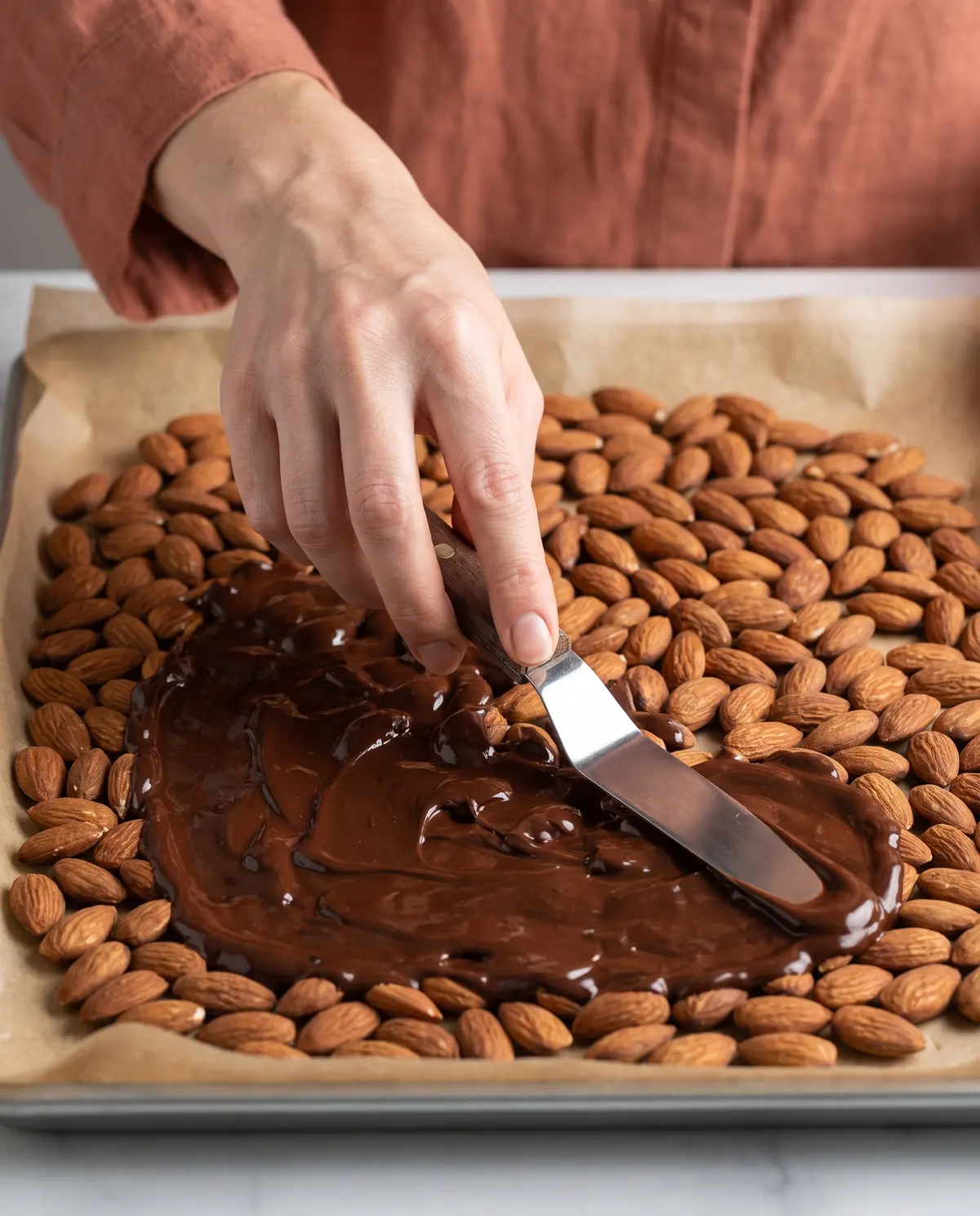
Step 2: Line your pan. Line a 9-by-13-inch rimmed sheet pan with parchment paper, leaving a few inches of overhang on each side. Crease the parchment along the edges so it stays put. This lets you lift the whole slab out in one piece later.
Step 3: Melt the chocolate. Combine the chopped chocolate and the shortening in a heatproof glass bowl. Microwave in 30-second bursts on medium power, stirring well and scraping the sides after each one. Stop when the chocolate is just melted and silky. Stir in the vanilla, if using.
Step 4: Layer up. Scatter half of the toasted almonds across the parchment in a single layer. Slowly pour the melted chocolate over the top and use an offset spatula to spread it smooth. Sprinkle the remaining almonds over the chocolate, pressing them down gently so they stick. Finish with a generous pinch of flaky sea salt — more than you think you need.
Step 5: Tap and chill. Tap the bottom of the sheet pan against the counter a few times to release any trapped air bubbles. Slide the pan into the fridge for 20 to 25 minutes, then let it sit at room temperature for about an hour.
Step 6: Break it up. Lift the slab out of the pan using the parchment overhang. Break it into uneven, rustic shards with your hands. I like the broken look, because every shard is a different size and feels homemade. Which it is.
Creative Twists Worth Trying
Once you’ve nailed the basic method, the whole world of mix-ins opens up. Here are the versions that have earned a permanent spot in my rotation.
- … Dark chocolate with dried cranberries and orange zest — like a chocolate orange in candy form.
- … Milk chocolate with crushed pretzels and a drizzle of melted white chocolate — sweet, salty, crowd-pleaser.
- … Bittersweet chocolate with pistachios and dried cherries, sprinkled with a little cardamom.
- … White chocolate with toasted macadamia nuts and a dusting of dried lavender.
- … Half milk, half dark chocolate swirled together, topped with flaky salt and hazelnuts.
Serving & Pairing Ideas
This bark is perfect on its own with a strong cup of coffee or a glass of cold milk. After dinner, serve a small plate of bark shards with a glass of tawny port or a bold cabernet. For a holiday cookie tray, nestle the bark between shortbread fingers and ginger snaps. For brunch, crumble a few pieces over vanilla ice cream for an effortless, slightly elevated dessert.
Why I Love This Bark
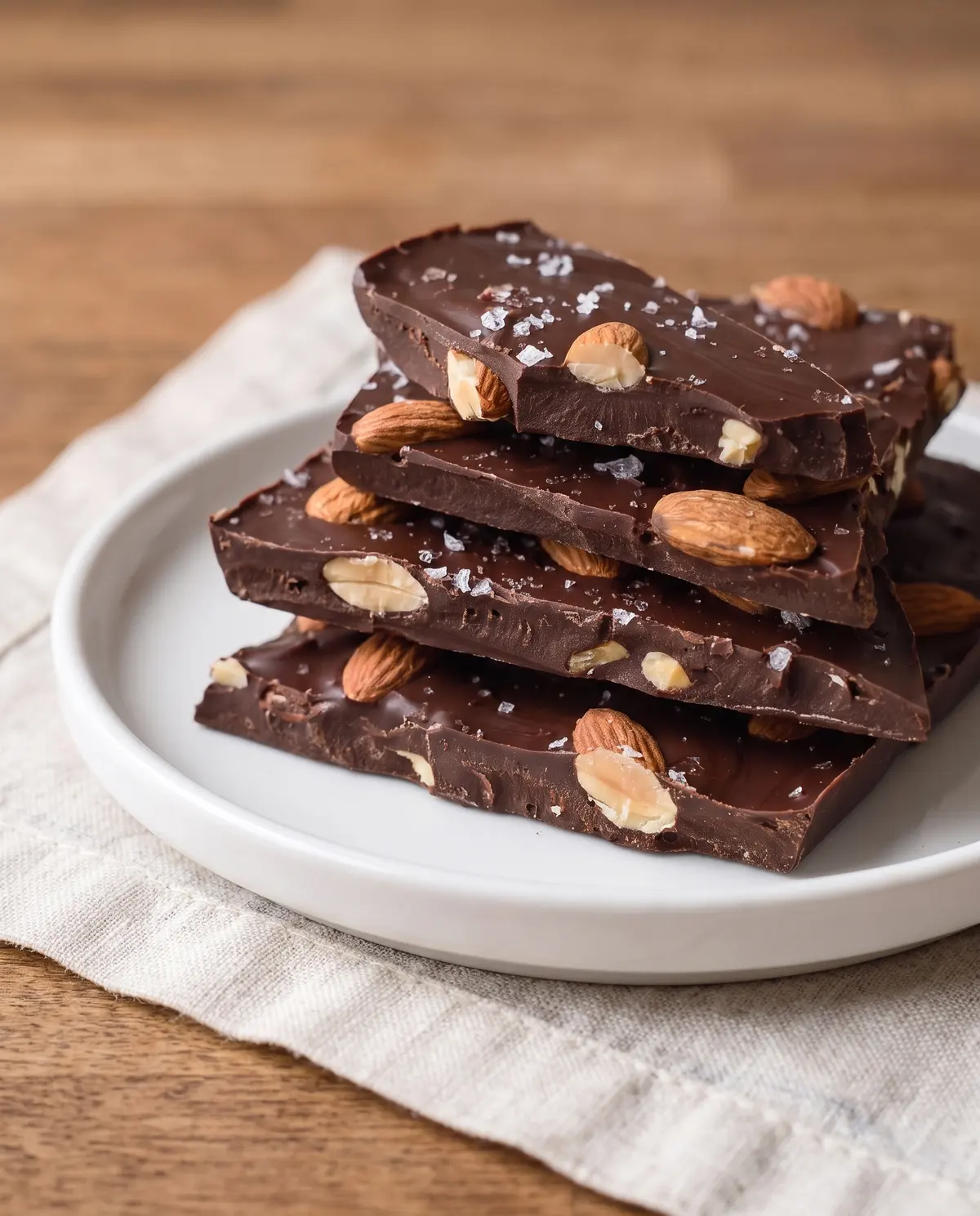
There are a thousand chocolate bark recipes on the internet, and I have tried more than I should admit. This one is the one I keep coming back to because of the ratio: just enough chocolate to coat the almonds without drowning them, just enough salt to wake everything up, just enough almonds to make every bite substantial. It’s also the recipe I make when I need a gift at the last minute. Stack the shards in a small kraft box, tie it with kitchen twine, and you’ve got something that looks like it came from a fancy chocolatier. For a few more make-ahead gifting ideas, my fudgy chocolate brownies and mini chocolate lava cakes wrap up beautifully too.
Storage and Make-Ahead Tips
This bark keeps for up to two weeks at room temperature in an airtight container with sheets of parchment between the layers. Keep it in a cool, dry spot — chocolate blooms if it gets warm or moist. You can also freeze it for up to three months: wrap the shards tightly in plastic, then pop them in a freezer bag. For make-ahead gifting, I make two double batches in early December and store them in tins. The bark actually tastes better on day two or three, after the flavors meld.
Troubleshooting Your Bark
Even a recipe this simple has its little traps. Here are the most common things that go sideways.
- … My chocolate seized up and went grainy. Water is almost always the culprit. Make sure your bowl and spatula are bone dry, and don’t cover the chocolate with plastic wrap while it’s still warm.
- … The bark looks white or streaky. That’s bloom, caused by temperature swings. It’s still fine to eat — just less pretty. Let it set at room temperature for 15 minutes before moving it to the fridge next time.
- … The almonds fell off when I broke the bark. Press them in more firmly. After sprinkling, give each one a gentle pat with your fingertips so it sinks into the chocolate.
- … The bark is too thick or too thin. For thinner bark, spread the chocolate further toward the edges. For thicker bark, keep it pooled in the center.
Your Bark Questions, Answered
Can I use chocolate chips instead of a bar? You can, but the result won’t be quite as silky. Baking chips contain stabilizers that help them hold their shape, so they don’t melt as smoothly. If that’s all you have, add a little extra shortening and be patient with the stirring.
Do I have to use almonds? Absolutely not. This method works with any nut you love — pecans, walnuts, hazelnuts, pistachios, even peanuts. Just toast them first. If you’re nut-free, try toasted pumpkin or sunflower seeds.
Can I make this dairy-free? Yes. Use a high-quality dark chocolate (most 70% bars are accidentally dairy-free, but always check) and swap the shortening for refined coconut oil. If you want another dairy-free treat, my chocolate chip banana bread is a wonderful option too.
Why did my chocolate never set? Either it wasn’t fully melted, or your fridge isn’t cold enough. Chocolate sets around 55°F, so a fridge at 40°F will firm it up in 20 minutes. If yours is taking longer, double-check the temperature.
A Little Goodbye from My Kitchen
Every December, when I pull the sheet pan out of the fridge and hear that quiet little tap-tap-tap on the counter, I think about my dad in his kitchen forty years ago. He never wrote down a single recipe, and he didn’t need to. He made the same things, the same way, every year, and the memory of them lives in my hands now. If you make this bark, I hope it becomes part of your family’s tradition the way it’s become part of mine. Which one would you try first — the classic version, or one of the creative twists? Let me know how yours turn out.
Happy baking!
—Marina Caldwell