The first loaf came out fine. The second one was better.
My neighbor Rosa handed me a bag of fresh cranberries in November and said, “do something Irish with them.” I made soda bread that afternoon and forgot to score the X deep enough, so the center stayed raw for an extra 12 minutes while the crust went almost too dark.
I served it anyway.
That first attempt is why I know — now — that the X has to go at least a quarter inch down. Not a scratch. A real cut. It lets heat into the middle and keeps the whole loaf from turning into a shell with a doughy core.
What’s actually going on with soda bread.
No yeast. No proofing. No waiting around for an hour while dough rises on the counter — you mix it, shape it, put it in the oven.
The baking soda and buttermilk react the moment they touch, which is why you don’t knead this for long and you don’t mess around once the dough comes together. A minute or two of kneading. That’s it. More than that and the bread gets tight and dense in a way that’s hard to fix after the fact.
Have you ever overkneaded a soda bread and wondered why it came out like a brick? That’s exactly what happened.
About the cranberries.
Fresh cranberries work and so do dried ones — but dried cranberries need a soak first, about 10 minutes in warm water, or they come out of the oven shriveled and weirdly chewy in a way that pulls your attention every bite.
I thought about adding orange zest to the dough — actually no, I skipped it. The cranberries are tart enough on their own and the bread doesn’t need another layer of citrus competing with the wheat.
Quick tip: Pat the soaked cranberries dry before folding them in, or they add too much liquid and the dough goes slack and sticky in a way that’s hard to handle.
The caraway question.
Traditional Irish soda bread sometimes has caraway seeds, sometimes doesn’t — it depends on the household and frankly on what’s in the cabinet.
I add them. A tablespoon goes in with the cranberries and the seeds sort of — this is hard to explain — they give the loaf a slightly herby, almost savory edge that keeps the sweetness from the cranberries from going too far in one direction. My husband eats it plain with butter and says the seeds are the best part.
It looked pale at 40 minutes. I left it in.
The oven goes to 425°F and the bread bakes for 45 to 50 minutes. At the 40-minute mark it might look like it needs more time — it does.
The real test is the tap. Flip the loaf over carefully and knock on the bottom with your knuckle. A hollow thud means it’s done. A dull, flat sound means put it back for another five minutes. I’ve used a thermometer too, but honestly the tap is faster and it works,
and once you do it a couple of times you stop second-guessing it.
Ten minutes. Don’t skip it.
Rest the loaf on a wire rack for at least 10 minutes before you cut into it.
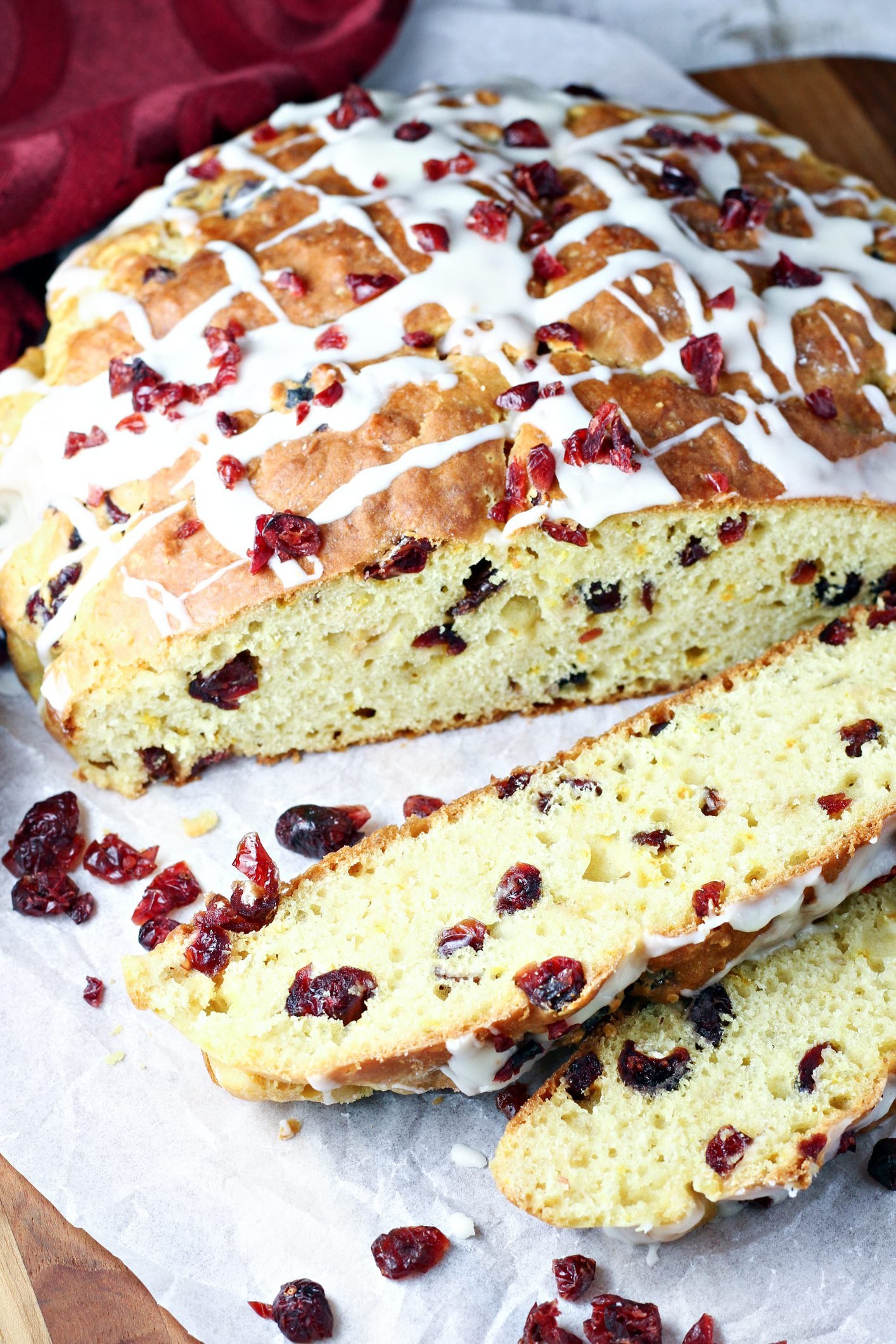
I know it smells good and the rack feels like a waste of time. But cutting too early compresses the crumb and you get a gummy, squashed slice instead of the open, slightly springy texture that was in there all along. Give it the 10 minutes. Walk away. Do the dishes.
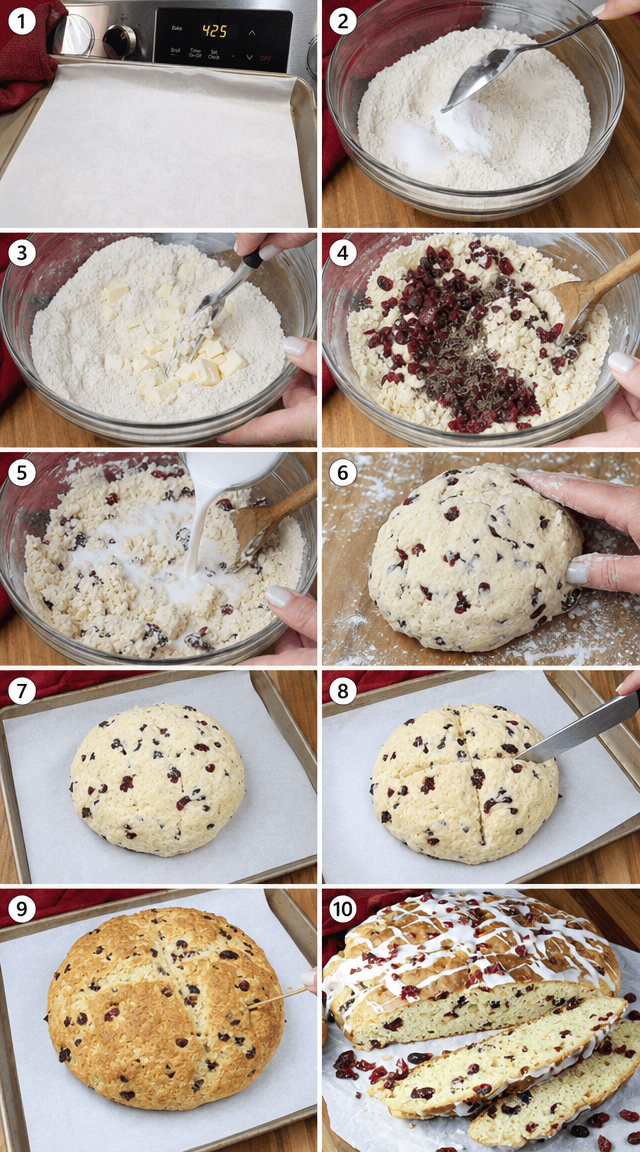
How to Make It
Step 1: Heat your oven to 425°F and line a baking sheet with parchment paper. Get this done first before you touch any of the ingredients — soda bread moves fast once the buttermilk goes in and you don’t want to be hunting for parchment paper with floury hands.
Step 2: Whisk together 2 cups all-purpose flour, 1 cup whole wheat flour, 1 teaspoon baking soda, 1 teaspoon salt, and 2 tablespoons sugar in a large bowl. Whisk it properly — not just a stir — so the baking soda is evenly distributed. (Pockets of undistributed baking soda leave bitter spots in the finished loaf.)
Step 3: Work 2 tablespoons of softened butter into the flour mixture using just your fingertips, rubbing it in until the whole thing looks like rough, sandy crumbs. Don’t use melted butter and don’t use cold butter straight from the fridge — softened is the word here and it actually matters for how the crumbs form.
Step 4: Toss in 1 cup of cranberries and 1 tablespoon of caraway seeds if you’re using them, then give everything a quick turn with your hands to distribute. Are you team caraway seeds or skipping them entirely? Share below!
Step 5: Make a hollow in the center of the flour mixture and slowly pour in 1 cup of buttermilk — bring it to room temperature first if you can, because cold buttermilk makes the dough fight you. Mix with a fork or your hands until a shaggy, rough dough forms. It should look messy. That’s fine.
Step 6: Turn the dough out onto a lightly floured surface and knead for about 1 to 2 minutes, just until it holds together and smooths out slightly. Stop there. I know the instinct is to keep going, but you genuinely have to stop.
Step 7: Shape the dough into a round mound and set it on the prepared baking sheet. Pat it down very slightly so it doesn’t roll around.
Step 8: Using a sharp knife, cut a deep X across the top — about a quarter inch down into the dough, not just a surface score. This is the step I got wrong the first time. A shallow cut and the center won’t cook through at the same rate as the outside.
Step 9: Bake for 45 to 50 minutes until deeply golden on top. At around 40 minutes the color might look almost right, but wait for that hollow tap on the bottom before you call it done. The difference between 43 minutes and 50 minutes in my oven is real.
Step 10: Transfer to a wire rack and rest for 10 to 15 minutes before slicing. Serve warm with butter — salted butter specifically, because the salt cuts through the sweetness of the cranberries and the whole thing just makes more sense that way.
Ways to Change It Up
Try this: Swap the cranberries for dried cherries and add a teaspoon of vanilla to the buttermilk for a slightly sweeter, dessert-adjacent loaf that still works with coffee in the morning.
Try this: Skip the sugar and cranberries entirely, add a handful of sharp cheddar and a pinch of black pepper to the dough for a savory loaf that goes next to soup without any sweetness competing.
Try this: Use all whole wheat flour instead of the split and add two tablespoons of rolled oats on top before baking — the texture gets more substantial and the crust has a little extra crunch where the oats brown.
Which would you go for? Drop it in the comments.
How to Serve It
Warm from the oven with a thick smear of salted butter is the most straightforward way and it’s hard to beat. The butter melts into the crumb in about 30 seconds and the cranberries are still slightly warm and a little jammy.
It also holds up well next to a bowl of thick vegetable soup — the caraway seeds pull double duty there and the bread soaks up broth without falling apart immediately.
The next morning, toasted slices with cream cheese and a drizzle of honey work surprisingly well, and my youngest specifically requests it this way on weekends now.
What would you pair it with?
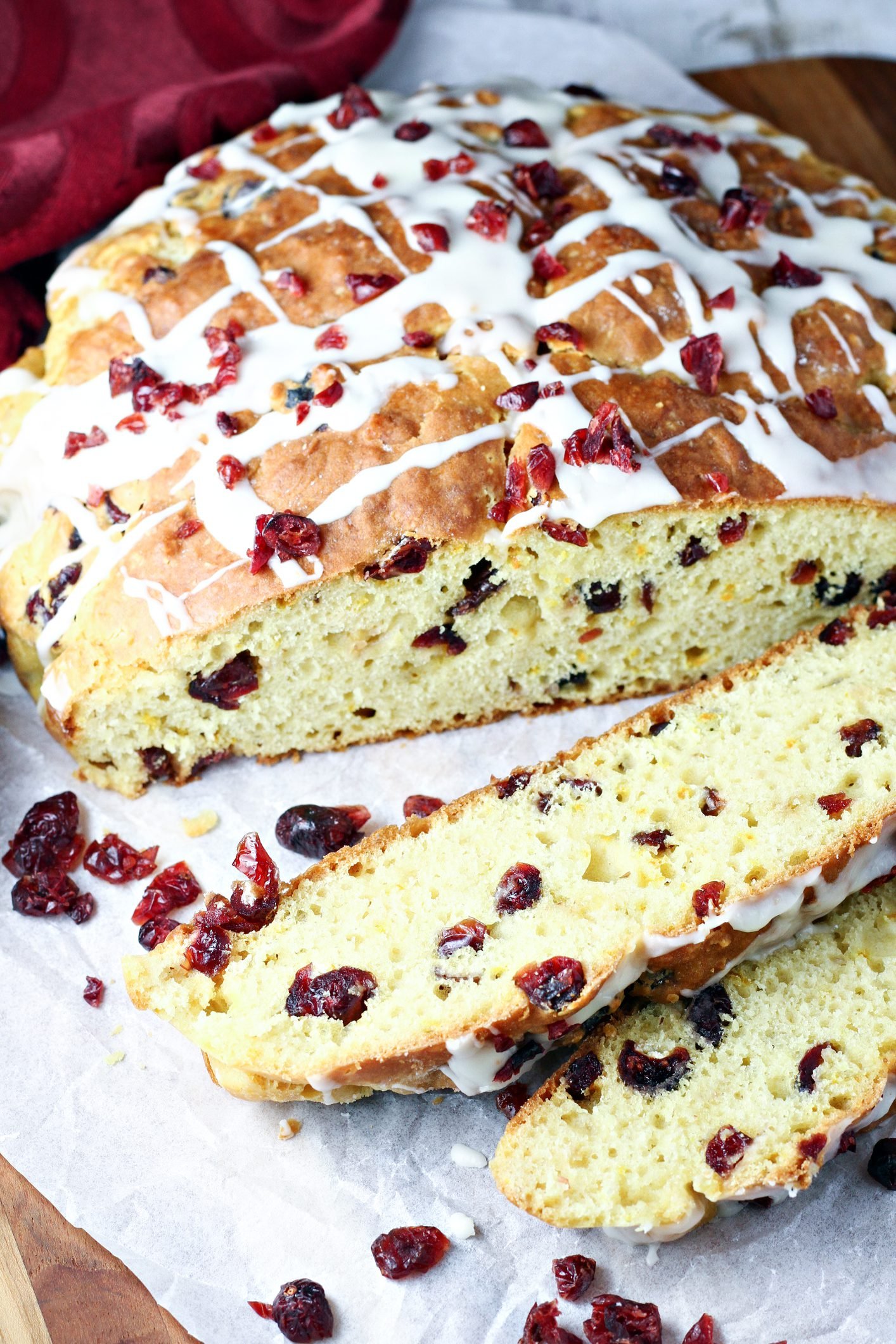
Storing It Without Ruining It
Wrap the cooled loaf in a clean kitchen towel and keep it at room temperature for up to 2 days. A plastic bag traps moisture and makes the crust go soft and a little soggy — the towel lets it breathe.
After 2 days, move it to the fridge wrapped tightly, where it keeps for about 4 more days. Cold bread slices a little more cleanly, which is actually useful if you’re making thin pieces for toast.
To freeze it, slice the whole loaf first, then wrap individual slices in parchment and put them in a zip bag. Pull out a slice and toast it directly from frozen — about 4 minutes in a toaster works — and it comes back reasonably close to fresh.
Have you ever saved leftovers like this? Tell me below!
Mistakes I Made So You Don’t Have To
I once used cold buttermilk straight from the fridge in a hurry and the dough came together stiff and uneven, with dry patches that never fully incorporated. Let it sit out for 20 minutes first. It actually matters.
The X scoring mistake already covered above — but I’ll say it again because it’s the most common thing to get wrong. Shallow score equals raw center. Go deep.
I also over-kneaded a batch when I was distracted by something on the stove. The loaf came out dense and almost rubbery in the middle, nothing like the open crumb it should have. I served it. My sister thought it needed more lemon, which wasn’t the problem, but that’s what she said. Did something like this happen to you?
Questions I Actually Get About This Bread
Can I use frozen cranberries instead of fresh? Yes, but don’t thaw them first — they’ll bleed too much liquid into the dough if you do. Toss them in frozen and add about 3 extra minutes to the bake time. I tried this once with a bag I’d had in the freezer for two months and it worked without any real issue.
What if I don’t have buttermilk? Add 1 tablespoon of white vinegar or lemon juice to 1 cup of regular milk, stir, and let it sit for about 5 minutes. It curdles slightly and works the same way. Not identical, but close enough that most people can’t tell the difference in the finished loaf.
Does the whole wheat flour change the texture much? It depends on your ratio. The recipe uses a 2-to-1 split — more all-purpose than whole wheat — which keeps the crumb lighter. Go full whole wheat and the loaf gets noticeably heavier and denser. Not bad, just different. And the color goes darker too, almost nutty-looking.
How do I know the bread is fully baked if I don’t trust the tap test? Use an instant-read thermometer. The internal temp should hit around 190°F to 200°F. I tried this once alongside the tap test to check myself and both methods landed at the same moment. But the thermometer removes the guesswork entirely if you’re not confident yet.
Can I make the dough the night before? Honestly, no. The leavening reaction starts the moment the buttermilk hits the baking soda, and by the next morning you’ve lost most of it. This is a same-day, start-to-finish bake. About 1 hour total from bowl to table.
Why does my loaf crack on the sides and not just at the X? That’s actually normal and not a problem. The dough expands fast in a hot oven and side cracks happen. The X guides the main split, but extra cracking around the sides just means good oven spring. Don’t panic.
Which answer helped you most?
Okay, go make it.
This bread takes about an hour from start to finish including bake time and rest. No special equipment, no rising time, no mixer.
The cranberries make it feel a little special without making the process complicated. My kids ate three slices each the first time I got it right and asked if there was more.
Fun fact: Cranberries are one of only three fruits native to North America cultivated on a commercial scale — and they were used by Indigenous peoples centuries before European settlers arrived, both as food and as a natural dye.
It’s not a fussy bread. It doesn’t need to be. Mix it, shape it, bake it, eat it warm.
Will you make this soon? Drop a comment and tell me how it goes — especially if you try the cheddar version, because I need more data points on that one.
Happy cooking! —Marina Caldwell
Rustic Cranberry Soda Bread Straight From Scratch
Ingredients
- 2 cups all-purpose flour
- 1 cup whole wheat flour
- 1 teaspoon baking soda
- 1 teaspoon salt
- 2 tablespoons sugar
- 2 tablespoons butter, softened
- 1 cup fresh or dried cranberries
- 1 cup buttermilk
- 1 tablespoon caraway seeds (optional)
Instructions
- 1Heat oven to 425°F (220°C) and line a baking sheet with parchment paper.
- 2Whisk together both flours, baking soda, salt, and sugar in a large bowl until evenly combined.
- 3Work the softened butter into the dry mixture using your fingertips until it resembles rough, sandy crumbs.
- 4Toss in the cranberries and caraway seeds if desired, distributing them evenly throughout.
- 5Create a hollow in the center of the mixture and slowly pour in the buttermilk, mixing until a shaggy dough comes together.
- 6Transfer dough to a lightly floured surface and knead briefly, about 1-2 minutes, just until smooth.
- 7Form the dough into a round mound and set it onto your prepared baking sheet.
- 8Cut a deep X across the top using a sharp knife, slicing roughly ¼ inch into the dough.
- 9Bake 45-50 minutes until deeply golden, confirming doneness by tapping the base for a hollow sound.
- 10Rest on a wire rack for 10-15 minutes before slicing and serving warm.
Notes
– Do not over-knead the dough as this activates too much gluten, resulting in a dense, tough loaf. – Soaking dried cranberries in warm water for 10 minutes before adding keeps them plump and juicy throughout baking. – Buttermilk that has been brought to room temperature beforehand blends more smoothly and produces a better dough consistency.