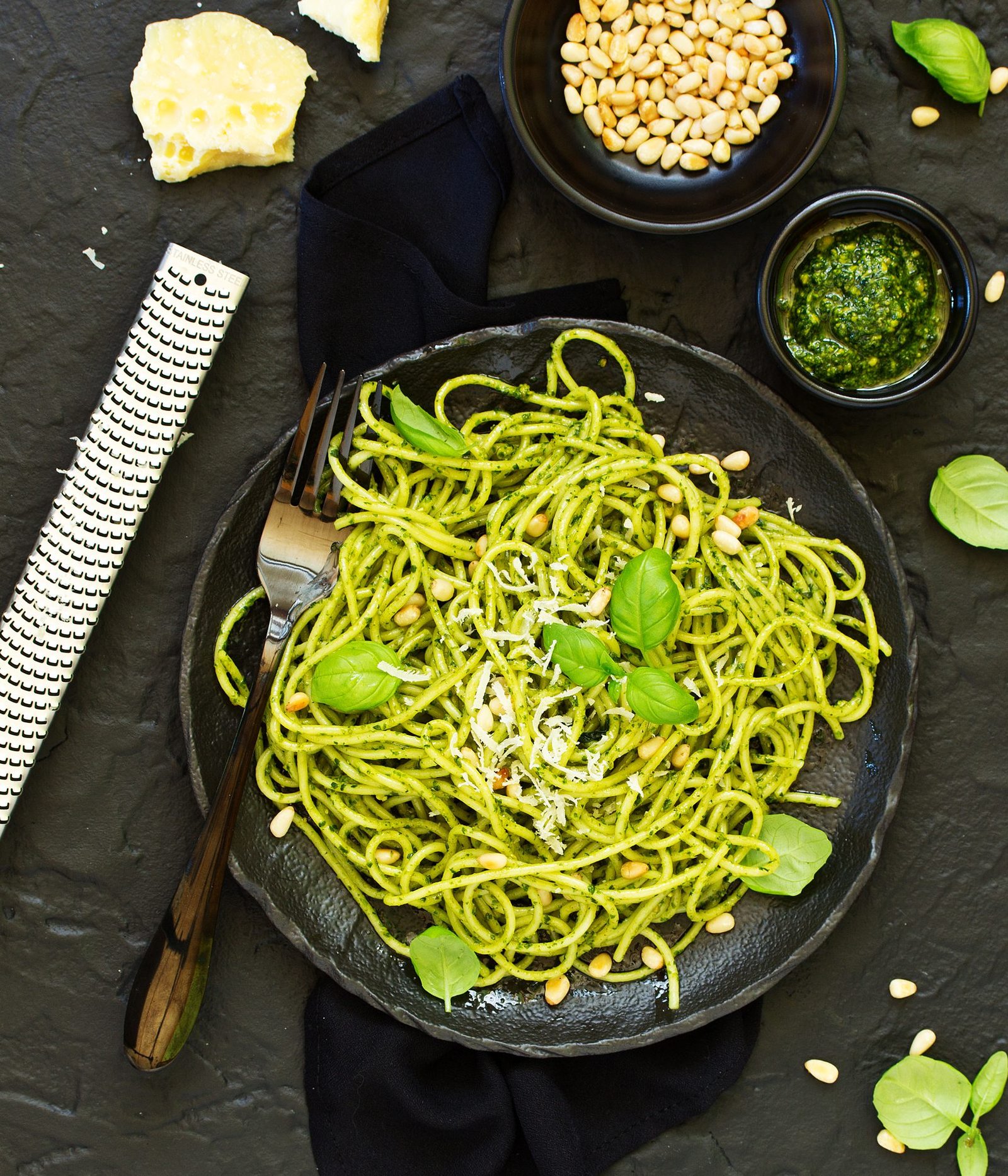
The Night I Stopped Making Regular Basil Pesto
I had a giant bag of arugula in my fridge that was about two days from turning, and I was not about to waste it. That moment — slightly desperate, standing in front of the open fridge at 6pm on a Tuesday — is exactly where this recipe came from.
I’d made basil pesto a hundred times. It’s fine. But arugula does something basil never does: it bites back.
That peppery sharpness, the way it hits the back of your throat, changes everything about how this sauce sits on pasta. My neighbor Greta tried it and immediately asked if I’d added mustard. I hadn’t.
Why Arugula Works So Well Here
Arugula has a natural bitterness that mellows just enough when you blend it with olive oil and Parmesan. It doesn’t disappear — it softens into something you want more of.
The pine nuts round out that sharpness. Toasted ones, specifically — raw pine nuts taste kind of waxy in pesto and I learned that the hard way the first time I made this.
Quick tip: Toast your pine nuts in a dry skillet on medium heat and do not walk away. They go from pale to dark brown in about 45 seconds once they start moving, and burnt pine nuts smell like a mistake you can’t un-make.
The Lemon Situation
Two tablespoons of lemon juice sounds modest. It’s not modest — it lifts the whole sauce.
My sister thought it needed even more lemon when she tasted it, and honestly she wasn’t wrong. She squeezed half a lemon over her bowl at the table and I’ve done it that way ever since.
Have you ever noticed how lemon juice completely changes the way green sauces taste? It’s not about citrus flavor — it’s about brightness.
Something Only Someone Who Made This Would Notice
The pesto looks almost too thick when it comes out of the food processor. You’ll think you did something wrong. You didn’t.
Once it hits the warm pasta and you start adding that starchy pasta water a spoonful at a time, it loosens into this glossy, clingy sauce that coats every single strand. That moment when it comes together is genuinely satisfying.
Do not skip saving the pasta water. I drained mine down the sink the first time I made this — which is my honest admission — and the sauce that night was thick and a little gluey. Not the same dish at all.
What This Recipe Actually Takes
About 25 minutes, start to finish. Less if your water boils fast.
You need a food processor — a blender can work in a pinch, but the texture ends up smoother than I like it. I want a little chew from the pine nuts, not a completely uniform paste.
The ingredient list is short. One pound of spaghetti, three cups of arugula, half a cup each of pine nuts and Parmesan, garlic, olive oil, lemon, salt, pepper. That’s it.
Who This Bowl Is For
Anyone who’s bored with the same pasta rotation. Anyone who has arugula sitting in the crisper drawer right now.
It’s weeknight food that doesn’t feel like you settled. My husband ate two full bowls the first time and asked if there was more in the pot — there wasn’t, which is why I now always make the full pound of pasta.
Do you have a go-to pasta sauce you keep coming back to? I’m genuinely curious what yours is — drop it in the comments.
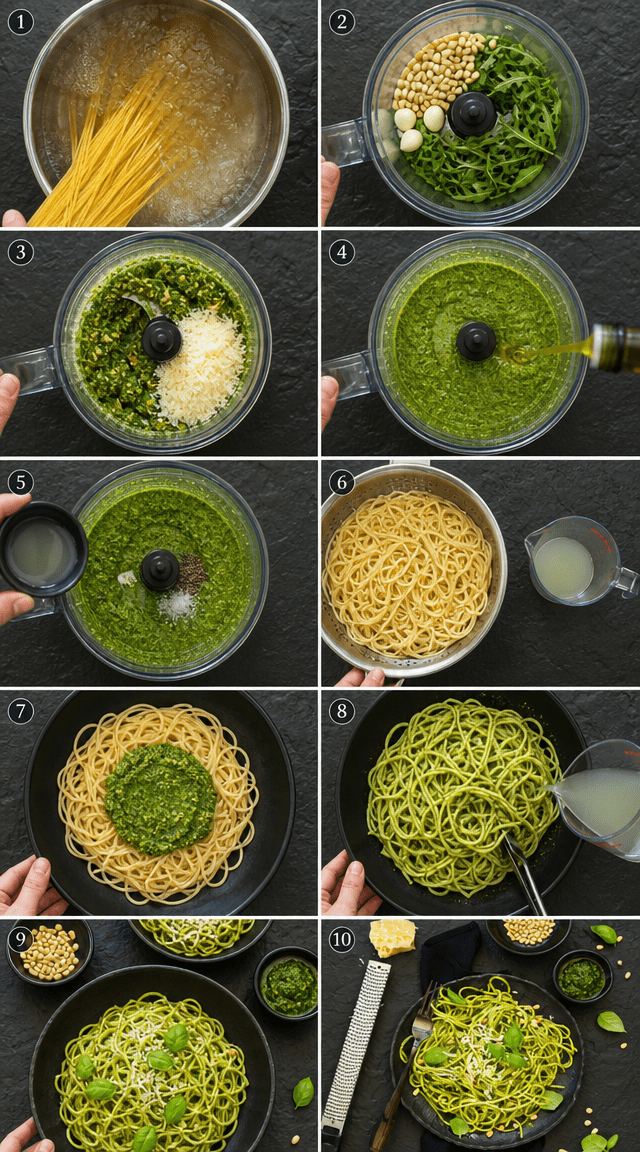
How to Make It, Step by Step
Step 1: Fill a large pot with water and salt it generously — more than feels comfortable. Bring it to a rolling boil over high heat. Salting the water is not optional here; it’s the only chance you get to season the pasta itself.
Step 2: Cook the spaghetti until just al dente according to your package directions, usually around 9–10 minutes. Before you drain it, scoop out at least 1 cup of that starchy pasta water and set it aside. (I keep a liquid measuring cup right next to the stove so I don’t forget — I forgot once and regretted it immediately.)
Step 3: While the pasta cooks, toast the pine nuts in a dry skillet over medium heat, stirring constantly until they turn golden in about 4–5 minutes. Pull them off the heat right away and spread them on a plate to stop the cooking. The smell when they hit that golden point is one of my favorite things in cooking — warm, nutty, almost buttery.
Step 4: Add the arugula, minced garlic, and half the toasted pine nuts to a food processor. Pulse about 8–10 times until everything is coarsely broken down. You want texture, not mush — stop before it looks like a smoothie.
Step 5: Add the grated Parmesan, then with the processor running, stream in the olive oil slowly through the top. Keep it going until the pesto is smooth but still has a little body. Squeeze in the lemon juice, taste it, and adjust salt and pepper as needed.
Step 6: Return the drained spaghetti to its warm pot. Spoon all of the pesto over the top and start tossing with tongs. Add the reserved pasta water one tablespoon at a time — I usually need about 2 full tablespoons — until the sauce looks silky and coats every strand without pooling at the bottom.
Step 7: Divide into bowls and finish with the remaining toasted pine nuts, a fresh grating of Parmesan, and red pepper flakes if you want heat. Serve immediately while the pasta is still warm and the pesto is glossy.
What’s the hardest part of making pesto for you — the blending, the pine nuts, or getting the sauce consistency right? Share below!
Ways to Change It Up
Try this: Swap the pine nuts for toasted walnuts. The flavor goes earthier and slightly more bitter, which actually plays well against the arugula. It’s a different bowl entirely.
Try this: Add a handful of halved cherry tomatoes right before serving. They don’t get cooked — just tossed in warm. The cold juicy burst against the rich pesto is worth doing at least once.
Try this: Use half arugula and half spinach if the peppery bite feels like too much for your crowd. You keep the green color and the freshness, just with less intensity.
Which would you go for? Drop it in the comments.
How to Serve It
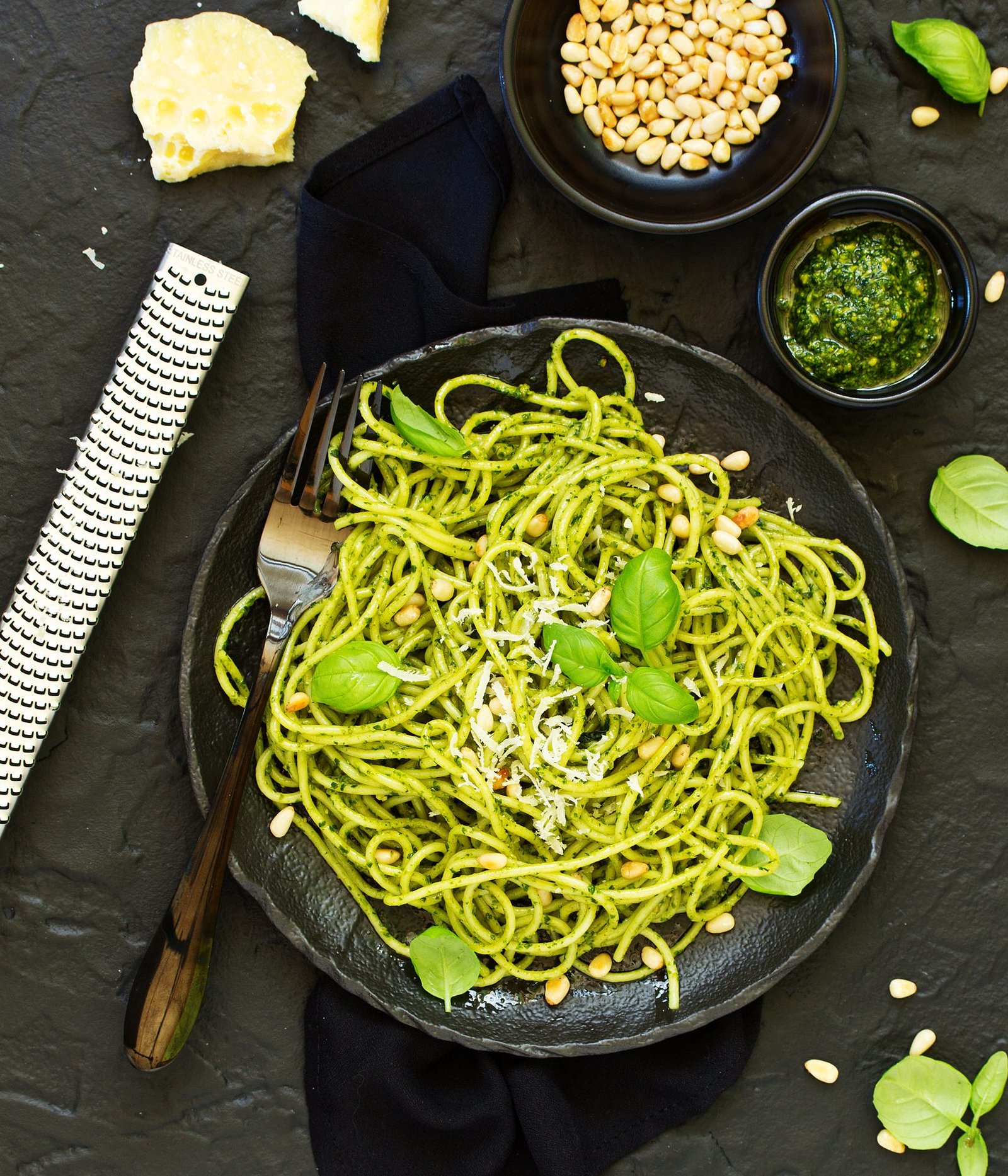
This bowl works on its own as a complete dinner — the Parmesan and pine nuts carry enough protein and fat to feel substantial. A simple side salad with shaved fennel and lemon dressing goes really well alongside it.
If you want something more filling, serve it with a piece of crusty bread for mopping up the pesto that collects at the bottom of the bowl. That pesto at the bottom is honestly the best bite.
It also works as a side dish next to grilled chicken thighs or a piece of pan-seared salmon — the tangy sauce cuts through the richness of both.
What would you pair it with?
Storing It Without Ruining It
Leftover pesto pasta keeps in the fridge for up to 3 days in an airtight container. It will clump together as it cools — that’s normal, not a sign anything went wrong.
To reheat, put it in a skillet on medium-low with a splash of water or a tiny drizzle of olive oil and toss until it loosens back up. Microwave works too but the texture gets a little sticky — skillet is better if you have 3 extra minutes.
You can also freeze the pesto by itself before mixing it with pasta. Pour it into an ice cube tray, freeze solid, then pop the cubes into a bag. Each cube is roughly one serving’s worth and thaws fast on the counter.
Have you ever saved leftovers like this? Tell me below!
Mistakes I Made So You Don’t Have To
I once over-processed the pesto until it was completely smooth — like a green cream sauce — and it lost all the texture that makes it interesting. Pulse, stop, check. Don’t just let it run.
I also forgot to reserve pasta water on my second attempt and tried to thin the sauce with regular tap water. It tasted flat and the sauce never properly clung to the pasta. The starch in pasta water is genuinely doing work.
The third mistake: I skipped toasting the pine nuts once because I was in a hurry. Raw pine nuts have a soft, almost waxy texture that doesn’t hold up once blended. Toasting takes 5 minutes and it matters. Did something like this happen to you?
Questions People Actually Ask About This Recipe
Can I use a blender instead of a food processor? You can, but the result will be noticeably smoother and more uniform. A food processor lets you pulse and stop, which gives you more control over texture. If a blender is all you have, just keep it on a low setting and stop as soon as the arugula and pine nuts break down — don’t let it run until it’s completely liquid. The flavor will still be there, the bite just won’t be.
How do I keep the pesto from turning brown? A couple of things help here. First, add the lemon juice — the acidity slows oxidation. Second, blanch the arugula for about 20 seconds in boiling water, then immediately plunge it into ice water before blending. It keeps the pesto a vivid, deep green for much longer. I don’t always do this on a weeknight, but if I’m making pesto ahead of time, I do it every time.
Can I make the pesto ahead of time? Yes, and it actually sits well. Make it up to 2 days ahead and store it in a jar with a thin layer of olive oil poured over the top surface — that layer of oil acts as a seal and keeps it from browning. When you’re ready to use it, just stir the oil back in. It takes about 10 seconds and the pesto looks and tastes like you just made it.
Is there a substitute for pine nuts? Toasted walnuts work really well and are usually cheaper. Almonds give a slightly drier, more crumbly texture but the flavor is good. Cashews make the pesto creamier and milder — more subtle, less nutty punch. If you have a nut allergy, toasted pumpkin seeds are a solid swap and keep the same kind of richness that pine nuts bring to the sauce.
Do I need to use spaghetti specifically? No. Spaghetti works because the long strands get coated evenly when you toss the pesto in the pot. But linguine, bucatini, or even a short pasta like rigatoni or fusilli all work. Fusilli is actually great because the pesto gets trapped in the spirals. Whatever pasta shape you have on hand will hold this sauce — just cook it al dente so it doesn’t go soft when you toss it.
What if the pesto tastes too bitter? That bitterness is the arugula doing its thing, and it usually mellows once the pesto hits warm pasta and mixes with the starchy water. But if it still feels sharp to you, add a tiny pinch of sugar — less than a quarter teaspoon — to balance it. A little extra Parmesan also helps soften the edge. And make sure your arugula is fresh; older arugula can be more intensely bitter than young leaves.
Which answer helped you most?
Okay, Just Make It Already
This is one of those recipes I come back to when I want something that feels fresh but doesn’t ask much of me. Twenty-five minutes. One pot, one food processor, done.
The arugula pesto is sharper and more interesting than anything from a jar. That’s not a knock on jarred pesto — I keep it in my pantry too. But this one is different enough that it feels like its own thing.
Toast the pine nuts. Save the pasta water. Don’t over-blend. That’s genuinely the whole secret.
Fun fact: Pine nuts are the seeds of pine trees, and harvesting them by hand from pine cones is one of the reasons they’re among the most expensive nuts in any grocery store.
If you try it, I really do want to know how it went. Did you add more lemon? Did you swap the nuts? Did your pasta water end up down the drain like mine did that one time?
Will you make this soon? Tell me in the comments — I read every one.
Happy cooking! —Marina Caldwell
Tangy Arugula Pine Nut Pesto Spaghetti Bowl
Ingredients
- 1 pound spaghetti
- 3 cups fresh arugula
- ½ cup pine nuts, toasted
- 3 cloves garlic, minced
- ½ cup Parmesan cheese, grated
- ½ cup extra virgin olive oil
- 2 tablespoons fresh lemon juice
- Salt and pepper to taste
- 2 tablespoons pasta water
- Red pepper flakes (optional)
Instructions
- 1Fill a large pot with water, season generously with salt, and bring to a rolling boil.
- 2Cook spaghetti until just al dente, then reserve 1 cup of starchy pasta water before draining.
- 3Meanwhile, combine arugula, garlic, and half the pine nuts in a food processor, pulsing until coarsely broken down.
- 4Add Parmesan, then stream in olive oil slowly while the processor runs until a smooth pesto forms.
- 5Squeeze in lemon juice and adjust seasoning with salt and pepper.
- 6Return drained spaghetti to the warm pot and spoon pesto over the top.
- 7Toss vigorously, adding reserved pasta water one tablespoon at a time until the sauce clings beautifully to every strand.
- 8Plate into bowls and finish with remaining pine nuts, extra Parmesan, and red pepper flakes.
Notes
– Toast pine nuts in a dry skillet over medium heat, watching closely as they burn quickly within seconds of turning golden. – Blanching arugula briefly in cold water before blending creates a vibrant green pesto that holds its color longer. – Save more pasta water than you think you need, as the starch is essential for achieving a silky, restaurant-quality sauce.