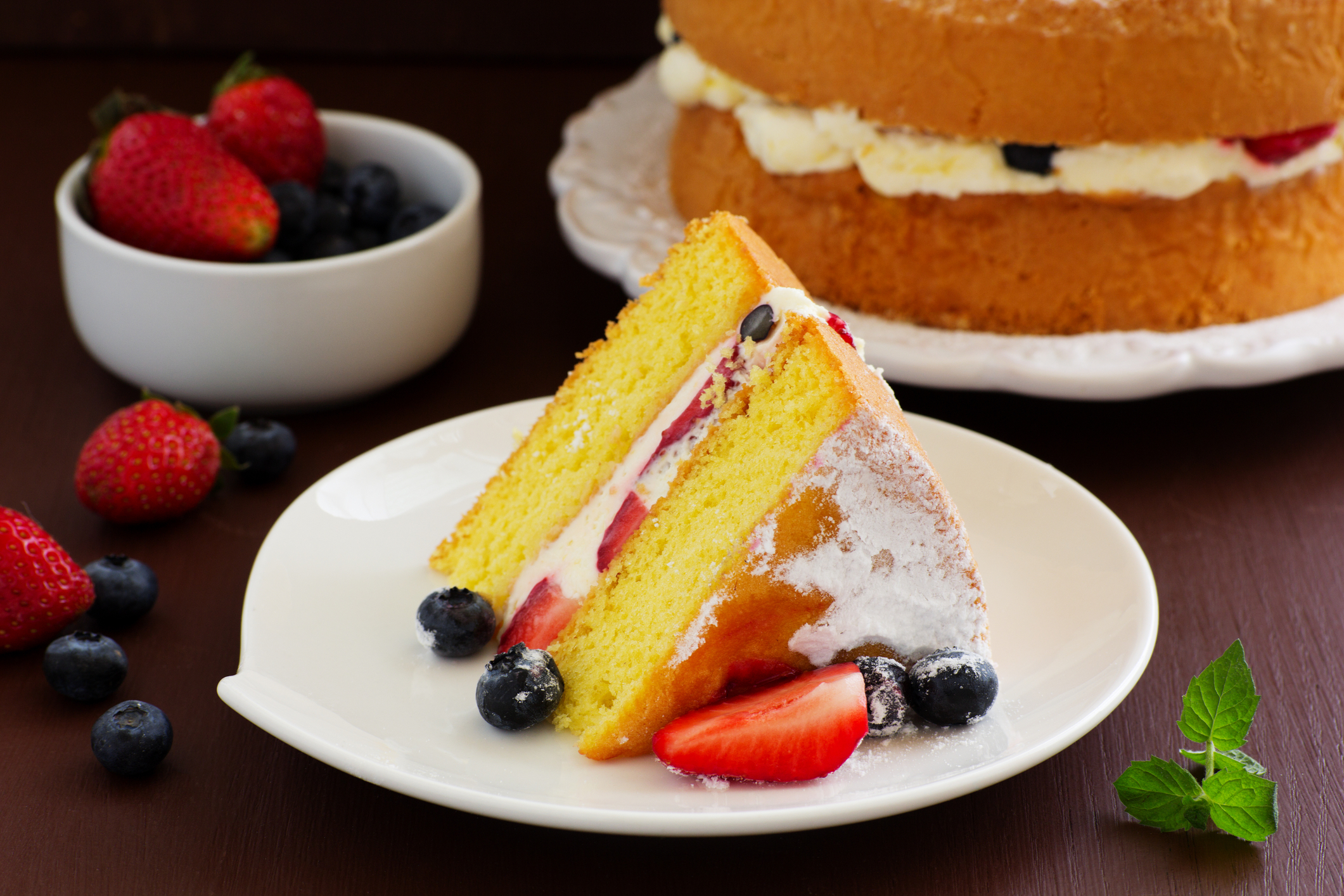
The Batter Looked Too Thin at That Point
I oversalted it. Twice. No — wait, that’s a different cake. This one, the genoise, I undermixed it the first time and it came out like a slightly sweet sponge brick.
The eggs and sugar have to be warmed over that double boiler until you can’t hold your finger in the mixture comfortably — about 110°F if you’re using a thermometer, which I wasn’t the first time. I was guessing. The cake was dense for exactly that reason.
A genoise is not a regular sponge. It has no baking powder, no chemical help. Every bit of lift comes from the air you beat into those warm eggs, and if you shortcut the beating time — eight minutes minimum on high, not six, not seven — you’ll know it the moment the batter hits the pan.
Pale yellow ribbons. That’s what you’re waiting for.
The batter will look almost too voluminous for the bowls, and then slightly terrifying when you start folding the flour in, because it deflates a little — noticeably — with every pass of the spatula. That’s normal. Keep going anyway.
My neighbor Elena watched me make this once and asked why I was being so slow with the folding. I told her I wasn’t being slow, I was being careful. She shrugged. She’s never made a genoise and I don’t think she plans to.
About the Lemon Cream.
Most recipes call this a lemon curd. It’s not quite that. No cornstarch, no whole-egg set — just yolks, sugar, butter, and enough lemon juice and zest from two whole lemons to make it sharp enough to matter against the cream.
You whisk the yolks and sugar over the double boiler for three to four minutes, then take it off heat and keep whisking until the mixture goes pale and thick — closer to five minutes than three, in my experience. Then the butter goes in gradually, which is the part I kept getting impatient with. Rushing this makes it greasy.
Sharp and a little rich, with actual texture.
The zest matters more than the juice here, I think — actually no, they work together and you can’t separate the contribution. The zest gives it something fragrant that the juice alone doesn’t. Add both, in that order.
Quick tip: Let the lemon cream cool until it’s just barely warm before spreading — if it’s too hot it’ll slide off the first cake layer and pool at the edges, which I found out the hard way when I was in a rush and didn’t wait long enough.

The Berries Bled Through. Didn’t Stop Me.
Four hundred grams of mixed berries sounds like a lot until you spread half of them across the lemon cream layer and realize they’re sitting in little gaps between each other, barely covering the surface.
Strawberries sliced thin. Raspberries whole. Blueberries just dropped in wherever they fit.
The first time I made this, the raspberries bled into the whipped cream layer I spread on top, and by the time I cut into the cake there was a pink streak running through the white. I served it anyway. Nobody mentioned it, and the slice looked fine on the plate.
Honestly? It’s not that deep. The berries are going to do what berries do.
The whipped cream — 300ml heavy cream beaten with 30g powdered sugar to stiff peaks — goes on top of those berries before the second layer comes down. Don’t try to smooth it too aggressively. You’ll push the berries sideways and the whole thing shifts. Lay the second cake layer on gently and press only the slightest bit.
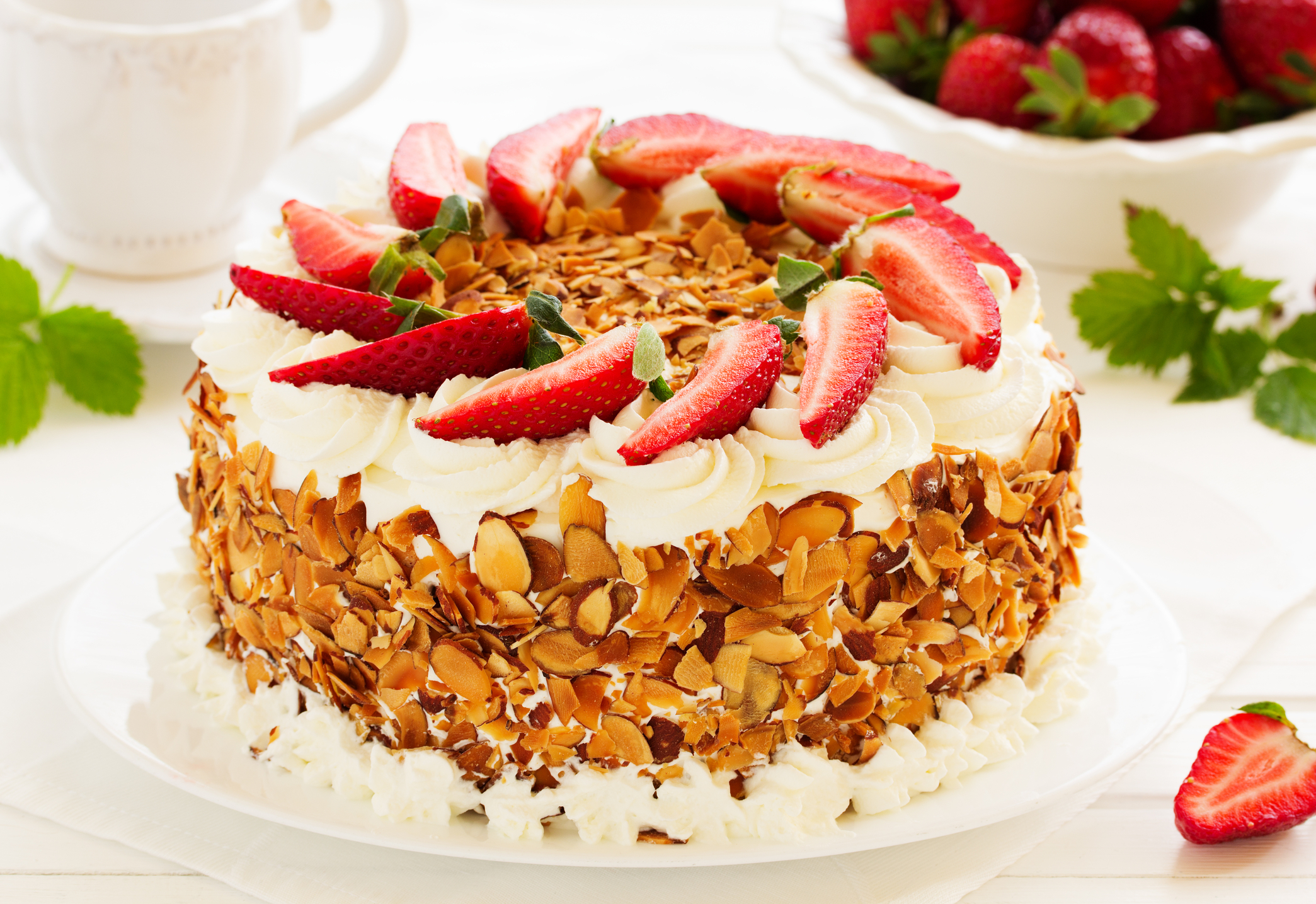
Then frost the top with the remaining whipped cream, pile the rest of the berries on, and dust the whole surface with powdered sugar just before it goes to the table. Not before refrigerating — it dissolves and goes grey.
The Part Nobody Talks About.
Thirty minutes in the fridge before serving isn’t enough if your kitchen is warm. Mine runs hot in the afternoon — around 75°F — and I’ve had the cream start to soften at the edges before I even finished cutting. An hour is safer. Two hours is fine. The cake holds its shape better cold, and the lemon cream firms into something you can actually see as a distinct layer when you slice through it.
The crumb on a genoise doesn’t get soggy the way a butter cake might. Something I only noticed after making it three times.
Most recipes tell you to serve this at room temperature. They’re wrong, or at least optimistic. This cake needs to be cold to stay in one piece, and cold is also when it tastes cleanest — the lemon reads sharper, the cream doesn’t go heavy on the tongue.
Do I always have two hours? No. But I’d rather plan for it.
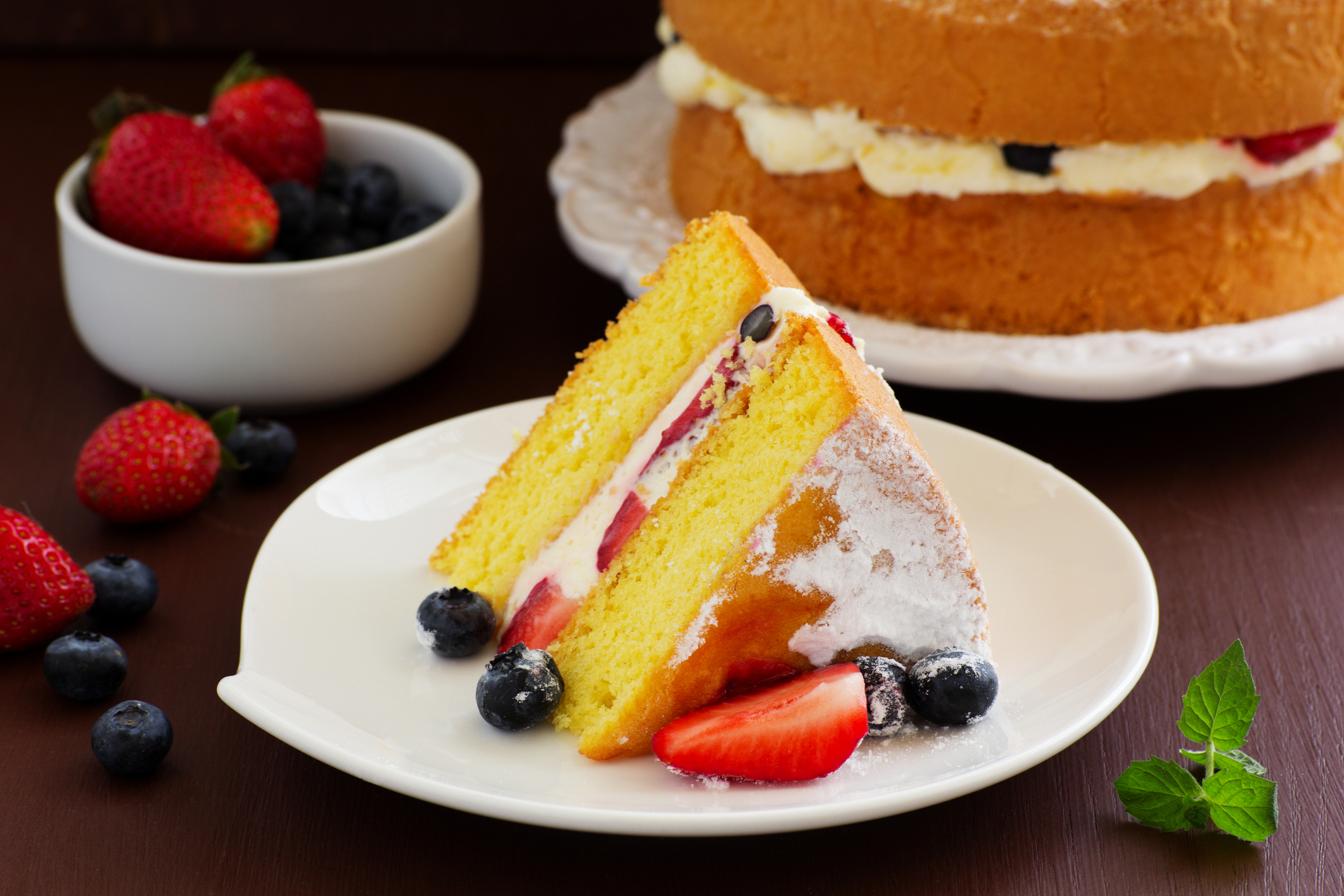
The Folding Is Where You Can Lose It.
Flour in three additions. This is not decorative advice. Add it all at once and the gluten develops unevenly — some patches overdeveloped, some barely mixed — and the texture suffers in a way that’s hard to pinpoint when you eat it but is definitely there.
Cut down through the center of the batter with a flat spatula, sweep along the bottom, and fold up the side. Rotate the bowl slightly and repeat. Don’t stir. Don’t whisk. Don’t rush.
Twenty to twenty-five slow folds per addition of flour. The batter will look streaky for longer than feels comfortable, and then suddenly it’s done. Stop there. Overfold and you’ve lost the air you spent ten minutes building.
The butter goes in last, and this is where I’ve messed it up most: pouring the melted butter in too fast, down the side of the bowl rather than through the center, and ending up with greasy pockets at the bottom that I didn’t discover until I’d already divided the batter between the pans. Drizzle it slowly. Fold gently, maybe eight or ten passes at most.
Twenty-two to twenty-five minutes at 350°F. Mine is usually done closer to twenty-three.
—How I Actually Assemble It (Step by Step)
Step 1: Preheat your oven to 350°F (175°C). Grease two 8-inch round pans, then flour them, tapping out the excess. Don’t skip the flour — I’ve tried just greasing and lost the outer edge of the cake to the pan on two separate occasions.
Step 2: Combine the 4 eggs and 120g granulated sugar in a heatproof bowl set over a pot of barely simmering water. Whisk constantly for 3–4 minutes until the mixture hits around 110°F — it should feel warm, not hot, when you dip a finger in. (Don’t guess at this. Use a thermometer if you have one. The whole cake depends on this step.)
Step 3: Remove from heat immediately and beat on high speed for a full 8–10 minutes. You want the batter to roughly triple in volume and fall from the beaters in thick, slow ribbons that hold their shape on the surface for a few seconds before dissolving. This is the stage where I usually get impatient around minute six and have to make myself keep going.
Step 4: Fold in the 120g flour in three additions — cut and fold, never stir. Between each addition, wait until just barely combined before adding the next. Then drizzle in the 50g melted butter slowly, along with the vanilla and pinch of salt. About 8 slow folds. Stop when you no longer see streaks.
Step 5: Divide the batter evenly between the two prepared pans and smooth the tops lightly. Bake for 22–25 minutes until a toothpick inserted in the center comes out clean. Let them cool in the pans for 10 minutes — no longer or the edges start to steam and stick — then invert onto wire racks and cool completely.
Step 6: While the cakes cool, make the lemon cream. Whisk 3 egg yolks and 75g sugar together over a double boiler for 3–4 minutes. Take off heat and whisk until the mixture is pale and thick, about 5 minutes more. Add the 100g softened butter a little at a time, folding slowly. Then stir in the 30ml lemon juice and zest of 2 lemons. Set aside to cool.
Step 7: Beat 300ml heavy cream with 30g powdered sugar to stiff peaks. Don’t overbeat — once it starts to look slightly grainy, stop. (I’ve pushed it too far before chasing “just a little more stiffness” and ended up with something closer to butter than cream.)
Step 8: Place the first cake layer on your serving plate. Spread the lemon cream evenly across the surface, leaving about half an inch from the edge. Scatter half the 400g fresh berries across the lemon cream — strawberries sliced, raspberries and blueberries whole. Spread a layer of whipped cream over the berries.
Step 9: Gently set the second cake layer on top. Frost the top and sides with the remaining whipped cream. Pile the remaining berries over the top, then dust everything with powdered sugar. Refrigerate for at least 30 minutes — ideally an hour — before slicing. Did you find the lemon cream layer tricky to spread without it sliding? Share below!
Ways to Change It Up
Try this: Swap the lemon cream for an orange version — same method, same quantities, just replace the lemon juice and zest with orange. The flavor is gentler and pairs better with blackberries than with raspberries, in my experience.
Try this: Soak each cake layer lightly with a simple syrup made from equal parts sugar and water, simmered with a strip of lemon peel. It makes the crumb slightly more tender and adds moisture that the genoise can sometimes lack if yours came out a touch dry.
Try this: Add a thin layer of good strawberry jam between the lemon cream and the whipped cream — about two tablespoons spread thin. It sounds like too much sweetness but it actually anchors the berries and keeps them from rolling around when you cut through.
Which would you go for? Drop it in the comments.
How to Serve It
This is a cold-dessert situation. Pull it from the fridge no more than 15–20 minutes before serving — just long enough for the cream to lose that refrigerator chill but not so long that it starts to soften at the edges.
A sharp knife, wiped clean between slices. The lemon cream layer compresses slightly when you cut and can drag if the blade is at all dull.
Serve with nothing, or with a few extra fresh raspberries on the side if you want to stretch the servings. A glass of something dry and slightly sparkling works against the sweetness in a way that feels considered without being fussy.
What would you pair it with?
—Storing It Without Ruining It
Cover loosely with plastic wrap and refrigerate. Not airtight — the berries on top need a little breathing room or they go soft and water-logged. It keeps for about two days before the whipped cream starts to look tired.
I haven’t tried freezing this whole, assembled. The whipped cream doesn’t survive freezing — it weeps when it thaws and the berries go mushy. If you want to freeze part of it, freeze just the unfilled, unfrosted cake layers wrapped tightly. They’ll keep for up to a month. Thaw in the fridge overnight, then assemble fresh.
Reheating doesn’t apply here. This is a cold cake.
Day two, the cake is actually good. The lemon cream softens slightly into the crumb and the layers compress just enough that a slice holds its shape better on the plate. Day three, the berries on top start to look like they’ve had enough.
Have you ever saved leftovers like this? Tell me below!
Mistakes I Made So You Don’t Have To
The butter for the lemon cream needs to be soft — genuinely at room temperature, not just out of the fridge for ten minutes. I once added it cold because I was in a hurry and the whole mixture seized into lumps that I had to strain out. The flavor was fine but the texture was grainy and I could see it.
Don’t dust the powdered sugar before refrigerating. It dissolves completely and leaves a slightly grey, damp surface that doesn’t look like anything you planned. Add it in the last five minutes before the cake goes to the table.
I skipped letting the cakes cool fully once — about fifteen minutes short — and the whipped cream melted on contact with the still-warm surface and slid toward one side. The cake was lopsided. I served it in slices directly from the kitchen so nobody saw the whole thing.
Did something like this happen to you?
Questions People Actually Ask About This Cake
Can I make this a day ahead? Yes, but assemble it no more than 24 hours before serving. The cake layers themselves can be made two days ahead and wrapped. But once it’s assembled with the cream and berries, 24 hours is about the outer limit before the texture changes in ways you’ll notice.
What if I don’t have a double boiler? A heatproof bowl set over a pot of barely simmering water works exactly the same way — the bowl just can’t touch the water below. That’s it. I’ve never owned an actual double boiler.
Can I use frozen berries? I tried this once and it didn’t work the way I hoped. The frozen raspberries collapsed and bled purple through the cream almost immediately after thawing. Frozen blueberries held their shape slightly better, but the overall look was messy. Fresh is not optional here — it’s the whole point of the top layer.
My lemon cream turned out grainy. What happened? Almost certainly the butter went in too fast, or was too cold. The mixture needs to be warm enough and the butter soft enough that it incorporates rather than clumps. About 20°C room temperature butter, added in small pieces over 2–3 minutes. And don’t rush the whisking before the butter goes in — it needs to be pale and actually thick.
Do I need cake strips to get even layers? It depends on your oven. Mine runs slightly hotter at the back, so I rotate at the halfway point and the layers come out reasonably even without strips. If yours domes significantly in the center, cake strips help. Or just level the domed layer with a serrated knife — it takes thirty seconds and nobody will know.
The batter deflated a lot when I folded in the flour. Is it ruined? Probably not. Some deflation is unavoidable. The question is whether it came out of the oven at a reasonable height — around 3–4cm per layer — and whether the crumb is open and springy rather than dense. If it came out dense, the more likely culprit is underbeating the eggs, not the folding. But if you folded aggressively or too many times, that’s also real damage that can’t be undone.
Which answer helped you most?
Where I’ve Landed With This One
I’ve made this cake five times now. The fourth time was probably the best — the lemon cream was exactly right, sharp without being acidic, and the cake layers came out evenly without rotating the pans. The fifth time I rushed the egg-beating and could tell.
It’s not a forgiving recipe. It rewards patience in a literal, structural way — the more carefully you do the technical parts, the better the cake holds together when you cut it. Cut corners on the beating or the cooling and you’ll see the evidence on the plate.
Will you make this soon?
The genoise itself is worth making even without the filling — just to understand how eggs and sugar and heat and air work together in a batter with no leavening. It’s a strange and slightly demanding process. I’m still not entirely sure I’ve got the folding exactly right every time.
Fun fact: Eggs are the sole leavening agent in a classic genoise — when beaten warm, the proteins and fat in the yolk help stabilize an enormous amount of air, which is why the volume nearly triples before a single gram of flour is added.
The lemon cream makes or breaks the whole thing. Get that layer right and the rest falls into place. Get it grainy or too loose and no amount of berries on top covers for it when someone cuts through the middle.
Happy cooking! —Marina Caldwell
Light Berry Lemon Genoise Cake Recipe Guide
Ingredients
- 4 large eggs
- 120g granulated sugar
- 120g all-purpose flour
- 50g unsalted butter, melted
- 1 teaspoon vanilla extract
- pinch of salt
- 300ml heavy whipping cream
- 30g powdered sugar
- 400g fresh mixed berries (strawberries, blueberries, raspberries)
- 3 large egg yolks
- 75g granulated sugar
- 30ml fresh lemon juice
- zest of 2 lemons
- 100g unsalted butter, softened
- powdered sugar for dusting
Instructions
- 1Preheat oven to 350°F (175°C). Grease and flour two 8-inch round cake pans.
- 2For genoise: whisk eggs and 120g sugar over a double boiler until warm (110°F), about 3-4 minutes.
- 3Remove from heat and beat with electric mixer on high for 8-10 minutes until thick ribbons form.
- 4Gently fold in flour in three additions using a spatula.
- 5Fold in melted butter, vanilla, and salt until just combined.
- 6Divide batter between prepared pans and smooth tops.
- 7Bake for 22-25 minutes until a toothpick comes out clean. Cool in pans for 10 minutes, then invert onto wire racks.
- 8For lemon cream: whisk egg yolks and 75g sugar over double boiler for 3-4 minutes until warm.
- 9Remove from heat and whisk until pale and thick, about 5 minutes.
- 10Fold in softened butter gradually until smooth.
- 11Add lemon juice and zest, mix until combined. Cool slightly.
- 12For whipped cream: beat heavy cream with 30g powdered sugar until stiff peaks form.
- 13Once cakes are completely cool, place one layer on serving plate.
- 14Spread lemon cream evenly on first cake layer.
- 15Add half the fresh berries, then spread whipped cream on top.
- 16Place second cake layer and frost with remaining whipped cream.
- 17Top with remaining fresh berries and dust with powdered sugar.
- 18Refrigerate for at least 30 minutes before serving.
Notes
See full recipe for nutritional information.