The Topping Went In Last. That Was the Problem.
I burned the breadcrumbs the first time. Not charred — just dark and bitter in the corners, the kind of thing you scrape to the side and hope no one mentions.
It still got eaten. Every last bit of it, which I think says more about how good the cheese sauce underneath was than about my baking judgment that night.
I’ve made this casserole probably eleven or twelve times since then, and I’ve landed on a version that doesn’t require babysitting the oven or crossing your fingers at the 30-minute mark.
About the Roux — Just Don’t Rush It
Most recipes tell you to cook the roux for about a minute. That’s not enough. Two full minutes over medium heat, stirring the whole time, is what takes the raw flour taste out.
You’ll see it go from pale and pasty to something that smells faintly nutty. That’s what you’re waiting for.
I thought about adding a pinch of mustard powder here — actually no, I skipped it. The nutmeg does enough work on its own and mustard would pull it somewhere I didn’t want to go.
Add the milk slowly. Not in one pour — in a thin, steady stream while you whisk. The first time I added it too fast and spent the next four minutes breaking up lumps that didn’t fully disappear before I gave up.
Quick tip: Pull the milk out of the fridge about 20 minutes before you start. Cold milk hitting a hot roux is where lumps begin.
The Cheese Question
Sharp cheddar and gruyere. I know gruyere feels like an unnecessary step, but it’s the one that makes people ask what’s in this.
Shred it yourself. Pre-shredded cheese has a coating on it — a starchy anti-caking agent — that keeps it from melting cleanly into the sauce. I learned this the hard way when I used a bag of pre-shredded cheddar and the sauce came out slightly grainy.
The gruyere melts almost silkier than the cheddar does, and together they make a sauce that coats every piece of pasta without pooling at the bottom of the dish.
Add both off the heat. The burner should be off before any cheese goes in. This matters more than most people think — residual heat is enough, and active heat makes the proteins seize.
Grainy sauce.
What the Pasta Should Look Like Before It Goes In
Al dente means actually al dente — there should still be a faint resistance at the center when you bite into a piece. It keeps cooking in the oven for 35 minutes inside a hot, wet sauce.
I once drained pasta that was already fully soft and the finished casserole came out mushy in the middle. Not unusable. But not good.
Penne is the right shape for this. The ridges hold the sauce and the hollow center fills up while it bakes — you get a different texture inside the tube than on the outside, which makes each bite less uniform in a way I find satisfying.
Don’t rinse the pasta. The surface starch helps the sauce cling.
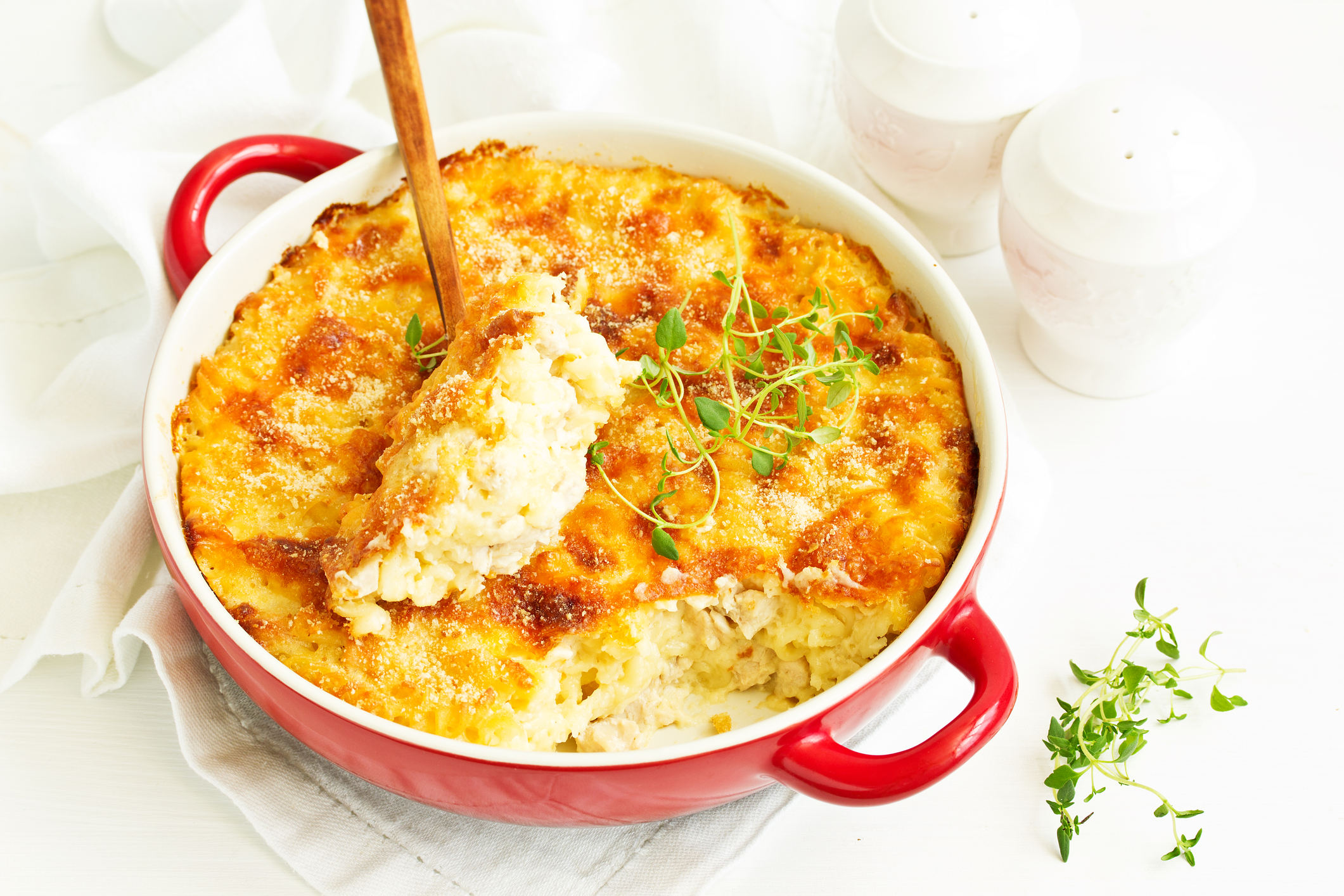
The Breadcrumb Layer — This Is Where I Went Wrong
Panko, melted butter, parmesan. That’s it. Mix them until the breadcrumbs look evenly damp — no dry dusty patches, no clumps soaked in butter.
Spread the layer evenly, all the way to the edges. The corners of the dish bake faster than the center, so if the corners have a thicker pile of breadcrumbs, they’ll go dark before the middle is ready. That’s exactly what happened to me.
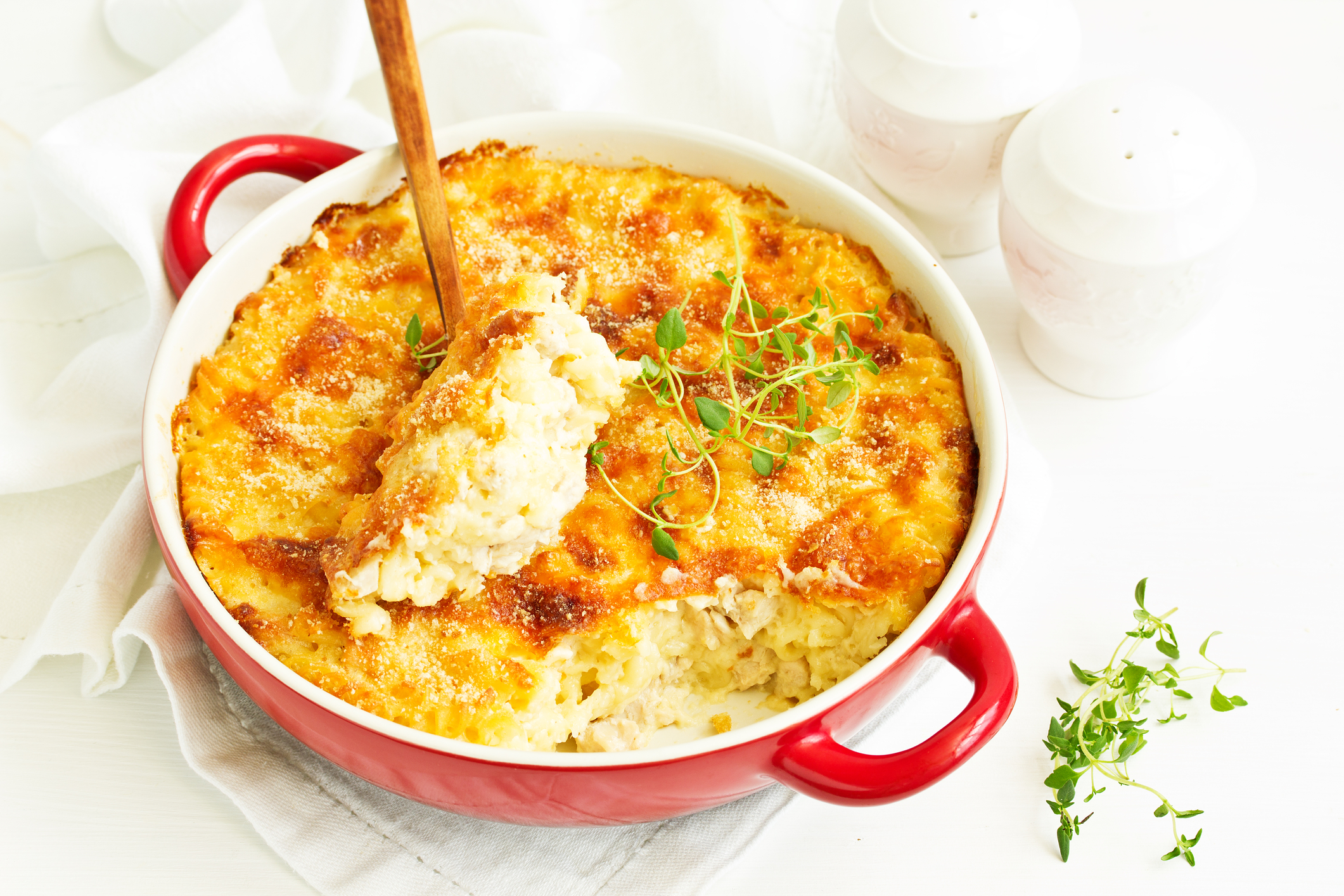
Thirty-five minutes at 375°F. I check at 28. If the top is already deep golden and the sides are bubbling, I pull it then — ovens run differently, and mine tends to run hot.
Five minutes of rest before you serve it. The sauce firms up slightly as it cools and the portions hold their shape instead of sliding apart when you scoop them out.
The parsley isn’t decorative. It cuts through the richness.

The Honest Part
My daughter asked for this three weeks in a row. I made it the third time on a Thursday when I was tired and distracted, and I forgot to grease the baking dish.
The bottom layer stuck. Not catastrophically — but the first serving came out ragged and I had to pry it loose, and the dish took about twice as long to clean.
Grease the dish. It takes four seconds and I don’t know why I skipped it.
Did yours turn out the way you expected the first time?
—Step 1: Preheat the oven to 375°F (190°C). Set a large pot of salted water on to boil while the oven comes up to temperature — by the time the water is boiling, the oven will be close to ready.
Step 2: Cook 1 pound of penne pasta until al dente — usually about 2 minutes less than the package says. Drain it and set it aside in the pot or a large bowl. Don’t rinse it. (The surface starch is doing something useful.)
Step 3: In a large saucepan over medium heat, melt 4 tablespoons of butter. Whisk in 4 tablespoons of flour and keep stirring for a full 2 minutes. It should start to smell faintly nutty and the color will shift from pale yellow to something closer to cream.
Step 4: Add the 3 cups of whole milk gradually — a slow, steady pour while you whisk. Don’t stop whisking. Cook the mixture for about 5 minutes over medium heat, stirring frequently, until it thickens enough to coat the back of a spoon and hold a line when you run your finger across it.
Step 5: Remove the saucepan from heat entirely. Stir in 3 cups shredded sharp cheddar, 1 cup shredded gruyere, 1 teaspoon salt, ½ teaspoon black pepper, and ¼ teaspoon nutmeg. Keep stirring until everything is melted and the sauce is smooth. I always stir in slow circles here rather than fast whisking — it keeps the sauce from breaking. Did your sauce come together smoothly? Share below!
Step 6: Combine the drained pasta and cheese sauce in a large bowl and stir until every piece is coated. Pour the mixture into a greased 9×13 inch baking dish and spread it into an even layer.
Step 7: In a small bowl, mix together 2 cups panko breadcrumbs, 3 tablespoons melted butter, and 1 cup grated parmesan. Stir until the breadcrumbs are evenly coated. Spread this topping over the casserole all the way to the edges — thin and even, no thick piles in any one spot.
Step 8: Bake for 35 minutes, until the top is golden and the edges are visibly bubbling. Check at the 28-minute mark if your oven runs hot. Let the casserole rest for 5 minutes before serving, then scatter fresh parsley over the top.
Ways to Change It Up
Try this: Stir in 2 cups of shredded rotisserie chicken with the pasta before baking. It makes the casserole substantial enough that it doesn’t need anything else on the table.
Try this: Add ½ teaspoon smoked paprika to the breadcrumb topping and swap half the parmesan for pecorino. The crust comes out sharper and slightly smoky.
Try this: Fold in a 10-ounce package of thawed, squeezed-dry frozen spinach with the cheese sauce. It disappears into the casserole almost completely but adds something green that makes you feel slightly better about the amount of cheese involved.
Which would you go for? Drop it in the comments.
How to Serve It
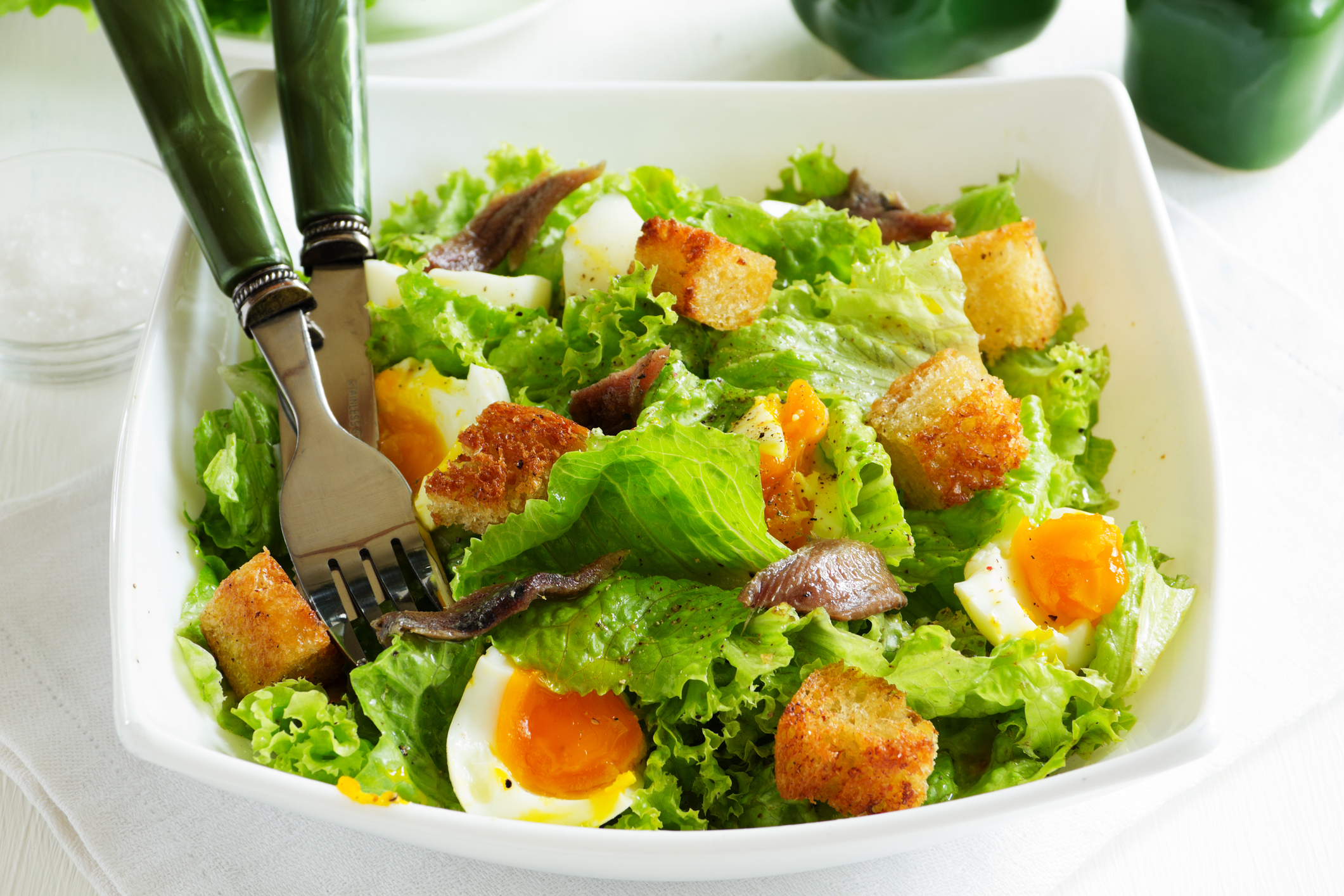
A sharp green salad with a simple vinaigrette. The acid cuts through the cheese in a way that keeps the meal from feeling heavy after the second serving.
Roasted broccoli or broccolini on the side — something with a bit of char. The bitterness works against the richness of the sauce and the whole plate makes more sense together.
Crusty bread if you’re not worried about the extra carbs. My daughter uses it to scrape the bottom of her portion and I’ve stopped commenting on it.
What would you pair it with?
—Storing It Without Ruining It
Cover the dish tightly with plastic wrap or transfer leftovers to an airtight container. It keeps in the fridge for about 4 days — the topping softens by day two, but the flavor is genuinely better after a night.
For freezing: portion it into individual servings before freezing, not as one large block. Reheat from frozen in a 350°F oven, covered with foil, for about 25 minutes. It works, but the texture of the pasta is softer than fresh.
To reheat from the fridge, cover with foil and bake at 350°F for about 15 minutes, or microwave individual portions in 90-second intervals until hot through the center. The microwave method is fine. I’m not going to pretend I always use the oven.
Have you ever saved leftovers like this? Tell me below!
Mistakes I Made So You Don’t Have To
I once skipped the parmesan in the breadcrumb topping because I was out and thought it wouldn’t matter. The crust came out pale and bland — it browned eventually but had no real flavor. The parmesan is what gives the topping its bite.
Adding cheese to the sauce while the heat was still on. The sauce went grainy and never recovered. I served it. It wasn’t good. No redemption there — just a lesson that took me two tries to actually apply.
Using skim milk instead of whole milk because that’s what was in the fridge. The sauce was thinner and less cohesive, and the baked casserole had a slightly watery layer at the bottom. Whole milk isn’t optional here.
Did something like this happen to you?
Questions People Actually Ask
Can I make this ahead of time? Yes — assemble the whole thing up to the breadcrumb topping, cover it, and refrigerate it for up to 24 hours. Add the topping right before baking, not before refrigerating. And add about 10 minutes to the bake time since the dish is going in cold.
Can I use a different pasta shape? It depends on the shape. Rigatoni works almost as well as penne. Farfalle tends to cook unevenly in the oven because the thin wing tips go soft before the thick center does. I tried rotini once and it was fine, but nothing special.
Do I have to use gruyere? No. But if you swap it for something mild like mozzarella, the flavor flattens out noticeably. Fontina is the closest substitute that doesn’t lose much. I tried Swiss once — wrong direction entirely.
Can I make this gluten-free? Use a 1:1 gluten-free flour blend for the roux and gluten-free pasta. The roux behaves slightly differently — it can thicken faster, so watch it. Gluten-free panko exists and works fine for the topping. But the pasta texture after baking is softer than regular pasta would be.
How do I know when it’s actually done? The top should be deep golden — not pale tan, not dark brown. The edges should be visibly bubbling. If you press gently on the center of the topping, it should feel set and not watery underneath. About 35 minutes at 375°F gets there, but check at 28 if your oven is unpredictable.
Can I double it? Two separate 9×13 dishes, not one bigger vessel. Doubling into a deeper pan means the center takes much longer to heat through and the top will overcook before the bottom is ready. I tried it. The edges were good. The middle was not.
Which answer helped you most?
Before You Make It
Fun fact: Gruyere has been made in the Fribourg region of Switzerland since at least the 12th century — and it’s specifically the caves in that region, with their particular humidity and temperature, that develop the flavor you can’t quite replicate elsewhere.
This casserole is straightforward — no unusual technique, no hard-to-find ingredients, nothing that requires special equipment. But it has enough places to go wrong that it’s worth reading through the steps once before you start.
The roux and the cheese are the two moments that decide everything. Get those right and the rest follows.
I still check the breadcrumb topping at 28 minutes every time. Every time. Old habits from the night I burned the corners.
Will you make this soon?
My next batch is going in with smoked paprika in the topping. I’m not sure it’s going to work the way I’m picturing it, but that’s usually how I find out.
Happy cooking! —Marina Caldwell
Cheesy Pasta Casserole Easy Weeknight Comfort Dinner
Ingredients
- 1 pound penne pasta
- 4 tablespoons butter
- 4 tablespoons all-purpose flour
- 3 cups whole milk
- 3 cups sharp cheddar cheese, shredded
- 1 cup gruyere cheese, shredded
- 1 teaspoon salt
- ½ teaspoon black pepper
- ¼ teaspoon nutmeg
- 2 cups panko breadcrumbs
- 3 tablespoons melted butter
- 1 cup parmesan cheese, grated
- 2 tablespoons fresh parsley, chopped
Instructions
- 1Preheat oven to 375°F (190°C).
- 2Cook pasta according to package directions until al dente. Drain and set aside.
- 3In a large saucepan, melt 4 tablespoons butter over medium heat.
- 4Whisk in flour to create a roux, stirring constantly for 2 minutes.
- 5Gradually add milk while stirring to avoid lumps. Cook for 5 minutes until thickened.
- 6Remove from heat and stir in cheddar cheese, gruyere cheese, salt, pepper, and nutmeg until melted.
- 7Combine cooked pasta with cheese sauce in a large bowl.
- 8Pour mixture into a greased 9×13 inch baking dish.
- 9In a small bowl, combine panko breadcrumbs, melted butter, and parmesan cheese.
- 10Sprinkle breadcrumb mixture evenly over the casserole.
- 11Bake for 35 minutes until golden brown and bubbly.
- 12Let cool for 5 minutes before serving.
- 13Garnish with fresh parsley and serve hot.
Notes
See full recipe for nutritional information.