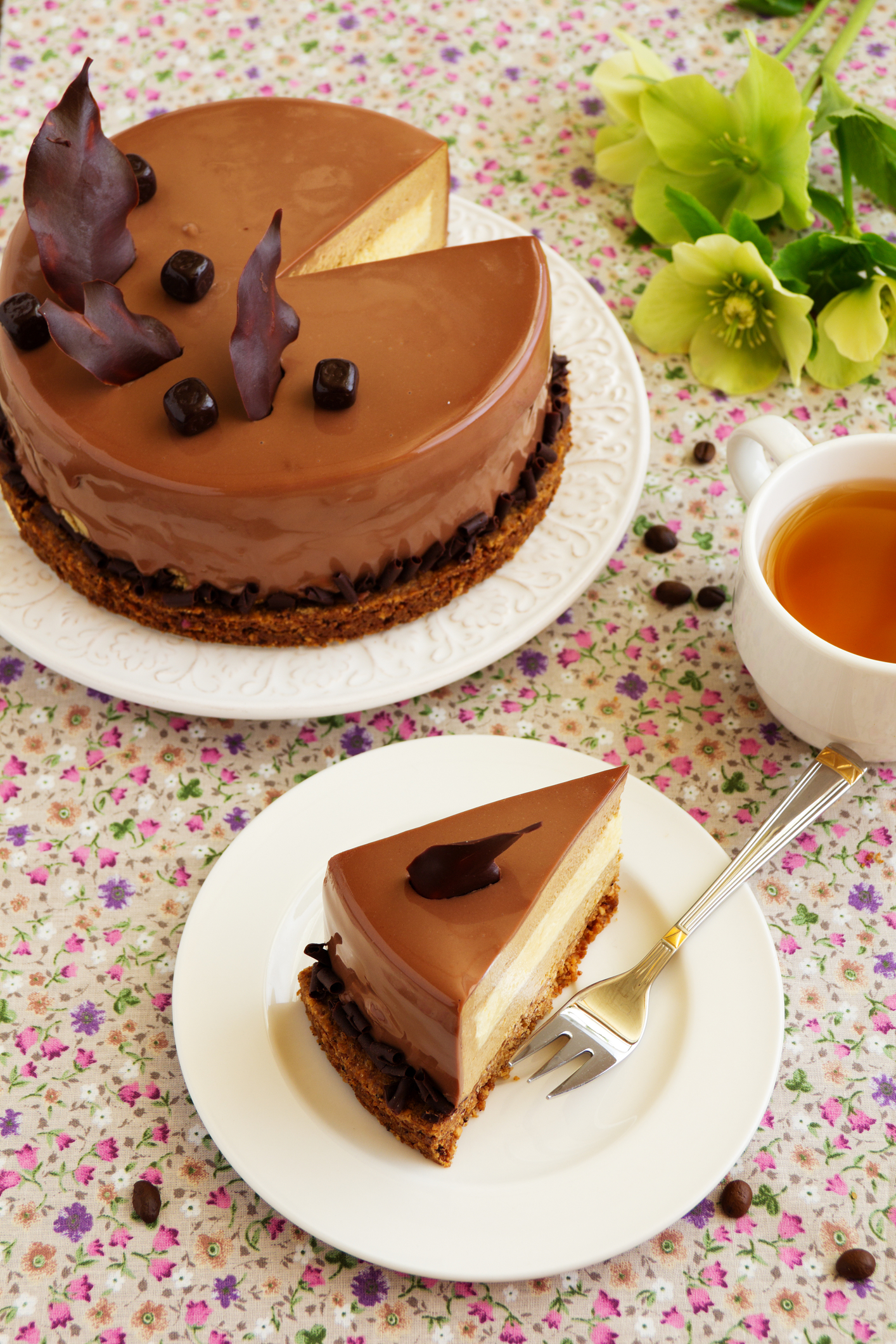
Tired on a Thursday. Made This Anyway.
Nobody asked me to make a layered cake that week. I just had leftover mascarpone and a bottle of amaretto that had been sitting on the counter since my neighbor Diane brought it over in February.
I wasn’t in a generous mood about it. I didn’t want a project. I wanted something I could assemble in under an hour and put in the fridge without thinking about it.
That’s not what happened.
The first cake layer — and I mean this flatly — cracked down the middle when I turned it out. Not a hairline crack. A full split. I pressed it back together, spread mousse over it, and continued. It held. You couldn’t tell when it was sliced.
The mousse, though. That part surprised me in the direction I didn’t expect — it came together in about four minutes, smoother than anything I’d made before with mascarpone. Cool temperature matters more than technique here. I had left the mascarpone out too long once before and the whole thing went grainy and loose. This time I used it straight from the fridge, which felt counterintuitive,
and it folded like it was cooperating with me for once.
The coffee in the batter. Don’t skip it.
Most chocolate cake recipes that call for coffee treat it like a background note. This one doesn’t — the coffee is present. You can taste it underneath the cocoa, not as a separate thing, but as something that makes the chocolate taste more like itself.
I used leftover morning coffee, cooled down, mixed with the sour cream before it went into the batter. 1½ cups total. The sour cream makes the crumb tighter, which you want here because the mousse is heavy and you need the cake to hold up to it without compressing.
Tender but dense enough. That’s the target.
I thought about adding espresso powder on top of that — actually no, I didn’t. Too much. The brewed coffee is enough and adding powder on top pushes it from background note into bitter territory, which is not what the amaretto is there to balance.
Quick tip: Cool the coffee completely before mixing it with the sour cream. Warm coffee curdles the sour cream slightly, and you’ll see small lumps in the batter that don’t bake out cleanly.
About the mousse. It looked broken.
At the point where the whipped cream meets the mascarpone mixture, it looks like it’s separating. It looks like you’ve ruined it. Keep folding.
Twenty strokes, maybe thirty. It comes together into something that holds a soft peak and has this pale beige color from the amaretto. Not white. Not cream. Somewhere in between with a faint warmth to it.
The amaretto extract — listed separately from the liqueur — I’m honestly not sure it adds much. I used it because the recipe called for it. Whether it deepens the almond flavor meaningfully or just doubles the sugar, I couldn’t say with confidence. I’d try it without sometime if I had a reason to.
The mousse is generous. You’ll have more than you think you need, which is fine because half goes between the layers and half goes on top. Don’t try to use it all between the layers — the cake will slide.
Two hours in the fridge, minimum. I went three. The mousse sets up firmer that way and slices cleaner. At two hours it’s still a little soft at the edges where it meets air.
I skipped toasting the almonds. I shouldn’t have.
The sliced almonds go on top just before serving — along with the cocoa powder dusted over the whole thing. Raw sliced almonds are a little soft and pale. They look fine but they taste like filler.
I put them in a dry pan for about four minutes on medium heat, kept moving them. They came out golden-edged and actually tasted like something. The contrast between the toasty nuttiness and the coffee mousse is worth the extra pan to wash.
The cocoa dusting is mostly visual. Don’t go heavy — it turns the top of the mousse dark and slightly bitter if you use too much. A light pass through a fine-mesh sieve is enough.
Does yours look slightly uneven when you dust it? Mine always does in the spots where the mousse dipped slightly at the edge. You can drag a spatula through it gently before dusting if that matters to you. I stopped caring after the first time.
What the second day is like.
Overnight, the mousse firms up considerably and the cocoa in the cake layers starts pulling flavor from the coffee in a way that isn’t there on day one.
Diane had a slice the next morning — she stopped by for something else, saw it on the counter — and she said it tasted like a tiramisu that had figured itself out. I thought that was accurate.
Day-two cake. Sometimes that’s the point.
The mousse does weep slightly at the base of the layers after about 36 hours. It’s not dramatic, just a thin ring of liquid under the bottom layer. Still tastes fine. Just plate it before it sits too long once you cut it.
I’ve made worse with a lot more effort. This one is not difficult. It just requires patience you might not have on a Thursday evening, which is exactly when I made it.
—How to Make It
Step 1: Preheat your oven to 350°F. Grease and flour two 9-inch round cake pans — do both sides of the pan bottom and tap out the excess flour. Skipping the flour is why cakes stick on the edges even when the center releases cleanly.
Step 2: Whisk together 2 cups all-purpose flour, ½ cup cocoa powder, 1½ teaspoons baking soda, and ½ teaspoon salt in a medium bowl. Set it aside. (Don’t sift unless your cocoa is particularly lumpy — sifting isn’t necessary here and just adds a step.)
Step 3: Beat ¾ cup softened butter with 1¾ cups granulated sugar until light and noticeably pale, about 3 minutes on medium-high. It should look almost whipped, not just combined. Add eggs one at a time, beating well after each — the batter will look slightly curdled after the third egg. That’s normal.
Step 4: Mix 1½ cups cooled strong brewed coffee with ½ cup sour cream in a measuring cup or small bowl. Alternate adding the flour mixture and the coffee-sour cream mixture into the butter mixture, starting and ending with the flour — three additions of flour, two of liquid. Mix only until combined each time. Overmixing here made my first batch noticeably tough.
Step 5: Divide the batter evenly between the two prepared pans. If you have a kitchen scale, use it — eyeballing it usually means one layer comes out thicker and the whole thing lists to one side. Bake for 25–30 minutes until a toothpick comes out clean from the center.
Step 6: Cool the cakes in the pans for 15 minutes before turning out. Not 5 minutes, not 20 — 15. Too soon and they fall apart; too long and the steam makes the bottoms damp and they stick. Run a thin knife around the edge before turning. Cool completely on a wire rack before assembling.
Step 7: For the mousse: whip 1½ cups heavy cream to soft peaks in a large bowl and set aside. In a separate bowl, beat 8 oz softened mascarpone, ½ cup amaretto liqueur, ¼ cup powdered sugar, and 2 tablespoons amaretto extract until smooth and fluffy. Did your mascarpone go lumpy here? Drop a comment below and share below! Fold the whipped cream into the mascarpone mixture in three additions until no streaks remain.
Step 8: Place the first cake layer on your serving plate. Spread half the mousse evenly over the top — go all the way to the edges but not over them. Set the second layer on top, press lightly, and top with the remaining mousse. Refrigerate for at least 2 hours. Garnish with toasted sliced almonds and a light dusting of cocoa powder just before serving.
Ways to Change It Up
Try this: Swap the amaretto for Kahlúa and fold in a tablespoon of finely ground espresso into the mousse. The coffee flavor becomes dominant and the almond note disappears entirely — a different cake.
Try this: Add a thin layer of dark chocolate ganache between the first cake layer and the mousse. Let it set for ten minutes before adding the mousse on top. It adds a slight bitterness that cuts through how sweet the mousse gets after chilling.
Try this: Make it as individual servings in wide glasses instead of a layered cake — crumble the cake, layer with mousse, and refrigerate in portions. Easier to serve and you skip the whole cracked-layer problem entirely.
Which would you go for? Drop it in the comments.
How to Serve It
Serve it cold, straight from the fridge. The mousse needs the chill to hold its shape when sliced — at room temperature for more than 20 minutes, it starts to soften noticeably at the cut edges.
A small glass of espresso on the side makes the amaretto in the mousse more pronounced. Black coffee works the same way. Something strong and unsweetened is the point.
It doesn’t need anything extra on the plate — no sauce, no berry coulis, nothing. The cocoa dusting and almonds are already there. More garnish makes it look like you’re compensating for something.
What would you pair it with?
—Storing It Without Ruining It
Cover the whole cake loosely with plastic wrap and refrigerate. It keeps well for up to 3 days. After that, the mousse starts to weep more visibly and the cake layers absorb enough moisture that the texture changes in a way you’ll notice.
Don’t use an airtight container unless you have one tall enough — pressing plastic against the mousse surface flattens it and drags the cocoa dusting into the mousse. A loose tent of wrap over the plate is better.
Freezing the assembled cake doesn’t work well. The mousse separates when it thaws and the texture of the mascarpone goes slightly grainy. If you want to freeze anything, freeze the unfrosted cake layers wrapped tightly, then make fresh mousse when you’re ready to assemble.
Reheating isn’t really a thing here — this is a cold dessert. If you’re pulling a slice from the fridge and the mousse looks too firm, let it sit at room temperature for about 8 minutes. Not more.
Have you ever saved leftovers like this? Tell me below!
Mistakes I Made So You Don’t Have To
I once used warm mascarpone straight from a bowl I’d been using to make something else — it was about 70°F by then. The mousse never fully firmed up, even after three hours in the fridge. The slices just slid apart. I served it in bowls and called it a deconstructed dessert, which is the kind of thing you say when you don’t have a better explanation.
I also underbaked the cake layers by about 4 minutes the second time I made this. The toothpick came out clean at the very center but the layers were still soft and slightly wet an inch from the edge. When I added the mousse, those edges compressed under the weight. Use a toothpick in at least two spots — center and about an inch from the edge.
The amaretto quantity is easy to get wrong if you taste as you go. Half a cup sounds like a lot going in, but once it’s folded with the cream and refrigerated, the alcohol softens considerably. I tried backing it off to ⅓ cup once thinking it would be more subtle — the mousse tasted like sweet cream with a vague almond hint and nothing else. Stick with the full amount.
Did something like this happen to you?
Questions People Actually Ask
Can I make this without the alcohol? You can swap the amaretto liqueur for almond-flavored simple syrup — about ¼ cup sugar dissolved in ¼ cup water with ½ teaspoon almond extract. The mousse won’t have the same depth and will be noticeably sweeter. It depends on who’s eating it; for kids or anyone avoiding alcohol, it works. But it’s a different dessert.
Can I use whipped topping instead of whipping the cream myself? No. Pre-whipped topping doesn’t have the fat content to hold against the mascarpone mixture. It deflates within a few hours and the mousse goes loose. I tried this once out of impatience and the cake looked fine going into the fridge but was a soft mess by the time I cut it.
How far in advance can I make it? About 24 hours ahead is ideal. The flavors settle and the mousse firms up properly. Beyond 48 hours, the cocoa powder dusting on top dissolves into the mousse surface and the almond garnish softens. Still edible. Just less visually interesting.
My mousse looks lumpy after folding — is it ruined? Check the mascarpone temperature first. Lumps usually mean the mascarpone was too cold and seized up when the whipped cream hit it. But if you folded too aggressively and it’s lumpy-grainy rather than lumpy-chunky, that’s over-mixed cream — it’s starting to turn buttery. Use it anyway, just refrigerate immediately. The texture is less airy but the flavor is fine.
Does this serve 8 or 10 people? Realistically 10 if you’re serving it after a meal — the mousse is heavy and slices don’t need to be large. 8 if it’s the main event. And if someone takes a second slice, plan for 6. That’s just how it goes.
Can I use a boxed chocolate cake mix instead? It works structurally. The crumb is slightly different — a bit spongier — and it absorbs the mousse weight differently. And you lose the coffee-sour cream flavor in the base, which is part of why this cake makes sense with the amaretto mousse and not just as a vehicle for it. But if the alternative is not making it at all, use the box.
Which answer helped you most?
A Few Last Things Before You Start
The total time listed is 3 hours, which is accurate but misleading — most of that is chilling time where you’re not doing anything. Active work is maybe 45 minutes. Factor that in if you’re planning around a specific serving time.
The cocoa in the cake batter is unsweetened, and so is the dusting at the end. The sweetness in this recipe comes from the sugar in the cake and the powdered sugar in the mousse. If you’re using Dutch-process cocoa instead of natural, the cake will bake a little differently — the baking soda needs the acidity from natural cocoa to activate properly. It still bakes, but the rise is slightly flatter.
Fun fact: Amaretto — the word means “a little bitter” in Italian — is made from the kernels of apricot pits, not almonds, though it tastes like almonds. The bitter almond flavor comes from benzaldehyde, which is present in both.
I’ve made this four times now and the mousse-to-cake ratio still feels like it could go either way. More mousse would make the layers slide; less and the top looks stingy. I’ve landed on the quantities as written but I’m not certain they’re final. If you double the cake layers and keep the mousse the same, it tips into something more balanced — I haven’t tried that yet.
Will you make this soon?
The crack in my first layer is still something I think about when I’m turning out a cake. It probably doesn’t matter. But I can’t fully stop watching for it.
Happy cooking! —Marina Caldwell
Amaretto Coffee Mousse Cake Recipe Indulgence
Ingredients
- 2 cups all-purpose flour
- 1/2 cup cocoa powder
- 1 1/2 teaspoons baking soda
- 1/2 teaspoon salt
- 1 3/4 cups granulated sugar
- 3/4 cup unsalted butter, softened
- 3 large eggs
- 1 1/2 cups strong brewed coffee, cooled
- 1/2 cup sour cream
- 1 1/2 cups heavy whipping cream
- 8 oz mascarpone cheese, softened
- 1/2 cup amaretto liqueur
- 1/4 cup powdered sugar
- 2 tablespoons amaretto almond extract
- 1/4 cup sliced almonds for garnish
- 2 tablespoons cocoa powder for dusting
Instructions
- 1Preheat oven to 350°F (175°C). Grease and flour two 9-inch round cake pans.
- 2Whisk together flour, cocoa powder, baking soda, and salt in a medium bowl.
- 3Beat butter and granulated sugar until light and fluffy, about 3 minutes.
- 4Add eggs one at a time, beating well after each addition.
- 5Alternate adding flour mixture and coffee mixture (cooled coffee mixed with sour cream), beginning and ending with flour mixture.
- 6Divide batter evenly between prepared pans.
- 7Bake for 25-30 minutes until a toothpick inserted in center comes out clean.
- 8Cool cakes in pans for 15 minutes, then turn out onto wire racks to cool completely.
- 9For mousse, whip heavy cream to soft peaks in a large bowl.
- 10In another bowl, beat mascarpone, amaretto liqueur, powdered sugar, and amaretto extract until smooth and fluffy.
- 11Gently fold whipped cream into mascarpone mixture until no streaks remain.
- 12Place one cake layer on serving plate, spread half the mousse on top.
- 13Add second cake layer and top with remaining mousse.
- 14Refrigerate for at least 2 hours before serving.
- 15Garnish with sliced almonds and dust with cocoa powder before serving.
Notes
See full recipe for nutritional information.