The Loaf That Started With My Grandmother’s Kitchen Smell
Every Easter Sunday when I was small, my grandmother’s kitchen smelled like warm milk, yeast, and something dark and slightly sweet that I couldn’t name until I was much older — poppy seeds cooked down with honey.
She never wrote the recipe down. Not once.
So last March, three weeks before Easter, I decided to figure it out myself — flour-dusted counters, two failed attempts, and one loaf I’m genuinely proud of.
Why This One Is Different From Regular Brioche
Standard brioche is butter-rich and pillowy, and it’s wonderful on its own. But this Polish version — sometimes called babka — has a dense, dark swirl of ground poppy seed filling rolled right through the middle, and that changes everything about the texture and the flavor.
The filling adds weight. Each slice has real substance to it, not just softness.
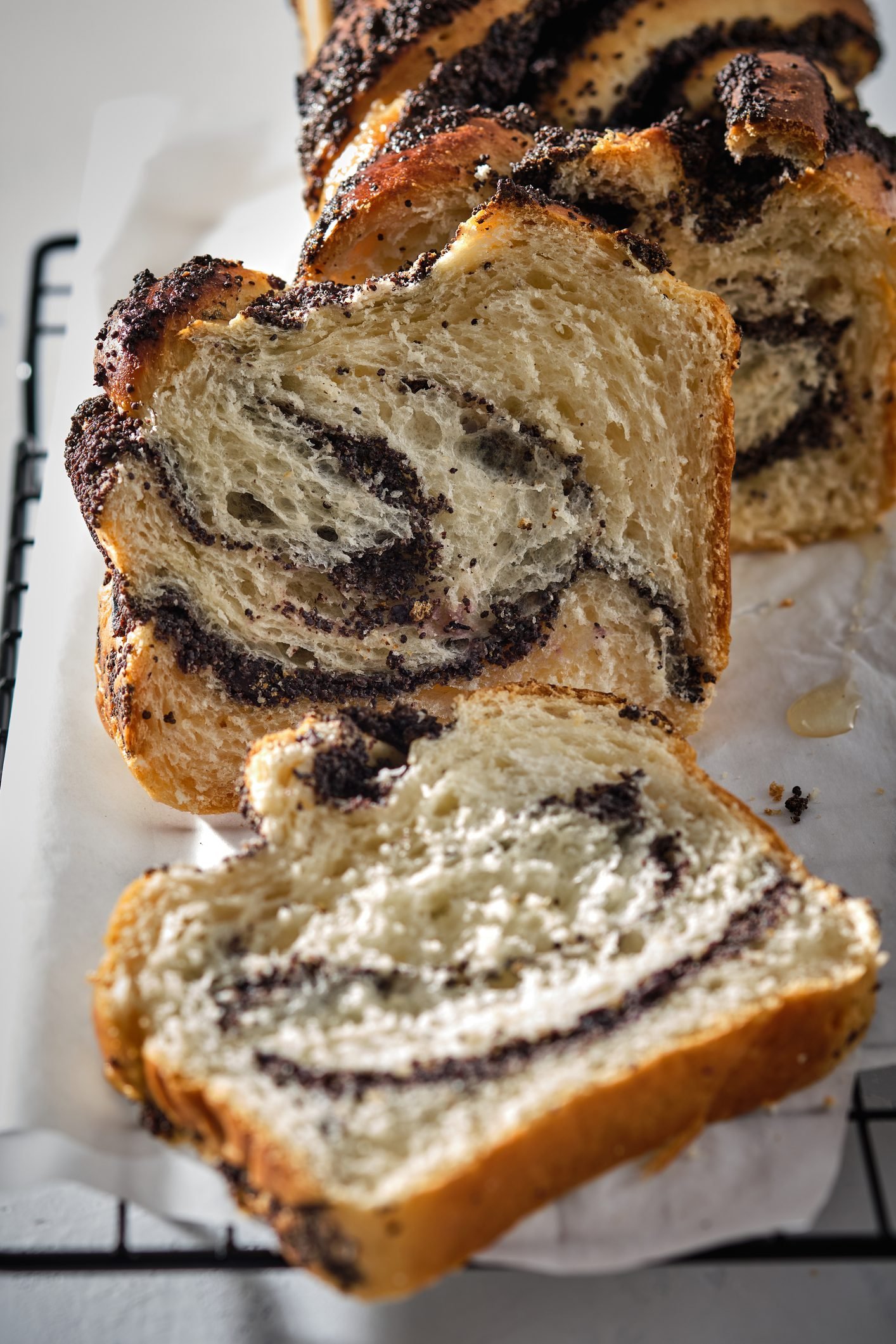
It also means the braid holds a shape that’s genuinely striking when you cut into it — dark ribbons wound through pale, golden bread.
Something Only Someone Who Made This Would Know
The moment the butter goes into the dough — all 100 grams of it — the whole thing turns into a sticky, shaggy mess that looks completely wrong.
I panicked the first time and added more flour. Don’t. That’s what flattened my first loaf and gave it a crumb like dense pound cake instead of something soft and layered.
Quick tip: Oil your hands instead of flouring the counter during the butter-incorporation stage — it keeps the dough workable without tightening the gluten.
The One Time I Actually Burned It
My second attempt went into the oven at the right temperature — 190°C — but I forgot I’d switched to a darker loaf pan, and the bottom got too much heat. The inside was fine. The bottom crust was nearly black.
I served it anyway at my neighbor Petra’s Easter table and just didn’t flip it right-side up until it was already sliced. Nobody noticed, or at least nobody said anything.
Have you ever had to quietly hide a baking mistake at a dinner table? Because I feel like we’ve all been there.
What Easter Baking Means to Me
There’s a particular kind of patience that holiday baking asks of you. Two rises. A filling to prepare in the middle. An egg wash you have to be gentle with so you don’t flatten the loaf right before it goes in the oven.
It’s not fast. It’s not supposed to be.
For me, making this on the Saturday before Easter — with the windows cracked and the radio on low — became its own kind of ritual, one that felt connected to something much older than my own kitchen.
What You’ll Need Before You Start
Pull the butter out of the fridge at least an hour ahead — genuinely softened butter, not microwave-melted, makes a difference in how cleanly it incorporates into the dough.
The poppy seed filling can be made the night before and refrigerated. Cold filling is actually easier to spread without tearing the dough.
And give yourself a full afternoon. This isn’t a two-hour project — between the first rise at 1.5 hours and the second proof at up to 60 minutes, plan on being home and nearby.
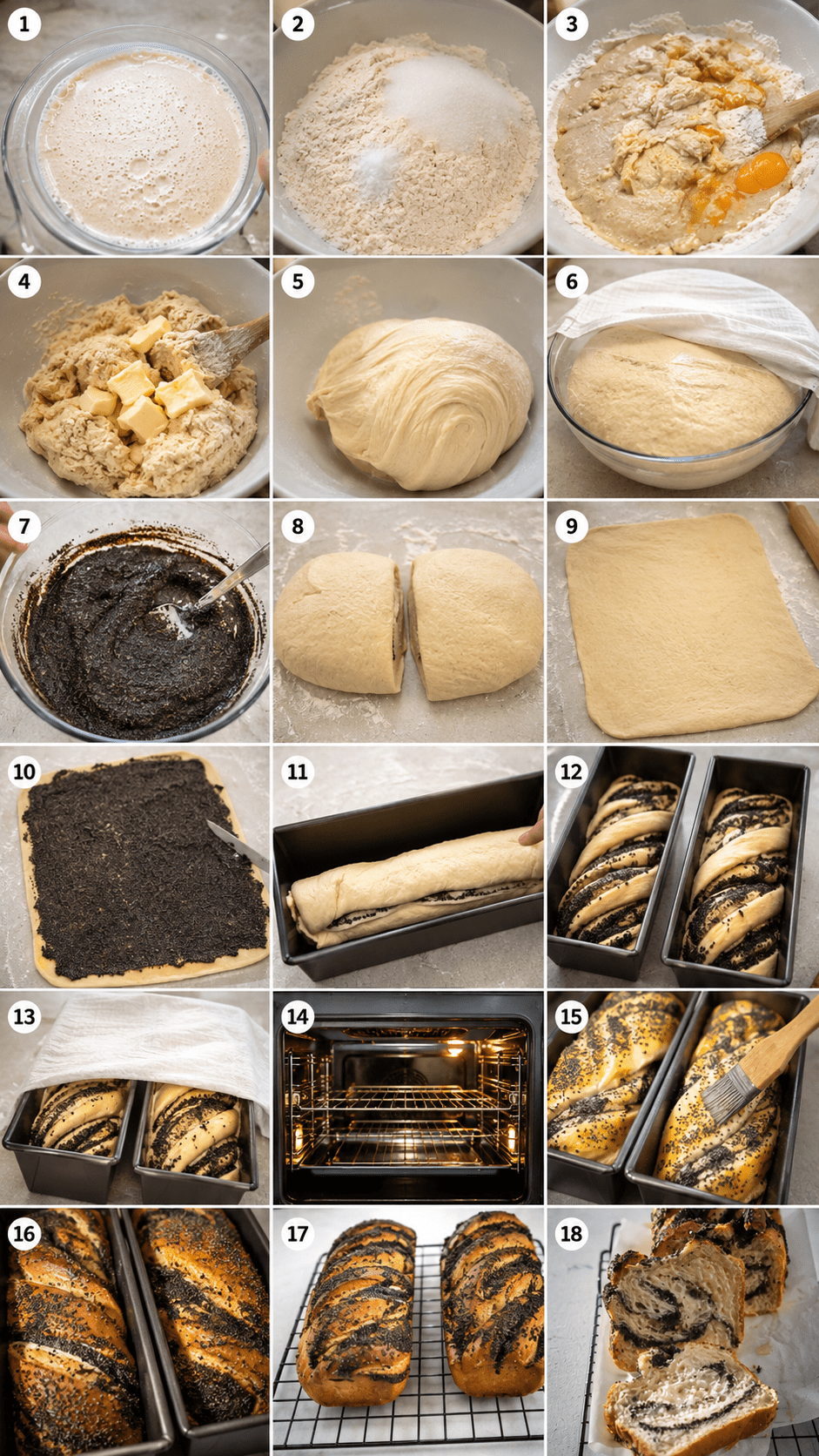
—Step 1: Combine 120ml warm milk, 100ml warm water, the 7g of instant yeast, and one tablespoon of sugar in a small bowl. Give it a stir and set it aside for 5 minutes — you’re looking for a foamy, slightly domed surface, which tells you the yeast is active. If it stays flat after 5 minutes, your water was probably too hot and killed it. Start that part over before you go any further.
Step 2: Whisk together 500g flour, the remaining sugar, and 10g salt in a large mixing bowl. Make a well in the center — a wide one, not just a small divot — so the wet ingredients actually have somewhere to go when you pour them in.
Step 3: Pour the yeast mixture into the well along with 4 large eggs and 1 teaspoon vanilla extract. Stir from the center outward until a rough, shaggy dough comes together. It’ll look messy and uneven — that’s completely normal at this stage.
Step 4: Turn the dough onto a lightly floured surface and knead for 8–10 minutes. Then add the 100g of softened butter in small pieces, pressing each addition into the dough and kneading it in before adding the next — I do about a tablespoon at a time. (This is the moment the dough becomes sticky and alarming-looking. Keep going. Do not add flour. Oil your hands if you need to.)
Step 5: Continue kneading for another 5 minutes after all the butter is in. The dough should feel smooth and soft, and when you press a finger gently into it, it should spring back slowly rather than staying dented. Honestly, that moment when it finally comes together and stops sticking to everything is one of my favorite things about bread making.
Step 6: Transfer the dough to a lightly greased bowl, cover with a damp kitchen towel, and leave it at room temperature for 1.5 hours until it’s visibly doubled in size. Don’t rush this by putting it somewhere too warm — slow rise builds better flavor.
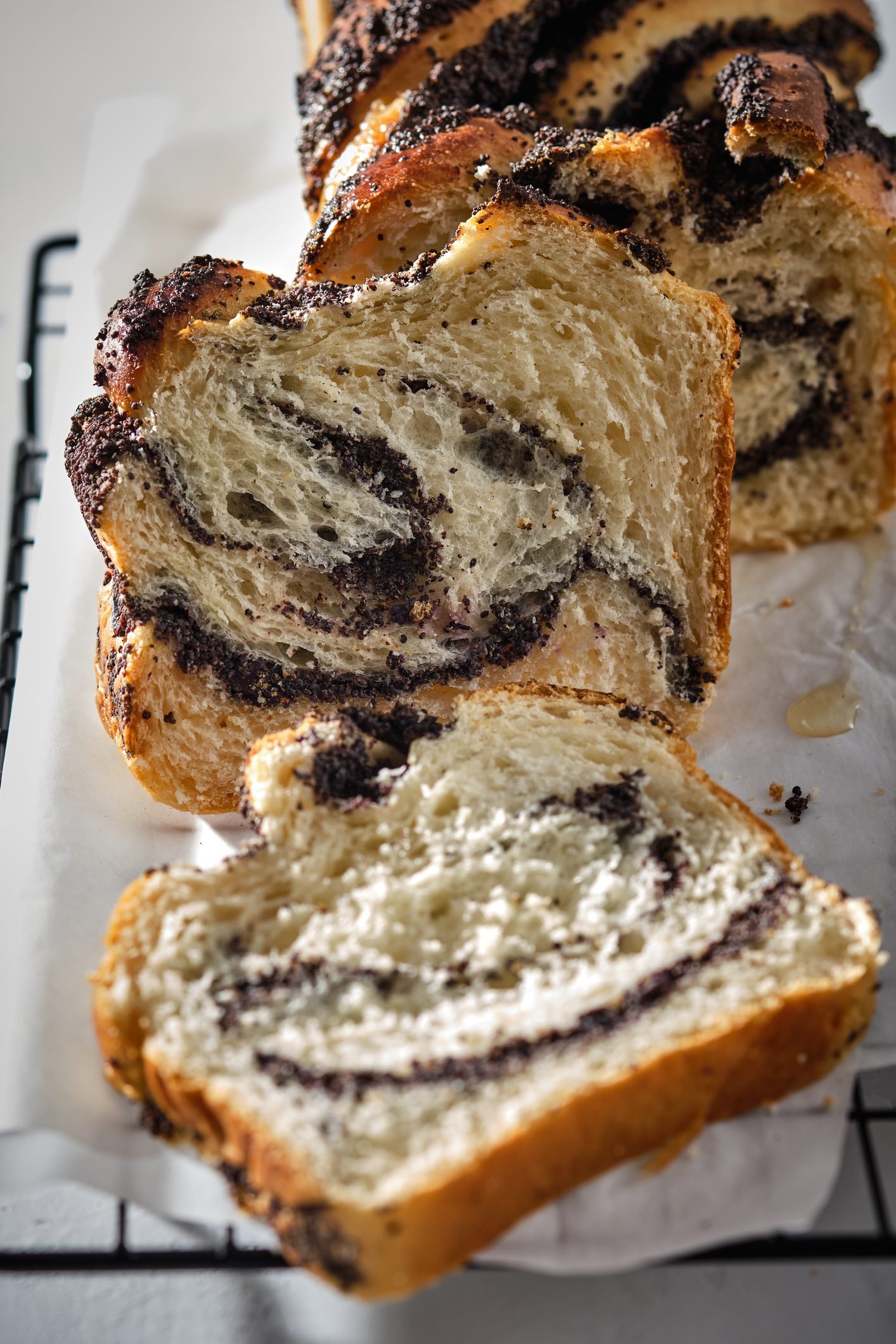
Step 7: While the dough rises, make your filling. Combine 250g ground poppy seeds, 2 tablespoons honey, a spoonful of sugar, and enough melted butter to bring it to a thick, spreadable paste — not runny, not stiff. Stir it well and set aside. If you made it the night before, take it out of the fridge now so it softens slightly.
Step 8: Once doubled, gently press the dough down and divide it into two equal portions using a bench scraper or knife. Even portions mean your two loaves bake in the same amount of time — worth the extra minute of weighing them.
Step 9: On a lightly floured surface, roll the first portion into a 10×14 inch rectangle, keeping the thickness as even as you can — thin spots will tear when you roll it up. Spread half the poppy seed filling across the surface, leaving a clean half-inch border around all edges.
Step 10: Starting from the longer edge, roll the dough tightly into a firm log. Give it a gentle twist along its length — just one full turn — then place it seam-side down into a greased loaf pan. Repeat with the second portion and the rest of the filling.
Step 11: Cover both pans loosely with a damp towel and proof for 45–60 minutes until the dough crowns about half an inch above the pan edges. Preheat your oven to 190°C (375°F) during the last 20 minutes of this wait.
Step 12: Mix 1 egg yolk with 1 tablespoon of water and brush it gently over each loaf — use a soft brush and light pressure so you don’t deflate that rise you just worked for. Scatter 2 tablespoons of poppy seeds over the tops.
Step 13: Bake for 35–40 minutes until deeply golden and an instant-read thermometer reads 88°C (190°F) in the center. My oven runs slightly hot, so I check at 33 minutes — yours might be different. Pull the loaves at whatever point the color is deep gold and the internal temperature is right, regardless of what the clock says.
Step 14: Rest in the pans for 10 minutes before turning out onto a wire rack. Let the loaves cool completely — I mean it, completely — before slicing if you want clean swirls. Or refrigerate the cooled loaf for 20 minutes first, which makes the poppy filling hold its shape much better against the knife.
Which step gave you the most trouble the first time you made an enriched dough? Share below!
Ways to Change It Up
Try this: Swap half the poppy seed filling for a thin layer of orange marmalade — the bitterness of the peel cuts through the sweetness of the honey in a way that’s really worth trying.
Try this: Add 1 teaspoon of finely grated lemon zest directly into the dough at the egg stage for a brighter, more citrus-forward loaf that still feels traditionally Eastern European.
Try this: After the loaf cools, drizzle a simple glaze of powdered sugar and warm milk over the top instead of leaving it plain — it sets in about 10 minutes and makes the loaf look like something from a bakery window.
Which would you go for? Drop it in the comments.
How to Serve It
Slice it about 3/4 inch thick and serve it slightly warm with unsalted butter — the poppy filling softens just enough that it melts into the bread a little.
It works well on an Easter table alongside boiled eggs, cold cuts, and a sharp white cheese — the sweetness of the bread balances the salt of everything else on the spread.
The day after baking, leftover slices make an outstanding French toast — soak in egg custard with a splash of vanilla, cook in butter until golden at about 3 minutes per side, and dust with powdered sugar.
What would you pair it with?
—Storing It Without Ruining It
Room temperature is fine for the first two days — wrap the loaf tightly in beeswax wrap or plastic, cut-side down if you’ve already started it, to keep that crumb from drying out.
After day two, move it to the fridge. It keeps well for up to 5 days and actually slices cleaner cold — just bring slices to room temperature for 15 minutes before eating or pop them in a 150°C oven for 8 minutes wrapped in foil.
To freeze, wrap individual slices in plastic, then foil, then into a zip bag. They thaw overnight in the fridge or on the counter in about 2 hours. The texture holds up surprisingly well — better than most enriched breads I’ve frozen.
Have you ever saved leftovers like this? Tell me below!
Mistakes I Made So You Don’t Have To
I once spread the poppy filling all the way to the very edge of the dough rectangle — no border at all — and when I rolled the log, filling squeezed out the sides and burned onto the pan in the oven. Leave the half-inch border. Every time.
My first proofed loaf went into a cold oven because I forgot to preheat during the final rise. It still baked but it took an extra 15 minutes and the crust was uneven and pale on one side. Set a timer when you start that last proof so you remember to turn the oven on 20 minutes before it’s done.
I also rushed the cool-down once and sliced into a loaf that was still slightly warm inside. The swirl completely smeared. It tasted fine but looked like a muddy mess — the poppy filling just wasn’t set enough to hold a clean line. An hour on the rack is the minimum. Did something like this happen to you?
Questions I Actually Get About This Recipe
Can I use active dry yeast instead of instant yeast? Yes, but you’ll need to proof it first in the warm milk and water for about 10 minutes rather than 5, and you may want to use slightly more — about 9g instead of 7g — since active dry yeast is less concentrated than instant. The rise times should stay roughly the same, though your kitchen temperature will have more influence on that than the yeast type does. Keep the dough somewhere consistently warm, around 24–26°C, for the best results.
Where do I find ground poppy seeds for the filling? Eastern European grocery stores are your best bet — they often carry canned poppy seed filling that works well as a shortcut if you don’t want to grind your own. If you’re grinding from whole seeds, use a clean spice grinder and go in short pulses so you get a paste-like consistency without turning it into liquid. You want the seeds broken down enough to be spreadable but still with some texture to them.
My dough didn’t double in 1.5 hours. What happened? A few things could cause this — yeast that wasn’t fully activated, milk or water that was too hot (above 43°C kills yeast), or a cold kitchen slowing everything down. If your kitchen is under 20°C, the dough might just need another 30–45 minutes. Give it time before assuming something went wrong. You can also place the covered bowl inside a cold oven with just the oven light on, which creates a stable 27°C environment.
Can I make the dough the night before and refrigerate it? Absolutely, and this is actually one of my favorite approaches for Easter morning. After kneading and shaping, cover the loaves tightly in the pans and refrigerate overnight — the cold slows the proof significantly, so they’ll need about 2 hours at room temperature the next day before baking to finish their rise and come to the right temperature. The slow fermentation adds a slightly deeper flavor to the dough that you don’t get from a quick same-day rise.
Why does my swirl disappear when I slice the bread? Two reasons, usually. First: the filling was too thin or runny when you spread it, so it absorbed into the dough during baking. Second: you sliced while the bread was still warm. The filling needs to cool and set to hold a distinct line against the pale dough. Refrigerating the fully cooled loaf for 20–30 minutes before slicing makes a significant difference — the chilled filling grips the knife differently and keeps its shape cleanly.
Can I make this as one large loaf instead of two smaller ones? You can, but I’d caution against it unless you have a large loaf pan — something at least 12 inches long. A single large roll tends to be too thick for the heat to reach the center at the same rate as the outside, which means you risk a baked exterior and an underdone middle. The thermometer test matters even more in that case: don’t pull it until the center reads 88°C, regardless of how the outside looks.
Which answer helped you most?
Make It This Easter. You Won’t Regret It.
This loaf takes time. Real time — not the kind you can shortcut with a higher oven temperature or a faster yeast.
But that time is part of what makes it feel like something worth bringing to a table you care about.
My sister thought the first version needed more lemon — she was right, which is why I now add zest directly into the dough. Small feedback, real improvement.
If you make this for Easter, or honestly any Sunday when you have a free afternoon, I’d love to know how it goes. Did the swirl come out clean? Did you try the marmalade variation? Did you eat a slice warm before it fully cooled and regret the smeared filling? Same.
Will you make this soon?
Fun fact: Poppy seeds contain tiny amounts of natural compounds that have been used in folk medicine for centuries — and in Poland, they’ve been a symbol of fertility and abundance in Easter baking for generations, which is part of why you see them in so many traditional holiday breads.
Happy cooking! —Marina Caldwell
Braided Polish Poppy Seed Brioche With Sweet Filling
Ingredients
- 500g all-purpose flour
- 100g sugar
- 10g salt
- 7g instant yeast
- 120ml warm milk
- 100ml warm water
- 4 large eggs
- 100g softened butter
- 1 teaspoon vanilla extract
- 250g poppy seed filling (ground poppy seeds, honey, sugar, butter)
- 2 tablespoons honey
- 50g melted butter (for brushing)
- 1 egg yolk + 1 tablespoon water (egg wash)
- 2 tablespoons poppy seeds (for topping)
Instructions
- 1Combine warm milk, water, yeast, and one tablespoon of sugar in a small bowl. Rest for 5 minutes until a foamy layer develops on the surface.
- 2Whisk together flour, remaining sugar, and salt in a large mixing bowl, creating a well in the center.
- 3Pour the activated yeast mixture into the well along with eggs and vanilla extract. Stir until a rough, shaggy dough comes together.
- 4Turn dough onto a lightly floured surface and knead for 8-10 minutes. Add softened butter in small pieces, working each addition fully into the dough before adding more.
- 5Continue kneading for an additional 5 minutes until the dough becomes smooth, supple, and springs back when gently pressed.
- 6Transfer dough to a lightly greased bowl and cover with a damp kitchen towel. Allow to rise at room temperature for 1.5 hours until visibly doubled in size.
- 7While dough rises, prepare the filling by combining ground poppy seeds, honey, sugar, and melted butter, stirring until a thick, spreadable paste forms.
- 8Gently deflate the risen dough and divide evenly into two equal portions using a bench scraper or knife.
- 9On a lightly floured surface, roll the first dough portion into a 10×14 inch rectangle, keeping thickness even throughout.
- 10Spread half the poppy seed filling across the rectangle, leaving a clean half-inch border along all edges.
- 11Starting from the longer edge, roll the dough tightly into a firm log. Give it a gentle twist along its length, then nestle it seam-side down into a greased loaf pan.
- 12Repeat the rolling, filling, and shaping process with the second dough portion and remaining poppy seed filling.
- 13Loosely cover both shaped loaves with a damp towel and leave to proof for 45-60 minutes until the dough crowns above the pan edges.
- 14Preheat your oven to 190°C (375°F) during the final 20 minutes of proofing.
- 15Gently brush each loaf with egg wash, then scatter poppy seeds generously over the tops.
- 16Bake for 35-40 minutes until deeply golden and an instant-read thermometer inserted into the center registers 88°C (190°F).
- 17Rest loaves in their pans for 10 minutes before carefully turning them out onto a wire cooling rack.
- 18Allow to cool completely before slicing for clean, defined swirls. Serve slightly warm or at room temperature.
Notes
– For the cleanest swirl pattern when slicing, refrigerate the fully cooled loaf for 20-30 minutes beforehand, as the chilled filling holds its shape much better against the knife. – If your dough feels stubbornly sticky after adding all the butter, resist adding extra flour as this will tighten the crumb. Instead, lightly oil your hands and continue kneading until the gluten develops properly. – Leftover babka slices make an exceptional French toast the following day, as the enriched dough and poppy seed filling absorb the egg custard beautifully.