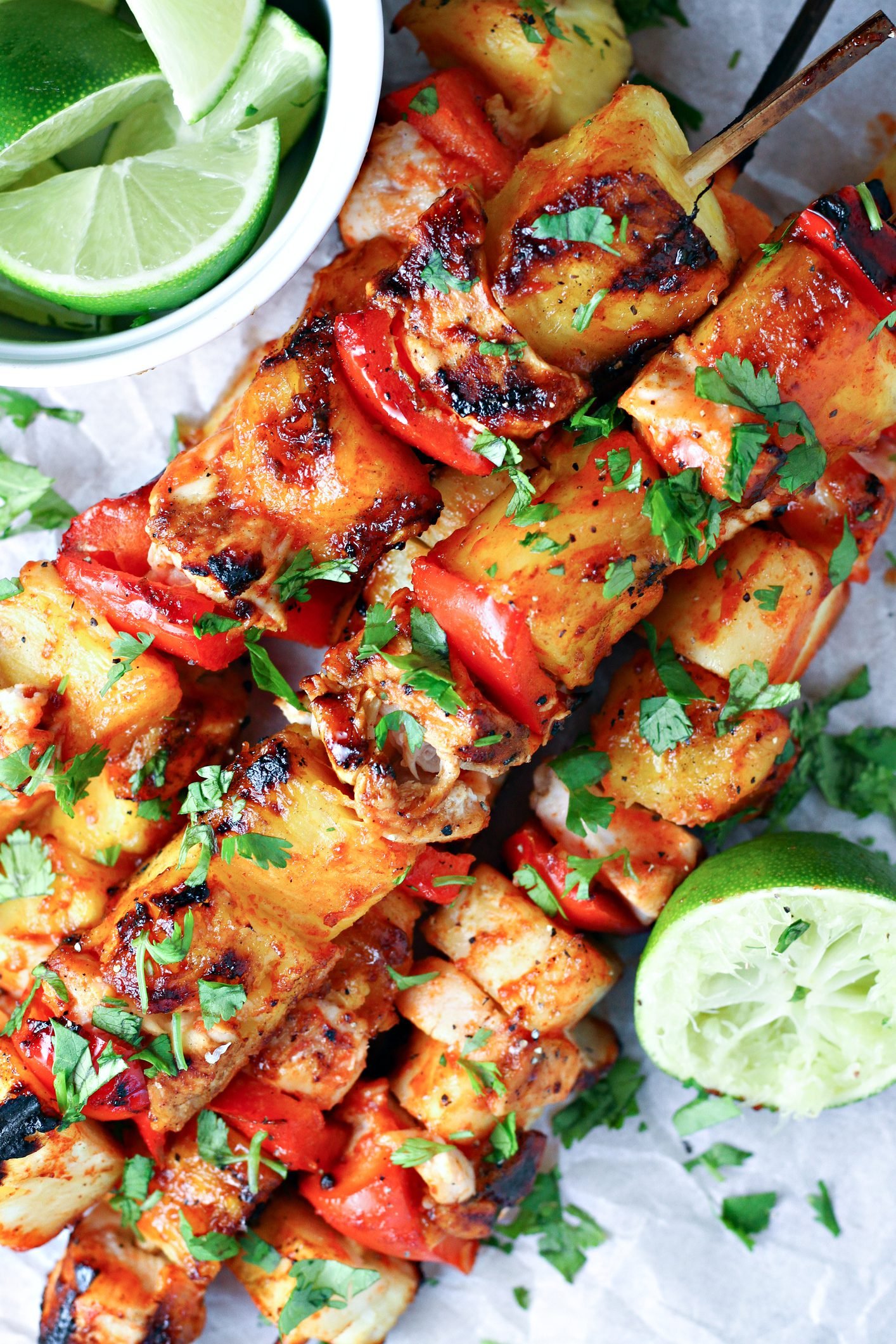
The skewers that started with a smoke alarm.
My husband set the timer for 8 minutes and walked away, and I did not correct him.
The first batch was too dark on one side and raw in the middle — not a great combination, and I served them anyway because I was already 20 minutes behind on dinner.
Okay, the marinade situation.
Three garlic cloves, minced, into the olive oil and lemon juice. Cumin and oregano too, which sounds like a weird pairing until the heat hits it and the whole grill smells like something you’d actually pay for.
I thought about adding more paprika — actually no, I kept it at half a teaspoon, because the last time I went heavier it tasted more like spice rub than anything else.
Ten minutes of marinating is the floor, not a suggestion. I’ve done it in less. I could tell.
About the peppers.
Red and yellow, not green.
Green peppers go bitter on high heat — something about the way they haven’t ripened all the way — and on a grill at 400°F that bitterness gets louder, not quieter. The red and yellow ones go soft and slightly sweet right around the 10-minute mark, which is exactly when the chicken finishes.
Have you ever noticed how the onion chunks char at the edges before anything else does? That part is not a mistake. That’s the best bite on the skewer.
It looked wrong. It wasn’t.
Around minute 9, the skewers looked genuinely alarming — dark grill marks crossing over each other, the peppers slightly collapsed, juice running down the grates.
I almost pulled them early, honestly I was second-guessing everything at that point,
and then I checked the internal temp and it read 167°F and I realized I’d been worrying about nothing.
Quick tip: Use a real instant-read thermometer, not a guess. The visual cues on grilled chicken are almost useless — charred outside means nothing about what’s happening inside.
The lime at the end matters more than you’d think.
My neighbor Rosa squeezed lime over her skewer before she even sat down, and I thought she was being dramatic.
She was right.
The lime cuts through the smokiness in a way that makes the whole thing taste brighter without changing what it is. Don’t skip it and don’t substitute lemon — they don’t taste the same off a hot grill.
One thing nobody tells you about wooden skewers.
Soak them for a full 30 minutes or just use metal ones.
I’ve done 15-minute soaks. The tips still catch. It’s annoying and also slightly embarrassing when you’re grilling for people who are watching.
Honestly? Metal skewers are just easier, and I don’t know why I kept buying the wooden ones for two years.
—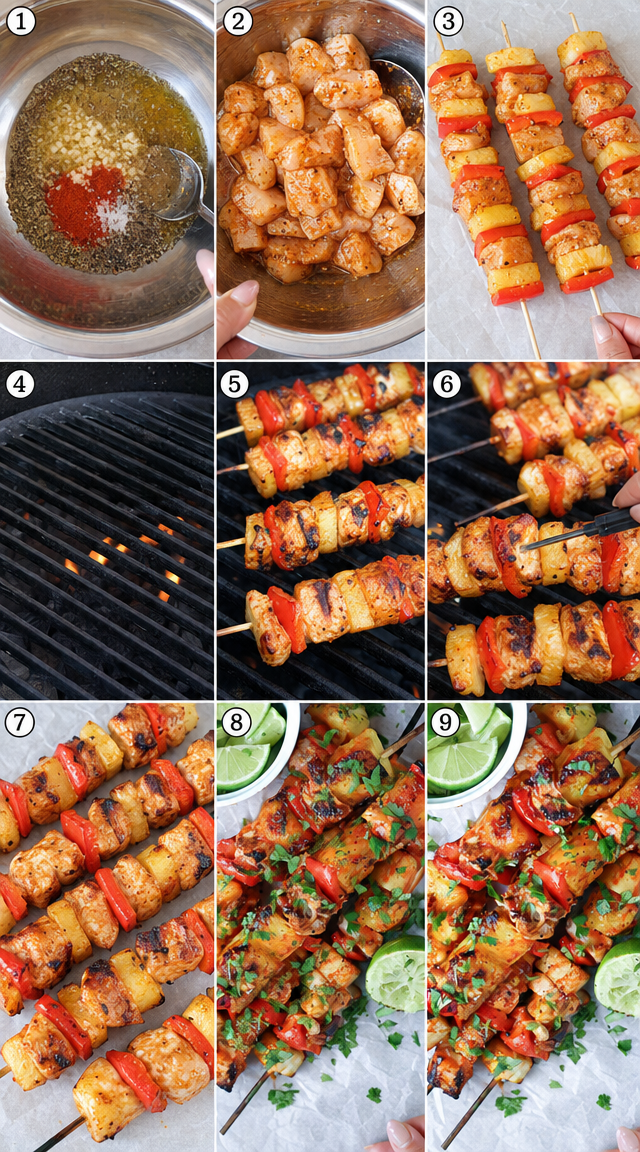
Step 1: Whisk together 3 tablespoons of olive oil, 2 tablespoons of fresh lemon juice, 3 minced garlic cloves, 1 teaspoon oregano, 1 teaspoon cumin, half a teaspoon of paprika, half a teaspoon of salt, and a quarter teaspoon of black pepper in a large bowl. Mix until it actually looks uniform — if the oil is still sitting on top, keep going. This takes maybe 45 seconds if you’re actually whisking and not just stirring.
Step 2: Add the cubed chicken to the marinade and toss until every piece is coated. Let it sit for 10 minutes at minimum — if you have the foresight to do this the night before, the flavor goes noticeably deeper throughout the meat, not just on the surface. (Don’t marinate more than 24 hours or the lemon juice starts to break down the texture in a way that gets mushy.)
Step 3: Build your skewers by alternating chicken with red pepper, yellow pepper, and onion. I do chicken, red, onion, yellow, chicken — roughly that pattern across all 8 skewers. It’s not about aesthetics, it’s about making sure nothing cooks at wildly different speeds by clumping all one thing together.
Step 4: Heat your grill to medium-high, around 400°F, and oil the grates before the skewers go on. I use a folded paper towel dipped in oil held with tongs — that’s it, nothing fancy. Did you know there are different ways to oil a grill grate? What’s your method? Share below!
Step 5: Lay the skewers on the grill and cook for 10 to 12 minutes total, rotating every 3 minutes. That 3-minute rotation is the part I kept skipping at first, and it’s why my first batch had one side that looked like charcoal. Four turns, even contact, even char. (A flat grill surface works better than grill grates with big gaps — the skewers roll less.)
Step 6: Check internal temperature on the thickest chicken piece — it needs to hit 165°F. Pull them at 165°F and let them rest on the platter for about 2 minutes before anyone touches them. The juices redistribute in that time and the first bite is much better for it.
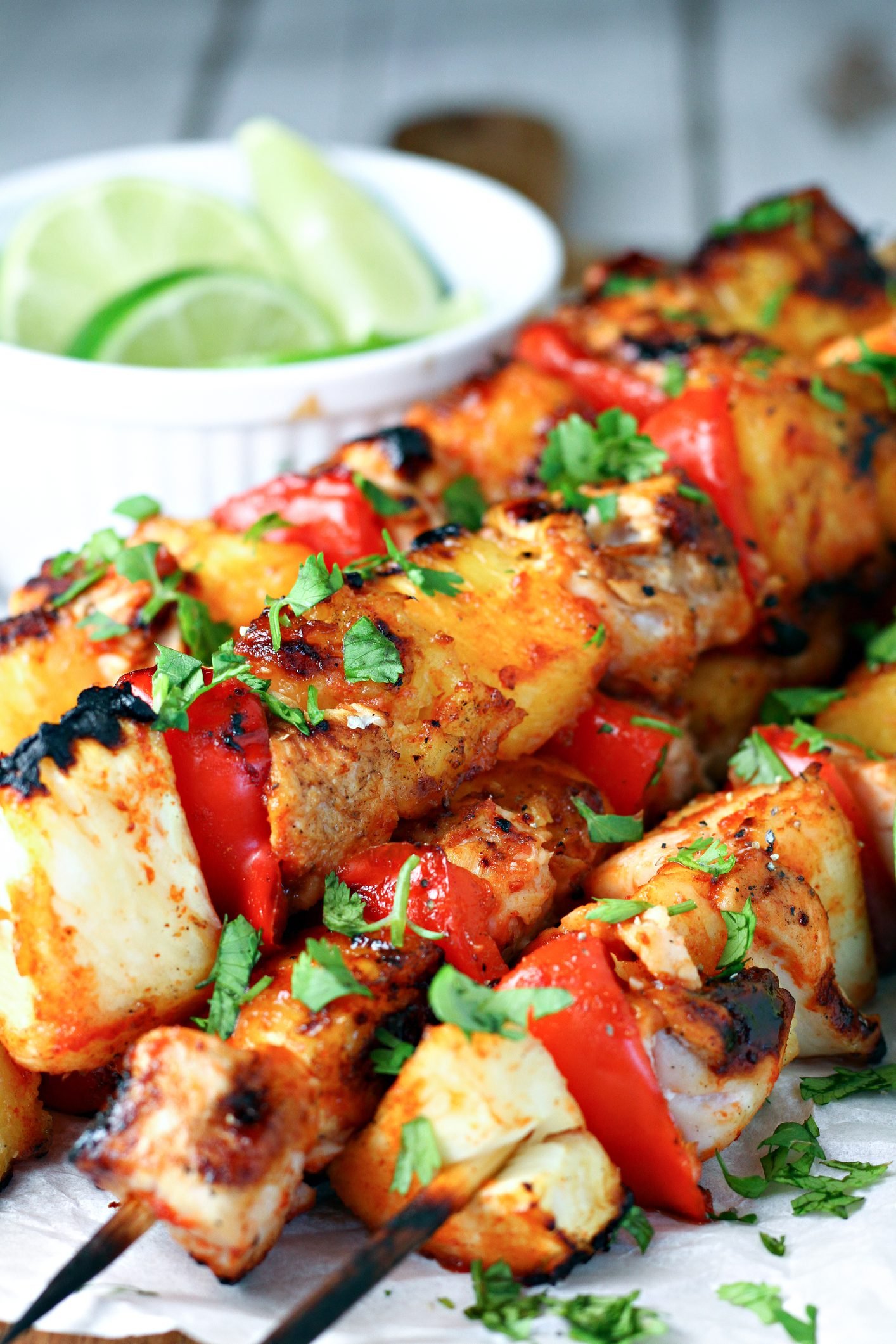
Step 7: Scatter fresh chopped parsley over the top and tuck lime wedges around the platter. Squeeze the lime directly over the hot skewers right before serving — this was Rosa’s move and I’ve stolen it permanently.
Ways to Change It Up
Try this: Swap the chicken for shrimp and cut the cook time to 4 to 5 minutes total — shrimp go from done to rubbery in about 60 seconds so watch them closely.
Try this: Add zucchini chunks between the pepper pieces. They hold up well on high heat and take on the smokiness without falling apart, which is more than I can say for mushrooms.
Try this: Double the cumin and add a quarter teaspoon of cayenne to the marinade if you want something with more heat. It doesn’t make the skewers spicy exactly — it makes them warmer, which is different.
Which would you go for? Drop it in the comments.
How to Serve It
Over a bed of plain white rice or warm pita — the juices from the skewers soak into both in a way that makes even the side dish worth eating.
A simple cucumber and tomato salad alongside keeps things fresh and cuts through the smokiness without competing with it.
You can also pull everything off the skewers and serve it over greens as a warm salad — my youngest ate three helpings of it that way and she doesn’t usually touch peppers.
What would you pair it with?
—
Storing It Without Ruining It
Pull the chicken and peppers off the skewers before you refrigerate them — leaving everything on the skewer takes up too much container space and the vegetables press into the chicken in a weird way overnight.
In the fridge, sealed container, they’re good for about 4 days. Reheat in a skillet over medium heat with a tiny splash of water in the pan so the chicken doesn’t dry out — the microwave works but the texture suffers more than I’d like.
For freezing: portion into zip bags, press the air out, and freeze up to 2 months. Thaw overnight in the fridge before reheating. Don’t try to reheat from frozen — the peppers go completely mushy and there’s no coming back from that.
Have you ever saved leftovers like this? Tell me below!
Mistakes I Made So You Don’t Have To
I once packed all the chicken pieces together on one skewer with no vegetables between them, thinking it would cook more evenly. It didn’t. The centers stayed pale and the outsides dried out because there was no moisture from the peppers nearby.
I skipped oiling the grates one time because the skewers had enough oil from the marinade. Half the chicken skin stuck and tore off when I rotated them. Lost a lot of the char I’d built up.
I also marinated chicken for 36 hours once — longer seemed better at the time. The texture was soft in a bad way, almost like the outside had started to break down before it ever hit the grill. Did something like this happen to you?
Questions I Actually Get Asked About These Skewers
Can I make these on a stovetop grill pan instead of an outdoor grill? Yes, and they turn out well — I’ve done it in a cast iron grill pan over medium-high heat with the window open. It takes about the same time, 10 to 12 minutes, but the char marks are narrower and the smoke inside your kitchen is real. Turn on the exhaust fan before you start.
Do I have to marinate the chicken, or can I skip it? It depends on how much time you have. A full overnight marinade gives you noticeably deeper flavor all the way through the meat. But even 10 minutes coats the surface and the grill does a lot of the flavor work anyway. I’ve made these in 15 minutes start to finish and they were fine. Not as good. Fine.
How do I know when the peppers are done without overcooking the chicken? At 400°F for 10 to 12 minutes, they finish at roughly the same time — the peppers should look slightly blistered and collapsed at the edges, not falling-apart soft. And the chicken hits 165°F in that same window. I tried this once using thicker pepper chunks and the chicken was done while the peppers were still almost raw, so cut them to about 1 inch, not bigger.
Can I use chicken thighs instead of breasts? Thighs are actually more forgiving on a grill because the higher fat content keeps them from drying out if you go a minute or two over. But they take slightly longer — budget 13 to 15 minutes depending on thickness. And still check the internal temp. Always.
What if I don’t have a grill thermometer to check the grill temperature? Hold your hand 5 inches above the grate — at medium-high you should be pulling it away in about 3 to 4 seconds. That’s not precise but it gets you in the right zone. But honestly, a cheap oven thermometer sitting on the grates tells you exactly what’s happening.
Is the lime at the end really necessary? No, technically. But it makes a noticeable difference — the squeeze over hot chicken and peppers right before serving lifts the whole thing. Flat without it, bright with it. Six words: just keep a lime on hand.
Which answer helped you most?
Go make them this week.
These skewers are not complicated. Eight skewers, a hot grill, and a marinade that takes 3 minutes to whisk together.
The char marks, the sweet peppers, the lime at the end — it all comes together in under 30 minutes of actual work, which is the part I always forget to mention when I’m describing this recipe to someone.
Fun fact: Bell peppers have nearly three times the vitamin C of an orange by weight — red ones especially, which is partly why they taste sweeter than green ones.
Overnight marinade if you can plan ahead. Metal skewers if you own them. Lime at the end, always.
Will you make this soon? Drop a comment and tell me how it goes — especially if you try the shrimp version, because I’m still not sure I’ve got that timing exactly right and I’d love to hear what you find.
Happy cooking! —Marina Caldwell
Charred Chicken Skewers With Vibrant Roasted Peppers
Ingredients
- 5 lbs boneless, skinless chicken breasts, cubed (1.5-inch pieces)
- 2 red bell peppers, cut into 1-inch chunks
- 2 yellow bell peppers, cut into 1-inch chunks
- 1 large red onion, cut into 1-inch chunks
- 3 tablespoons olive oil
- 2 tablespoons fresh lemon juice
- 3 garlic cloves, minced
- 1 teaspoon dried oregano
- 1 teaspoon cumin
- 1/2 teaspoon paprika
- 1/2 teaspoon salt
- 1/4 teaspoon black pepper
- 8 wooden skewers, soaked 30 minutes
- Fresh parsley for garnish
- Lime wedges for serving
Instructions
- 1Whisk together olive oil, lemon juice, garlic, oregano, cumin, paprika, salt, and black pepper in a large bowl until fully combined
- 2Toss chicken cubes into the marinade, ensuring every piece is thoroughly coated, and rest for 10 minutes
- 3Build skewers by alternating chicken pieces with red pepper, yellow pepper, and onion chunks across all 8 skewers
- 4Heat grill to medium-high, around 400°F, and lightly oil the grates
- 5Lay skewers on the grill and cook 10-12 minutes, rotating every 3 minutes to achieve even char marks
- 6Verify doneness by checking that chicken reaches an internal temperature of 165°F
- 7Transfer finished skewers to a serving platter and scatter fresh chopped parsley over the top
- 8Tuck lime wedges around the plate and serve immediately
Notes
– Marinate the chicken overnight in the refrigerator for significantly deeper, bolder flavor throughout each piece – Metal skewers are a reliable alternative to wooden ones, eliminating any soaking time and reducing burn risk – A squeeze of fresh lime directly over the hot skewers just before serving brightens all the smoky grilled flavors