The Blueberries Were Already Slightly Too Ripe
Cold soup is a hard sell in this house. I knew that going in.
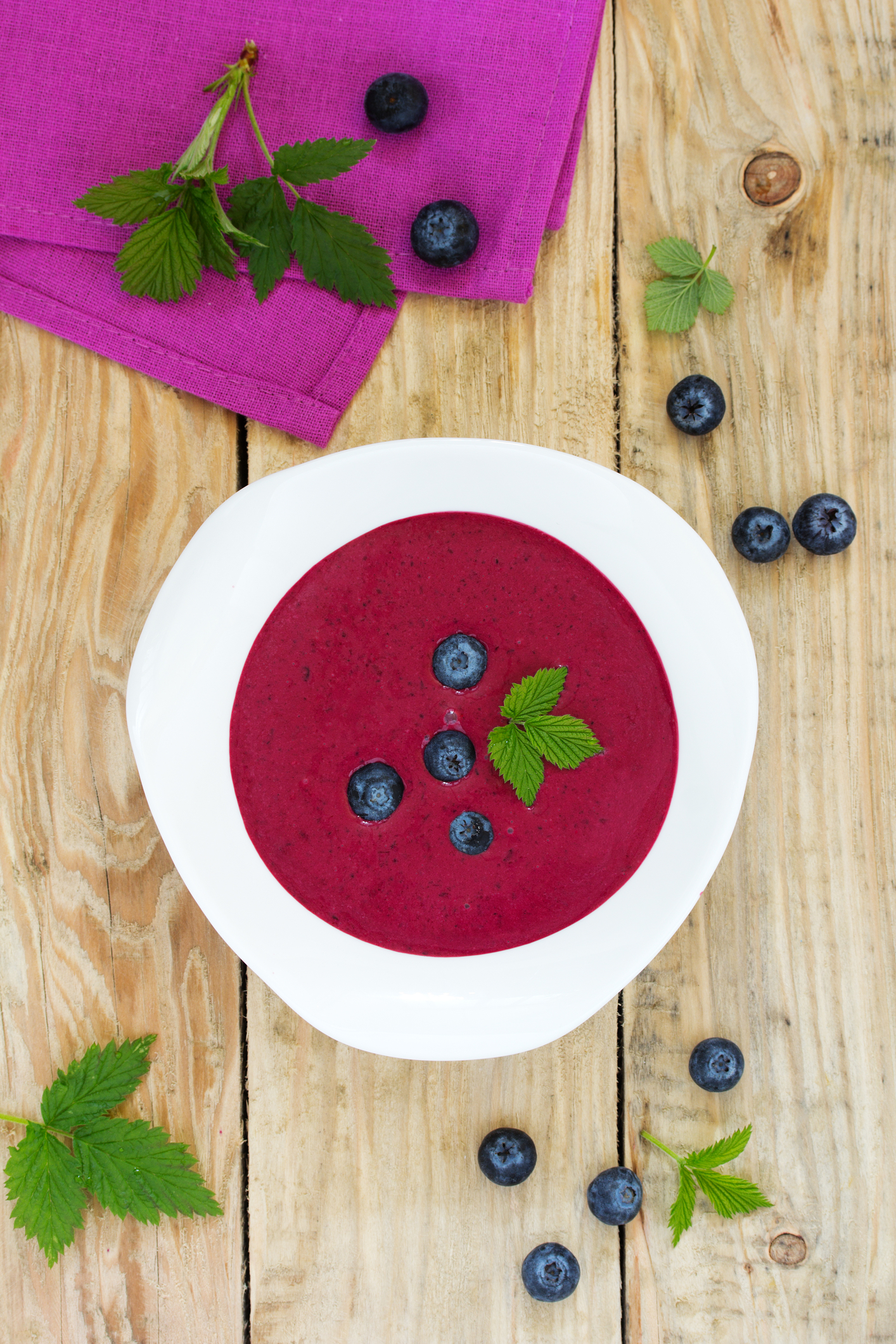
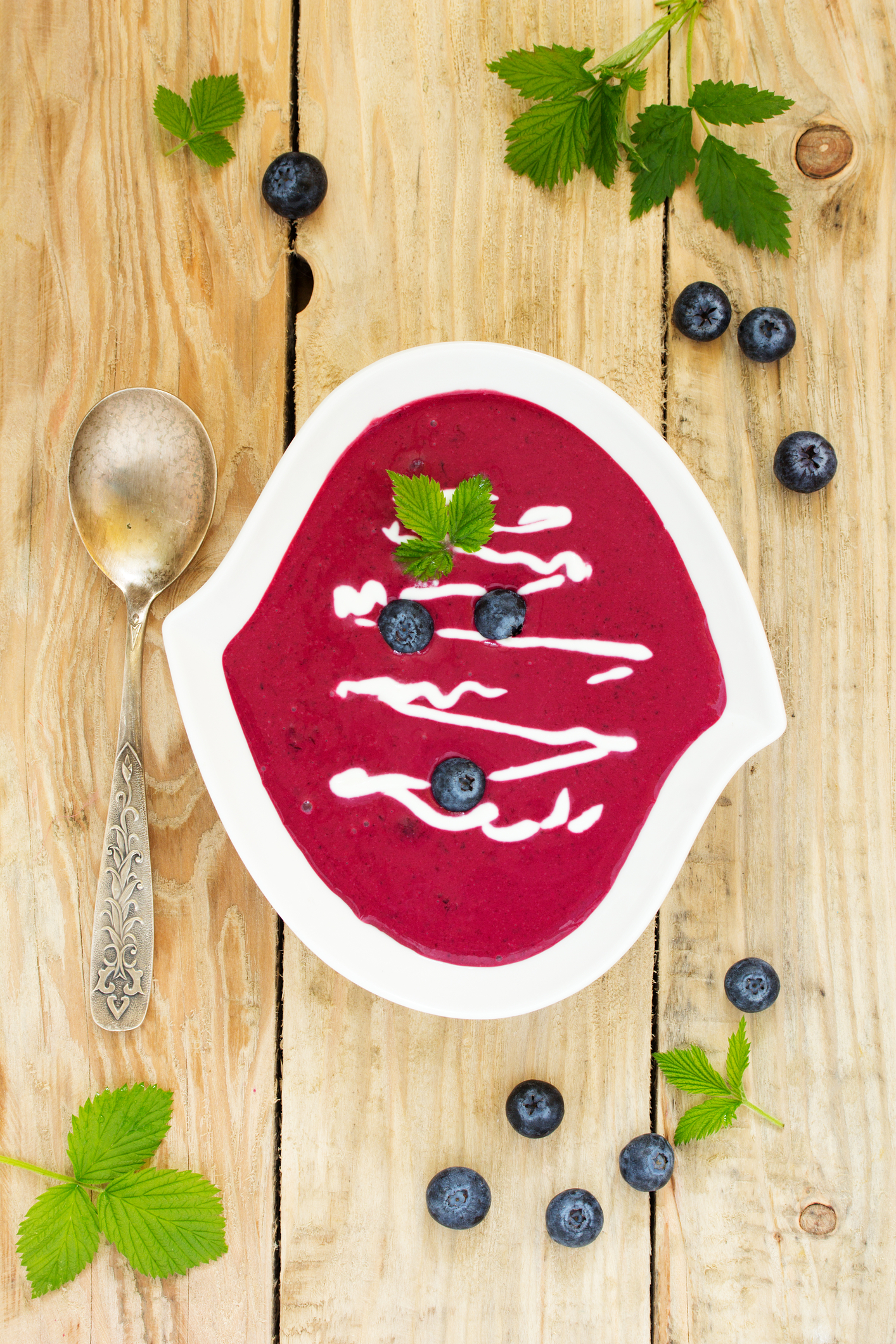
My daughter gave it the look — the one she reserves for things that aren’t pasta — when I set the bowl in front of her. Purple. Cold. Topped with cream. It did not look like dinner, and she was not wrong.
She ate the whole bowl.
I’d made this because I had two cups of blueberries sitting on the counter that weren’t going to last another day. Not sad blueberries, just pushy ones — the kind that start to collapse slightly at the bottom of the pint, just soft enough that you don’t want to eat them plain but not soft enough to throw out. That’s exactly the moment to make this.
The smell when the berries hit the warm juice and sugar is — I actually stopped what I was doing. Something between jam and fruit punch, but less cloying than either. It only lasts about 90 seconds before it settles into something quieter, so if you’re near the stove, stay near it.
The Part I Almost Got Wrong
I skipped straining it the first time. Don’t do that.
The texture without straining is fine — thicker, more like a compote — but it’s not the same dish. You lose the smoothness that makes the cream topping actually contrast with something. I thought about skipping the strainer again on batch two — actually no, I got it out. Worth it every time.
Press the berries through gently. Not aggressively. If you force them, you’ll push the skins through too, and the soup gets a slightly bitter edge at the finish that the honey can’t fix.
The cornstarch slurry is also non-negotiable. Most recipes for chilled fruit soups skip it entirely and rely on the natural pectin. They’re wrong. Without the slurry, the soup separates in the fridge and you end up with a thin, watery layer on top and a dense purple mass at the bottom. Two tablespoons of cornstarch mixed with three tablespoons of cold water, stirred in after the berries have been simmering for five minutes. Two to three more minutes on the heat, then off.
Quick tip: Let the soup cool completely at room temperature before refrigerating — if you put it in hot, condensation forms under the lid and waters it down by about 20 percent. I learned this the hard way after the first batch tasted thin and I couldn’t figure out why.
About the Cream — It’s Not Optional
Half a cup of heavy cream. Two tablespoons of sour cream. One tablespoon of honey.
Whip it until it holds soft peaks, which took me about three minutes with a hand mixer on medium. Don’t push it to stiff — you want it to fold slightly when it hits the cold soup, not sit on top like a separate thing entirely.
The sour cream is doing real work here. It cuts through the sugar in the soup. Without it, the cream topping is just sweet on sweet, and the whole bowl starts to feel like dessert before you’re halfway through it. With it, there’s a faint tang that makes the blueberry flavor come forward instead of receding.
I considered skipping the honey and using powdered sugar instead. Didn’t. Honey keeps the cream softer for longer, which matters if you’re making this ahead and plating it before anyone sits down. Powdered sugar stiffens the cream faster and it doesn’t hold the same texture after five minutes on a cold bowl.
The lemon zest goes on last, after the mint. Not before. I put it on first once and the mint covered it completely and I couldn’t taste it at all, which made the whole garnish pointless. Zest on top, mint tucked at the side.
What the Cinnamon and Nutmeg Are Actually Doing
A quarter teaspoon of cinnamon. An eighth of nutmeg. These are not spices you taste.
They’re there to keep the soup from tasting flat — blueberries at room temperature and below have a muted quality, and without something warm underneath, the whole bowl reads as one-dimensional. The spices don’t announce themselves. You’d only notice them if they were missing.
I tried cardamom once instead of the cinnamon. The soup was fine but it tilted toward something more chai-adjacent, which competed with the lemon zest in a way I didn’t love. Cinnamon stays neutral. Cardamom has opinions.
At least 2 hours in the fridge. Honestly, overnight is better — the spices settle in and the soup becomes more cohesive. Served at the 2-hour mark, it still tastes slightly like warm soup that got cold. At the 4-hour mark, it tastes like it was always supposed to be cold.
I’m not sure I’d make this again without chilling it overnight, even though I’ve done it both ways now.

The First Batch Broke. I Served It Anyway.
I whipped the cream too far on my first attempt. It went grainy before I caught it.
I served it anyway. Nobody said anything, which either means they didn’t notice or they were being polite. Either way, the soup underneath was good enough that the cream issue was secondary. But it’s worth watching — once heavy cream starts to look cottage-cheesy, you can’t pull it back.
The soup itself is more forgiving than the topping. You can add a splash more juice if it comes out too thick after straining. You can’t un-whip cream.
Cold Soup in a Warm Bowl Is a Waste of Effort
Put your bowls in the freezer for 10 minutes before serving. This is not precious. It’s practical.
A warm bowl warms the soup from the bottom while you’re eating, and by the third spoonful you’ve lost the chill that makes this dish what it is. Cold bowl keeps it at temperature long enough to actually finish it.
Serve it as a first course, not dessert. It reads as dessert visually but it’s too tart and too lightly sweet to work as one — it’ll make whatever comes after it taste strange. As a starter before something savory and simple, it’s exactly right.
Does this kind of dish work at your table, or does cold soup always get a skeptical look? I’m genuinely curious because mine is split down the middle every single time.
—Step 1: Combine the blueberries, blueberry juice, sugar, cinnamon, and nutmeg in a medium saucepan over medium heat. Stir everything together before the heat climbs — the sugar dissolves more evenly if it’s moving from the start. You’ll see the berries begin to release their juice within the first two minutes.
Step 2: Bring the mixture to a simmer and stir occasionally for 5 minutes. The berries will start to soften and burst on their own — don’t press them yet. (If you press them too early, before they’ve fully softened, the skins can make the soup slightly bitter once it cools.)
Step 3: Mix the cornstarch with 3 tablespoons of cold water in a small bowl until completely smooth. Lumpy slurry means lumpy soup — take an extra 30 seconds to get it right before adding it to the pan.
Step 4: Stir the cornstarch slurry into the simmering soup and cook for 2 to 3 minutes, stirring constantly. The soup will thicken noticeably — it should coat the back of a spoon. I always set a timer here because this is the step I’ve rushed and regretted.
Step 5: Remove from heat and let the soup cool to room temperature before doing anything else with it. This takes about 20 to 30 minutes on the counter depending on your kitchen. Don’t cover it yet — trapping the steam causes condensation that dilutes it.
Step 6: Pour the cooled soup through a fine mesh strainer into a bowl or container, pressing the berries gently with the back of a spoon. You’re looking to get as much liquid through as possible without pushing the skins. This step takes patience — about 3 to 4 minutes of steady pressing.
Step 7: Cover and refrigerate for at least 2 hours. Overnight is better. The flavor tightens up considerably between hour 2 and hour 6, and if you can plan ahead, you’ll taste the difference.
Step 8: When you’re ready to serve, whip the heavy cream, sour cream, and honey together with a hand mixer on medium until soft peaks form. Watch it — this cream goes from soft to over-whipped in under a minute once it gets close. Did your cream hold its shape the way you expected? Share below!
Step 9: Ladle the chilled soup into cold bowls. Add a generous dollop of cream — don’t be stingy, the cream-to-soup ratio matters. Finish with fresh mint leaves and a pinch of lemon zest directly on top of the cream.
Step 10: Serve immediately. This does not hold well once plated — the cream starts to sink into the soup after about 8 minutes and you lose the visual contrast entirely.
Ways to Change It Up
Try this: Swap the blueberry juice for pomegranate juice. The soup turns a deeper red-purple and gains a sharper tartness that pairs well with the honey cream. Add an extra tablespoon of sugar to compensate for the bitterness.
Try this: Use coconut cream instead of heavy cream for the topping. It won’t whip the same way — you’ll get a looser, pourable cream — but the coconut flavor works with the blueberry in a way that’s unexpected and genuinely good.
Try this: Stir a tablespoon of balsamic vinegar into the soup before straining. It sounds wrong. It isn’t. The vinegar deepens the berry flavor without making the soup taste like salad dressing — just adds a background note that makes the whole thing more interesting.
Which would you go for? Drop it in the comments.
How to Serve It
Serve it as a first course before something simply grilled — chicken thighs, a piece of salmon, anything that won’t compete with the sweetness. The soup works as a palate opener, not a closer.
For a casual lunch, pair it with good bread and a sharp cheese on the side. The salt from the cheese cuts the sweetness of the soup in a way that makes both things taste better.
If you’re serving it at a dinner party, plate it at the table rather than in the kitchen — the cream starts moving the moment it hits the cold soup, and carrying four bowls from one room to another costs you about 2 minutes of presentation time you don’t get back.
What would you pair it with?
—Storing It Without Ruining It
The soup on its own keeps in the fridge for up to 4 days in a sealed container. Don’t store it with the cream already in it — the cream breaks down and sinks, and reintegrating it doesn’t really work.
For freezing: the soup base freezes well for up to 2 months. Thaw it overnight in the fridge, give it a good stir, and re-strain it if the texture looks uneven. Make the cream fresh when you’re ready to serve — it doesn’t freeze.
Reheating is not something I’d do. This dish is built around being cold. If it warms up, it becomes a syrup, which is fine on pancakes but not what you made.
The mint and lemon zest should always go on fresh. Stored garnish is just wilted garnish.
Have you ever saved leftovers like this? Tell me below!
Mistakes I Made So You Don’t Have To
I once made the soup and served it at the 45-minute mark because I was impatient and convinced myself it was cold enough. It wasn’t. The flavors tasted scattered — the cinnamon was too sharp, the sugar too present, the berry too muted. It needed time and I didn’t give it any.
I skipped the sour cream in the topping and used all heavy cream the second time I made this. The topping was flat — sweet and white and structurally fine but contributing nothing. The sour cream is a small quantity but it changes everything about how the topping interacts with the soup.
I also used frozen blueberries once without thawing them first, which extended the simmer time by almost 4 minutes and threw off the cornstarch ratios because of the extra liquid the berries released. The soup came out thinner than intended. If you use frozen, thaw them completely and drain the liquid before they go in the pan.
Did something like this happen to you?
Questions I Actually Get About This Soup
Can I make this without the cornstarch?
You can, but the soup will separate after about an hour in the fridge. I tried this once thinking the natural pectin from the blueberries would be enough — it wasn’t. A thin, watery layer settled on top and no amount of stirring fully fixed it. The cornstarch is a small step with a disproportionate effect on texture.
How long does it actually need to chill?
Minimum 2 hours. But the real answer is 4 to 6. And overnight is better than either. At 2 hours the soup is cold. At 6 hours it’s cohesive. It depends on how far ahead you’re planning.
Can I use frozen blueberries?
Yes, but thaw them first and drain off the liquid. I tried adding them frozen once and got a thinner soup and a longer cook time — about 14 minutes total instead of the usual 7 or 8. And drain them. Seriously.
What if I don’t have blueberry juice?
Water works. The soup is slightly less intense in flavor — maybe 15 percent less concentrated — but it’s still good. I’ve made it both ways. Blueberry juice is better. Water is fine.
Can the cream topping be made ahead?
Up to about 2 hours. After that it starts to weep liquid at the bottom. Keep it covered in the fridge and give it one or two folds with a spoon before serving to refresh the texture. But don’t re-whip it.
Is this a dessert or a first course?
First course. It’s not sweet enough to satisfy as dessert and it’s too sweet to sit alongside a savory main. It works as a starter before something simple and unadorned. I’ve served it as dessert twice. Both times it left people slightly confused about what came next.
Which answer helped you most?
Before You Make It
This is a recipe that rewards patience more than technique. The technique is straightforward — simmer, thicken, strain, chill, whip. None of it is difficult.
What trips people up is the timing. The chilling time is not optional and it’s not flexible. Make it the day before if you can. Make the cream the day of.
The lemon zest matters more than it looks like it should. Don’t skip it thinking the mint is enough garnish. They’re doing different things — the mint is aromatic, the zest is flavor.
Will you make this soon?
I haven’t figured out whether it works better as a dinner party opener or a quiet lunch thing. Both times I’ve made it for guests, someone asked for the recipe. Both times I made it just for us, I thought it needed something — I still haven’t decided what.
Fun fact: Blueberries are one of the only naturally blue foods that get their color from anthocyanins — the same compounds that make red cabbage purple and change color in acidic versus alkaline environments. Add lemon juice to blueberries and they turn brighter. Add baking soda and they shift toward green. The lemon zest in this recipe is doing more than you think.
Happy cooking! —Marina Caldwell
Chilled Blueberry Soup with Creamy Summer Bliss
Ingredients
- 2 cups fresh blueberries
- 1 cup blueberry juice or water
- 1/2 cup sugar
- 1/4 teaspoon cinnamon
- 1/8 teaspoon nutmeg
- 2 tablespoons cornstarch
- 3 tablespoons water
- 1/2 cup heavy cream
- 2 tablespoons sour cream
- 1 tablespoon honey
- Fresh mint leaves for garnish
- Zest of 1 lemon
Instructions
- 1Combine blueberries, blueberry juice, sugar, cinnamon, and nutmeg in a saucepan
- 2Bring mixture to a simmer over medium heat, stirring occasionally for 5 minutes
- 3Mix cornstarch with water to create a slurry
- 4Stir cornstarch mixture into the soup and cook for 2-3 minutes until thickened
- 5Remove from heat and let cool to room temperature
- 6Pour soup through a fine mesh strainer, pressing berries gently
- 7Refrigerate soup for at least 2 hours or until chilled
- 8Whip heavy cream with sour cream and honey until soft peaks form
- 9Ladle soup into bowls and top with a dollop of cream
- 10Garnish with fresh mint leaves and lemon zest
- 11Serve immediately and enjoy
Notes
See full recipe for nutritional information.