This Is Not a Breakfast Recipe. Or Maybe It Is.
Rolled them up on a Tuesday afternoon, just to see. It was not a special occasion and no one had asked for them.
The filling — cottage cheese, honey, a handful of walnuts I’d been meaning to use for two weeks — turned out to be the thing I kept tasting straight from the bowl before I’d even started cooking the pancakes.
I’d made chocolate pancakes before, thin ones, but always as a stack. Rolling them was something I’d seen in a photo somewhere and filed away for later. Later turned out to be a random Tuesday.
Worth it.
The Batter Almost Got Away From Me.
The first pancake tore when I tried to flip it. I’d poured the batter too thick, and the cocoa made it harder to see when the edges were actually lifting.
Second one was fine. I’d turned the heat down slightly — medium, not medium-high — and waited a full two minutes before touching it.
Thin enough to roll without cracking. That’s the only target worth hitting here.
Most recipes tell you to wait until bubbles form before flipping a pancake. With a cocoa batter, you can’t see those bubbles. Watch the edges instead — when about half an inch around the perimeter looks dry and matte, it’s ready.
Quick tip: Tilt the pan as you pour so the batter spreads into a wide, thin circle before it sets. You want something closer to a crêpe than a flapjack.
About the Cottage Cheese.
My neighbor Roz told me once that she’d never put cottage cheese in anything sweet. I get it. It’s a credibility problem the ingredient has.
But drained well and mixed with honey, it loses the wet, grainy quality people object to. It becomes something closer to a loose ricotta — mild, slightly tangy, not assertive.
I used full-fat. I thought about using low-fat — actually no, I didn’t bother. Full-fat holds together better when you spread it and doesn’t weep as much once the roll is assembled.
Three tablespoons of filling per pancake. I measured the first time, then eyeballed after that. The eyeballed ones were slightly overfilled and harder to roll, which is its own lesson.
Slightly too much filling.
The Nuts Were an Afterthought That Shouldn’t Be.
I used walnuts because that’s what I had. Almonds would work and would probably be less bitter against the cocoa, but I didn’t miss them.
The crunch matters more than the flavor here — the filling is soft, the pancake is soft, and without the nuts the whole thing is one texture from edge to edge. Not terrible, just a little flat in the mouth.
The chocolate chips went on top of the filling before rolling, not stirred in. Stirred in, they’re fine. On top of the filling, some of them end up in the middle of the roll where the warmth of the pancake softens them slightly. That’s the version worth making.
Rolling Without It Falling Apart.
Let the pancake cool for about a minute before you spread the filling. Hot pancakes tear at the edges when you try to roll them, and the filling slides.
Spread the cottage cheese mixture to within half an inch of the edges — not to the very edge. When you roll, the filling compresses and pushes outward. If you’ve already gone edge-to-edge, it will come out the sides.
Roll from one end, slowly, keeping tension without pressing hard. Place seam-side down immediately on the plate. They hold their shape better than you’d expect.
Did yours crack on the first roll too?
What It Looked Like at the End.
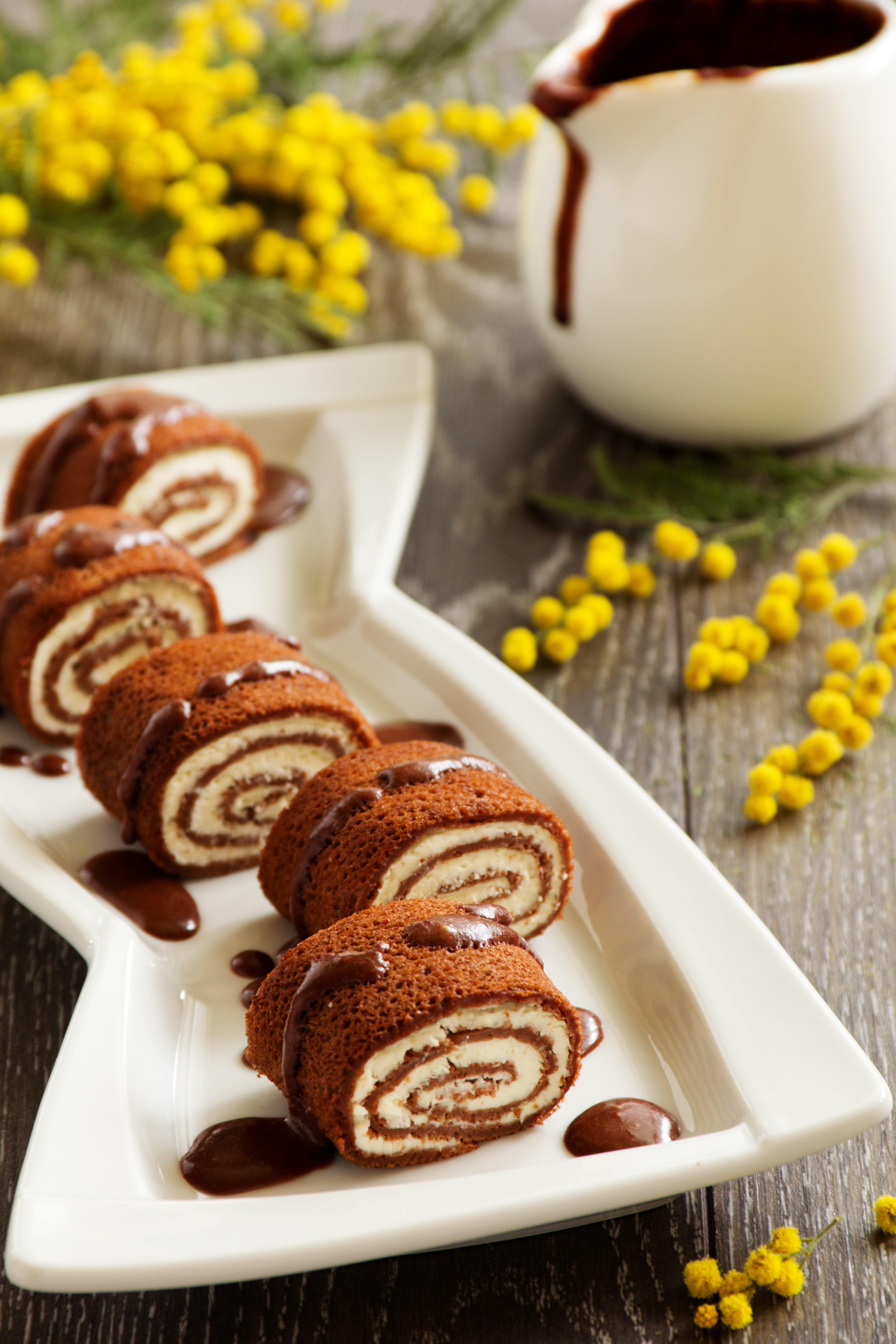
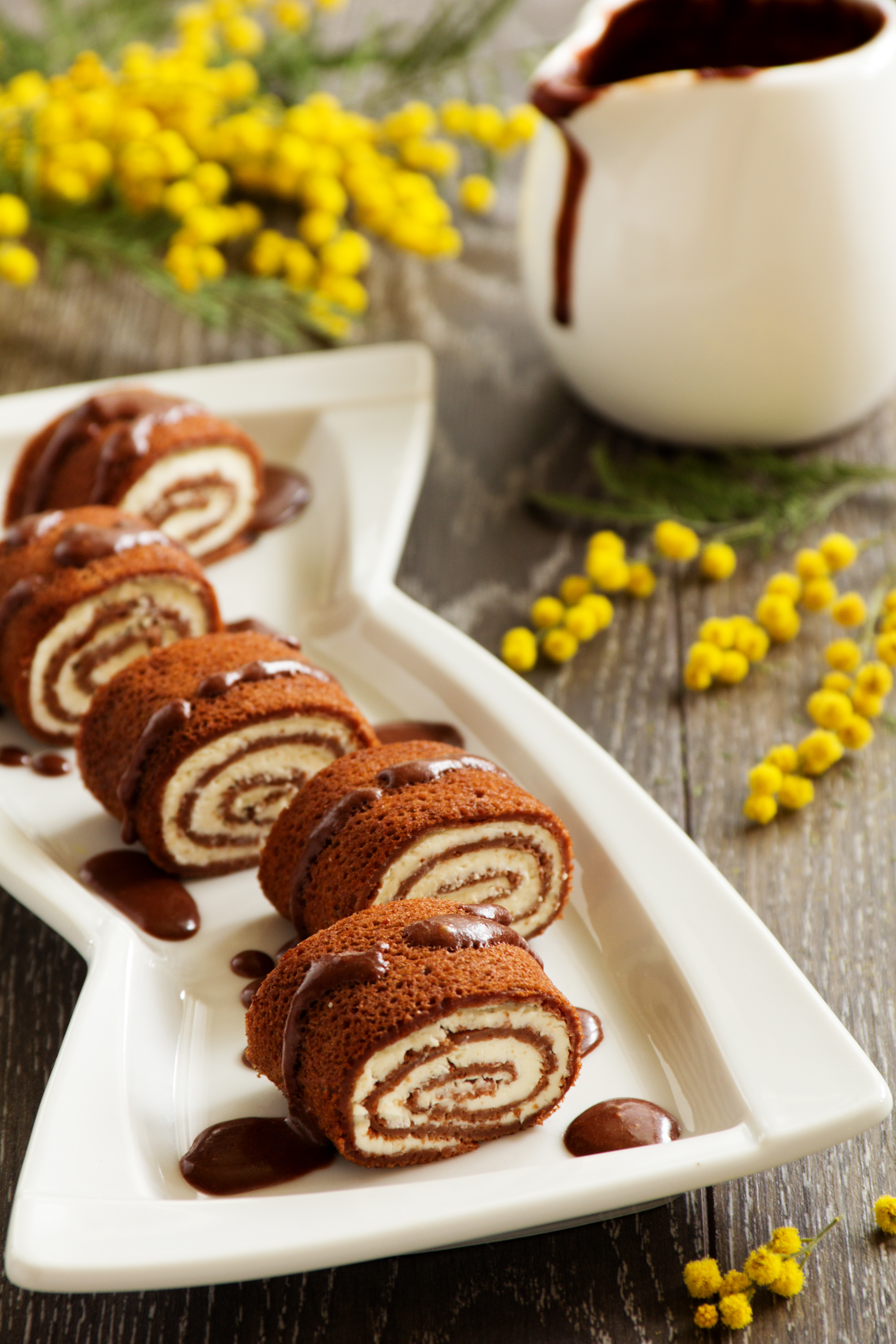
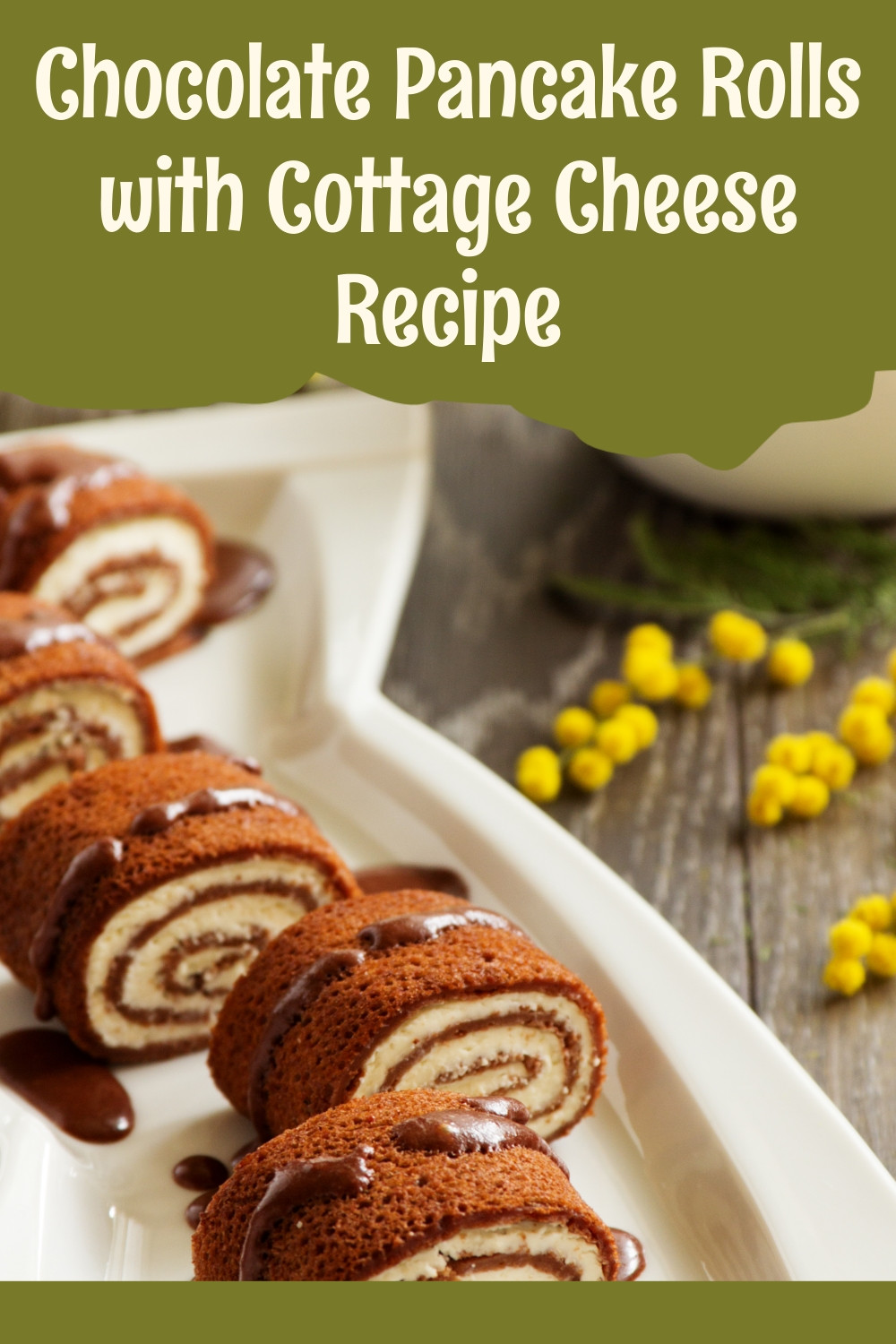
Six rolls on a white plate, drizzled with honey that ran off the sides a little. I didn’t wipe the plate. It looked fine — a little messy, which is what it is.
The cocoa pancake goes dark against the pale filling where it peeks out at the ends. If you cut one in half on the diagonal, the cross-section is actually interesting to look at — a swirl of dark and cream with flecks of nut and chocolate.
I served them warm, which I’d recommend. At room temperature they’re still fine, but the slight warmth softens the chocolate chips just enough. Cold out of the fridge is a different experience — firmer, a little dense. Not bad. Just different.
Honestly? I ate two standing at the counter before I brought the plate to the table.
Making Them, Start to Finish.
Step 1: Combine 1 cup all-purpose flour, 2 tablespoons cocoa powder, 2 tablespoons sugar, 1 teaspoon baking powder, and 1/4 teaspoon salt in a bowl. Whisk them together dry before anything liquid goes in — cocoa has a tendency to clump when it hits wet ingredients unprepared.
Step 2: In a separate bowl, whisk together 1 cup milk, 1 egg, 2 tablespoons melted butter, and 1 teaspoon vanilla extract. Pour the wet mixture into the dry and stir until smooth. A few small lumps are fine. (Don’t overwork it — I did this on my third batch, and the pancakes turned out noticeably tougher.)
Step 3: Heat a non-stick pan over medium heat and add a small amount of butter. Let it melt and foam, then pour a thin layer of batter — about 3 to 4 tablespoons — into the pan, tilting immediately to spread it wide. You want thin, not fluffy. Cook for 1 to 2 minutes until the edges look dry and matte.
Step 4: Flip carefully using a thin spatula and cook the second side for about 30 seconds. This side won’t look as even, which is fine — it becomes the inside of the roll. Transfer to a plate and repeat with the remaining batter. You should get 7 to 8 pancakes from this batch.
Step 5: While the pancakes cool slightly, mix 2 cups cottage cheese with 3 tablespoons honey and 1/4 cup chopped almonds or walnuts. I stirred this until it looked uniform, which took less time than I expected — maybe 45 seconds.
Step 6: Spread about 3 tablespoons of the cottage cheese mixture onto each pancake, leaving a border at the edges. Scatter a few chocolate chips across the filling. Roll the pancake from one end tightly but without forcing it, and set it seam-side down on a serving plate.
Step 7: Drizzle the finished rolls with additional honey. Serve warm. Did your batter end up thinner or thicker than expected? Share below!
Ways to Change It Up
Try this: Swap honey for maple syrup in both the filling and the drizzle. The flavor shifts earthier, which works particularly well if you use walnuts over almonds.
Try this: Add a teaspoon of orange zest to the cottage cheese mixture. The citrus cuts through the richness and makes the whole thing taste a little less heavy. I thought about doing this on my second batch — actually, I forgot, but I’m including it here because it would work.
Try this: Replace 1/4 cup of the cottage cheese with cream cheese for a denser, richer filling that holds together more firmly. Good if you’re making these ahead and need them to sit for a while without weeping.
Which would you go for? Drop it in the comments.
How to Serve It
Warm on a plate with a small bowl of extra honey on the side. The honey thins slightly when it hits the warm pancake, which makes for a better drizzle than doing it straight from the bottle ahead of time.
Cut two rolls on the diagonal and leave two whole — the cross-sections add visual interest without making it feel overthought. A dusting of cocoa powder over the plate takes about four seconds and looks like you planned ahead.
These also work alongside fresh fruit — sliced strawberries or a handful of raspberries cuts through the richness and adds something the filling doesn’t have. I served them once with just a cup of black coffee and that was enough.
What would you pair it with?
Storing It Without Ruining It
In the fridge, covered tightly with plastic wrap or in an airtight container, these keep for about 2 days. After that the pancake starts to absorb moisture from the filling and softens past the point of being pleasant.
Don’t freeze them assembled. The cottage cheese breaks when it thaws — it goes grainy and wet in a way that doesn’t recover. If you want to prep ahead, freeze the pancakes alone, separated by parchment, and make the filling fresh when you’re ready.
To reheat, 20 seconds in the microwave on a plate, not stacked. Stacked, the ones in the middle steam and go soggy while the outside ones stay cool. One layer only.
Room temperature for up to an hour is fine — I left a plate out while people were eating slowly and they held up. Much longer than that and the filling starts to look weepy at the ends.
Have you ever saved leftovers like this? Tell me below!
Mistakes I Made So You Don’t Have To
I once made the batter the night before, thinking it would save time in the morning. The baking powder had already done half its work by the time the batter hit the pan, and the pancakes came out flat and slightly rubbery. Make it fresh.
Filling too cold. I used cottage cheese straight from the fridge, and it was stiff and hard to spread without tearing the pancake. Letting it sit at room temperature for 15 minutes first makes it noticeably easier to work with and more evenly distributed once you roll.
Rolled them too loosely the first time, thinking I was being gentle. They unrolled on the plate. The seam-side-down part is not optional — and rolling with actual tension, not a hesitant curl, is what keeps them together. The pancake is more flexible than it looks.
Did something like this happen to you?
Questions People Actually Ask
Can I make these gluten-free? A 1:1 gluten-free flour blend works here — I tried this once with a rice flour blend and the pancakes were slightly more fragile at the edges but rolled without cracking. Give them an extra 30 seconds in the pan before flipping. And yes, it depends on the blend you use.
How much cocoa makes them taste actually chocolatey? Two tablespoons gives a mild cocoa flavor — present but not intense. If you want more depth, go up to 3 tablespoons and reduce the flour by the same amount. But the chocolate chips in the filling do more work than the batter does.
Can I use ricotta instead of cottage cheese? Yes, and it’s a smoother result. I tried this once and the filling was denser, a little richer. It doesn’t spread as far — you’ll need slightly more per roll, roughly 4 tablespoons instead of 3. And it’s less tangy, which some people will prefer.
Do these work as a make-ahead breakfast? Sort of. Assemble them the night before and store covered in the fridge. About 4 to 6 hours is fine. Much longer and the moisture from the filling migrates into the pancake. They’re still edible. Just softer than ideal.
What if I don’t have a non-stick pan? Use a well-seasoned cast iron or add more butter between each pancake. These stick if the surface isn’t right, and cocoa batter is less forgiving than plain batter. A torn pancake doesn’t roll. Use the right pan.
Can kids eat these? The chocolate chip and honey version is sweet enough that mine ate them without complaint, which is not a low bar in this house. The nuts can be left out entirely — the texture is softer, but the filling holds. They’re fine without.
Which answer helped you most?
A Few Last Things
This recipe makes more pancakes than you think — 7 to 8 from one batch of batter — and you’ll probably have 1 or 2 leftover even after filling. I ate one plain while assembling the rolls. No regrets.
Fun fact: Cottage cheese has been made in Europe since at least the 19th century and was one of the first cheeses recommended for home production in the United States — partly because it requires no aging, no special equipment, and no cultures beyond an acid like lemon juice or vinegar to separate the curds.
The honey drizzle at the end is not decoration. It loosens the filling flavor and adds a sweetness that the pancake itself doesn’t have — the cocoa batter is only lightly sweet, which is intentional.
Will you make this soon?
I keep thinking I’ll try a savory version — cottage cheese with herbs instead of honey, maybe some thin cucumber slices. Haven’t done it yet. It might be terrible. It might not be.
Happy cooking! —Marina Caldwell
Chocolate Pancake Rolls Cottage Cheese Delight
Ingredients
- 1 cup all-purpose flour
- 2 tablespoons cocoa powder
- 2 tablespoons sugar
- 1 teaspoon baking powder
- 1/4 teaspoon salt
- 1 cup milk
- 1 egg
- 2 tablespoons melted butter
- 1 teaspoon vanilla extract
- 2 cups cottage cheese
- 3 tablespoons honey
- 1/4 cup chopped almonds or walnuts
- 2 tablespoons chocolate chips
- Butter for pan
Instructions
- 1Mix flour, cocoa powder, sugar, baking powder, and salt in a bowl
- 2Whisk milk, egg, melted butter, and vanilla extract in another bowl
- 3Combine wet and dry ingredients until smooth batter forms
- 4Heat butter in a non-stick pan over medium heat
- 5Pour thin layer of batter and cook 1-2 minutes until edges lift
- 6Flip and cook other side 30 seconds until cooked through
- 7Transfer pancake to plate and repeat with remaining batter
- 8Mix cottage cheese with honey and chopped nuts in a bowl
- 9Spread 3 tablespoons cottage cheese mixture on each pancake
- 10Sprinkle chocolate chips over filling
- 11Roll pancake tightly from one end and place seam-side down
- 12Arrange rolls on serving plate and drizzle with extra honey
- 13Serve warm and enjoy
Notes
See full recipe for nutritional information.