I Oversalted the Broth. Both Times.
I oversalted the broth. Both times I made this before landing on the version below, the seasoning was off in exactly the same way — too much too early, before the Worcestershire had a chance to settle in.
Beef stroganoff has a reputation for being forgiving. It’s not, actually.
The sauce looks thin when the broth first goes in, and every instinct tells you to add more seasoning, more depth, more of something. Ignore that instinct for at least five minutes.
Still waters.
I’d made versions of this before — quick weeknight ones with whatever beef was in the freezer — but this time I wanted to do it properly, with sirloin, real broth, and sour cream stirred in at the end rather than bubbled into oblivion.
My neighbor Deb asked me once why I bother making it from scratch when the packet version exists. I didn’t have a clean answer. I still don’t, except that the texture is entirely different and the packet version leaves a metallic aftertaste I can’t stop noticing once I’ve noticed it.
The Beef Went in Dry. That Part Matters.
Pat the sirloin strips dry before anything else. Wet beef steams instead of browning, and you’ll spend four minutes staring at grey meat wondering what happened.
I thought about adding extra paprika — actually no, I backed off to just one teaspoon. The tomato paste and Worcestershire already bring enough dark, slightly bitter depth that a heavier hand with paprika muddies it.
Brown in batches. This is not optional and it’s not about being fussy.
The first time I crowded the pan, the strips sat in their own liquid for three minutes before anything happened, and the sear was uneven at best. The second batch — done with space around each piece — took about three and a half minutes per side and came out with actual color on it.
Quick tip: Pull the beef before it’s completely cooked through. It finishes in the simmering broth later and if it’s already fully cooked at this stage, it’ll be chewy by the time you serve it.
Set the seared strips aside on a plate — not a bowl, not paper towels. A plate, so any resting juices can go back into the pan when the beef returns.
It Looked Curdled When the Sour Cream Went In.
Off the heat. That part is not a suggestion.
Most recipes tell you to reduce heat to low and stir in the sour cream. They’re describing what you’re hoping will happen, not what actually happens if the pan is still actively hot. Even on low, if the sauce is still simmering when the sour cream hits it, it breaks — grainy, separated, slightly unpleasant in texture.
Pull the pan completely off the burner. Wait thirty seconds. Then stir in the sour cream slowly, in two additions, letting the first one incorporate before the second goes in.
It will look slightly curdled at first. Keep stirring.
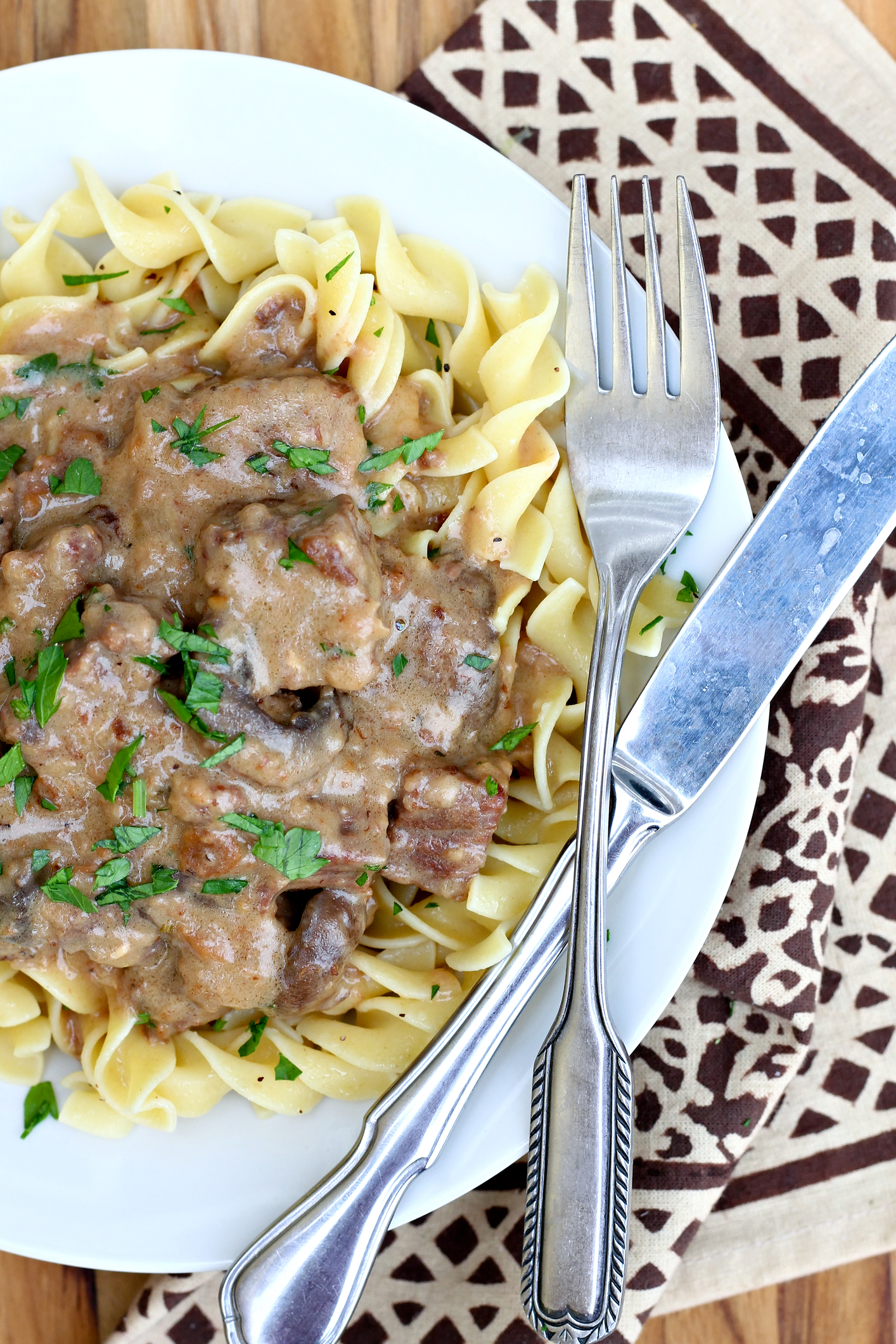
By the time you’ve done a full minute of stirring, the sauce smooths out and turns that pale, creamy tan color that actually looks like stroganoff should look. The first time I saw it separate, I panicked and turned the heat back on — which made it worse. I served it anyway.
One cup of sour cream is enough. Some recipes call for more; I find anything beyond a cup makes the sauce taste more like a dip than a pan sauce.
About the Mushrooms.
Eight ounces. Sliced, not chopped.
Chopped mushrooms disappear into the sauce and you lose the texture entirely. Sliced ones hold their shape through the simmer and give you something to actually bite into between the beef strips and noodles.
Cook them with the onion in the butter left in the pan — don’t add more fat here, the beef drippings are already doing work. Five minutes over medium heat until they go soft and slightly golden at the edges.
The onion will want to go translucent before the mushrooms are done. That’s fine. Don’t rush them apart; they cook well together.
Garlic goes in last, one minute only. Longer than that and it turns sharp in a way that fights the Dijon later.
Cremini mushrooms, by the way. Not white button. The flavor is more pronounced and they don’t release as much water.
The Flour Situation.
Two tablespoons sprinkled directly over the vegetables, stirred to coat, cooked for one full minute before any liquid goes in.
Skip this step and the broth stays thin. The flour needs that dry minute in the pan to cook out the raw taste — if it doesn’t get it, the sauce has a faint floury undercurrent that doesn’t go away no matter how long you simmer it.
One minute exactly.
Then the broth goes in — two cups — along with the tomato paste, Worcestershire, and Dijon all at once. Stir immediately and scrape the bottom of the pan. There will be browned bits down there from the beef and that’s where most of the flavor is sitting.
The sauce thickens as it simmers with the beef, somewhere between eight and ten minutes over low heat. At eight minutes it’s still a little loose. At ten, it coats a spoon properly.
Do the noodles while this is happening — eight ounces, cooked according to the package, drained and set aside. They’ll sit fine for ten minutes. Don’t rinse them.
Instructions
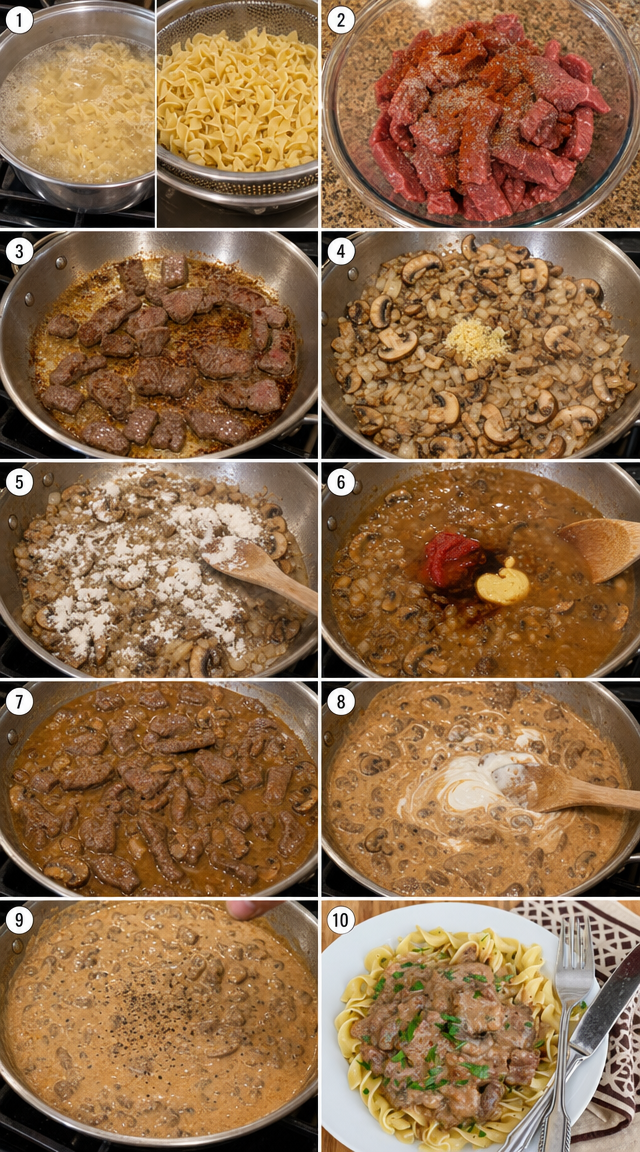
Step 1: Cook 8 ounces of egg noodles according to the package. Drain and set aside — don’t rinse, the starch helps the sauce cling later. While they cook, pat 1.5 pounds of sirloin strips completely dry with paper towels, then season with salt, pepper, and 1 teaspoon of paprika.
Step 2: Heat 1 tablespoon olive oil and 1 tablespoon butter in a large skillet over medium-high until the butter foam subsides. Brown the beef in two batches, 3 to 4 minutes per side, without moving the strips. Remove and set on a plate. (If you crowd the pan here, you’re steaming the meat — every piece needs space or none of them brown properly.)
Step 3: Reduce heat to medium. Melt 2 tablespoons of butter in the same skillet. Add 8 ounces of sliced cremini mushrooms and one large sliced onion. Cook for about 5 minutes, stirring occasionally, until softened and lightly golden at the edges. The pan will smell good at this point — good enough that I stood there longer than I needed to.
Step 4: Add 3 minced garlic cloves and cook for 1 minute. Sprinkle 2 tablespoons of flour over the vegetables, stir to coat everything, and cook for 1 more minute until the flour smells slightly nutty. Don’t skip this minute — it changes the sauce texture entirely.
Step 5: Pour in 2 cups beef broth, 1 tablespoon tomato paste, 2 tablespoons Worcestershire sauce, and 1 tablespoon Dijon mustard. Stir well and scrape the bottom of the pan. Return the beef and any resting juices to the skillet. Reduce heat to low and simmer uncovered for 8 to 10 minutes until the sauce thickens and the beef is tender.
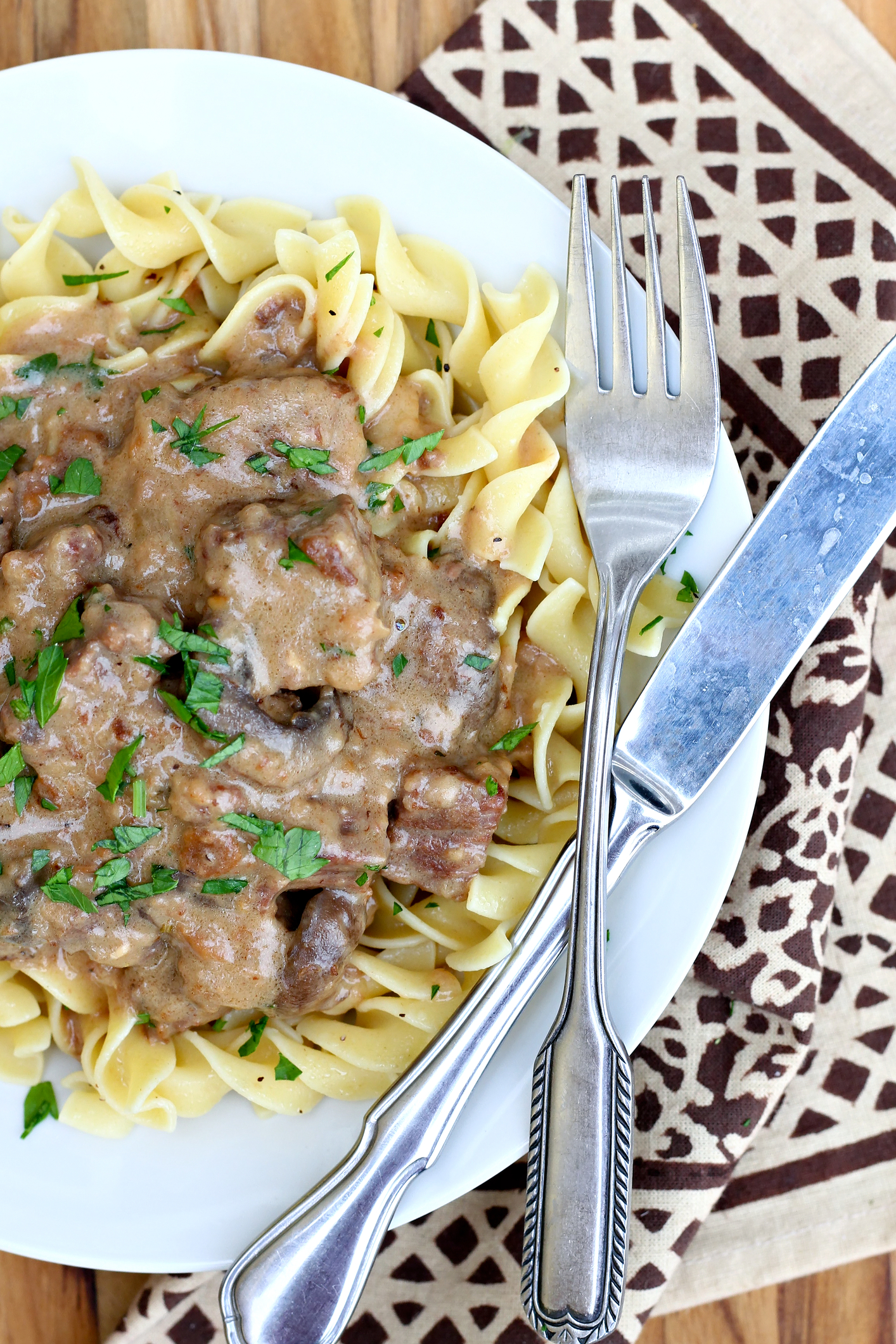
Step 6: Pull the pan off the heat entirely. Wait 30 seconds. Stir in 1 cup of sour cream in two additions, stirring steadily until the sauce is smooth and pale. Taste and adjust salt and pepper. Serve over egg noodles and top with 2 tablespoons of fresh chopped parsley. Did yours come together on the first try or did the sauce give you trouble? Share below!
Ways to Change It Up
Try this: Swap the sour cream for crème fraîche. It’s a bit more stable under heat and the flavor is slightly tangier, which cuts through the richness in a way that works well if you’re using a fattier cut of beef.
Try this: Replace the egg noodles with mashed potatoes. This is technically not stroganoff anymore but it’s what my grandmother served it over and the sauce soaks into the potatoes in a way that’s genuinely different — denser, more filling, better for cold weather.
Try this: Add a tablespoon of brandy to the pan after the garlic, before the flour. Let it cook off for 30 seconds. It doesn’t taste boozy in the final dish but it adds a faint warmth underneath the Worcestershire that I noticed most when I left it out.
Which would you go for? Drop it in the comments.
How to Serve It
Over egg noodles is the obvious choice and it works. The noodles catch the sauce in their ridges and hold up to the weight of the beef without going mushy if you serve quickly.
A simple green salad alongside — something with a sharp vinaigrette — cuts through the cream and gives the meal a balance it doesn’t have on its own. Buttered green beans work for the same reason.
If you want to stretch it to feed more people, serve it in smaller portions over rice with a slice of crusty bread on the side. The sauce is strong enough to carry a larger surface area.
What would you pair it with?
Storing It Without Ruining It
The sauce and noodles store better separately. Mixed together in the fridge, the noodles absorb the sauce overnight and you end up reheating something closer to a beef-noodle casserole than stroganoff.
The sauce on its own keeps in an airtight container in the fridge for about 3 days. Reheat it low and slow — medium-low on the stovetop, stirring gently, never at a boil. The sour cream will separate again if you push the heat.
Freezing is possible but the sour cream base does not come back cleanly. It separates on thaw and even aggressive stirring doesn’t fully fix it. The flavor is still fine; the texture is not.
If you know you’re going to freeze it, leave the sour cream out entirely before freezing and stir it in fresh when you reheat. That actually works.
Noodles reheat well with a splash of water in the microwave, covered, for about 90 seconds.
Have you ever saved leftovers like this? Tell me below!
Mistakes I Made So You Don’t Have To
I once added the sour cream straight from the fridge — cold, straight into the hot pan without pulling it off heat first. The sauce broke within seconds into small white curds floating in brown liquid. I stirred it for three minutes and it never recovered.
The second mistake: seasoning the broth before tasting it, assuming the Worcestershire and Dijon weren’t salty enough. They are. By the time the simmer concentrated everything, the sauce was over-salted and there was no fixing it. I added a splash more broth to dilute it — it helped maybe forty percent.
Third: not drying the beef before searing. The pan temperature dropped the moment wet meat hit it, and instead of a three-minute sear I got a six-minute grey steam. The strips were cooked through before they ever browned. They were edible but the texture was off — tighter, less tender than they should have been.
Did something like this happen to you?
Questions I Actually Get About This Recipe
Can I use a different cut of beef? Yes, but it matters which one. Tenderloin works well and stays very tender, but it’s expensive for a weeknight pan sauce. Chuck is cheaper and has good flavor but needs a longer simmer — about 20 to 25 minutes instead of 8 to 10 — or it stays tough. I tried it once with flank steak and the texture was too chewy even after a full ten-minute simmer. Sirloin is the practical middle ground.
Can I make this without sour cream? It depends on what you mean by “this.” The dish without sour cream is a beef and mushroom braise in brown sauce — still good, but not stroganoff. Greek yogurt works as a substitute in terms of creaminess, but it’s tangier and thinner. Full-fat only, off the heat, same method. About 1 cup. But the flavor shifts noticeably.
Does the Dijon mustard make it taste mustardy? No. One tablespoon in that volume of sauce reads as a background sharpness rather than actual mustard flavor. And if you skip it entirely, the sauce tastes flatter — there’s a roundness that disappears. I noticed it when I accidentally used the wrong jar and used yellow mustard instead. That one you can taste.
How long does the whole recipe actually take? About 40 minutes if you’re not stopping to measure things twice. The noodles and beef can run simultaneously, which saves roughly 10 minutes. But the simmer step cannot be rushed — 8 minutes minimum. Under that, the flour taste is still there.
Can I make the sauce ahead of time? Yes, up to the point before the sour cream goes in. Refrigerate the base for up to 2 days. Reheat it gently on the stovetop, then pull off heat and finish with the sour cream as normal. It actually re-thickens well. And the flavor improves slightly overnight — deeper, more settled.
My sauce turned out too thin. What happened? Two likely causes. First: the flour didn’t get its full minute in the dry pan before the liquid went in. Second: the simmer was too short. Give it the full 10 minutes uncovered over low heat and it will tighten. If it’s still thin, a slurry of 1 teaspoon flour mixed with 2 tablespoons cold water, stirred in and simmered for 2 more minutes, pulls it together. But that’s a fix, not a method.
Which answer helped you most?
A Few Things Worth Saying Before You Start
This is a 40-minute recipe, which sounds fast, but it has more active steps than most 40-minute recipes. You’re searing in batches, building a sauce in layers, and finishing something that can break if you’re not paying attention at the end.
It’s not difficult. But it’s not hands-off, either.
The version I landed on uses sirloin, cremini mushrooms, and a full tablespoon of Dijon — more than most recipes call for — because the sauce needs that edge. Without it, the broth and sour cream read as a bit bland and heavy.
Deb made it after I told her about it and said the sauce was too tangy. I told her to cut the Dijon to half a tablespoon next time. She said she’d just use the packet again.
Honestly? Fair enough.
Will you make this soon?
The one thing I’m still not certain about is the mushroom quantity. Eight ounces feels right to me but I’ve had versions with twice that amount and liked them, and I’m not sure I’d complain if you pushed it to twelve. It changes the ratio enough that the beef becomes more of a supporting character, which might actually be what you want.
Fun fact: Worcestershire sauce contains fermented anchovies — which is part of why it adds such a deep, savory base to meat-heavy dishes without tasting like fish at all.
Happy cooking! —Marina Caldwell
Classic Beef Stroganoff A Timeless Noodle Comfort
Ingredients
Instructions
Notes
See full recipe for nutritional information.