Why You Should Care About This Dish
Most weeknight dinners force you to choose between easy and actually satisfying. You either end up with something bland that cooks in fifteen minutes, or you commit to an hour of chopping and stirring for a meal that tastes like you tried.
This peanut chicken curry sits in a different category. It delivers restaurant-level flavor without the technical footwork of traditional curries, and it gets there in forty minutes using ingredients you probably already have.
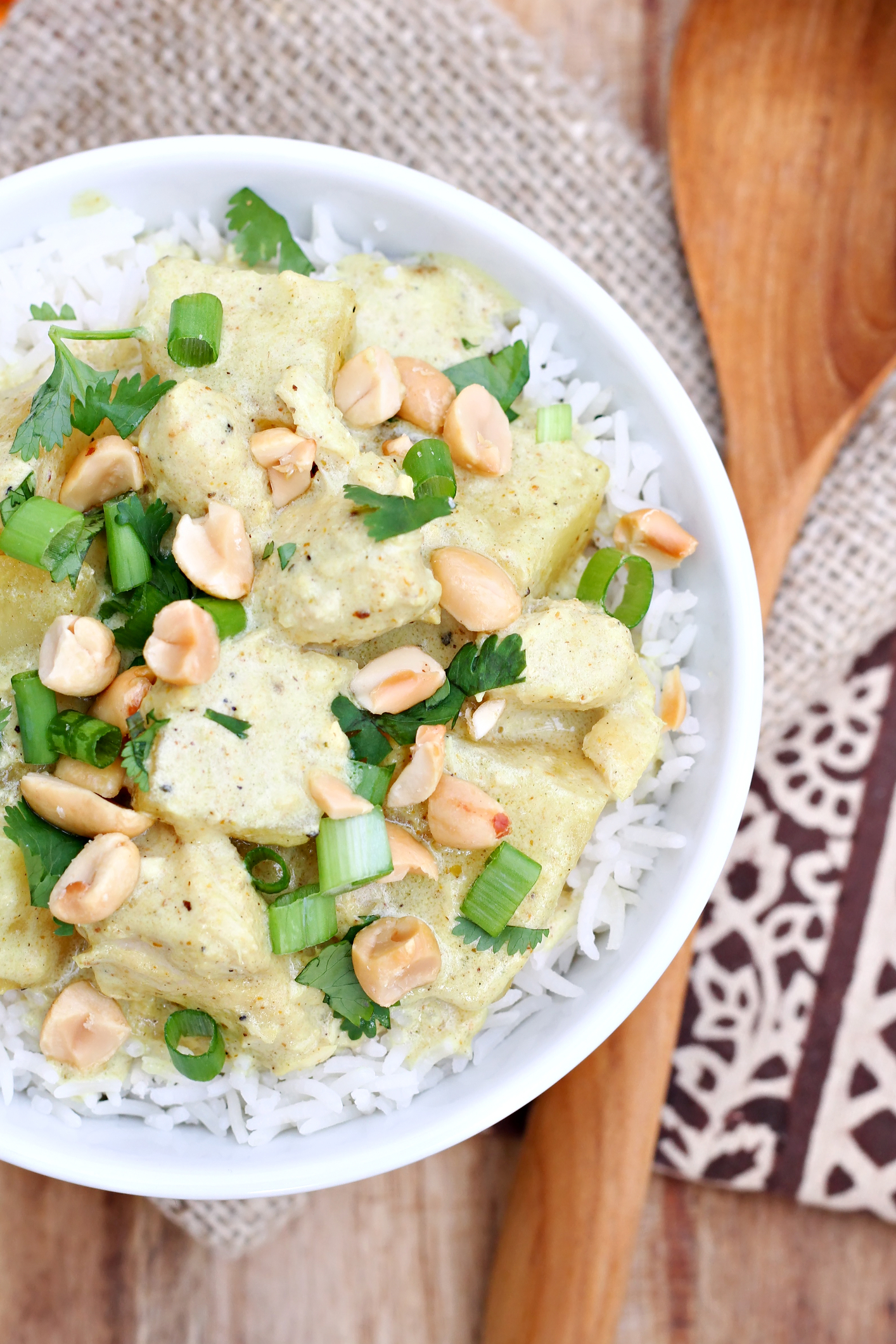
The secret is peanut butter. Not as a gimmick, but as a legitimate base that brings richness, body, and a subtle sweetness that balances the curry spices without requiring you to toast whole seeds or bloom aromatics in ghee.
I started making this after getting tired of watery curry attempts that tasted more like spiced chicken soup. The peanut butter changed everything because it naturally thickens the sauce and adds depth that usually takes hours of simmering to achieve.
If you’ve been stuck in a rotation of the same five dinners, this one actually breaks the pattern. Not because it’s exotic, but because it’s different enough to feel special while being straightforward enough that you’ll actually make it on a Wednesday.
What Makes This Curry Different
Traditional curry builds flavor through layers. You temper spices in oil, add aromatics at specific times, and simmer for long enough that everything melds together. That process works, but it requires attention and timing most people don’t have on weeknights.
This version shortcuts that by using curry powder instead of individual spices, and peanut butter instead of a slow-cooked base. You lose some complexity, but you gain consistency and speed without ending up with something that tastes shortcuts.
The jasmine rice cooked in chicken broth instead of water is the other move that matters. Plain rice under a flavorful curry is fine, but seasoned rice turns the whole bowl into something cohesive instead of sauce on top of filler.
Quick tip: If your curry powder has been sitting in the cabinet for more than a year, replace it. Old curry powder tastes dusty and flat, which is exactly what you’re trying to avoid here.
Coconut milk shows up in a lot of curry recipes, and here it serves two purposes. It adds creaminess without dairy, and it tempers the intensity of the peanut butter so the sauce doesn’t taste like you’re eating spiced peanut soup. The balance between the two is what makes this work.
The vegetables—bell pepper and green beans—aren’t decorative. They add texture contrast and a slight freshness that keeps the dish from feeling too heavy. You could swap them for other quick-cooking vegetables, but you need something with a bit of snap to break up all that creaminess.
How to Build the Curry Properly
Start by getting your rice going first. This seems obvious, but I’ve watched people start the curry and then realize twenty minutes in that they forgot the rice. Jasmine rice in chicken broth takes about fifteen to eighteen minutes, so time it so everything finishes together.
Cube the chicken into consistent pieces, roughly one inch. Uneven pieces mean some dry out while others stay raw in the middle, and you end up with a texture problem that no amount of sauce fixes.
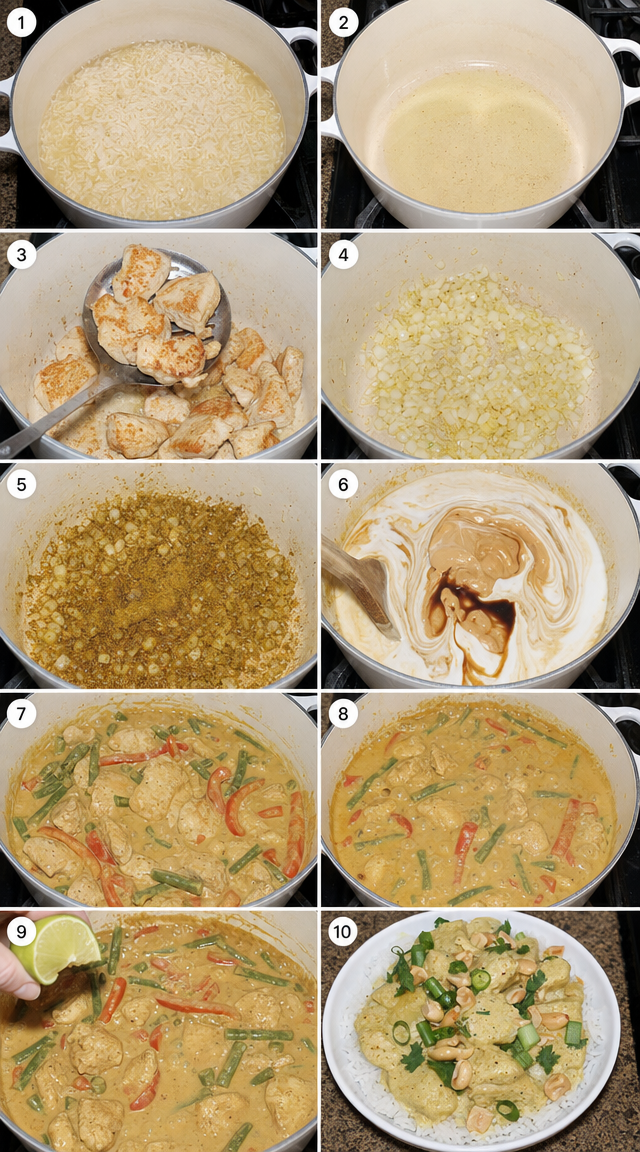
Season the chicken with salt and pepper before it goes into the pot. This sounds basic, but underseasoned chicken never gets properly seasoned later, even in a flavorful sauce. You’re not adding much, just enough so the chicken itself tastes like something.
Sear the chicken in a hot pot with vegetable oil until it gets some color. You’re not cooking it through at this stage, just developing flavor through browning. Pull it out after five minutes and set it aside. If you try to cook it completely now, it’ll be overcooked rubber by the time the curry finishes.
In the same pot, add your onion, garlic, and ginger. The leftover chicken bits stuck to the bottom will mix in and add depth. Sauté for two to three minutes until everything smells fragrant and the onion starts to soften but hasn’t browned yet.
Add curry powder directly to this mixture and stir for about a minute. This step—called blooming—wakes up the spices and prevents them from tasting raw or harsh in the final dish. It’s one minute that makes a noticeable difference.
Now comes the sauce building. Add your peanut butter, coconut milk, and soy sauce to the pot. Stir until the peanut butter dissolves into the liquid and you have a smooth, creamy base. If it looks too thick, don’t panic. The vegetables will release moisture as they cook, and the chicken will add some liquid too.
Return the chicken to the pot along with the sliced bell pepper and chopped green beans. Everything simmers together for fifteen minutes. This is when the chicken finishes cooking, the vegetables soften, and the flavors actually combine instead of just sitting next to each other.
The one thing most recipes don’t tell you: Peanut butter brands vary wildly in thickness and oil content. Natural peanut butter makes a thinner sauce, while standard processed peanut butter creates something richer and thicker. Neither is wrong, but know which you’re using so you can adjust the coconut milk accordingly.
Finish with lime juice right before serving. Acid brightens everything and cuts through the richness in a way that makes the dish feel balanced instead of heavy. Taste it before and after adding the lime—you’ll notice the difference immediately.
What People Get Wrong About Peanut Curry
The biggest mistake is thinking peanut curry is inauthentic or some kind of fusion experiment. Peanuts show up in Southeast Asian curries all the time, particularly in Thai and Indonesian cooking. This isn’t a bastardization—it’s just a different tradition than Indian curry, which is what most people think of first.
Another common error is using too much peanut butter and ending up with something that tastes more like peanut sauce than curry. The peanut butter should support the curry spices, not dominate them. One cup for this recipe is the right ratio, but if you go heavier than that, you lose the balance.
People also skip the ginger or use powdered ginger instead of fresh. Fresh ginger brings a brightness and slight heat that powdered ginger simply cannot replicate. It’s one of those ingredients where the fresh version matters enough to make the trip to the store worth it.
Overcooking the chicken is another frequent problem. Since the chicken gets seared first and then simmers in the sauce, it’s easy to end up with dry, stringy meat if you’re not paying attention. Pull it at fifteen minutes of simmering, not twenty or twenty-five. The residual heat will finish it without turning it into jerky.
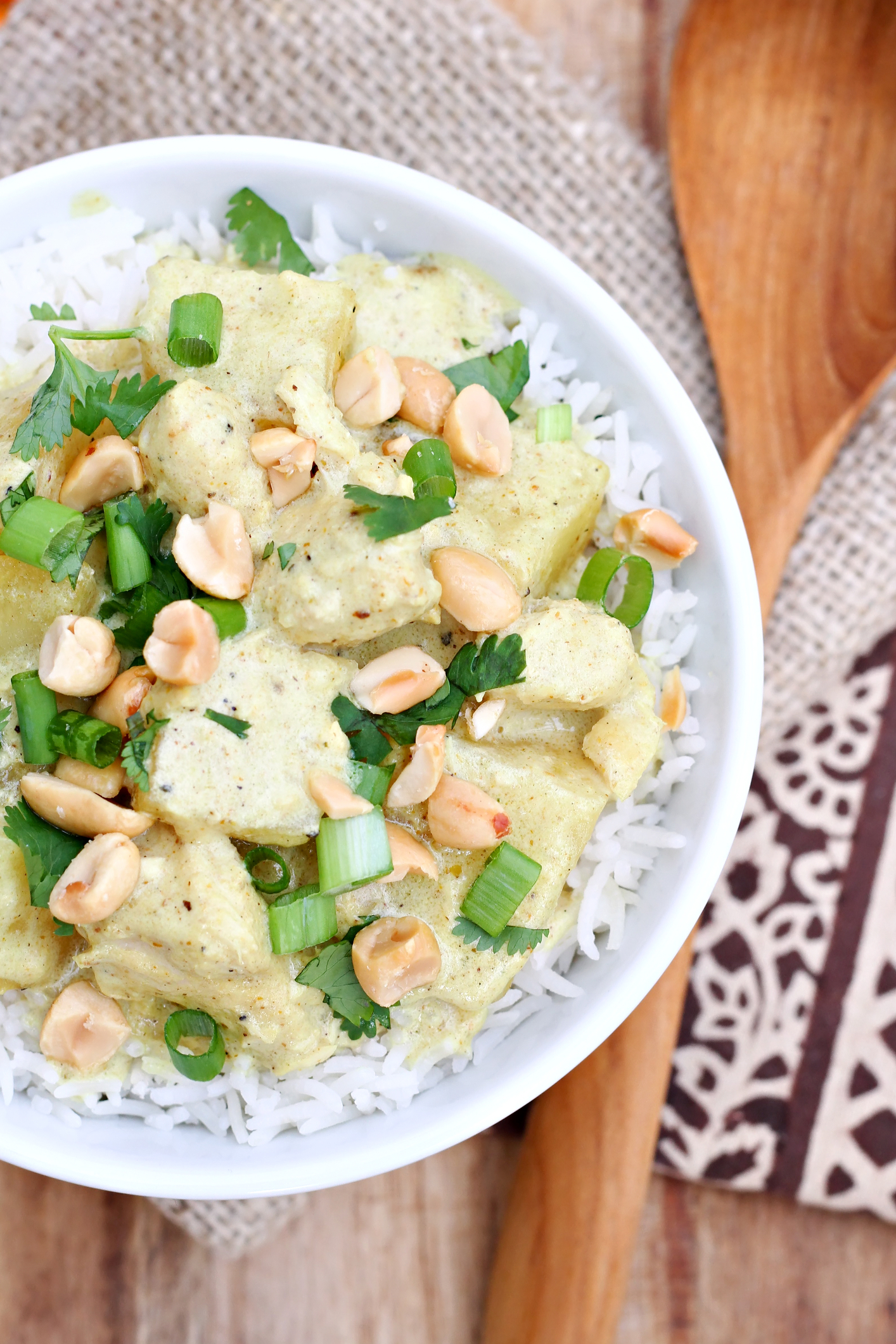
Some recipes tell you to use chunky peanut butter for texture. Don’t. The peanut chunks get soft and weird in the sauce, and they don’t add the texture contrast you’re hoping for. If you want crunch, add crushed peanuts as a garnish at the end instead.
Finally, people under-season at the end. Even with soy sauce and curry powder, this dish needs a final adjustment. Taste it before serving and add salt if it tastes flat, or more lime juice if it feels too heavy. That final seasoning step is what separates a dish that’s fine from one that’s actually good.
How to Adapt This to Your Actual Life
If you don’t have jasmine rice, any long-grain white rice works. Basmati is actually a closer flavor match to traditional curry than jasmine, and brown rice works if you’re willing to adjust the cooking time and add more liquid. Just don’t use instant rice—it turns mushy under the curry and ruins the texture.
Chicken thighs instead of breast make this richer and more forgiving. Thighs have more fat, so they stay moist even if you accidentally simmer them a few minutes too long. They also add more flavor to the sauce as they cook. The trade-off is a slightly higher calorie count and a bit more prep if you’re removing the skin.
For vegetables, you can swap in whatever cooks quickly. Snap peas, zucchini, or broccoli florets all work. Avoid starchy vegetables like potatoes unless you’re willing to extend the cooking time—they won’t soften properly in fifteen minutes.
If you’re vegetarian, this works with tofu or chickpeas instead of chicken. Press the tofu well and cube it the same size as you would the chicken. For chickpeas, use two cans drained and rinsed. Both options need less cooking time than chicken, so add them in the last five minutes just to heat through and absorb flavor.
Quick tip: Leftovers actually improve as they sit because the flavors meld overnight. Store the rice and curry separately if you can, because reheating them together sometimes makes the rice gummy. Reheat the curry on the stove with a splash of coconut milk or water to loosen it back up.
You can make this spicier by adding red pepper flakes when you bloom the curry powder, or by mixing in a spoonful of sriracha at the end. The peanut butter and coconut milk mellow heat pretty effectively, so you can go heavier on the spice than you might expect without making it unbearable.
Meal prep works for this dish if you store everything properly. The curry holds in the fridge for four days. The rice lasts about the same but dries out faster, so store it with a damp paper towel over the top to keep moisture in. Freeze individual portions if you’re making a big batch—it reheats well from frozen.
The Debate Around Curry Powder
Using pre-mixed curry powder instead of individual spices is controversial in certain cooking circles. Purists argue that curry powder is a British invention that flattens the complexity of actual South Asian spice blends. They’re not completely wrong—curry powder is a simplified shortcut.
But for a weeknight meal, curry powder delivers consistent results without requiring you to stock and balance eight different spices. It’s a trade-off between authenticity and practicality, and which one matters more depends on what you’re trying to accomplish.
Different brands of curry powder vary significantly in heat level and flavor profile. Some lean sweet with more coriander and turmeric, others bring more heat from chili and black pepper. Taste yours before you commit two tablespoons to a pot—you might want to adjust the amount based on intensity.
There’s also the question of whether peanut butter belongs in curry at all. As I mentioned earlier, peanuts are traditional in many Southeast Asian dishes, but this particular combination of ingredients doesn’t map perfectly onto any single culinary tradition. It’s more of a hybrid that borrows techniques and flavors from multiple places.
Some cooks argue that using coconut milk and peanut butter together is redundant—both add richness and fat, so why use both? The answer is that they each bring something different. Coconut milk adds a subtle sweetness and thins the sauce, while peanut butter provides body and a deeper, nuttier flavor that coconut milk alone can’t deliver.
The lime juice at the end is another point of disagreement. Some recipes call for tamarind instead, which brings a different kind of acidity with more complexity. Lime is easier to find and use, but tamarind paste is worth trying if you want to see what the fuss is about. The flavor difference is noticeable but not life-changing.
Final Thoughts on Making This Work
This dish won’t replace the curry you get from a restaurant that’s been slow-cooking their sauce for hours and building layers of flavor through technique you probably don’t want to replicate at home. But that’s not the point.
The point is having a reliable recipe that delivers something satisfying without demanding perfection. It works when you’re tired, when you haven’t grocery shopped in a week, and when the alternative is ordering takeout for the third time this week.
The peanut butter does most of the heavy lifting here by creating richness and body without requiring advanced technique. The curry powder brings complexity in one step instead of ten. And cooking the rice in broth instead of water means even the base layer of the dish tastes like something.
You might adjust this recipe after making it once. Maybe you want more heat, or you prefer different vegetables, or you discover your curry powder needs an extra teaspoon to come through properly. That’s expected. The recipe as written is a starting point, not a rigid formula.
What surprised me most about this dish is how well it holds up to repetition. I’ve made it dozens of times now, and it hasn’t gotten boring yet because the flavors are balanced enough that they don’t wear out your palate. Some dishes are exciting once and then lose their appeal—this isn’t one of them.
If you’ve been looking for something that feels a little more interesting than your usual dinner rotation but doesn’t require you to learn a new cooking technique or hunt down specialty ingredients, this is worth trying. Not because it’s revolutionary or the best curry you’ll ever eat, but because it’s solid, reliable, and actually gets made.
Which part of this recipe are you most likely to change? I’m curious if people gravitate toward different proteins, spice levels, or vegetable combinations.
Was this helpful?
—Marina Caldwell
Creamy Peanut Chicken Curry Rice Bowl
Ingredients
Instructions
Notes
See full recipe for nutritional information.