I Oversalted the Water. Twice.
My husband took one bite and asked if I’d seasoned the sauce or the entire pot of boiling water with the same hand. I had, actually — both, aggressively, without measuring anything.
That was the first attempt. The second went better, though not because I suddenly became careful. I just got lucky with the sauce timing and remembered to taste before I poured.
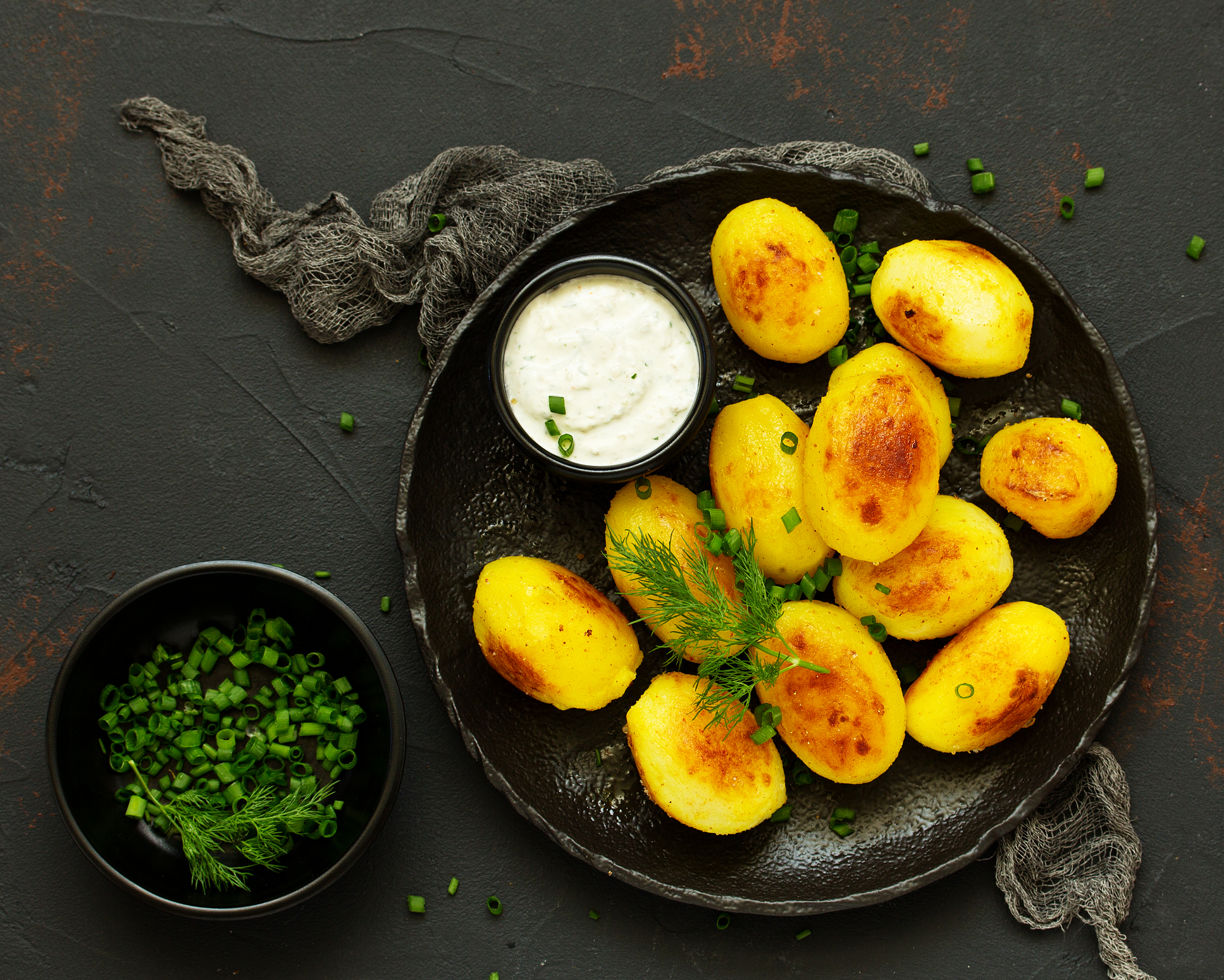
Young potatoes — the small, thin-skinned kind you find in late spring and early summer — behave differently in the oven than their mature counterparts. They hold their shape under the sauce instead of collapsing, which means you get actual bites of potato rather than a mash situation with delusions of grandeur.
The white sauce here isn’t a béchamel in the classical sense. It has broth in it, which thins the richness just enough that you don’t feel like you’re eating the sauce as the main event.
The Roux Went Blond, Not Brown.
Most recipes tell you to cook the flour for about a minute. That’s not enough. Two full minutes at medium heat — stirring the whole time — is what takes the raw flour taste out. I know because the first version tasted faintly chalky in the back of the throat, and I couldn’t figure out why until I timed myself the next round.
You’re looking for a pale gold color. Not beige, not toasted. If it goes darker than that, your sauce will carry a slightly bitter edge that the Gruyère can’t cover.
The garlic goes in before the flour — one minute, medium heat, just until it softens. I thought about adding a shallot here — actually no, I skipped it. The garlic is already assertive enough against the nutmeg.
Quick tip: Add the milk and broth slowly — not all at once. Add about a quarter of the liquid, whisk until smooth, then add more. If you dump everything in at once, you’ll spend the next five minutes chasing lumps around the pan.
Once the sauce thickens — about 3 to 4 minutes of gentle simmering — pull it off the heat before you add the cheese. Hot enough to melt, not hot enough to break.
About the Par-Boil.
Eight minutes in salted water, starting from a boil. Not longer. If you go to twelve, the potatoes finish too soft in the oven and the sauce has nothing to grip.
Drain them well and let them sit for two or three minutes. Steam-drying matters here — wet potatoes sitting in sauce turn a little waterlogged at the edges by the time the dish comes out of the oven.
Halved, cut-side down in the buttered dish.
That part actually does matter — the cut surface gets a bit of direct contact with the bottom of the dish and takes on a slightly different texture than the rounded top, which stays soft under the sauce. Not a dramatic difference, but you notice it when you eat.
I skipped this step once and just tumbled them in randomly. It cooked fine but the texture was less interesting. Honestly? Not worth saving the ten seconds.
The Breadcrumb Situation.
Two tablespoons of breadcrumbs mixed with the remaining Gruyère and a tablespoon of olive oil. That’s it. Sprinkle it evenly and don’t press it down — you want some of it to catch air in the oven and go crispy rather than just brown.
375°F for 25 to 30 minutes. The top should be noticeably golden — not light tan, not dark brown. Somewhere in that 27-minute range is usually where this lands in my oven, but ovens vary and the only real test is color and a fork through the largest potato.
If the top is browning too fast before the potatoes are fully tender, lay a piece of foil loosely over the top for the last 8 minutes. Don’t seal the edges — you just want to slow the surface browning.
Mine went in at 25 minutes and came out looking underdone, so I gave it another 5. The breadcrumb layer had gone a little darker than I wanted by then, but it was still fine to eat. I’ve made worse.

Gruyère or Something Else.
Gruyère melts cleanly and has a slight nuttiness that works with the nutmeg and the Dijon. Swap it for a mild cheddar and you lose that dimension, though the dish is still edible. Swap it for fontina and it gets richer, a little stringier, which some people will prefer.
Don’t use pre-shredded. Pre-shredded cheese has a starch coating that resists melting and leaves the sauce slightly grainy — I tried it once when I’d run out of the block and didn’t want to go back to the store,
and the sauce never came together as smoothly as it should have.
The Dijon is not optional. A teaspoon doesn’t make this taste like mustard — it just sharpens the back of the sauce in a way that keeps it from going flat. If you pull it, something feels missing and you won’t know why.
White pepper instead of black. Black pepper leaves visible flecks in the sauce and bites differently — more on the surface. White pepper distributes through the whole dish and doesn’t announce itself.
What I’d Do Differently Next Time.
More parsley than the recipe says. Two tablespoons gets absorbed into the sauce and practically disappears visually. I’d do three in the sauce and then a handful scattered on top after baking, just for contrast against all that beige.
I also wonder about roasting the garlic first instead of sautéing raw minced garlic in the butter. It would mellow the sharpness considerably. I haven’t tried it yet.
The dish serves four generously as a side. As a main — with just a green salad and some bread — it works for two adults who are actually hungry. My husband and I ate the whole pan between us and didn’t feel bad about it.
—Step-by-Step Instructions
Step 1: Preheat your oven to 375°F (190°C) and butter a medium baking dish well — all the way up the sides, not just the bottom. The sauce will creep up as it bakes and anything unbuttered will stick.
Step 2: Bring a large pot of salted water to a full boil. Add the halved young potatoes and cook for exactly 8 minutes. (Not 10, not 12 — 8 minutes leaves enough structure for the oven to finish the job without turning them to mush.) Drain, spread on a clean towel, and let them steam off for 2 to 3 minutes.
Step 3: Melt 4 tablespoons of butter in a medium saucepan over medium heat. Add the minced garlic and stir for about 1 minute — just until it softens and smells sharp but not bitter. Don’t walk away for this part.
Step 4: Whisk in the flour and keep whisking for 2 full minutes. The roux should turn pale gold and smell slightly toasty. This is the step most people rush, and it’s why some white sauces taste a little off.
Step 5: Begin adding the milk and broth together in a slow stream — about a quarter at a time — whisking constantly between additions. The sauce will look alarmingly thick at first; keep going. Once all the liquid is in, it smooths out. Simmer gently for 3 to 4 minutes until the sauce coats the back of a spoon. (If you see any lumps at this stage, a quick strain through a fine mesh sieve fixes it fast — no need to start over.) Did your sauce ever lump up on you? Share below!
Step 6: Pull the pan off the heat. Stir in the Dijon mustard, salt, white pepper, and nutmeg. Then fold in half the Gruyère and all the fresh parsley. The sauce should be glossy and thick enough to pour but not so thick it globs. I always taste it here — this is the last real chance to fix the seasoning before it goes over the potatoes.
Step 7: Arrange the potato halves cut-side down in the prepared baking dish. Pour the sauce evenly over them. In a small bowl, combine the breadcrumbs, remaining Gruyère, and olive oil. Scatter the mixture over the top without pressing it down.
Step 8: Bake for 25 to 30 minutes until the top is properly golden and the potatoes are fully tender when poked with a fork. Let it sit for 5 minutes before serving — the sauce tightens slightly as it cools and holds together better on the plate. Garnish with fresh parsley and serve hot.
Ways to Change It Up
Try this: Stir a tablespoon of whole-grain mustard into the sauce instead of Dijon for more texture and a sharper, more visible mustard flavor throughout.
Try this: Add a handful of blanched spinach or wilted leeks folded into the sauce before pouring over the potatoes — it adds color and makes the dish feel more substantial without changing the core recipe.
Try this: Swap the Gruyère for smoked Gouda on the breadcrumb topping only, keeping Gruyère in the sauce. The smokiness on top adds a different layer without overpowering the sauce underneath.
Which would you go for? Drop it in the comments.
How to Serve It
Serve it straight from the baking dish — it doesn’t plate as cleanly as something more structured, and trying to make it look architectural just cools it down. Spoon deep to get sauce with every portion.
It works alongside roast chicken, pan-seared pork chops, or a simple green salad with a sharp vinaigrette. The vinaigrette acidity cuts through the sauce in a way that makes the whole meal feel lighter than it is.
For a quieter dinner, just bread and this. That’s a real meal.
What would you pair it with?
—Storing It Without Ruining It
Cover the baking dish tightly with plastic wrap or transfer leftovers to an airtight container. In the fridge, it keeps for 3 days. The sauce thickens considerably once cold — that’s normal.
To reheat, add a splash of milk or broth over the top before warming it in a 325°F oven for about 15 minutes covered with foil. The added liquid loosens the sauce back toward its original consistency. Microwave reheating works in a pinch but the breadcrumb topping goes soft and a little gummy.
Freezing is possible but not ideal. The sauce can separate slightly after thawing — not dramatically, but noticeably. If you do freeze it, thaw overnight in the fridge and reheat slowly in the oven with extra liquid.
Don’t freeze it with the breadcrumb topping intact. Scrape it off first or accept that it’ll be soggy.
Have you ever saved leftovers like this? Tell me below!
Mistakes I Made So You Don’t Have To
I once skipped the par-boil entirely because I was impatient and figured the oven would handle everything. After 35 minutes the potatoes were still firm in the center, the sauce had reduced to something almost paste-like around the edges, and I had to cover the whole thing and bake it another 20 minutes. The top went dark.
I added the cheese to the sauce while it was still on a hot burner. It seized into long, stringy clumps that didn’t dissolve back into the sauce no matter how long I stirred. Off the heat — always off the heat — before the cheese goes in.
I used too much nutmeg on a batch where I wasn’t measuring. A quarter teaspoon is the right amount. More than that and the dish starts tasting medicinal in a way that’s hard to identify but impossible to ignore once you’ve noticed it.
Did something like this happen to you?
Questions I Actually Get About This Recipe
Can I use regular potatoes instead of young potatoes?
Yes, but the texture changes. Regular potatoes are starchier and tend to absorb more sauce, which leaves less on the surface. Cut them smaller — about 1-inch pieces — and reduce the par-boil to 6 minutes. And it depends on the variety: Yukon Golds hold their shape better than russets under sauce.
Can this be made ahead?
Assemble everything up through pouring the sauce, cover it, and refrigerate for up to 24 hours. Add the breadcrumb topping right before baking — not before. If it goes in the oven cold from the fridge, add about 8 extra minutes to the bake time. I tried doing the topping ahead once and it went soggy sitting in the fridge overnight.
What if I don’t have Gruyère?
Comté is the closest substitute and melts nearly identically. Mild cheddar works but changes the flavor profile noticeably — more familiar, less interesting. But it depends on who you’re feeding: my kids won’t touch Gruyère but eat the cheddar version without complaint.
My sauce looks lumpy. Is it ruined?
Not ruined. Pull it off the heat immediately and whisk hard for about 30 seconds. Still lumpy? Pour it through a fine mesh sieve into another pan and press the lumps through. It won’t be as smooth as a lump-free batch, but it’s absolutely still usable. Takes maybe 2 minutes to fix. And the lumps usually come from adding liquid too fast — slow down the pour next time.
Is the Dijon mustard noticeable in the final dish?
Not as mustard, no. One teaspoon distributed across two cups of liquid basically disappears as a distinct flavor. What it does is add a slight sharpness that keeps the sauce from tasting flat. I tried it without once — just to see — and the sauce needed more salt to compensate, which wasn’t the right fix. The mustard was the right fix.
Can I double this recipe for a crowd?
Use two separate baking dishes rather than one large one. A single oversized pan bakes unevenly — the center takes longer and the edges go farther than you want. About 30 minutes at the same temperature works for doubled portions when split across two standard dishes. But test the center potatoes specifically with a fork before pulling them out.
Which answer helped you most?
Before You Close This Tab
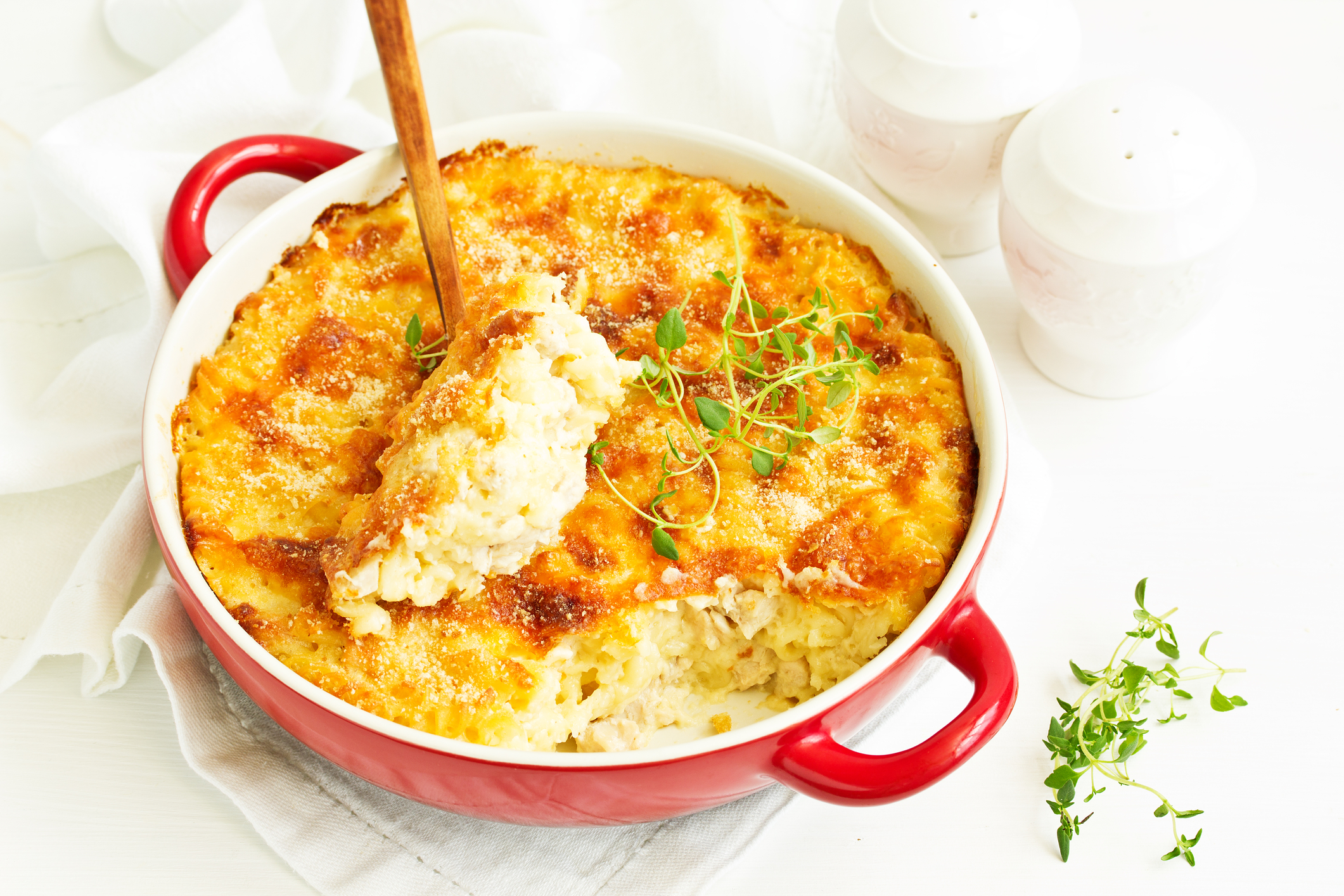
This is a dish that photographs poorly and tastes better than it looks. The sauce is cream-colored and the potatoes disappear under it and the whole thing comes out of the oven looking like a casserole your grandmother might have made without writing down the recipe.
That’s not a problem. It’s just what it is.
Will you make this soon?
The Gruyère in the topping browns faster than you expect after the 25-minute mark, so don’t leave the kitchen in the last 10 minutes. I’ve learned this the hard way twice and I’m not fully convinced I won’t do it again.
Fun fact: Gruyère cheese has been produced in Switzerland since at least the 12th century and is one of the few cheeses that still carries a protected designation of origin — meaning real Gruyère can only come from the Gruyères district of Fribourg.
The sauce will seem thinner than you want when you pour it over the potatoes. It firms up in the oven. Resist the urge to keep cooking it down on the stove first — if it goes in too thick, it bakes into something closer to a crust around the potatoes, and the whole texture balance shifts in a way that’s hard to describe but immediately obvious when you eat it.
I still haven’t figured out the exact timing for my oven. 27 minutes is usually close, but I’ve pulled it at 25 and wished I’d given it 3 more.
Happy cooking! —Marina Caldwell
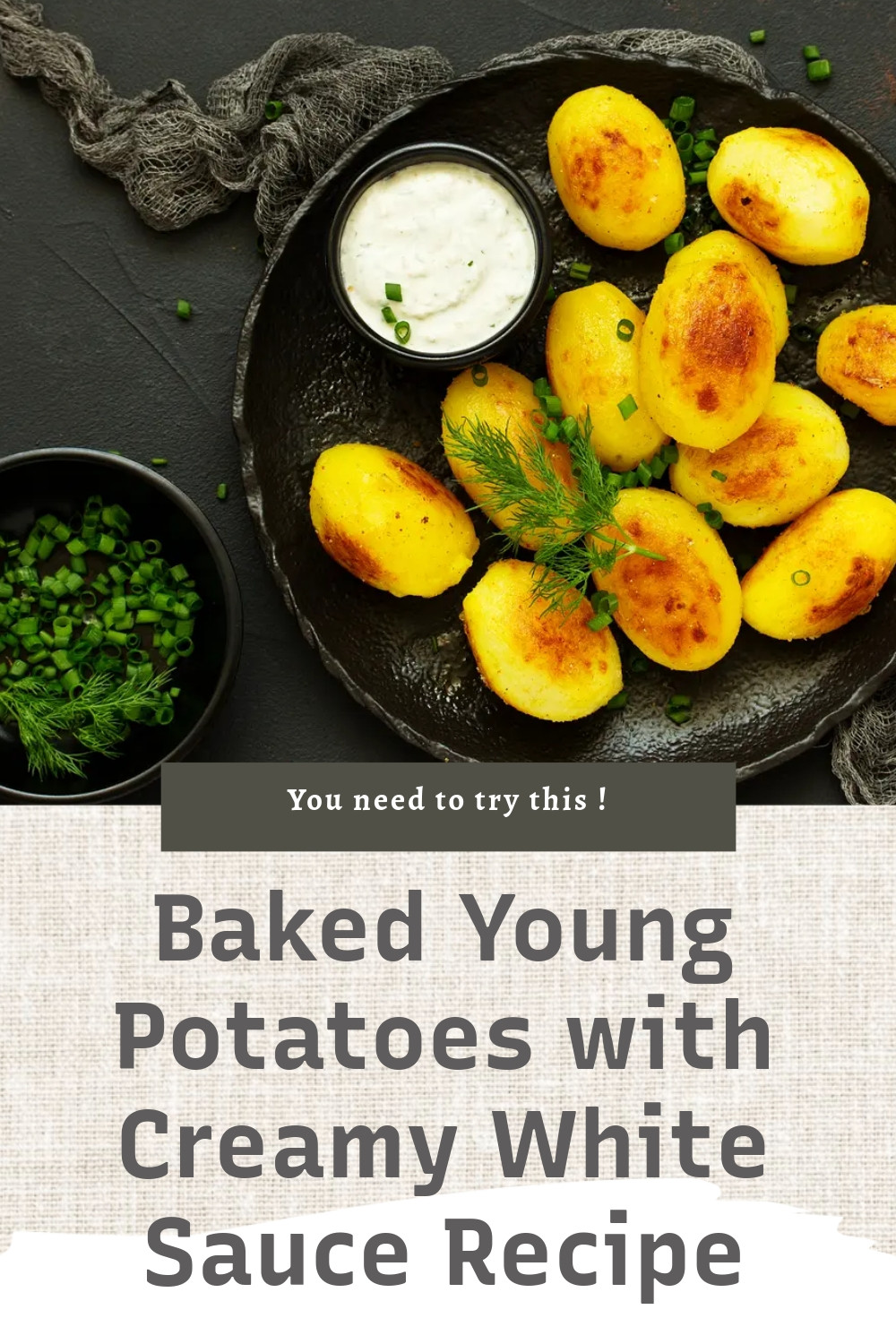
Creamy White Sauce Young Baked Potato Recipe
Ingredients
- 2 lbs young potatoes, halved
- 4 tablespoons butter
- 3 tablespoons all-purpose flour
- 2 cups whole milk
- 1 cup vegetable or chicken broth
- 1 teaspoon Dijon mustard
- 1/2 teaspoon salt
- 1/4 teaspoon white pepper
- 1/4 teaspoon nutmeg
- 2 cloves garlic, minced
- 2 tablespoons fresh parsley, chopped
- 1/2 cup grated Gruyère cheese
- 2 tablespoons breadcrumbs
- 1 tablespoon olive oil
Instructions
- 1Preheat oven to 375°F (190°C).
- 2Boil young potatoes in salted water for 8 minutes until partially cooked. Drain and set aside.
- 3Melt butter in a saucepan over medium heat. Add minced garlic and cook for 1 minute.
- 4Whisk in flour to create a roux, stirring constantly for 2 minutes until light golden.
- 5Gradually add milk and broth, whisking continuously to avoid lumps.
- 6Stir in mustard, salt, white pepper, and nutmeg. Simmer for 3-4 minutes until sauce thickens.
- 7Remove from heat and fold in half the Gruyère cheese and parsley.
- 8Transfer potatoes to a buttered baking dish and pour white sauce evenly over them.
- 9Mix breadcrumbs with remaining cheese and olive oil. Sprinkle over the potatoes.
- 10Bake for 25-30 minutes until golden brown and potatoes are tender.
- 11Garnish with fresh parsley and serve hot.
Notes
See full recipe for nutritional information.