The first time I burned it
My sister thought the chicken needed more glaze. I agreed. So I added twice as much and the sugar in the jam hit the pan like a bomb.
Black crust. Not golden. Black.
I served it anyway because dinner wasn’t going to make itself. My husband ate two pieces and said it was “fine.” That’s how I knew I needed to fix it.
Okay, the garlic situation.
I added garlic to the breading once. Thought it would be subtle.
It wasn’t. Raw garlic bits in panko burn before the chicken cooks through. I scraped them off with a knife and started over. Now I only use garlic powder in the flour. Honestly? It’s not that deep.
Garlic powder gives you the flavor without the panic.
About the glaze.
Apricot jam and Dijon mustard sounds weird. I thought so too.
But the mustard cuts through the sweetness — it’s sharp, not spicy — and the jam gets sticky-thick in the pan. Brush it on the last two minutes, not earlier. Quick tip: If the glaze starts smoking, pull the pan off the heat for thirty seconds. The sugars caramelize fast.
I tried this with orange marmalade once and it was too bitter. Apricot is the one.
Why does this work so well?
Three textures in one bite. The panko stays crunchy because you glaze it at the end, not the beginning.
The rice soaks up the extra glaze from the plate. Almonds add a snap.
I forgot the parsley the first time I photographed this and the dish looked flat. Green matters more than you think.
It looked wrong. It wasn’t.
The jam sits on top of the chicken and the mustard sinks into the pan juices. That’s what you want.
When I first made this, I thought the sauce broke. It didn’t. The oil just separated from the jam a little. Stir it back together or drizzle the pan juices over the rice — that part is actually the best bit.
Have you ever tried a sweet glaze on chicken and had it go wrong?
It’s fast enough for a Tuesday
Twenty-five minutes from start to plate. The rice takes the longest.
I made this on a night when my youngest had refused everything for three days. She ate two helpings. My kids ate it so I called it a win.
Fun fact: Apricots were first cultivated in China over 4,000 years ago, but the jam version didn’t show up in European kitchens until sugar became affordable in the 1700s.
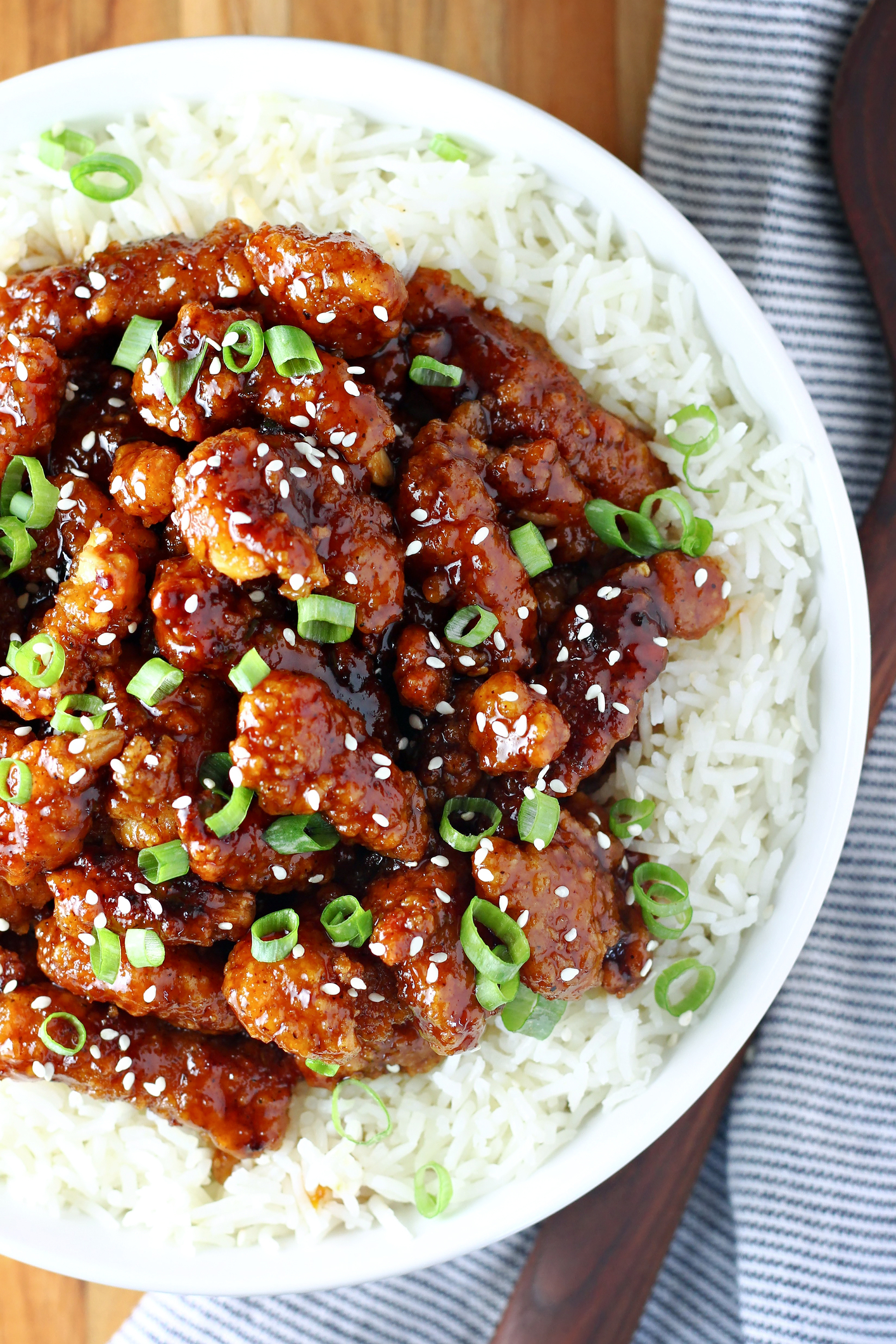
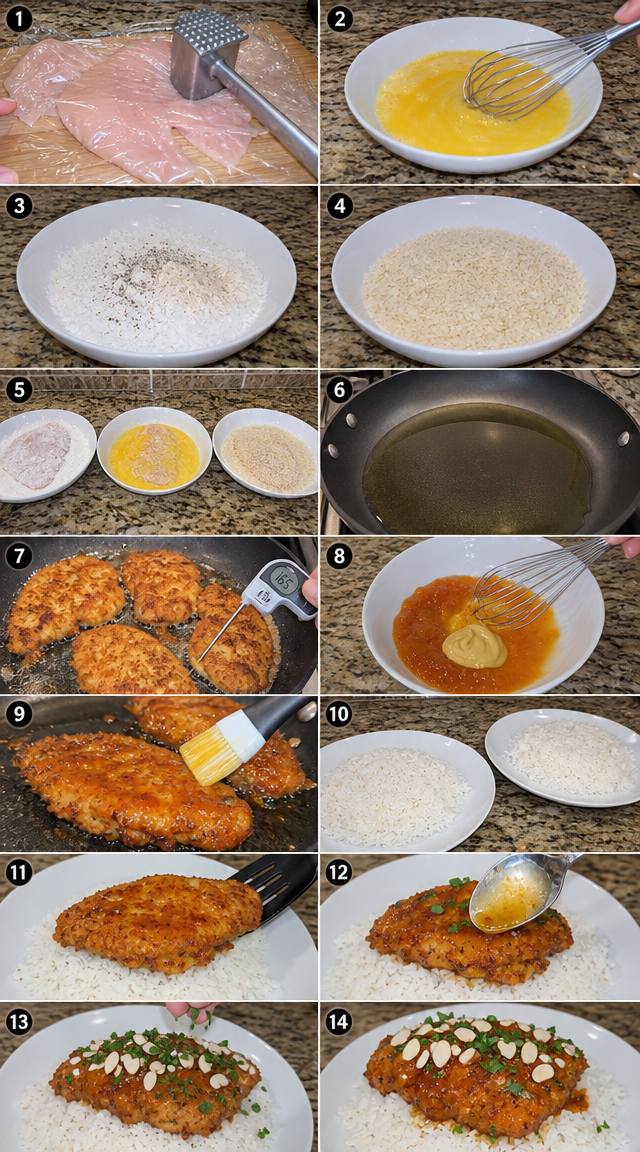
Step 1: Flatten chicken breasts to ¾-inch thick with a meat mallet. Even thickness means even cooking. (I used a rolling pin once in a pinch. It worked.)
Step 2: Set up three bowls: seasoned flour, beaten eggs, panko breadcrumbs. Season the flour with 1 teaspoon salt, ½ teaspoon black pepper, ½ teaspoon garlic powder.
Step 3: Dredge each piece through flour, shake off the extra, dip in egg, then press into panko. Press firmly — loose breading falls off in the pan. Have you tried double-dredging before? Share below!
Step 4: Heat 2 tablespoons olive oil in a large skillet over medium-high until shimmering. Not smoking. Shimmering. (About 2 minutes on my stove.)
Step 5: Cook chicken 6–7 minutes per side, undisturbed. Don’t move it. Let the crust set. Internal temp should hit 165°F. I check with a thermometer because guessing is how I burned it that first time.
Step 6: Mix ½ cup apricot jam with 2 tablespoons Dijon mustard in a small bowl. Stir until smooth. Taste it — the mustard should hit first, then the sweet.
Step 7: Brush the glaze over the chicken in the last 2 minutes of cooking. Let it caramelize but watch it. The sugar burns fast. Have you ever burned a glaze like this? Share below!
Step 8: Spoon warm rice onto plates. Use white, brown, or whatever you have. I’ve used jasmine and basmati both work.
Step 9: Rest a chicken breast over the rice. Drizzle leftover pan juices on top. Don’t skip this — the pan juice is liquid gold.
Step 10: Sprinkle sliced almonds and fresh parsley over everything. Serve immediately. The crunch fades fast.
Ways to Change It Up
Try this: Swap the almonds for toasted pine nuts or sesame seeds. Different texture, same crunch.
Try this: Use peach jam instead of apricot. Sweeter, less tangy. My neighbor Rosa swears by it.
Try this: Skip the rice entirely and serve over buttered egg noodles or a simple green salad.
Which would you go for? Drop it in the comments.
How to Serve It
With steamed green beans and a squeeze of lemon. That’s what I did the night it finally worked.
Or with roasted asparagus and a side of crusty bread to mop up the extra glaze.
Cold leftovers the next day over a salad are honestly better than the original meal.
What would you pair it with?
Storing It Without Ruining It
Keep the chicken and rice in separate containers. If you store them together, the panko turns to mush by morning.
Fridge for up to 4 days. Freezer for 2 months, but only freeze the chicken without the glaze. Add glaze when reheating.
Reheat in a skillet over medium heat with a splash of water, not the microwave. The microwave ruins the crust. Have you ever saved leftovers like this? Tell me below!
Mistakes I Made So You Don’t Have To
I once used a non-stick pan on high heat. The glaze burned before the chicken was done. Medium-high is the sweet spot.
I skipped flattening the chicken once. Thick pieces cooked unevenly. Thin end was dry; thick end was raw. Flatten it.
I added the glaze too early, honestly I wasn’t paying attention,
and the whole bottom of the pan went brown before I noticed.
Did something like this happen to you?
Can I use chicken thighs instead?
Yes. Boneless thighs work great.
Cook them about 5 minutes per side instead of 7. Thighs stay juicier if you overcook slightly. I’ve ruined breasts more times than thighs.
What kind of apricot jam should I buy?
Any brand with fruit chunks visible. Not jelly. Jelly is too smooth and burns faster.
The cheap store-brand jar works. I use it. No shame.
My glaze turned out too thick. What now?
Thin it with a tablespoon of water or chicken broth before brushing.
But honestly, thick glaze is fine. Just spread it with a spatula. It caramelizes darker but that’s flavor, not failure.
Can I make this gluten-free?
Yes. Use gluten-free panko and swap the flour for rice flour or cornstarch.
I tried it with almond flour once and it didn’t stick right. Rice flour is the better option. Cornstarch gives a lighter crunch.
How do I keep the panko from falling off?
Press it in hard. Not gentle. Hard.
Then let the coated chicken rest on a wire rack for 5 minutes before frying. That sets the crust. I learned this after my third batch floated off in the oil.
Can I bake this instead of pan-fry?
Yes. Bake at 400°F for 18-20 minutes on a wire rack over a baking sheet.
But the crust won’t be as golden. Pan-frying is better for texture. Baking is better for cleanup. Pick your priority.
Which answer helped you most?
One last thing before you go
This recipe is not fancy. It’s sticky, crunchy, and a little bit messy.
I made it on a Tuesday when I had nothing planned and everything felt hard. The kitchen smelled like jam and mustard and something warm.
My youngest asked for seconds. That’s all I needed.
I’ve made worse. I’ve burned it. I’ve scraped it. But this version — the one with the toasted almonds and the careful two-minute glaze — that one works.
Will you make this soon?
Happy cooking! —Marina Caldwell
Crispy Apricot Glazed Chicken Over Rice
Ingredients
- 4 boneless, skinless chicken breasts
- 1 cup all-purpose flour
- 2 large eggs
- 1 cup panko breadcrumbs
- 1 teaspoon salt
- ½ teaspoon black pepper
- ½ teaspoon garlic powder
- ½ cup apricot jam
- 2 tablespoons Dijon mustard
- 2 tablespoons olive oil
- 2 cups cooked white or brown rice
- ¼ cup sliced almonds
- 2 tablespoons fresh parsley, chopped
Instructions
- 1Using a meat mallet, flatten chicken breasts to a uniform ¾-inch thickness for even cooking.
- 2Set up a breading station with three shallow dishes — one with seasoned flour (salt, pepper, garlic powder), one with beaten eggs, and one with panko breadcrumbs.
- 3Dredge each chicken breast through the flour, shake off excess, dip into egg wash, then press firmly into panko until fully coated.
- 4Warm olive oil in a large skillet over medium-high heat until shimmering.
- 5Place breaded chicken into the skillet and cook undisturbed for 6–7 minutes per side until deep golden and cooked through (165°F internal temperature).
- 6Meanwhile, stir together apricot jam and Dijon mustard in a small bowl until smooth and well combined.
- 7Brush the apricot-mustard glaze generously over the chicken during the final 2 minutes of cooking, allowing it to caramelize slightly.
- 8Spoon warm rice onto each plate as your base layer.
- 9Rest a glazed chicken breast over the rice and drizzle any remaining pan juices on top.
- 10Finish with a scatter of sliced almonds and freshly chopped parsley before serving immediately.
Notes
– For extra crunch, lightly toast the panko breadcrumbs in a dry skillet before breading the chicken. – If the apricot glaze begins to burn, reduce heat slightly — the natural sugars in the jam can caramelize quickly. – Swap sliced almonds for toasted pine nuts or sesame seeds to give the dish a different texture and flavor profile.