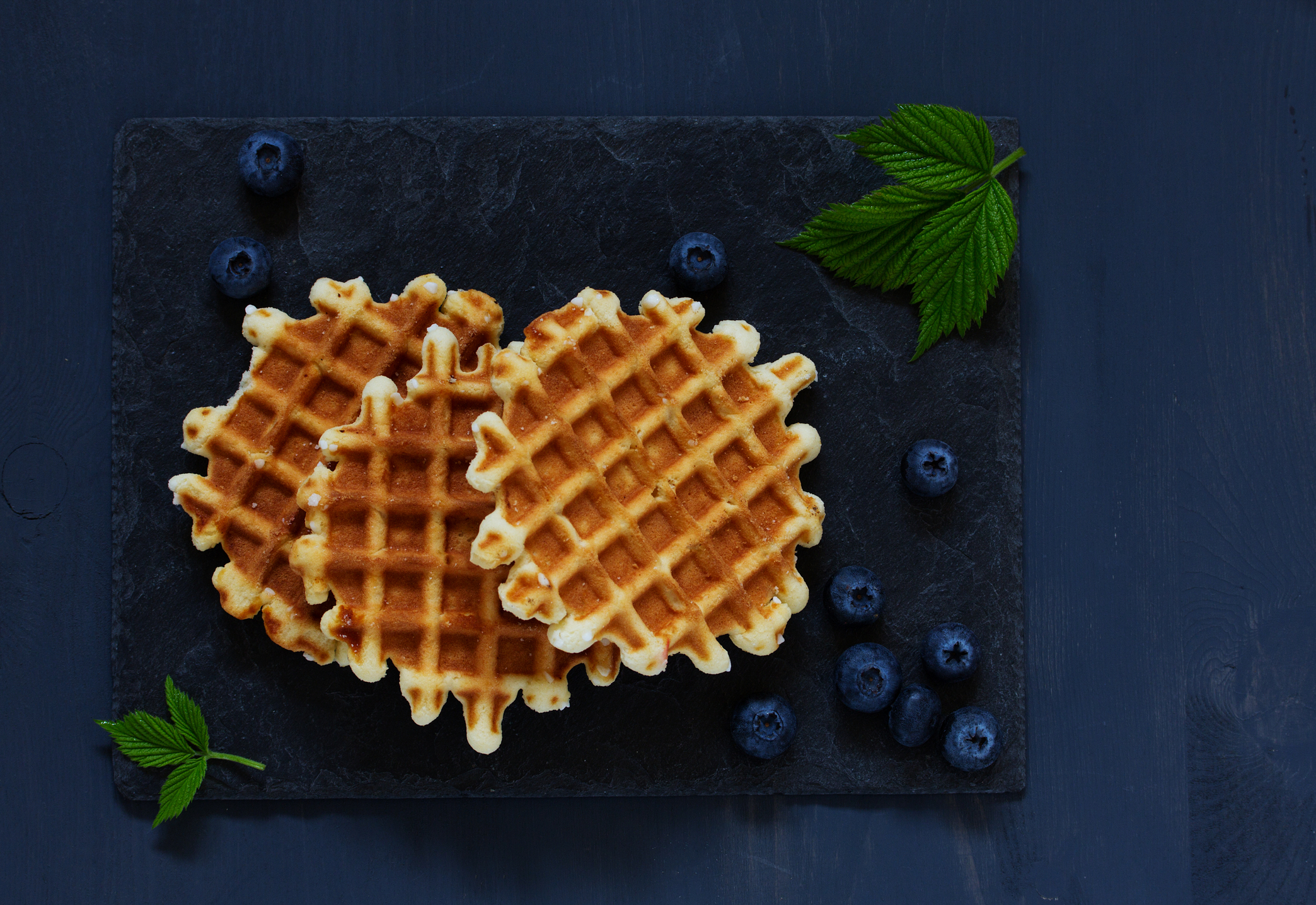
My daughter asked for waffles three Sundays in a row.
The fourth Sunday, I finally made them right. The first three attempts weren’t failures exactly — they were edible, even good — but they weren’t crispy, which is the whole point of a Viennese waffle and also the part I kept getting wrong.
I’d been pouring in too much batter and letting steam do most of the work. The result was soft in the middle, pale at the edges, and honestly kind of sad.
Blueberries — I folded them in from the start, which I’d read you weren’t supposed to do. I did it anyway. Most of them held up fine; a few burst and stained the batter purple in patches, which looked strange going in and tasted better coming out.
Not every waffle browned evenly. I stopped worrying about that around the third batch.
The batter looked wrong and I almost started over.
It’s lumpy. That’s not a mistake — that’s what you want. Every instinct says to keep whisking until it’s smooth, and that instinct is wrong. Overworked batter makes a chewy, dense waffle with no lift and no crunch.
Stir until just combined. Stop when you still see small flour streaks disappearing into the mix. The lumps cook out.
Melted butter goes in with the wet ingredients, not drizzled on at the end. I tried drizzling once — actually no, I skipped the drizzle idea entirely after the first batch came out greasy on the outside and dry in the middle. Butter needs to be in the batter, not on top of it.
The eggs get beaten first, before anything else joins them. Two minutes of beating, no more.
Quick tip: Let the batter rest for 5 minutes before pouring. The baking powder needs a moment to activate, and the flour absorbs the liquid more evenly. Waffles from rested batter brown in about 2 minutes flat; waffles from fresh-mixed batter take closer to 3 and still come out paler.
About the blueberries.
Fresh only. I’ve tried frozen — they release too much water and the batter goes slack before it even hits the iron. The waffles come out soft no matter what you do after that.
One cup goes into the batter. The other half cup stays back for the top. This matters more than it sounds because the ones inside the waffle get slightly jammy and concentrated, and the ones on top stay bright and cold against the whipped cream.
Two different textures. Two different temperatures. Both blueberry.
Do the ones inside stick to the waffle iron? Sometimes. Mostly along the edges if a berry lands too close to the grid lines. There’s no clean fix for this — I just accept that a few waffles will have a ragged edge and move on.
My daughter ate those ones first. Said the crispy burst bits were the best part. I’m inclined to agree.

The iron temperature is not optional.
Most recipes tell you to just preheat until the light comes on. They’re not wrong, but they’re not telling you the full story either. If your iron hasn’t been used in a while, one round of preheating isn’t enough. The plates need to be genuinely hot, not just warm.
Run one empty cycle — grease it, close it, let it sit at full heat for two minutes before the first pour. The first waffle is always a test waffle. Always. It will not be your best one.
Pour the batter in and close the lid without pressing. The Viennese iron does the pressing. You just have to leave it alone.
Two to three minutes, depending on your iron. Mine runs hot, so two minutes gives me golden. Three minutes gives me brown at the edges, which I prefer. You’ll figure out your iron’s timing after the first two batches — and not before then, no matter how carefully you watch it.
Don’t open the lid early. The steam is still escaping and the waffle is still forming its crust. Opening early tears the surface and you get a soft, stuck mess.
Open too late and the blueberry edges char. I’ve done both.
What I’d do differently next time — and what I wouldn’t.
The powdered sugar amount in the recipe is generous. I used even more. No regrets.
The whipped cream I made myself — just cold heavy cream whipped to soft peaks, no sugar added. Sweet waffles, sweet berries, unsweetened cream. It balanced. Store-bought whipped cream is too sweet against the dusted powdered sugar and makes the whole plate taste like a dessert rather than a breakfast.
I thought about adding lemon zest to the batter — actually, I did add it. About half a teaspoon. It didn’t disappear into the flavor the way I hoped; it competed with the vanilla instead. Next time I’d choose one or the other.
The mint garnish I skipped entirely and don’t miss it.
Keeping finished waffles warm in a 200°F oven works better than I expected. After 15 minutes in there, they were still crisp. After 25 minutes, the edges had softened a little. So if you’re making a full batch for four people, eat in two rounds rather than waiting for all ten.
Does the batter keep overnight? I haven’t tried it, and I’m genuinely not sure what the baking powder would do sitting in the fridge for 8 hours.
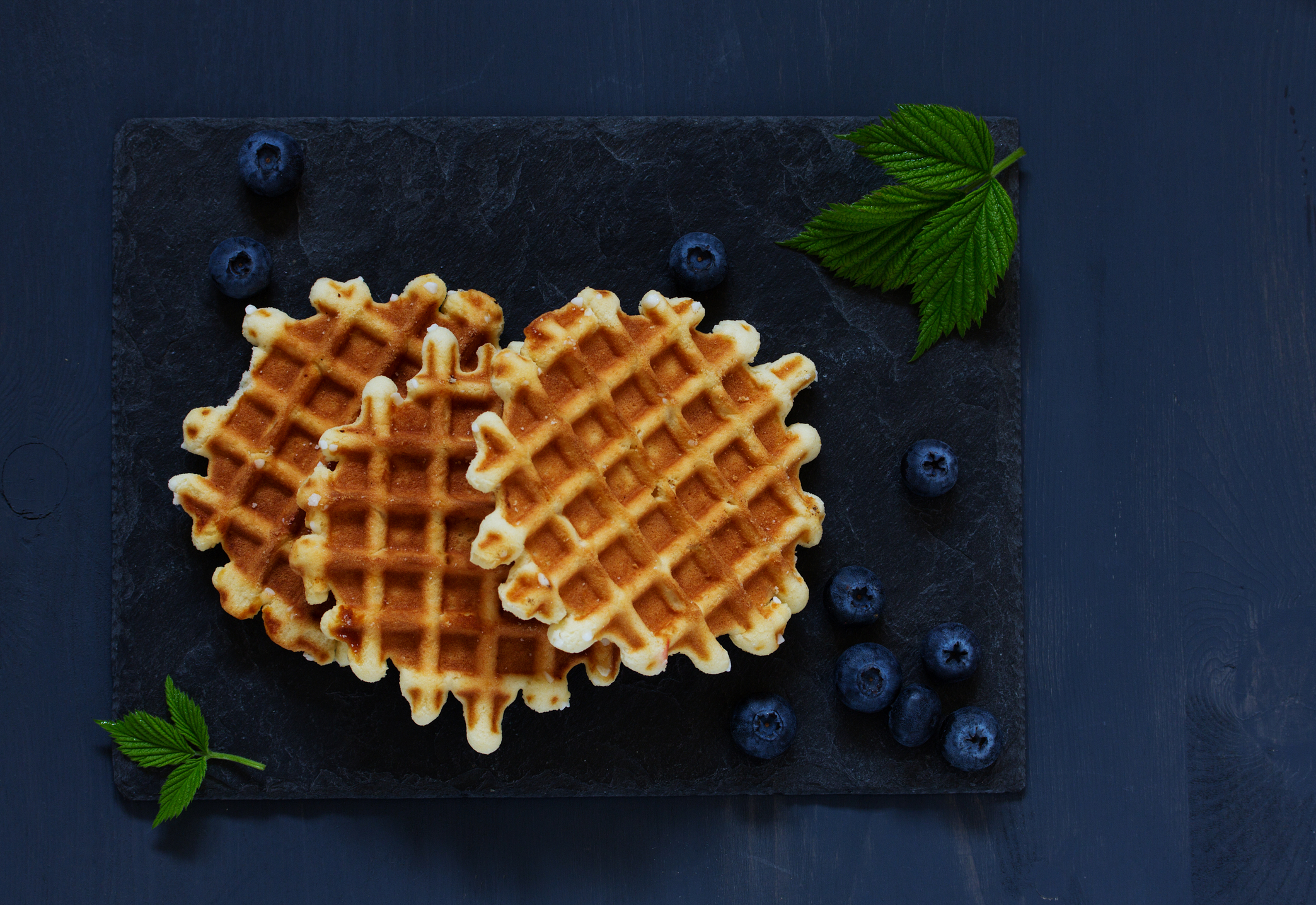
Steps, in order.
Step 1: Preheat your Viennese waffle iron according to the manufacturer’s instructions. Then run one extra empty cycle after the ready light comes on — grease the plates, close the lid, and let it sit at full heat for another two minutes. (This is the step most people skip and then wonder why the first waffle sticks.)
Step 2: Whisk together 2 cups all-purpose flour, 2 tablespoons granulated sugar, 1 tablespoon baking powder, and 1/2 teaspoon salt in a large bowl. Use a real whisk — a fork leaves uneven pockets of baking powder and the waffles rise unevenly.
Step 3: In a separate bowl, beat 2 large eggs until slightly frothy. Gradually add 1 3/4 cups whole milk, 1/2 cup melted butter, and 1 teaspoon vanilla extract. Keep it gradual — pouring all the milk in at once makes the eggs seize slightly and you get a streaky wet mixture that never fully incorporates.
Step 4: Make a well in the center of the dry ingredients and pour the wet mixture in. Stir until just combined — lumps are fine, lumps are good, lumps are the goal. I always over-stir the first batch out of habit and the difference in texture is immediately obvious when it comes off the iron.
Step 5: Gently fold in 1 cup of the fresh blueberries. Let the batter rest for 5 minutes. Do not skip the rest.
Step 6: Lightly grease the waffle iron with butter or cooking spray. Pour in enough batter to fill the plates without overfilling — the exact amount depends on your iron, so the first one is always a calibration pour. Cook 2–3 minutes until golden brown and crisp. Remove and keep warm in a 200°F oven on a baking sheet while you repeat with remaining batter.
Step 7: Plate the waffles, top with the remaining 1/2 cup fresh blueberries, dust generously with powdered sugar, and add whipped cream. Serve immediately — the crust softens faster than you’d expect once the cream goes on. How do you like your waffles finished — heavy on the cream or just the powdered sugar? Share below!
Ways to Change It Up
Try this: Swap the blueberries for sliced fresh strawberries and add a pinch of black pepper to the batter. Sounds wrong, doesn’t read as pepper, makes the strawberries taste more like strawberries.
Try this: Replace the vanilla extract with almond extract and use a mix of blueberries and raspberries. The almond note plays surprisingly well against the tart berry combination — better than vanilla does, honestly.
Try this: Make it savory. Drop the sugar, the vanilla, and the berries. Add 1/2 cup shredded gruyère and a tablespoon of fresh thyme to the batter. Serve with a soft fried egg on top instead of whipped cream. Different recipe entirely, same iron.
Which would you go for? Drop it in the comments.
How to Serve It
These are breakfast waffles, but they hold up as a late-morning brunch plate next to scrambled eggs and a sharp coffee. The sweetness doesn’t feel out of place alongside savory food — the blueberries keep it grounded.
For a dessert version: skip the powdered sugar entirely, serve warm with a scoop of vanilla ice cream instead of whipped cream, and add a small pour of warm honey over the top. The contrast between cold ice cream and hot waffle holds for about 90 seconds before everything melts together. Eat fast.
If you’re feeding kids, cut the waffles into strips before plating. Easier to handle, and somehow more fun to eat. My daughter refuses waffles served whole. No explanation given.
What would you pair it with?
—Storing It Without Ruining It
Let them cool completely before storing — even five minutes of residual steam trapped in a container will make them soft. Completely soft. No recovering from that.
In the fridge, stacked in an airtight container with a paper towel between layers, they keep about 2 days. Not 4. Two.
For freezing: lay them flat on a baking sheet, freeze until solid (about 1 hour), then stack in a freezer bag. They reheat in a toaster at medium heat in about 3 minutes and come out surprisingly crisp — better than the microwave by a wide margin. The microwave makes them limp and slightly gummy. Don’t use the microwave.
Don’t store with blueberries already on top. They weep overnight and everything gets wet and purple. Top fresh, every time.
Have you ever saved leftovers like this? Tell me below!
Mistakes I Made So You Don’t Have To
I once used cold butter — not melted, just softened — because I was in a hurry and thought it wouldn’t matter. The batter had visible butter flecks throughout, and the waffles cooked unevenly, with greasy patches where the butter pooled. Melt it fully. Let it cool slightly before adding it to the eggs.
First batch, first time I made these: I filled the iron too full. Batter dripped down the sides, hit the heating element, and smoked up the kitchen for a solid minute. I opened the windows. My neighbor texted to ask if everything was okay. Embarrassing. Fill to just below the edge of the lower plate — you’ll know from the first pour where your iron’s limit is.
I tried swapping whole milk for oat milk once. The waffles were paler, thinner, and the texture was slightly rubbery. Oat milk has less fat and the batter doesn’t set the same way against the hot iron. Use whole milk. Did something like this happen to you?
Questions I Actually Get Asked
Can I use frozen blueberries? Technically yes, but they release a lot of water as they thaw inside the batter, and the waffle surface stays wet longer than it should. You end up with soft spots and a grayish-blue tinge through the whole waffle. Fresh is worth it here.
Do I need a Viennese waffle iron specifically? A standard Belgian waffle iron will work. The grid pattern is different and the pockets are deeper, so the waffle will have a different shape and the blueberries sit in the wells rather than baking into the surface. It’s still good. But if you have the right iron, the texture difference is real — the Viennese iron runs hotter and makes a thinner, crispier result.
Can the batter be made the night before? I tried this once and the waffles were noticeably flatter — the baking powder had already done most of its work in the fridge overnight. About 20% less lift. If you want to prep ahead, mix the dry and wet ingredients separately and combine them in the morning. That buys you most of the convenience with almost none of the loss.
How do I get them crispy if my iron seems weak? Cook longer, not hotter. And don’t stack the finished waffles on a plate — that traps steam immediately. Lay them flat on a wire rack or keep them single-layer in the warm oven. Stacking is what kills the crunch.
Can I add lemon zest? Yes. But not with the vanilla — pick one. I learned this the hard way; together they muddy each other and neither comes through clearly. Lemon zest plus a little extra sugar is a cleaner combination. Vanilla on its own is warmer. Both work. Not together.
What if the waffles stick to the iron? It’s almost always a heat problem, not a grease problem. Adding more cooking spray won’t fix an iron that isn’t hot enough. Let it preheat longer. And if a waffle tears, use a wooden skewer to release the edges before trying to lift it — a fork scratches the non-stick coating and then every waffle after that sticks worse. And yes, I found this out by ruining the coating on my first iron.
Which answer helped you most?
Before You Make These
Read the iron’s manual. I know that sounds obvious but I didn’t do it the first time and I had no idea my iron had a “Viennese” setting separate from the standard one. Used the wrong setting for three batches.
Buy more blueberries than you think you need. A cup and a half sounds like enough until you’re standing at the iron and realize you’ve been snacking from the bowl while you cooked.
Fun fact: Blueberries are one of the only naturally blue foods. The color comes from pigments called anthocyanins, which are also what turns your batter that faint purple when the berries burst — and why fresh blueberries hold their shape better in heat than frozen ones, which have already had their cell walls broken down.
The recipe makes 8–10 waffles for 4 people, which sounds like plenty. It isn’t, once everyone sees the plate. Make the full batch and don’t apologize for it.
Will you make this soon?
I’m still not entirely happy with my timing on the last batch — the second-to-last waffle was perfect and the final one was slightly overdone, which means my iron loses heat and then spikes when it’s been running for 20 minutes. I haven’t figured out a consistent fix for that yet.
Happy cooking! —Marina Caldwell
Crispy Viennese Waffles Bursting With Blueberries
Ingredients
- 2 cups all-purpose flour
- 2 tablespoons granulated sugar
- 1 tablespoon baking powder
- 1/2 teaspoon salt
- 2 large eggs
- 1 3/4 cups whole milk
- 1/2 cup melted butter
- 1 teaspoon vanilla extract
- 1 1/2 cups fresh blueberries
- Powdered sugar for dusting
- Whipped cream for serving
- Fresh mint leaves optional
Instructions
- 1Preheat your Viennese waffle maker according to manufacturer instructions.
- 2In a large bowl, whisk together flour, granulated sugar, baking powder, and salt.
- 3In another bowl, beat eggs and gradually add milk, melted butter, and vanilla extract.
- 4Create a well in the dry ingredients and pour in wet mixture, stirring until just combined with some small lumps remaining.
- 5Gently fold 1 cup of blueberries into the batter.
- 6Lightly grease waffle maker with butter or cooking spray.
- 7Pour batter into waffle maker and cook until golden brown and crispy, approximately 2-3 minutes.
- 8Remove waffles and keep warm on a baking sheet in a 200°F oven.
- 9Repeat with remaining batter.
- 10Arrange waffles on serving plates and top with remaining fresh blueberries.
- 11Dust generously with powdered sugar and serve with whipped cream.
- 12Garnish with fresh mint if desired and enjoy immediately.
Notes
See full recipe for nutritional information.