Nobody Asked for My Opinion on Salad Dressing, But Here It Is
Bottled dressing is fine until you’ve made your own, and then it isn’t fine at all.
I didn’t come to this slowly or gracefully. I made this yogurt dressing on a Tuesday when I’d already used the last of my olive oil on something else, and I was annoyed about it, and I just started adding things to yogurt out of mild spite.
It took maybe six minutes.
The salad itself is mostly vegetables I had sitting in the crisper drawer looking at me accusingly. Cucumber, celery, cherry tomatoes, bell pepper — nothing you’d describe as dramatic.
But when the dressing was cold and the vegetables were cold and everything got tossed together, the whole thing had a snap to it that I did not expect from a bowl I’d assembled mostly out of impatience.
I’ve made worse. Much worse.
The Dressing Looked Too Thick at First.
Most recipes tell you to thin out yogurt dressing with water or extra lemon. They’re wrong — or at least, they’re solving the wrong problem.
The thickness isn’t the issue. The issue is that people are adding the dressing to warm vegetables, or underdressed greens, or not tossing it well enough. A thick dressing coats properly.
Cold yogurt directly from the fridge.
That’s the only thing I’d insist on. The lemon juice will loosen it slightly as you whisk, and the garlic and cumin need a few minutes to actually bloom into the yogurt — I didn’t let it sit the first time, and the dressing tasted flat and a little raw. Two minutes of rest made a real difference.
I thought about adding a pinch of paprika — actually no, I skipped it. The cumin was enough and I didn’t want to crowd the flavor.
Quick tip: Whisk the Dijon in last. It acts as an emulsifier and keeps the dressing from separating, but if you add it too early while the garlic is still rough, the mustard flavor can turn sharp in a way that doesn’t smooth out.
About the Vegetables — Specifically the Celery
Celery gets ignored in salads. It’s there, people eat around it, it ends up in a pile at the edge of the bowl.
Not here.
Slice it thin — about a quarter inch — and it becomes something different. The crunch is cleaner, and it doesn’t dominate the bite the way a thick chunk does. My neighbor Diane told me she usually pulls celery out of salads, and she ate every piece in this one without mentioning it, which I’m counting as a win.
The cucumber needs to be diced small enough that it matches the tomato halves in size, roughly. When the pieces are wildly different sizes, some bites are all cucumber and some bites have nothing, and the whole thing feels uneven even if it tastes okay.
Honestly? It’s not that deep. Just try to keep the pieces in the same general neighborhood.
The bell pepper is the one thing I’d say you can reduce or skip entirely if you’re not into raw pepper. I used half a cup and it was fine. The first time I made this I used a full cup and the pepper flavor took over in a way I didn’t want. So I pulled it back.
The Herbs Are Not Optional, Actually
I used to think fresh herbs in a salad were decorative. I was wrong about that for a long time.
The parsley and mint together are doing something specific here — the mint cuts through the yogurt’s tang in a way that parsley alone doesn’t, and parsley alone would make the whole thing taste vaguely like a grocery store deli container.
Don’t chop the mint too fine.
When you mince it small, it bruises and turns slightly bitter before it even hits the bowl. Rough chop, added at the end, sitting on top rather than tossed in — it keeps the flavor bright instead of muddy. I learned this by doing it wrong three times before I noticed the difference.
The parsley can go in during the toss. The mint goes on after.

The First Time I Made This, the Dressing Broke
I added the lemon juice to warm yogurt — I’d left it on the counter too long — and it went grainy almost immediately.
I served it anyway.
The texture was slightly off, a little lumpy in a way I couldn’t fully explain to the two people eating with me. Nobody said anything, which is its own kind of politeness I didn’t ask for.
Cold yogurt solves this entirely. The lemon emulsifies cleanly into cold yogurt, the garlic distributes evenly, and the whole dressing comes together in about two minutes of actual whisking.
Two minutes of real whisking — not stirring, whisking — with a small balloon whisk if you have one.
Do you refrigerate your yogurt right up until you use it, or does yours sit out for a while before you start cooking? I’m genuinely not sure which is more common.
What the Finished Bowl Should Look Like
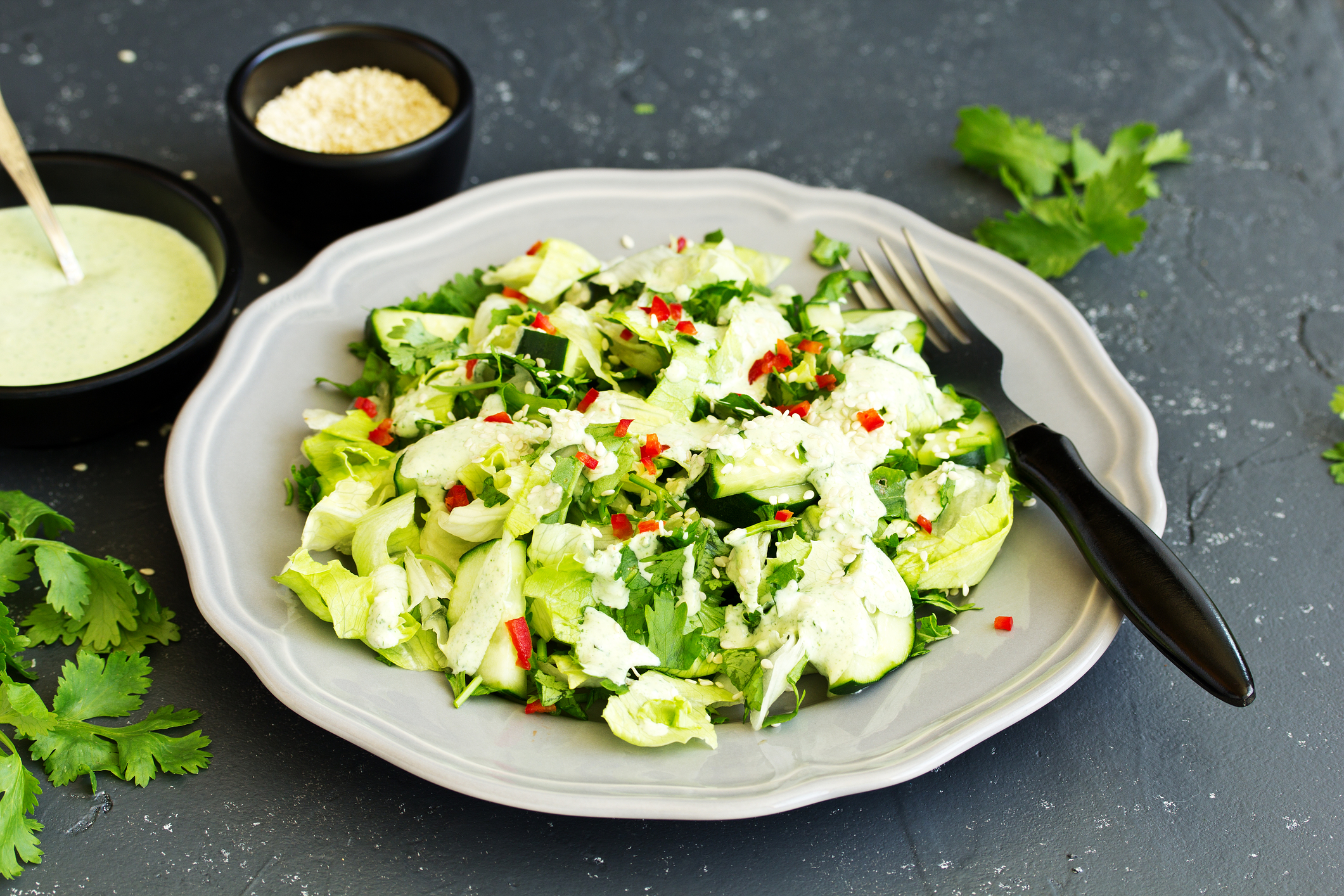
The dressing should coat everything — not pool at the bottom, not sit in clumps on top of the greens.
If it’s pooling, you didn’t toss enough or the greens were still wet from washing.
Dry the greens.
Spin them or pat them, but don’t skip it. Wet lettuce dilutes the dressing in the first thirty seconds and you’ll end up with watery yogurt at the bottom by the time you sit down.
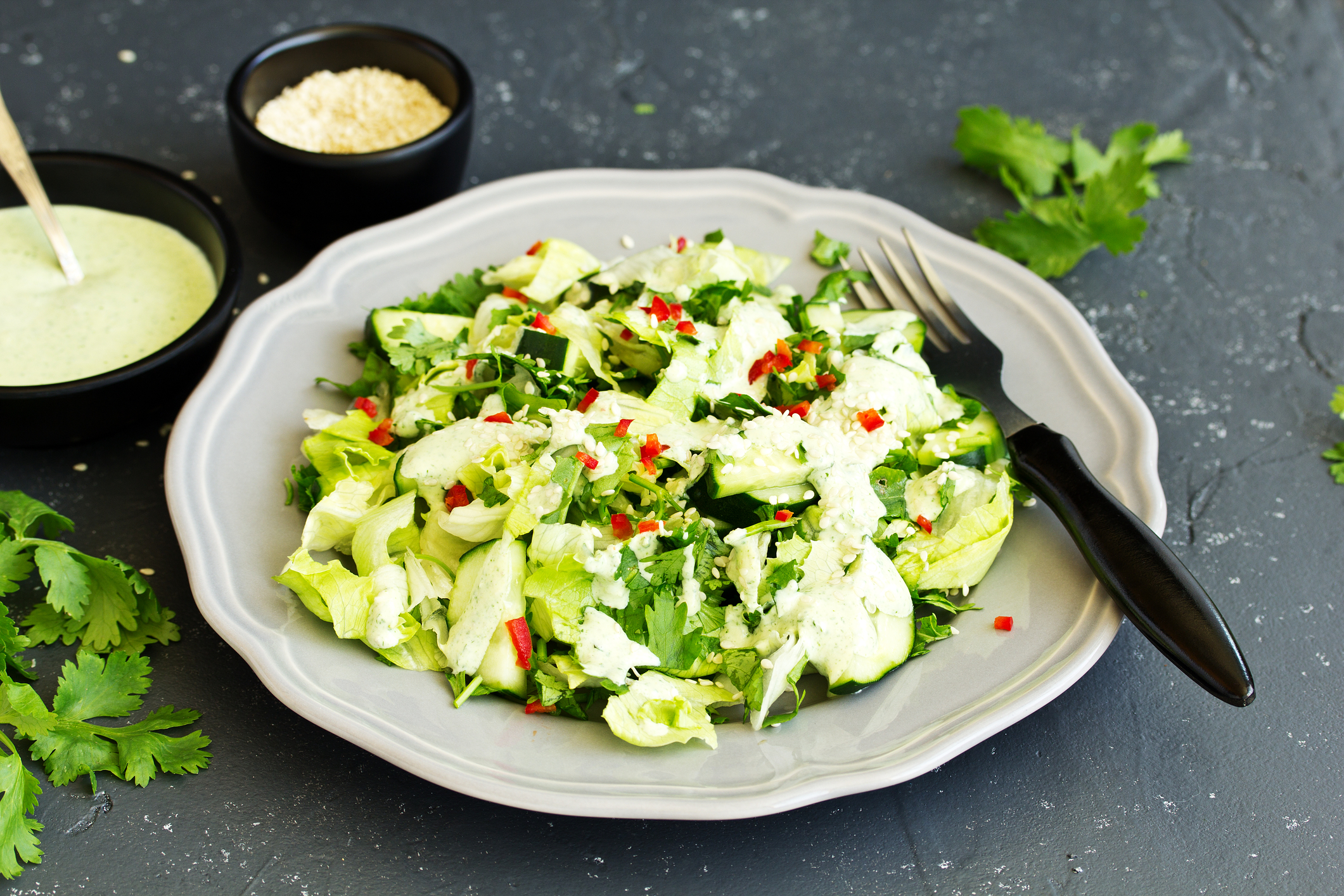
The finished bowl should be pale green and white with the red of the tomatoes coming through, the darker green of the parsley on top. It’s not a visually dramatic salad — it doesn’t try to be. It just looks like food someone made and actually intended to eat.
How to Put It Together
Step 1: Wash all the vegetables under cold running water. This isn’t optional even if the lettuce came in a sealed bag — rinse it. Dry everything before you start cutting. A salad spinner for the greens, a clean towel pat-down for the harder vegetables.
Step 2: Chop the lettuce into rough pieces and add it to a large salad bowl. Large means large — you need room to toss without flinging tomatoes across the counter, which I have done more than once.
Step 3: Add the diced cucumber, halved cherry tomatoes, sliced celery, and diced bell pepper to the bowl. (Keep the pieces roughly similar in size — this isn’t precision work, just reasonable consistency.)
Step 4: In a separate bowl, combine the yogurt, lemon juice, minced garlic, and Dijon mustard. Whisk until smooth. This took me about 90 seconds, which surprised me — I expected it to resist more than it did.
Step 5: Season the dressing with salt, black pepper, and cumin. Taste it at this point — it should have a little heat from the pepper, a clean brightness from the lemon, and the cumin sitting underneath everything without shouting. If the lemon is too forward, add a small pinch more salt before adding more yogurt.
Step 6: Pour the dressing over the vegetables and toss gently but thoroughly. Every piece of lettuce should have some dressing on it. (If you’re hesitating about whether to toss more — toss more.)
Step 7: Add the chopped parsley during the toss. Add the mint on top after everything is plated. Serve immediately — this does not hold well once dressed. Did you serve yours right away or let it sit? Share below!
Ways to Change It Up
Try this: Add half an avocado, diced, right before serving. It makes the dressing cling differently — richer, a little heavier — and the creaminess doubles in a way that turns this into more of a meal.
Try this: Swap the Dijon for a small spoonful of tahini and add a squeeze more lemon. The dressing shifts toward something more Middle Eastern in profile, and it pairs well if you’re serving this alongside grilled chicken or flatbread.
Try this: Use Greek yogurt instead of plain for a thicker dressing that stays put when you plate it. It’s less tangy and a little more substantial — good if you want the salad to sit for a few minutes before serving without going completely slack.
Which would you go for? Drop it in the comments.
How to Serve It
This works alongside grilled fish — something mild like tilapia or cod — where the yogurt dressing connects the plate instead of competing with a sauce.
It also works as a side with a grain bowl, particularly one built around farro or bulgur. The crunch of the raw vegetables does the work that a roasted component would otherwise do.
If you’re serving it as a standalone lunch, add a soft-boiled egg on top. That’s not a formal suggestion — it’s just what I do when I want it to last past 2pm.
What would you pair it with?
—Storing It Without Ruining It
This salad does not store well once dressed. I’m not going to pretend otherwise.
The lettuce goes limp within about 40 minutes, the cucumber starts releasing water, and the whole thing becomes something you’d describe as “damp” rather than “fresh.” If you know you’re making it ahead, keep the dressing separate in a sealed container in the fridge — it holds for up to 3 days — and dress only what you’re eating.
The undressed vegetables hold better. Chopped and stored in the fridge in a covered bowl, they stay crisp for about a day.
Freezing is not an option here. Raw cucumber and lettuce do not survive a freeze.
If you have leftover dressed salad and you’re not going to eat it within the hour, you can drain off the liquid that collects at the bottom and add it to a wrap or a grain bowl where the texture matters less. That’s the most useful thing I can tell you about saving it.
Have you ever saved leftovers like this? Tell me below!
Mistakes I Made So You Don’t Have To
I once made this for a dinner with three people and dressed the entire bowl an hour before they arrived. By the time we sat down, the salad was sitting in a small puddle of cucumber water and nobody took seconds.
The second mistake: I added the garlic raw and immediately, without letting it sit in the lemon juice first for even two minutes. Raw garlic directly into yogurt is a lot — sharp in a way that doesn’t mellow quickly, and it dominated the first few bites until the rest of the flavors caught up. Let it sit.
Third: I under-salted the dressing and tried to fix it by salting the vegetables directly. That doesn’t work — you end up with some pieces too salty and some pieces with nothing, and it never evens out during the toss the way you think it will. Season the dressing properly, taste it before it goes on, and don’t try to correct it after.
Did something like this happen to you?
Questions I Actually Get About This Salad
Can I use Greek yogurt instead of plain? Yes, and the dressing will be noticeably thicker — closer to a sauce than a dressing. It holds up better if you’re not serving immediately. But it’s tangier, which not everyone wants.
How far ahead can I make the dressing? About 3 days in the fridge in a sealed container. It actually improves slightly after sitting overnight — the garlic softens and the cumin blooms into the yogurt in a way it doesn’t when the dressing is fresh. And it takes about 30 seconds to re-whisk before using.
What if I don’t have fresh mint? I tried dried mint once and it tasted like toothpaste. Skip it entirely if you don’t have fresh — the parsley carries the herb flavor well enough on its own. Don’t substitute.
Is the cumin necessary? It depends on what you’re pairing the salad with. If you’re serving it alongside something that already has warm spices, the cumin can feel repetitive. I’ve left it out and the dressing is cleaner, more neutral. It’s not structural — it’s a flavor choice.
Can kids eat this? I tried this once with my daughter’s lunch and she ate the tomatoes out and left the rest. The garlic is noticeable and the mustard adds a little bite — for younger kids, reduce both by half and it gets significantly milder. Under 6 words: Yes, with adjustments.
Does lemon juice amount matter that much? More than you’d think. Two tablespoons is the right amount for 1 cup of yogurt — one tablespoon and the dressing tastes flat, three tablespoons and it curdles slightly and the tang becomes the only thing you notice. But it also depends on the lemon. A small lemon gives you less juice than the measurement suggests, so taste as you go.
Which answer helped you most?
A Few Last Things Worth Saying
This salad takes 15 minutes and requires no heat and no special equipment, and somehow that combination makes people assume it’s simple in a dismissive sense.
It’s not complicated. But it’s also not something you can make badly and have it come out fine — the temperature of the yogurt matters, the timing of the herbs matters, the size of the vegetable pieces matters in a low-stakes way that still affects the result.
Fun fact: Cucumbers are about 96% water by weight, which is why they release so much liquid after they’ve been cut and salted — or after they’ve sat in dressing for more than an hour. That water is exactly what turns a crisp salad into a soggy one.
I’ve made this version four times now. The second time was better than the first, the third time I got impatient with the dressing and rushed it, the fourth time was back to normal.
It’s not a recipe I’ve memorized yet. I still check the cumin amount every time because I always think it’s less than it is.
Will you make this soon?
I still haven’t decided if I want to try it with a different herb base — something like dill or tarragon instead of mint — or whether that would just make it a completely different salad wearing the same structure.
Happy cooking! —Marina Caldwell
Crunchy Garden Greens With Creamy Yogurt Dressing
Ingredients
- 2 cups mixed green lettuce, chopped
- 1 cup cucumber, diced
- 1 cup cherry tomatoes, halved
- 1 cup celery, sliced
- 1/2 cup bell peppers, diced
- 1/4 cup fresh parsley, chopped
- 1/4 cup fresh mint, chopped
- 1 cup plain yogurt
- 2 tablespoons fresh lemon juice
- 1 clove garlic, minced
- 1 teaspoon Dijon mustard
- 1/2 teaspoon salt
- 1/4 teaspoon black pepper
- 1/4 teaspoon cumin
Instructions
- 1Wash all vegetables thoroughly under cold running water
- 2Chop lettuce and place in a large salad bowl
- 3Add cucumber, cherry tomatoes, celery, and bell peppers to the bowl
- 4In a separate bowl, combine yogurt, lemon juice, minced garlic, and Dijon mustard
- 5Whisk the yogurt dressing until smooth and well blended
- 6Season the dressing with salt, black pepper, and cumin
- 7Pour the yogurt dressing over the vegetables
- 8Toss gently until all vegetables are evenly coated
- 9Sprinkle fresh parsley and mint on top
- 10Serve immediately and enjoy cold
Notes
See full recipe for nutritional information.