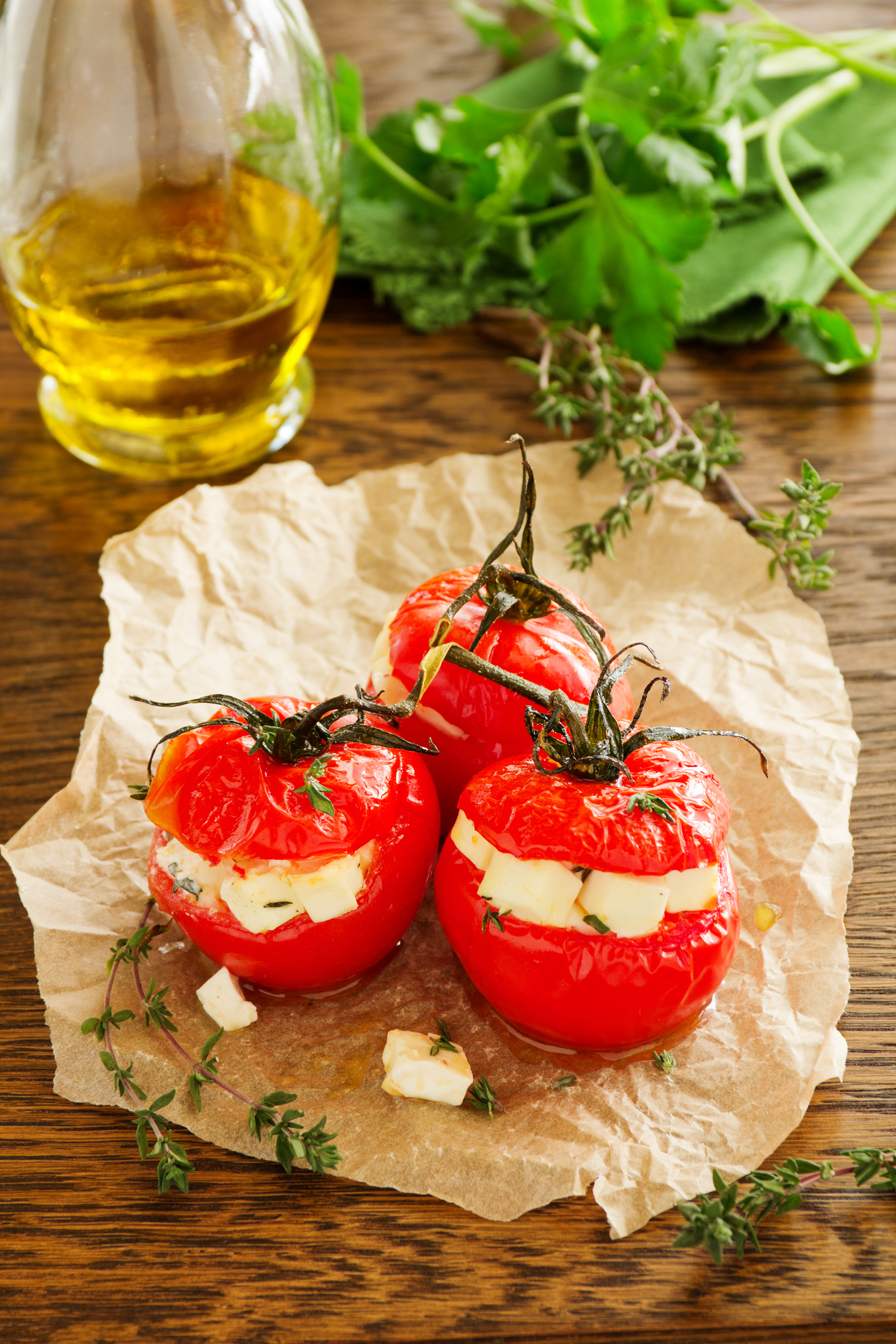
My husband took one bite and immediately asked if I’d used a different tomato.
I hadn’t. Same grocery store beefsteaks I always buy, the ones that look almost too big and occasionally disappoint when you cut them open. That day they were fine — not exceptional, just fine — and somehow they came out of the oven tasting like I’d sourced them from somewhere specific.
The cheese filling had something to do with it. The ricotta softens into the tomato walls as it bakes, and the whole thing collapses slightly inward — not unpleasantly, just enough that the shell and the filling stop feeling like two separate things.
I’d made this twice before and it hadn’t quite landed either time. The first attempt the tomatoes released too much liquid and the filling went watery. The second time I overcorrected and scooped them out so aggressively I tore two of them before they even went in the oven.
Third time was different. Not because I’d figured out some trick — I just didn’t rush it.
About the tomatoes.
Go big. Not garden tomatoes — those are usually too small and the walls are thinner than they look. You want something sturdy enough to hold the filling without the sides caving under their own weight.
Four large ripe tomatoes, but “ripe” here doesn’t mean soft. If it yields to light pressure at the stem end, it’s going to go mushy in the oven before the filling has time to set properly. You want ripe the way a good piece of fruit is ripe: colored all the way through, firm when pressed, not resistant.
I thought about using a mix of colors — actually no, I skipped it. The flavor variation wasn’t worth the inconsistency in wall thickness.
When you scoop the insides out, use a spoon with a sharper edge, not a rounded one. A regular dinner spoon left me with too much pulp clinging to the walls, which added moisture I didn’t want. A grapefruit spoon — if you have one — works better. Leave about a quarter-inch shell all the way around.
Quick tip: Pat the inside of each scooped tomato with a piece of paper towel before filling. You won’t eliminate the moisture issue entirely, but you’ll reduce it enough to matter.
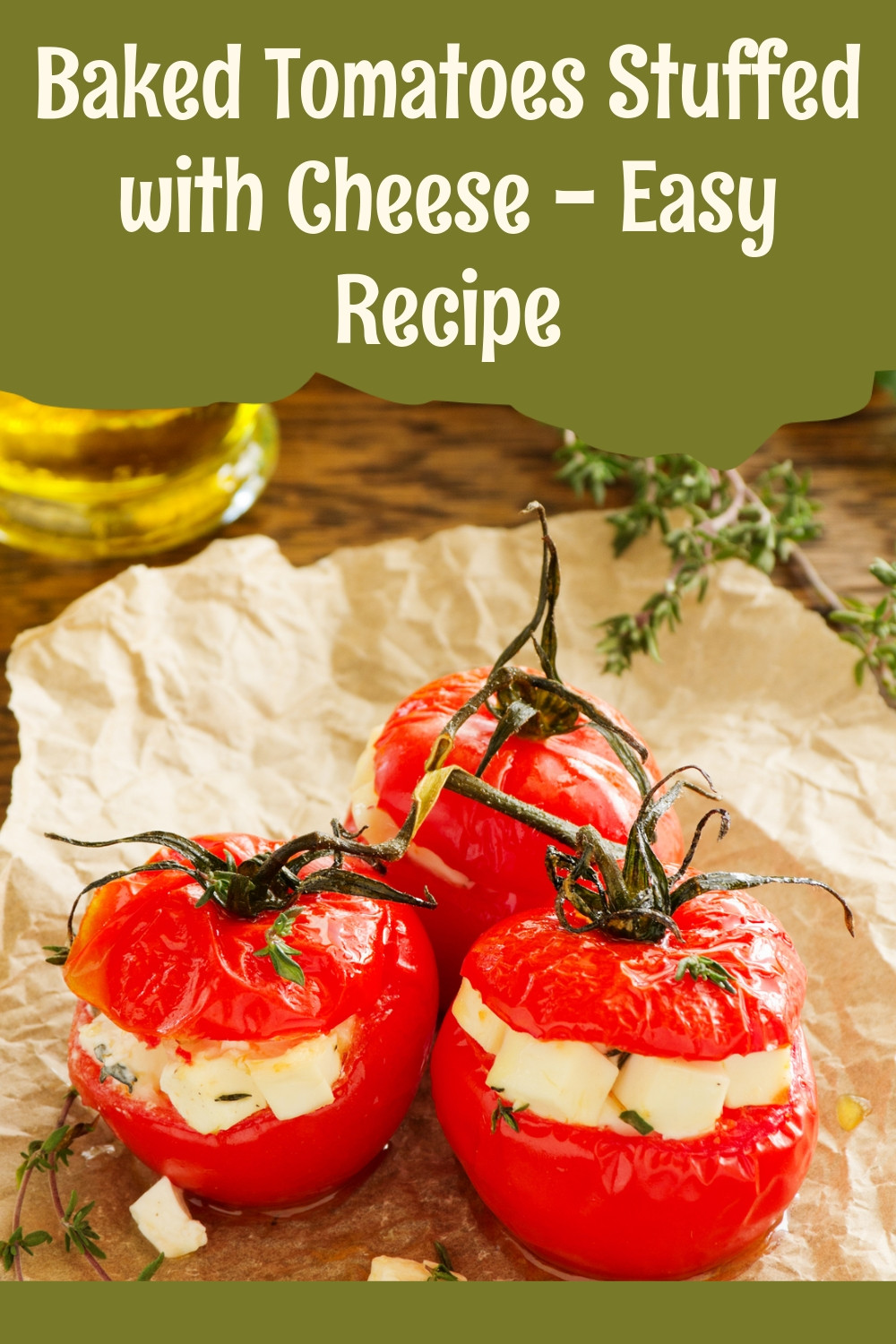
The filling is where most recipes go wrong.
Most recipes using ricotta in a baked context tell you to add an egg to bind it. Don’t. In something this small, baking in this short a window, the egg makes the filling dense and slightly rubbery by the time the tomato is done. Skip it entirely.
One cup ricotta, half a cup of shredded mozzarella, a quarter cup of grated Parmesan. The Parmesan is doing a lot — it’s the salt and the depth, both. Don’t reduce it to make room for more mozzarella. I tried that ratio once and the filling was bland in a way I couldn’t fix after the fact.
Two cloves of garlic, minced — not pressed, minced. Pressed garlic releases more liquid and turns sharp in this context. Mince it fine and it mellows completely by the time the tomatoes come out of the oven.
The basil goes in raw. A quarter cup, chopped, stirred directly into the cheese mixture before filling. It loses some brightness in the oven, which is fine — you’re not using it for freshness here, you’re using it for flavor, and that holds.
Red pepper flakes — a quarter teaspoon — are optional in the sense that the recipe works without them. They’re not optional in the sense that the filling is noticeably flatter without them.
The breadcrumbs. Don’t skip this part.
Two tablespoons of breadcrumbs mixed with two tablespoons of olive oil. That’s it. The ratio matters more than it looks like it should.
Too dry and they burn before the tomato is tender. Too oily and they go soft and don’t crisp at all. I found that equal parts breadcrumb to oil — by tablespoon — hit the right balance at 375°F. They go golden in about 20 minutes and stay that way without scorching.
Panko works here if that’s what you have, but the topping ends up slightly coarser and less even across the surface. Regular dried breadcrumbs coat more consistently.
Honestly? The breadcrumb layer is what makes people think you put in more effort than you did.
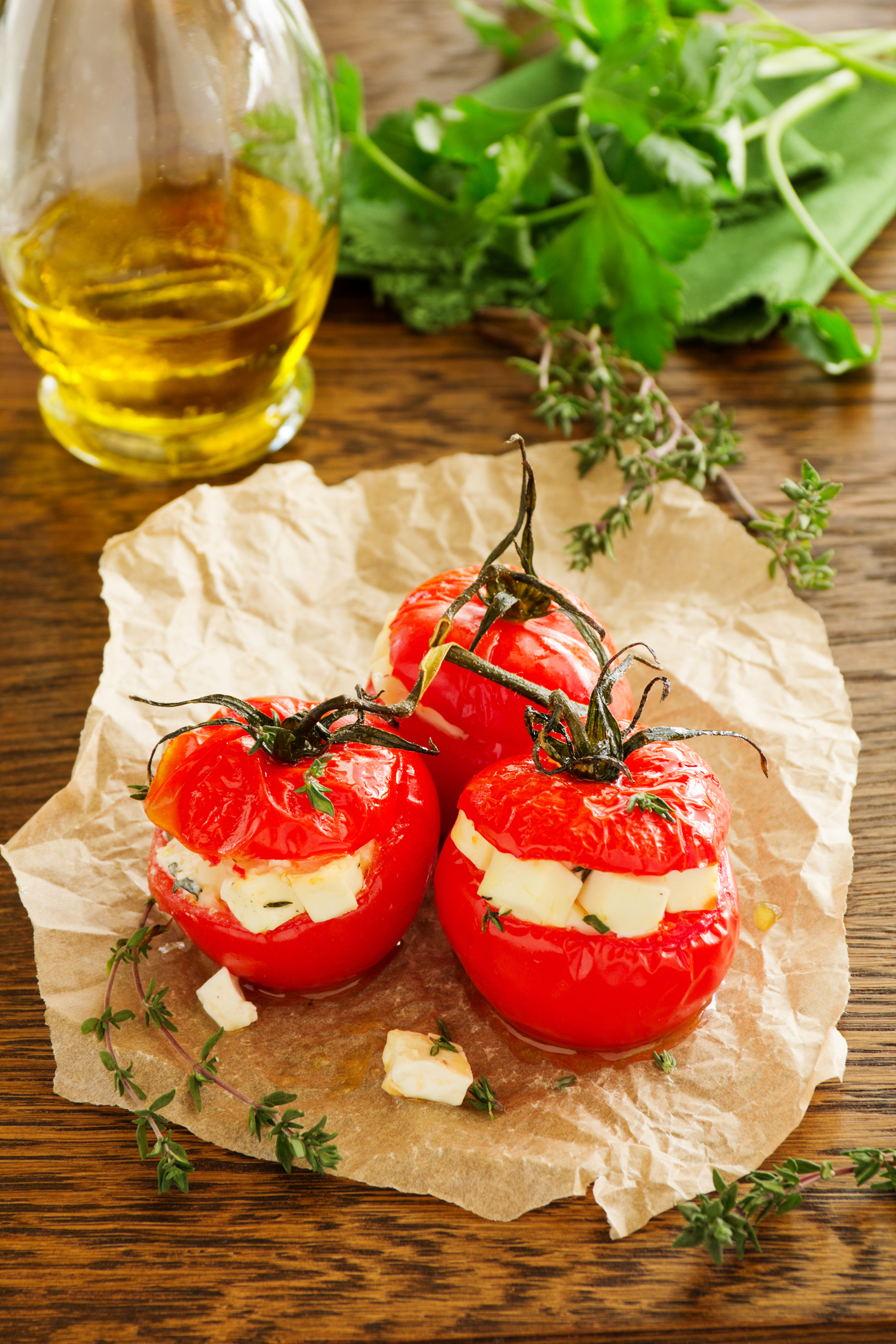
What actually happens in the oven.
375°F for 20 to 25 minutes. The tomatoes will shrink. Not dramatically, but visibly — the shoulders pull in slightly and the base spreads just a little. This is normal and it’s also how you know the walls have softened through.
The filling won’t bubble dramatically the way a pasta bake does. It sets quietly. You’ll see the cheese just starting to color at the edges, and the breadcrumb top will go from pale to golden — that transition takes about 18 minutes at my oven’s actual temperature, which runs slightly hot.
There will be liquid in the bottom of the baking dish. Some is normal. A lot means the tomatoes were either too ripe or weren’t patted dry. It doesn’t ruin them — I’ve served these sitting in a small pool of tomato juice and they were fine — but if you want a cleaner presentation, tilt the dish and spoon it off before you bring them to the table.
Let them rest two minutes before serving. The filling is genuinely hot at the center and the cheese needs a moment to stop moving.
Did yours come out with more liquid than you expected? I’m curious whether it’s a tomato size thing or a temperature thing.
One more thing I should have mentioned earlier.
The baking dish matters more than I thought. I used a shallow dish the first time — about an inch deep — and two of the tomatoes tipped over during baking because they had nothing to brace against. A dish where the tomatoes fit snugly, held upright by their neighbors, is the move.
If you only have four tomatoes and a large dish, you can crumple a small piece of foil and wedge it between them. It looks ridiculous but it works.
I’ve made worse workarounds.
Fun fact: Tomatoes are technically a fruit, and in 1893 the U.S. Supreme Court ruled them a vegetable — for tariff purposes. The tomato has been legally reclassified more times than most produce.
—Step 1: Preheat your oven to 375°F (190°C). Don’t start scooping tomatoes until the oven is actually at temperature — putting them in cold and letting them come up slowly makes the walls go limp before the filling sets.
Step 2: Cut the tops off all four tomatoes and set them aside — you won’t use them, but cutting cleanly matters here. Use a sharp knife and cut about half an inch down, enough to give you a wide enough opening to scoop without struggling. Then use a sharp-edged spoon to remove the pulp and seeds, leaving a wall about a quarter-inch thick. (The first time I did this I went too thin on one side and it collapsed in the oven. Take your time.)
Step 3: Place the hollowed tomatoes cut-side up in a baking dish. Make sure they fit snugly — you want them held upright by the dish walls or each other. Pat the inside of each one with a paper towel to pull out surface moisture.
Step 4: In a medium bowl, combine 1 cup ricotta, 1/2 cup shredded mozzarella, 1/4 cup grated Parmesan, 2 cloves minced garlic, 1/4 cup chopped fresh basil, 1/2 teaspoon salt, 1/4 teaspoon black pepper, and 1/4 teaspoon red pepper flakes. Stir until evenly mixed. The mixture will be thick and slightly sticky — that’s right.
Step 5: Spoon the cheese mixture into each tomato cavity. Fill them generously — the filling won’t expand much, so if it’s mounded slightly above the rim, that’s fine. Press it gently so it settles into the bottom rather than sitting in a dome.
Step 6: In a small bowl, mix 2 tablespoons of breadcrumbs with 2 tablespoons of olive oil until the breadcrumbs are evenly coated. Spoon the mixture over the top of each filled tomato. Spread it to the edges so you get even browning. Did yours end up lopsided with the topping? Let me know below how you fixed it — Share below!
Step 7: Slide the dish into the preheated oven. Bake for 20 to 25 minutes. At 20 minutes, check for color on the breadcrumb top — golden is what you’re looking for, not pale and not dark. The tomato walls should look slightly shrunken and tender when you press the side gently with a spoon.
Step 8: Remove from the oven. Let the tomatoes rest in the dish for 2 to 3 minutes before moving them — the filling is very hot at the center and the walls are soft enough to tear if you rush. Serve warm directly from the dish or transfer carefully with a wide spatula.
Ways to Change It Up
Try this: Swap the basil for fresh thyme and add a tablespoon of sun-dried tomatoes, finely chopped, to the filling. The flavor goes in a more savory, almost Italian-deli direction.
Try this: Replace the ricotta with goat cheese, reduced to 3/4 cup. The filling will be tangier and slightly denser. It holds its shape better if you want a cleaner slice.
Try this: Add two tablespoons of finely chopped kalamata olives and a teaspoon of lemon zest to the original filling. It shifts toward something that feels more like it belongs next to a Greek salad than a pasta dish.
Which would you go for? Drop it in the comments.
How to Serve It
These work as a side next to grilled chicken or a simple roasted fish — something that doesn’t compete with the richness of the cheese. They hold their own without needing much beside them.
If you’re serving them as a main, put them on top of a small mound of dressed arugula. The bitterness of the greens and the heat from the tomatoes work together in a way that’s worth trying at least once.
Crusty bread, toasted, on the side — not optional if you have people who will want to catch the juices from the dish.
What would you pair it with?
—Storing It Without Ruining It
Let them cool completely before covering. If you trap steam, the breadcrumb topping goes from crisp to paste in about ten minutes.
Once cooled, store in an airtight container in the fridge. They’ll keep for about 3 days. After that the tomato walls get thin enough that reheating tends to collapse them.
Reheating in the oven at 350°F for about 10 minutes is better than the microwave — the microwave steams them and the topping loses all its texture. The oven brings the breadcrumbs back to something close to what they were.
I don’t recommend freezing. The tomato cell walls break down completely and what you thaw is closer to a warm soup in a tomato-shaped container than anything you’d want to serve. I tried it once. It was not salvageable.
Have you ever saved leftovers like this? Tell me below!
Mistakes I Made So You Don’t Have To
I once used tomatoes that were one day past their prime — slightly soft at the base, which I noticed and ignored. They collapsed sideways at the 15-minute mark and leaked filling into the bottom of the dish. The filling that made it through tasted fine. The presentation was not recoverable.
I skipped patting the insides dry the second time I made this, thinking it probably didn’t matter. The filling went watery enough that the texture was off the whole way through — soft and wet in the center in a way that wasn’t pleasant. It was a step I invented on the third attempt out of frustration, and it turned out to actually matter.
I also once tried to add an egg to the filling because a similar recipe called for it. The filling set rubbery and pulled away from the tomato walls as it cooled, leaving a visible gap around the edges. I served them anyway and didn’t mention it, but I noticed.
Did something like this happen to you?
Questions I Actually Get About This Recipe
Can I use canned tomatoes instead of fresh? No. Canned tomatoes don’t have walls — you’d have nothing to fill. This recipe only works with whole fresh tomatoes that can hold their shape through 25 minutes of oven heat.
What if my tomatoes are on the small side? It depends on how small. If they’re smaller than a baseball, the filling-to-wall ratio goes off and you end up with more cheese than tomato in each bite. Use the smaller ones for something else and find bigger ones for this. About 4 days in the fridge is the shelf life for the finished dish regardless of tomato size.
Can I make the filling ahead of time? Yes, up to a day ahead. Keep it covered in the fridge. I tried this once and the garlic got sharper overnight — not bad, just more present. Stir it before using since the moisture separates slightly. Don’t fill the tomatoes ahead of time, though. They’ll start releasing liquid into the cheese before baking even begins.
Is there a way to make this dairy-free? I haven’t tested it. But the structure of the recipe depends heavily on how ricotta and mozzarella behave when heated — they melt into each other in a specific way. A straight swap to cashew-based alternatives would change the texture significantly. It depends on which dairy-free cheeses you’re working with and how they melt.
Mine came out watery — what went wrong? Two likely causes. First: tomatoes that were too ripe and holding more liquid than usual. Second: skipping the step where you pat the interior dry. Both. And if you used pressed garlic instead of minced, that adds a small amount of extra liquid too. Dry the inside. Use ripe but firm tomatoes. That combination fixes it in about 20 minutes flat.
Can I add meat to the filling? Yes. Cooked, drained Italian sausage — about a quarter cup, crumbled fine — works well mixed into the cheese filling. But keep it to that amount or the filling becomes too heavy and the tomatoes can’t support it without splitting. I tried a half cup once. The walls gave out on two of the four tomatoes before I even got them out of the dish.
Which answer helped you most?
If You’re Going to Make These
This is a recipe that looks like it requires more than it does. Forty minutes total, fifteen of which is prep work you can do without any particular skill. The oven does the rest.
The filling is forgiving — the three-cheese combination has enough fat and salt that it doesn’t need to be precise to the gram. The tomatoes are the variable. Get that part right and the rest follows.
My husband has asked for these three times since that first batch. I’ve made them four times. One of those was just for myself on a Wednesday afternoon, which I’m only mentioning because it holds up fine as something you make without an audience.
Will you make this soon?
I’m still not entirely happy with the moisture situation on the third time I made these. It was better, but not gone. I haven’t landed on a fix that works every time across every tomato, and I suspect I won’t — it just depends too much on the fruit itself.
Happy cooking! —Marina Caldwell
Easy Cheesy Baked Tomatoes Recipe
Ingredients
- 4 large ripe tomatoes
- 1 cup ricotta cheese
- 1/2 cup shredded mozzarella cheese
- 1/4 cup grated Parmesan cheese
- 2 cloves garlic, minced
- 1/4 cup fresh basil, chopped
- 2 tablespoons olive oil
- 1/2 teaspoon salt
- 1/4 teaspoon black pepper
- 1/4 teaspoon red pepper flakes
- 2 tablespoons breadcrumbs
Instructions
- 1Preheat oven to 375°F (190°C).
- 2Cut off the tops of tomatoes and scoop out the inside pulp and seeds using a spoon, leaving a 1/4-inch shell.
- 3Place hollowed tomatoes in a baking dish, cut-side up.
- 4In a bowl, combine ricotta, mozzarella, Parmesan, minced garlic, basil, salt, pepper, and red pepper flakes.
- 5Spoon the cheese mixture evenly into each tomato cavity.
- 6In a small bowl, mix breadcrumbs with olive oil.
- 7Top each stuffed tomato with the breadcrumb mixture.
- 8Bake for 20-25 minutes until tomatoes are tender and filling is heated through.
- 9Remove from oven and let cool for 2-3 minutes before serving.
- 10Serve warm as a main dish or side.
Notes
See full recipe for nutritional information.