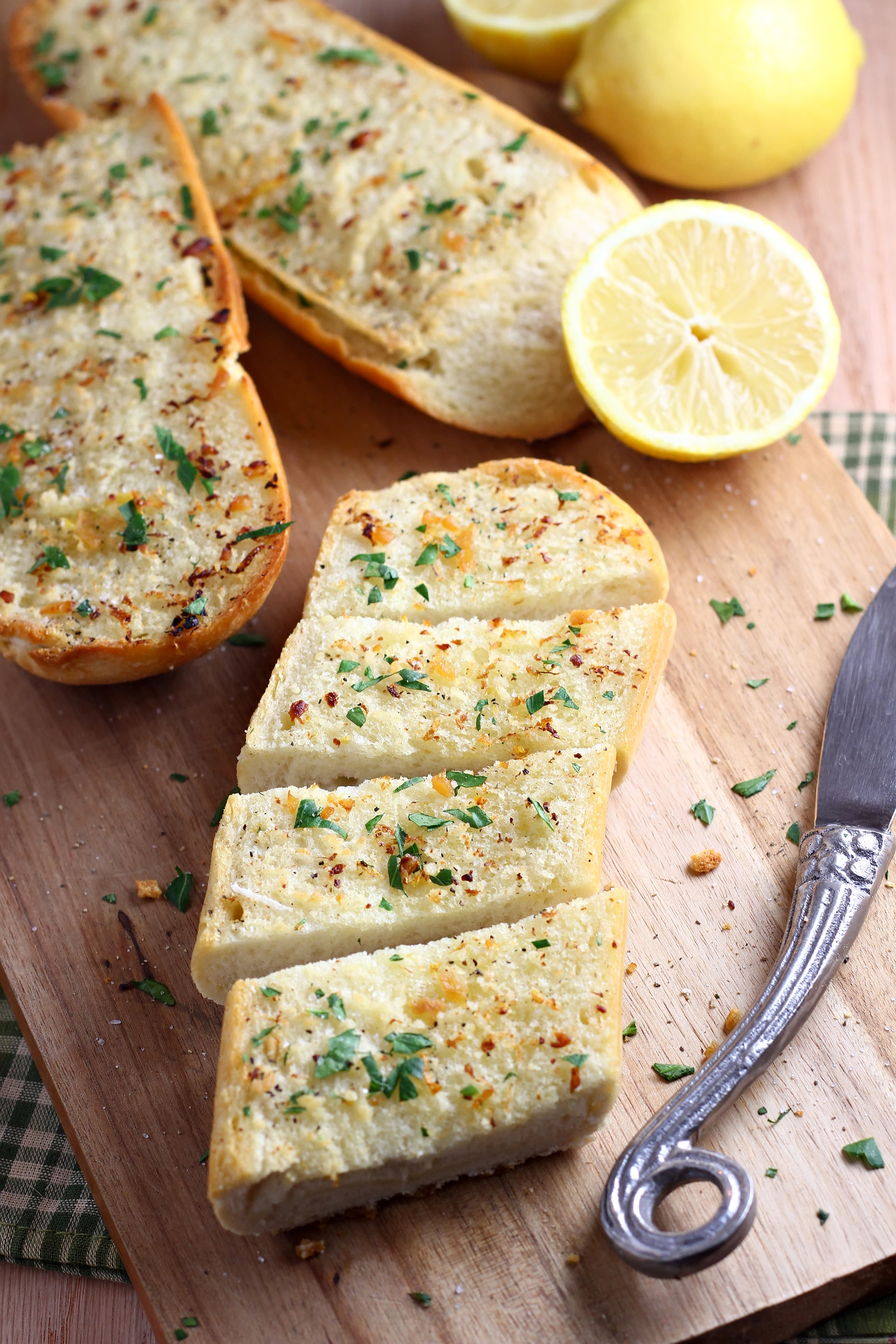
My husband took one bite and didn’t say anything for a full minute.
Which would have been flattering, except I was still standing at the counter trying to figure out if I’d used too much lemon juice or not enough.
This is lemon garlic bread — not the version from a box, not the version from a chain restaurant with the suspicious orange grease. Just butter, garlic, lemon zest, a little parsley, and a baguette that goes into a 375°F oven for 12 minutes and comes out with crispy edges and a soft, saturated middle.
It sounds straightforward. It mostly is.
But there are a few places where things go sideways — where the lemon punches too hard, or the butter doesn’t spread evenly, or the bread goes in cold and comes out gummy. I’ve hit all of them. I’ll tell you which ones actually matter.
The butter situation.
Softened. Not melted. I know it sounds like a small thing but I’ve tried both and melted butter runs off the cut surface before it has a chance to absorb, which means the center of the bread stays dry and the edges get all the flavor.
Take the butter out at least 30 minutes before you plan to use it — actually, I thought about doing a quick microwave soften — no, don’t do that, you end up with butter that’s soft on the outside and still cold in the middle and it doesn’t incorporate right.
Room temperature all the way through. That’s what lets it spread like a paste rather than a liquid.
Six tablespoons for one halved baguette. That seems like a lot. It is a lot. Use it anyway.
Quick tip: Press the butter mixture gently into the bread with the back of a spoon rather than just dragging a knife across it. You get better coverage and the garlic doesn’t all slide to one end.
About the lemon — and where I went wrong the first time.
The first time I made this, I skipped the zest and used only the juice. The lemon flavor was almost invisible. Barely there. I thought I’d imagined it.
The zest is doing the actual work here. One tablespoon of lemon zest carries more flavor than two tablespoons of juice, because the oils in the skin are concentrated in a way the juice isn’t. I didn’t fully believe this until I tasted the two versions side by side on the same afternoon.
Both. You want both. The juice adds a little acidity that cuts through the butter. The zest adds the citrus smell and the brightness that makes the whole thing taste like it has something going on.
Without zest, it’s just garlic bread with a vague sourness. Not what we’re going for.
The garlic went in raw. That’s intentional.
Most garlic bread recipes that tell you to toast or roast the garlic first are trying to get rid of the sharpness. They’re not wrong to want that, but they’re solving for the wrong problem.
Raw minced garlic baked at 375°F for 10–12 minutes gets just enough heat to mellow out without losing the bite entirely. You get something in between — not raw-aggressive, not sweet-roasted. It sits right behind the lemon.
If you go full roasted garlic here, the lemon takes over completely and the whole thing tastes like a lemon tart that got confused.
Six cloves, minced fine. Not pressed — minced. Pressed garlic releases more liquid and it can make the butter mixture slightly watery. Small difference, but noticeable when you’re spreading it.
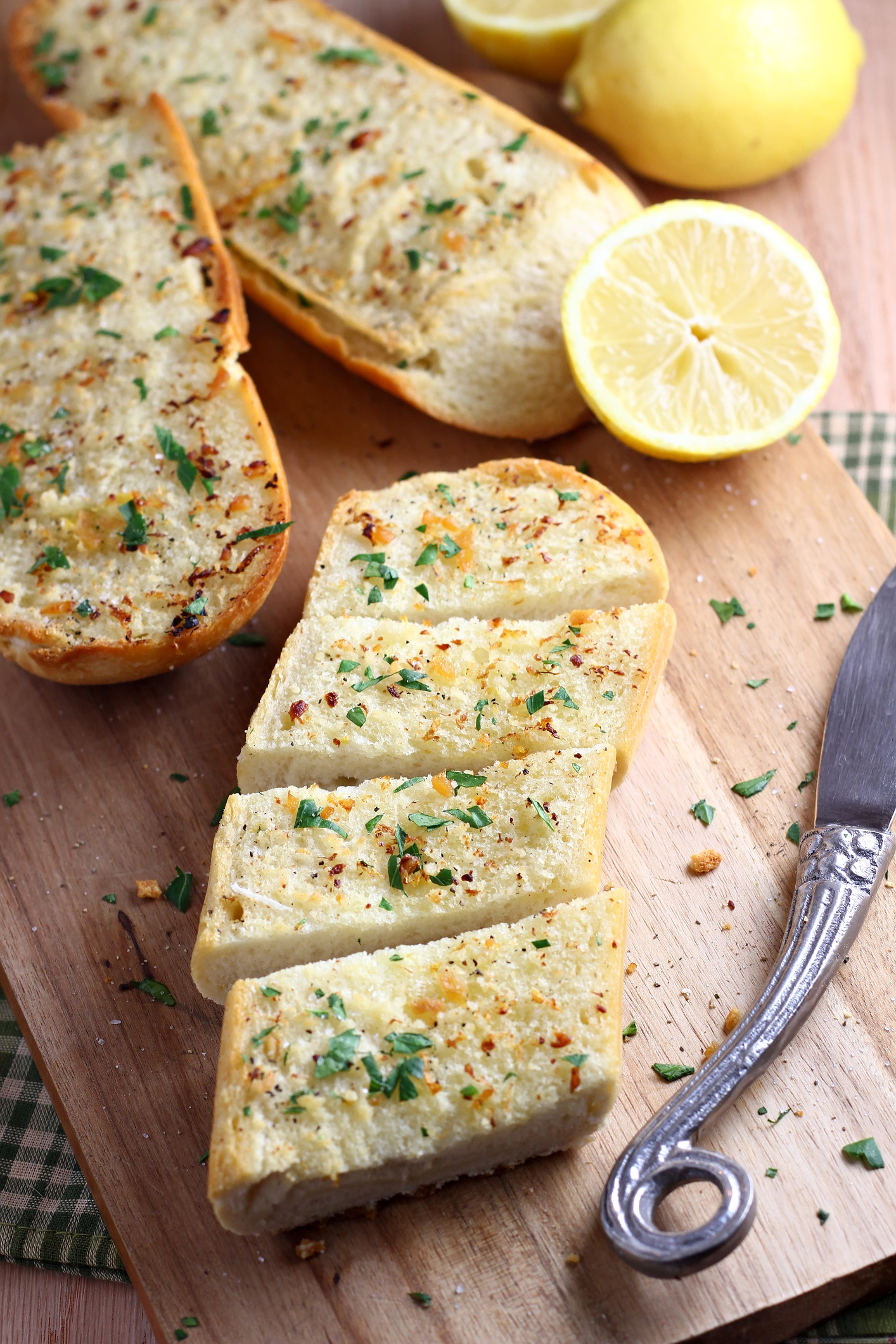
The bake itself. Purely procedural.
375°F. Baguette halved lengthwise. Butter side up on a baking sheet. No foil, no parchment — bare metal gets the bottom crispier faster.
10 minutes gets you soft with golden edges. 12 minutes gets you crunchy edges and a slightly firmer center. I pull it at 12 almost every time.
Do not cover it. Covered bread steams. Steamed bread is soft all the way through and you lose the whole textural point of this.
Let it rest 1–2 minutes out of the oven before slicing. The butter is still moving at that point — give it a second to settle or it drips straight off when you cut it.
Slice, serve immediately. It does not hold well. Warm bread goes stale faster than you think and the crispy edges soften within about 8 minutes of coming out of the oven.
The parsley almost got cut.
I thought about leaving it out entirely — actually I tried leaving it out once, and the bread looked a little flat and pale and my sister asked if something was missing.
It wasn’t about flavor. It’s mostly visual. Two tablespoons of fresh parsley stirred into the butter gives the cut surface color and makes it look like something deliberate happened rather than just butter on bread.
Dried parsley does nothing here, for the record. It turns brown in the oven and adds no discernible flavor. Not worth it.
The red pepper flakes are genuinely optional. I use them. They add a small background heat that you mostly notice after the fact, not while you’re eating.
The bread looked good. My husband got the last piece. Neither of those things was planned.

Step 1: Preheat your oven to 375°F (190°C). While it heats, take your butter out if it isn’t already soft — you want it fully room temperature, spreadable but not greasy. (If you try to rush this with a microwave, you’ll end up with uneven texture in the butter mixture and it won’t blend properly with the garlic.)
Step 2: Combine the softened butter, minced garlic, lemon juice, and lemon zest in a small bowl. Stir until everything is fully incorporated — no streaks of plain butter left. The mixture will look slightly speckled from the zest and that’s exactly right.
Step 3: Add the parsley, salt, black pepper, and red pepper flakes if you’re using them. Stir again. Taste it on a small piece of bread or even off a spoon — this is the moment to adjust salt before it goes on the bread and into the oven.
Step 4: Halve your baguette lengthwise and spread the butter mixture across both cut sides. Press gently as you go rather than dragging so the garlic stays evenly distributed. Get all the way to the edges — the corners dry out if they don’t have coverage.
Step 5: Place both halves cut-side up on a bare baking sheet. Nothing under them. Slide into the oven on the middle rack. I personally always check at 10 minutes because every oven runs differently and I’ve pulled bread that was almost burnt at 11 minutes in my current oven. Has your oven ever surprised you mid-bake? Share below!
Step 6: Bake 10–12 minutes until the edges are golden and the top surface has a slight sheen. The garlic bits on the surface will have darkened slightly — that’s fine, expected, good even. Pull it when the edges look done because the center will finish from residual heat.
Step 7: Rest for 1–2 minutes, then slice into portions. Serve while warm. There’s no graceful way to save this for later — it just stops being good.
Ways to Change It Up
Try this: Add 2 tablespoons of finely grated parmesan into the butter mixture before spreading. It forms a thin crust on top during baking and adds a savory, slightly nutty layer that plays well against the lemon.
Try this: Swap the parsley for fresh basil, chopped fine. The flavor becomes more summery and a little sweeter. Use the same amount, two tablespoons.
Try this: Double the lemon zest to two tablespoons and skip the juice entirely if you want a more concentrated citrus hit without extra liquid in the butter. The spread stays firmer and easier to work with.
Which would you go for? Drop it in the comments.
How to Serve It
Alongside a simple pasta with olive oil and capers — the lemon in the bread echoes the acidity in the pasta without competing with a cream sauce, which would just be too much butter in one meal.
Next to a bowl of tomato soup. The crispy edges hold up to dipping better than soft sandwich bread and the garlic does something interesting when it hits the tomato.
On its own, sliced, as something to put on the table while everything else finishes cooking. It disappears in about four minutes in my house and I’ve learned to make two baguettes when I actually want some for myself.
What would you pair it with?
Storing It Without Ruining It
If you have leftovers — which is unlikely but possible — wrap them loosely in foil and keep at room temperature for up to one day. Not the fridge. Cold bread goes dense and the texture doesn’t come back.
To reheat, unwrap and put directly on a baking sheet at 350°F for about 5 minutes. The edges crisp back up reasonably well. Not as good as fresh, but edible.
Freezing works if you freeze it before baking. Assemble the butter-covered baguette halves, wrap tightly in plastic wrap, freeze up to one month. Bake straight from frozen at 375°F for about 16–18 minutes.
I have never successfully frozen it after baking. The texture was wrong and I didn’t bother finishing it.
Have you ever saved leftovers like this? Tell me below!
Mistakes I Made So You Don’t Have To
I once used cold butter because I was impatient, and the garlic clumped in pockets instead of distributing through the spread. Some bites had too much, some had none, and the whole thing felt uneven in a way I couldn’t fix after it came out of the oven.
I also tried baking it on parchment paper to make cleanup easier. The bottom of the bread came out pale and slightly soft rather than golden. Bare pan only. The cleanup is fine.
The third mistake was slicing it too soon — like, immediately out of the oven while the butter was still fully liquid. Half of it dripped onto the cutting board. I lost a noticeable amount of flavor to a wooden surface. Wait the two minutes. It matters.
Did something like this happen to you?
Questions I Get About This One
Can I use garlic powder instead of fresh garlic?
You can, but the flavor is flatter and drier. About 1 teaspoon garlic powder per 6 cloves is the rough swap. I tried it once when I was out of fresh garlic and it was fine — not the same, but fine. The lemon ends up more prominent when the garlic is weaker.
What kind of baguette should I use?
A standard French baguette from a bakery or grocery store works. Avoid anything described as “soft” — you want a crust with some structure so the edges actually crisp up in the oven. And it should be fresh, not day-old. Day-old baguettes dry out too fast at 375°F.
Can I make the butter mixture ahead of time?
Yes. Up to 48 hours in the fridge, stored in a small container. Let it come back to room temperature before spreading — about 20 minutes on the counter. But don’t spread it on the bread ahead of time; the bread gets soggy if it sits with wet butter on it for more than 20 minutes.
Does bottled lemon juice work?
Honestly? No. It has a slightly processed taste that the zest can’t cover. Fresh lemon juice takes about 30 seconds to squeeze and it makes a real difference here. One lemon gives you more than enough juice and zest for this recipe.
Can I make this without an oven?
A toaster oven at the same temperature works almost identically — check it at 9 minutes because toaster ovens run hot. A skillet works too: medium-low heat, butter side down, press gently with a spatula, about 4–5 minutes. You lose the oven-wide even heat but you gain a crispier cut surface. It depends on what you have available.
How do I know when it’s done?
The edges go golden and pull slightly away from each other. The butter surface has set and no longer looks wet. The garlic bits on top will have browned a little at the edges. Pull it then. If you’re unsure, give it one more minute — but only one.
Which answer helped you most?
What I’d Tell You If You Were Making It Right Now
Get the butter soft before you start anything else. That’s the one thing that makes the whole process easier. Everything else follows from that.
Don’t skip the zest. I know I already said this. It bears repeating because it’s the part people skip when they’re moving fast.
Will you make this soon?
It’s 22 minutes total. Less if your oven preheats fast. The kind of thing you can decide to make while something else is already cooking and have it on the table before that something else is done.
My husband asked if I was making it again last Tuesday. I hadn’t planned to. I did anyway and used slightly more lemon zest than the recipe calls for — maybe a teaspoon extra — and I’m still not entirely sure if that was better or just different.
Fun fact: Lemon zest contains limonene, a compound found in the outer peel that is roughly 6–10 times more concentrated in flavor than lemon juice. It’s also what gives lemon its smell — the juice barely contributes to that at all.
I’ll probably keep adjusting it. That’s the thing about a recipe this short — there’s nowhere to hide.
Happy cooking! —Marina Caldwell
Easy Lemon Garlic Bread Recipe Crispy Buttery
Ingredients
- 1 French baguette, halved lengthwise
- 6 tablespoons butter, softened
- 6 cloves garlic, minced
- 2 tablespoons fresh lemon juice
- 1 tablespoon lemon zest
- 2 tablespoons fresh parsley, chopped
- 1/2 teaspoon salt
- 1/4 teaspoon black pepper
- 1/4 teaspoon red pepper flakes (optional)
Instructions
- 1Preheat oven to 375°F (190°C).
- 2In a small bowl, combine softened butter, minced garlic, lemon juice, and lemon zest.
- 3Stir in parsley, salt, black pepper, and red pepper flakes if using.
- 4Spread the lemon garlic butter mixture evenly on cut sides of baguette halves.
- 5Place baguette halves on a baking sheet, butter-side up.
- 6Bake for 10-12 minutes until bread is golden and crispy at edges.
- 7Remove from oven and let cool for 1-2 minutes.
- 8Slice into individual portions and serve immediately while warm.
Notes
See full recipe for nutritional information.