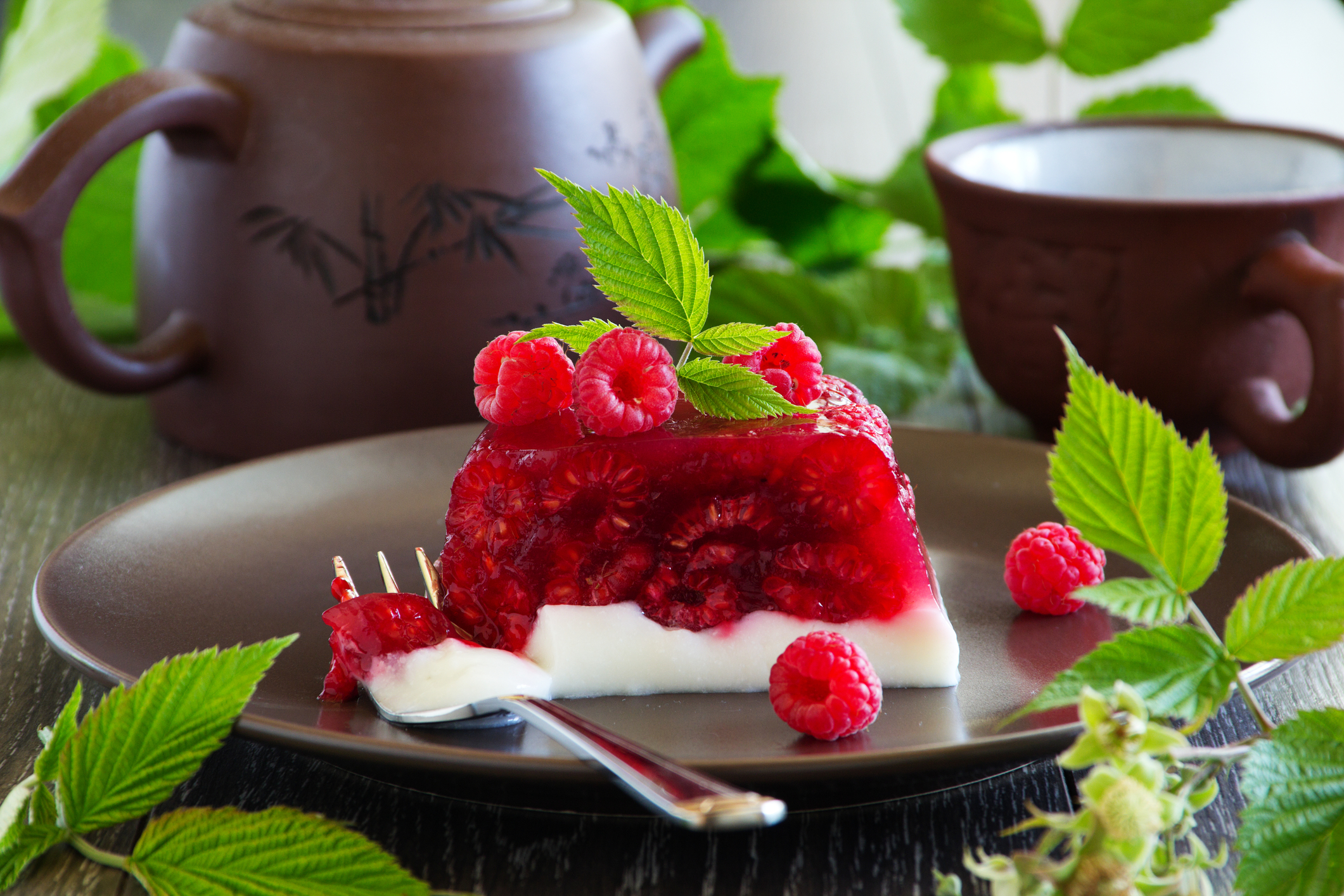
My sister finished hers before I sat down.
She didn’t say anything about it, just scraped the glass clean with a spoon and pushed it toward the center of the table. That was the first time I made this.
I’d been skeptical. Raspberry gelatin out of a packet felt like cheating somehow, like I should be simmering actual fruit down with pectin and pretending I had time for that.
I didn’t have time for that.
It was a Tuesday, the kind where you open the fridge at 6pm and realize you never planned dessert and have about forty minutes before someone gets impatient. The raspberries were sitting there, slightly too ripe, and I had one packet of gelatin left from some other plan I’d abandoned weeks ago.
Fast assembly. Long wait. That part I hadn’t thought through.
About the gelatin — and I mean specifically the gelatin.
Most recipes just say “dissolve it.” Fine, yes, but they don’t tell you that undissolved gelatin granules will sink to the bottom of the glass and set there in a grainy layer that ruins the texture of the whole thing. I found this out the hard way on batch one.
Stir it longer than you think you need to. A full minute, minimum. The liquid should look completely clear — no visible grains, no cloudiness at the bottom of the bowl when you tilt it.
Grainy bottom layer. Not pleasant.
The cold water goes in after, and this matters. Adding it too soon — before the powder is fully dissolved — cools everything down before the gelatin has done its job. You end up with a mixture that looks set-ready but isn’t, and four hours later you have something closer to a very firm syrup than an actual jelly.
I thought about adding a splash of raspberry liqueur at this stage — actually, no, I skipped it. The fresh berries do enough without it, and I didn’t want the cream to taste like it was competing with something.
Quick tip: Run your spoon along the bottom of the bowl while stirring, not just around the sides. Gelatin settles low and hides there.
The raspberries went in first. That part matters.
Not floating on top, not stirred in — placed at the bottom of the glass before any liquid touches them. This way they stay where you put them, suspended in the set jelly rather than bobbing up and clustering at the surface.
Four glasses, about 50g of raspberries each. Even, not packed.
Mine were slightly too ripe that first Tuesday, which meant a few of them collapsed when the warm gelatin hit them. It wasn’t catastrophic, but the jelly ended up with a pink tint from the juice bleeding out. Still tasted fine. Looked a bit muddy in one glass.
If you’re buying raspberries specifically for this, get ones that are firm enough to hold their shape under warm liquid. It makes a visible difference when you’re serving in clear glasses.
Fill three-quarters full, not to the top.
You need room for the cream. This sounds obvious until you pour too much and realize you’ve left yourself a centimeter of space for what’s supposed to be a generous dollop. I’ve done it. The cream ended up stacked on top like a precarious hat and fell off before anyone got a photo.
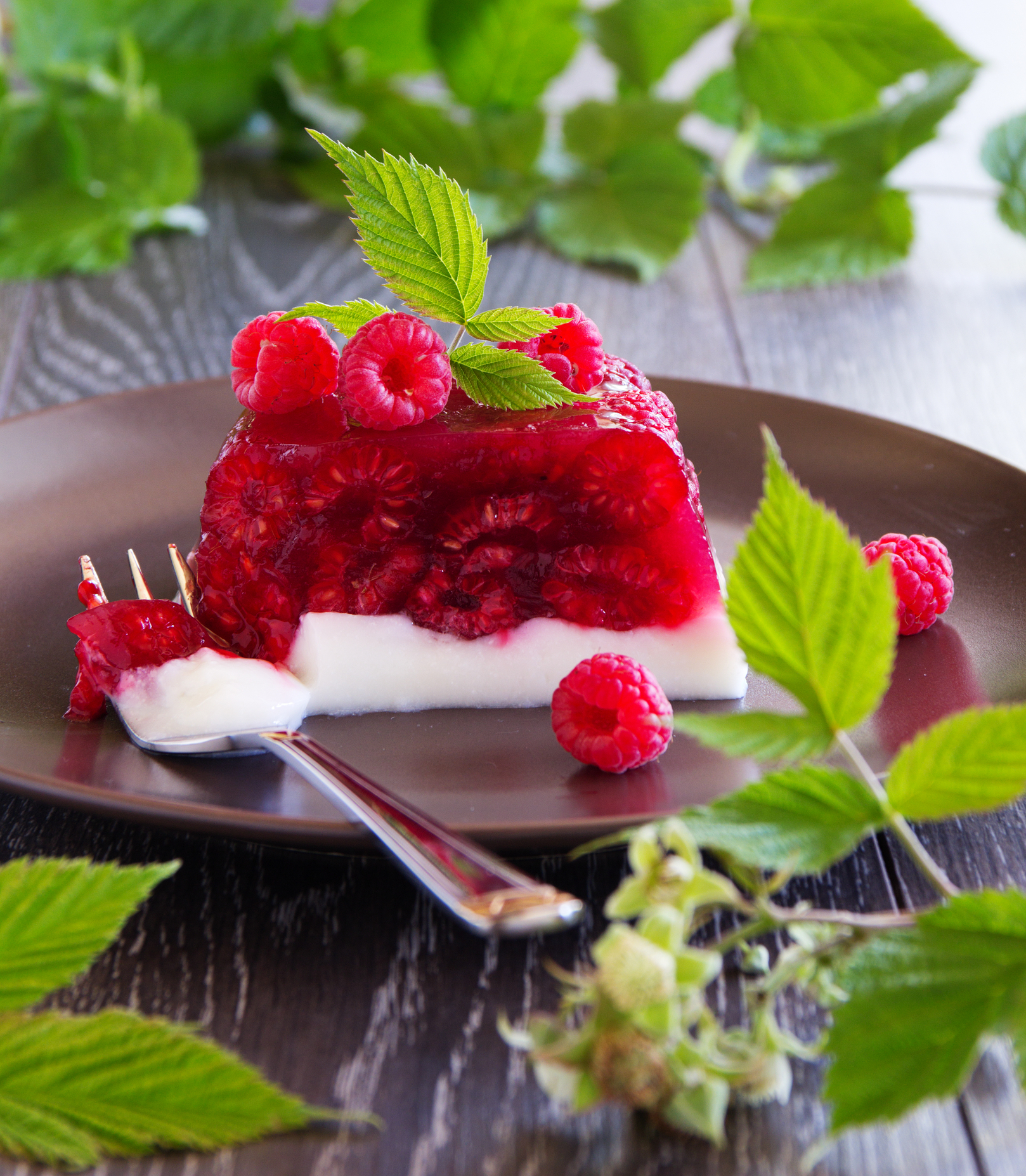
It looked curdled. It wasn’t.
The cream, when you first start whipping it with the powdered sugar, goes through a stage where it looks slightly grainy and separated, like it’s about to break. Keep going.
Soft peaks means it holds a shape when you lift the whisk but the tip falls over slowly. Not stiff, not liquid — something in between that looks almost too loose until you spoon it onto the jelly and it sits there perfectly.
Overwhipped cream, on the other hand, goes grainy and dense. It still tastes fine but it sits on the jelly like a lid rather than a cloud, which changes the whole experience of eating it.
The vanilla goes in with the powdered sugar, not after. I don’t have a strong reason for this beyond the fact that it seems to distribute more evenly that way — but honestly? It’s not that deep. Either way works.
300ml of cream makes more than enough for four glasses with some left over. I always eat the leftover cream with a spoon standing at the counter and I’m not going to pretend otherwise.
The wait. Which is the actual hard part.
Three to four hours in the fridge. This is not negotiable and I’ve tried to negotiate it.
At two hours, the jelly is set around the edges but still jiggly in the center — like a panna cotta that hasn’t committed yet. Spoonable but not structured. The cream sinks in rather than sitting on top, and the whole thing looks like it gave up.
Four hours. Set it and leave it alone.
I usually make these in the morning if I’m serving them at dinner, or the night before if I have the foresight. The cream and garnish go on right before serving, never in advance, or the cream starts weeping and the fresh raspberries on top get soft and stain everything pink.
Do not cover them with plastic wrap while still warm. Condensation pools on the surface of the jelly and leaves a wet, slightly tacky layer that the cream won’t sit on properly. Let them cool to room temperature for about 20 minutes first,
then cover and refrigerate.
What I’d do differently. Maybe.
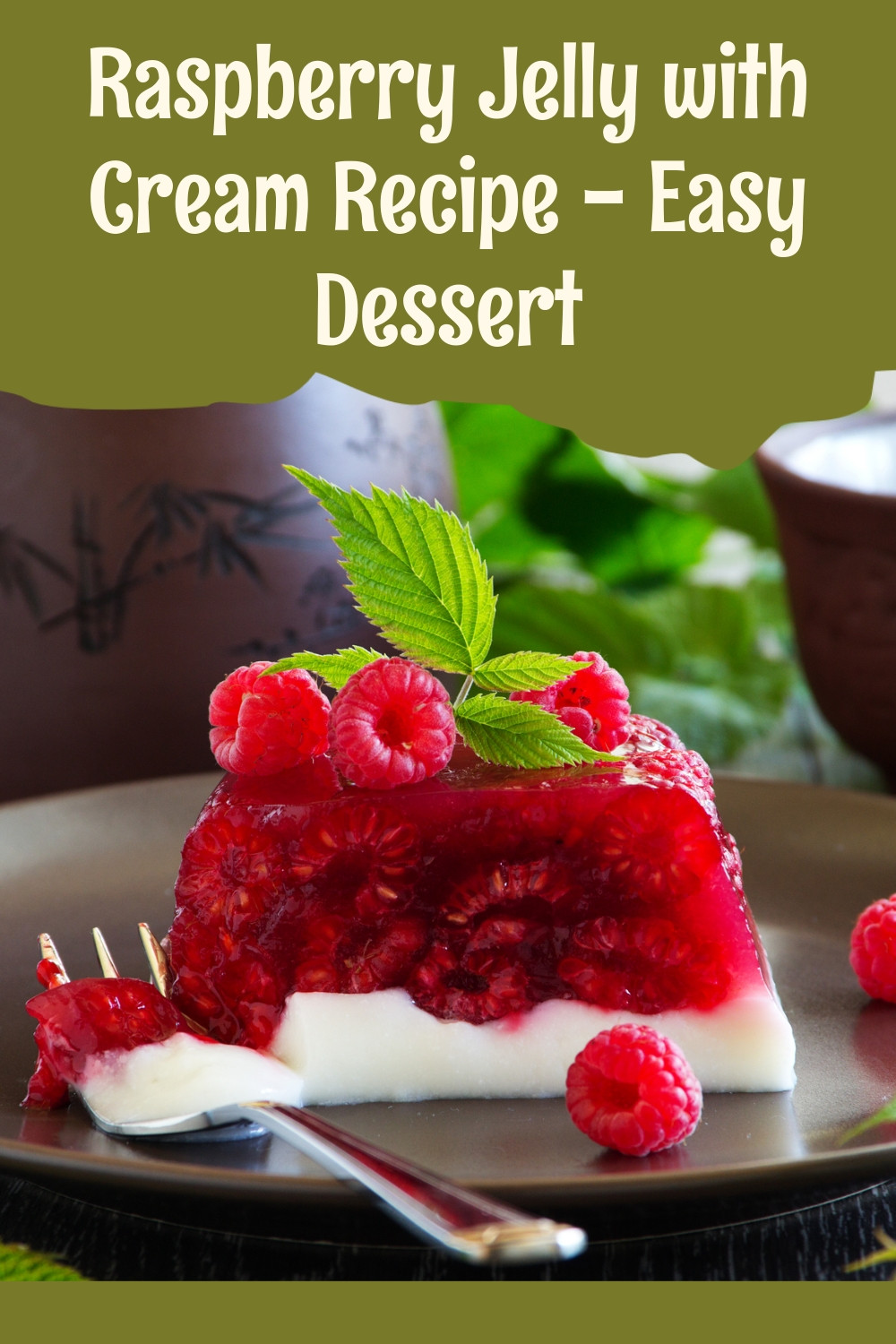
Layered jelly. Two pours — first a thin layer of plain jelly, let it set for about 90 minutes, then add the raspberries and pour the rest. They’d float in the middle instead of sitting at the bottom. Looks more intentional.
I haven’t done this yet. It requires patience I usually don’t have on the day I decide to make these.
The cream could take a little lemon zest. Half a teaspoon grated in while whipping. My sister would probably say yes to this; I’m undecided. It cuts through the sweetness but also pulls attention away from the raspberry, which is supposed to be the point.
Does the garnish raspberry need to be there? Technically no. But the glasses look unfinished without something on top of the cream — too much white, not enough contrast. Three berries per glass, placed off-center. That’s what I do now.
—Step 1: Pour one cup of boiling water into a medium bowl and add the raspberry gelatin powder. Stir continuously for at least 60 seconds, running the spoon along the bottom of the bowl. The mixture should be completely clear before you move on. (Underdissolved powder sets gritty — it ruined my first batch and I didn’t realize until we were already eating.)
Step 2: Add one cup of cold water to the dissolved gelatin and stir again. The liquid will go from warm to cool quickly — this is what you want. It should still be fully liquid at this point, not starting to thicken.
Step 3: Divide 200g of fresh raspberries among four serving glasses. Aim for an even layer at the bottom — not mounded, not sparse. About 50g per glass.
Step 4: Pour the gelatin mixture over the raspberries, filling each glass to three-quarters full. Do this slowly; pouring too fast disturbs the berries and shifts them around. Did your raspberries move around when you poured? Share below!
Step 5: Let the glasses sit at room temperature for about 20 minutes before covering. Then refrigerate for 3 to 4 hours until the jelly is completely firm. (Test by pressing the surface lightly with a fingertip — it should spring back with no liquid pooling around it.)
Step 6: When the jelly is fully set, whip 300ml of heavy cream with 2 tablespoons of powdered sugar and 1 teaspoon of vanilla extract until soft peaks form. Start on medium speed, not high — high speed at the beginning can make the cream grainy.
Step 7: Spoon or pipe a generous dollop of whipped cream onto each glass. I use a large spoon and drop it from about an inch above so it lands in a natural shape rather than looking forced.
Step 8: Garnish with fresh raspberries and serve immediately.
Ways to Change It Up
Try this: Swap the raspberry gelatin for strawberry and use sliced strawberries at the bottom. The flavor is softer and sweeter — works well if you’re serving this to people who find raspberries too sharp.
Try this: Add a thin layer of crushed digestive biscuits or graham crackers to the bottom of the glass before the raspberries. It adds something to chew against, and the biscuit soaks up just enough jelly to hold together without going fully soggy.
Try this: Replace 100ml of cold water with coconut cream in the gelatin mixture. The set is slightly softer and the flavor is surprisingly good with raspberries — more interesting than it sounds.
Which would you go for? Drop it in the comments.
How to Serve It
These work well on a tray in the middle of the table so people can take their own. Clear glasses show the layers, so use the clearest ones you have — even mason jars work if that’s what you’ve got.
Alongside something very plain — a thin shortbread, a piece of plain cake — the jelly and cream carry most of the flavor and don’t need much competing with them.
For a slightly more composed plate, unmold the jelly into a shallow bowl instead of serving in glasses. This only works if the jelly is fully set and the bowls are chilled. I’ve done it once and it looked good. I’ve also had it collapse twice and that looked terrible.
What would you pair it with?
—Storing It Without Ruining It
The jelly itself — without cream — keeps in the fridge covered for up to 3 days. After that the texture starts getting a bit rubbery at the edges, not inedible but not great.
Once you’ve added the cream, eat it the same day. Whipped cream starts weeping after a few hours and the moisture sits on the jelly surface in a thin, sad layer.
I wouldn’t freeze this. Gelatin desserts do not recover from freezing — they turn grainy and release a lot of liquid when they thaw. It’s not a texture anyone wants.
If you want to make these ahead, set the jelly up to a day in advance and refrigerate uncovered for the first 20 minutes, then cover with cling film. Whip the cream and garnish right before serving. That’s the only prep-ahead approach that actually holds up.
Have you ever saved leftovers like this? Tell me below!
Mistakes I Made So You Don’t Have To
I once poured the gelatin mixture in while it was still very hot — almost boiling — and the raspberries at the bottom partially cooked. They lost their shape, released a ton of juice, and the bottom quarter of each glass was more soup than jelly. Let the mixture cool slightly before pouring, or at least let it come off the boil for two or three minutes first.
Covered the glasses with plastic wrap immediately after pouring. Condensation dripped back down onto the surface while it chilled and left small watery pockets throughout the jelly. The 20-minute wait before covering is not optional.
Whipped the cream too far on my third batch — I got distracted and came back to something that was nearly butter. It still piled onto the glasses, but the texture was wrong, dense rather than light, and it overpowered the jelly instead of sitting alongside it. Watch for soft peaks and stop.
Did something like this happen to you?
Questions People Actually Ask
Can I use frozen raspberries instead of fresh? You can, but thaw them completely and drain off the excess liquid first — frozen raspberries release a lot of water, and that liquid will dilute the jelly around them. And the texture of thawed raspberries is softer, so they tend to break apart more easily when the gelatin is poured over. Fresh holds up better in clear glasses where the texture is visible.
What if I don’t have powdered sugar for the cream? Regular granulated sugar works in a pinch, but it doesn’t dissolve as quickly. I tried this once and the cream had a very slightly gritty finish. Give it an extra minute of whipping and it mostly resolves, but not entirely. About 1.5 tablespoons of granulated to replace 2 of powdered.
Can I make this in one large dish instead of individual glasses? Yes. A standard 20cm square dish works for this quantity. The set time is the same. But it depends on how you’re serving it — scooping out of a shared dish breaks the jelly layers and looks messy. Individual glasses make it neater if presentation matters to you.
How do I know the jelly is actually set before I add the cream? Press the center lightly with a clean finger — about 4 hours in. It should feel firm and spring back slightly. No wobble in the middle. If the surface gives and liquid pools around your fingertip, put it back for another 45 minutes.
Can I use a different flavor gelatin? Any flavor that pairs with cream works — strawberry, blackcurrant, peach. But avoid citrus-heavy flavors like orange or lemon with this amount of cream on top. The acidity and the fat don’t play well together in terms of flavor balance. I tried orange once and it tasted like a creamsicle that couldn’t commit to being a creamsicle.
Is this actually four servings or is that optimistic? It depends on the glass size. In standard 300ml dessert glasses, four is accurate. But if you’re using larger tumblers, it stretches to three generous portions. I’ve also done six small portions in narrower glasses for a dinner party where there were other desserts. All of them worked.
Which answer helped you most?
Where I’ve Landed With This
It’s a dessert I return to when I want something that looks more considered than it is. Four components, none of them difficult, and the presentation does most of the work as long as you use clear glasses.
The part that still trips me up occasionally is timing. Not the technique — the timing. Making sure the jelly has a full four hours, not three and a half. Making sure the cream goes on at the last possible moment rather than an hour before dinner when I think I’m being efficient.
Fun fact: Raspberries are one of the few fruits that are technically an aggregate of many smaller drupelets — each tiny bubble on the berry is a separate fruit with its own seed. A single raspberry contains around 100 of them.
Will you make this soon?
My sister has asked for it twice since that Tuesday. I’ve made it four more times and it’s been slightly different each time — different firmness, different cream texture, once with a slightly muddy jelly because the raspberries were overripe again. I haven’t cracked a version I’d call completely consistent yet.
Happy cooking! —Marina Caldwell
Easy Raspberry Jelly Cream Dessert Recipe
Ingredients
- 1 package (12g) raspberry gelatin powder
- 1 cup boiling water
- 1 cup cold water
- 200g fresh raspberries
- 300ml heavy cream
- 2 tablespoons powdered sugar
- 1 teaspoon vanilla extract
- Extra raspberries for garnish
Instructions
- 1Pour boiling water into a bowl and add raspberry gelatin powder, stirring until completely dissolved.
- 2Add cold water to the gelatin mixture and stir well.
- 3Divide fresh raspberries evenly among 4 serving glasses.
- 4Pour gelatin mixture over raspberries, filling glasses three-quarters full.
- 5Refrigerate for 3-4 hours until jelly is completely set and firm.
- 6In a separate bowl, whip heavy cream with powdered sugar and vanilla extract until soft peaks form.
- 7Once jelly is set, top each glass with a dollop of whipped cream.
- 8Garnish with fresh raspberries on top of the cream.
- 9Serve immediately and enjoy.
Notes
See full recipe for nutritional information.