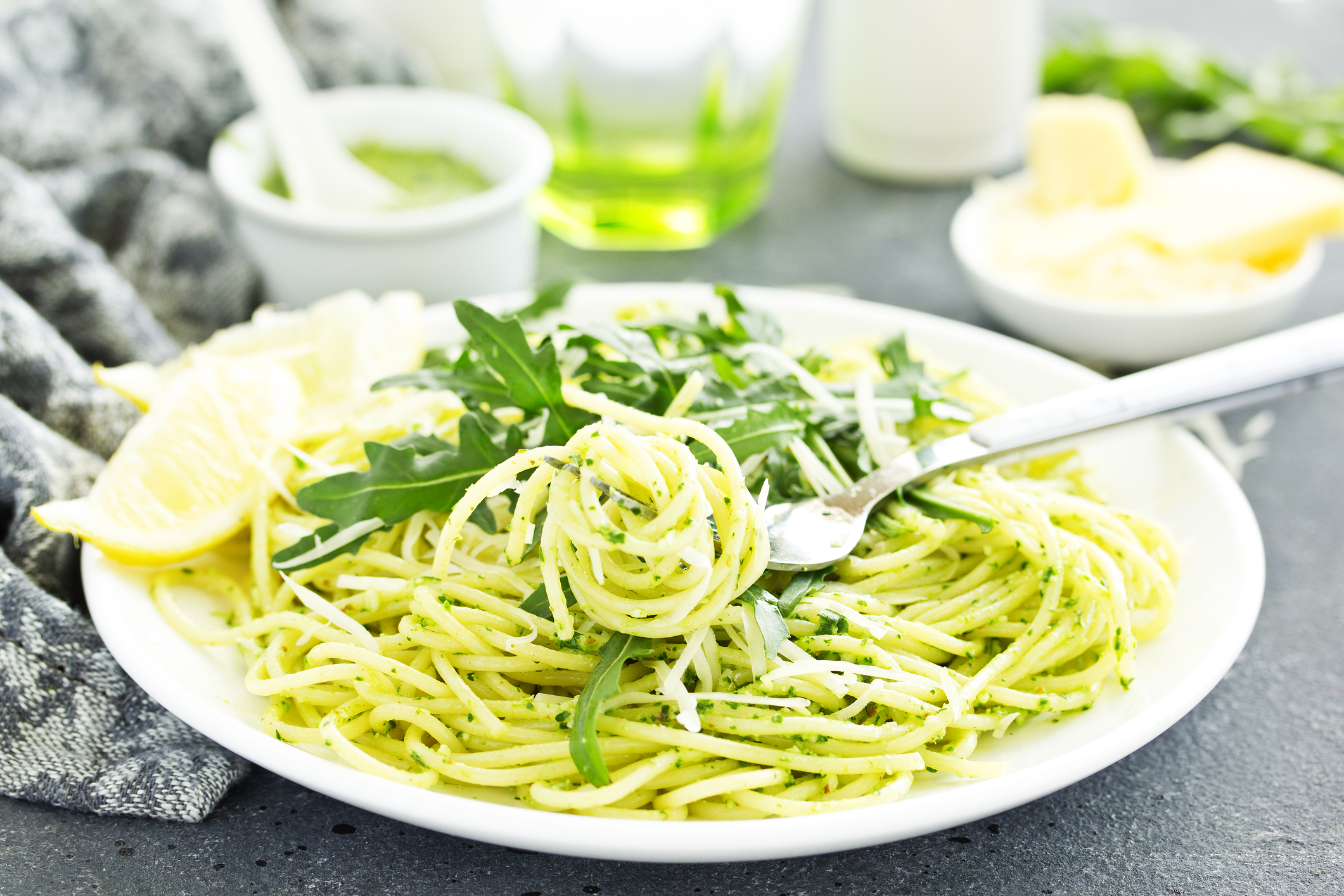
My husband took one bite and asked if I’d used a different pasta.
Same spaghetti, different pesto — arugula instead of basil, and somehow it changed the whole mood of the dish.
I’d been making the same basil pesto for years. Not because it’s the only option, just because it never occurred to me to swap it out until I had a bag of arugula that needed to disappear by Thursday.
The peppery bite hit differently than basil. Sharper. Less sweet. My husband — who usually says nothing about food unless it’s bad — asked if we could have it again next week.
I said maybe.
The arugula situation.
Three cups sounds like a lot until you pack it into the food processor and watch it vanish.
I thought about wilting it first — actually no, I skipped it. Raw arugula keeps the bitterness intact, which is exactly what you want here. Cooking it would just make the whole thing taste flat and a little grassy in a bad way.
What nobody tells you: the pesto will look almost neon green when it comes out of the processor. Brighter than basil pesto, almost aggressively so. Don’t let it alarm you.
It settles once it hits the hot pasta.
Quick tip: If your arugula is on the older side — slightly limp, a little yellowed at the edges — the bitterness intensifies and can tip into unpleasant. Use fresh if you can.
The pine nuts went in dry. That was a mistake.
First time I made this, I added the pine nuts straight from the bag without toasting them. The pesto came out fine, technically. But it was missing something — a little depth, a little warmth underneath the sharpness of the arugula.
I toasted them the second time. Dry pan, medium heat, about four minutes, shaking the pan every thirty seconds because pine nuts will burn without warning and no apology.
Most recipes don’t mention toasting. They’re wrong to leave it out.
The lemon juice is also not optional, even though it’s listed last in most versions of this recipe. Without it, the pesto sits heavy. Two tablespoons is right — more and it starts tasting like a salad dressing, less and you lose the brightness entirely.
Acid doing what acid does.
About the pasta water.
Reserve it before you drain. I know every recipe says this. I still forgot once and had to use tap water, which doesn’t emulsify with the oil the same way and just makes the whole thing wet instead of creamy.
One cup is usually more than enough — I typically use somewhere between a half cup and three-quarters, adding it a quarter cup at a time while the pasta is still hot in the pan. The heat is what pulls it together.
Don’t rinse the spaghetti. Ever. I don’t understand why this still needs to be said, but here we are.
What it actually tastes like cold.
Worse. It tastes worse cold, which I say not to discourage you from eating the leftovers but to prepare you for the fact that the olive oil firms up and the pasta clumps and the peppery brightness dulls down considerably.
I ate it cold out of the fridge the next morning standing at the counter and I’ve made worse decisions, but it’s not the experience you want.
Reheat it gently with a splash of water, low heat, and stir constantly. It comes back most of the way.
Has anyone else noticed that arugula pesto turns slightly more olive-colored after a night in the fridge? I’ve never seen anyone write about this but it happens every single time. The flavor is still there — just don’t expect it to look the same as it did fresh.
The garlic question.
Three cloves is correct for this amount of pesto if you’re using raw garlic straight into the processor. If your garlic is especially pungent — the kind that lingers for hours — two cloves is fine.
I went with three once when the cloves were particularly large and the whole dish tasted like it had an agenda.
Raw garlic in pesto is stronger than you expect it to be, because it never gets cooked. There’s no heat to soften it. It just sits there in the pesto, fully itself, until it hits your pasta.
If you’re making this for someone who’s cautious about garlic — not for a date, obviously, but in general — two cloves and taste before you add more.
—Step 1: Bring a large pot of well-salted water to a boil. The water should taste like mild seawater — this is the only chance you have to season the pasta itself. Cook the spaghetti according to package directions until al dente, which for most brands is somewhere between 8 and 10 minutes. Start checking at 7.
Step 2: While the pasta cooks, toast your pine nuts. Dry skillet, medium heat, constant attention. They go from pale to golden to burned in about 90 seconds flat — I’ve lost more pine nuts to distraction than I care to admit. Pull them off the heat as soon as they’re golden and let them cool on the counter for a few minutes before adding them to the processor.
Step 3: Add the arugula, cooled pine nuts, and minced garlic to the food processor. Pulse in short bursts — five or six pulses — until it looks roughly combined but still chunky. (Don’t over-process at this stage or the nuts will turn to paste before the oil goes in, and you’ll lose all the texture.)
Step 4: Add the Parmesan and pulse twice more. Then, with the processor running, drizzle in the olive oil slowly through the feed tube. This takes about 45 seconds if you’re patient. The pesto should look cohesive but not totally smooth — some texture is correct here.
Step 5: Add the lemon juice, salt, black pepper, and red pepper flakes if you’re using them. Pulse once or twice to combine. Taste it now — this is your last chance to adjust before it hits the pasta. I usually add another small pinch of salt here.
Step 6: Before draining the pasta, pull out at least one full cup of the cooking water. This step matters more than most people give it credit for — set the cup somewhere you’ll actually see it. Drain the pasta but don’t rinse it.
Step 7: Return the hot drained pasta to the pot or a large bowl. Add the pesto and toss to coat, then start adding pasta water a quarter cup at a time, tossing continuously. The pasta should look glossy and lightly coated, not wet. I usually end up using about half a cup total, sometimes a little more if the pasta absorbed a lot of oil quickly.
Step 8: Serve immediately with extra Parmesan grated over the top and lemon wedges on the side. Do you squeeze the lemon at the table or skip it entirely? Share below!
Ways to Change It Up
Try this: Swap the pine nuts for walnuts. The pesto turns earthier and slightly more bitter, which pairs well with a heavier pasta like rigatoni if you want to go that route.
Try this: Add a handful of fresh spinach alongside the arugula — about one cup — to soften the peppery sharpness if you’re feeding someone who finds straight arugula too aggressive.
Try this: Stir in a handful of halved cherry tomatoes after tossing the pasta with the pesto. They don’t need to cook. The cold burst against the warm pasta works better than it sounds.
Which would you go for? Drop it in the comments.
How to Serve It
This needs to be on the table within about five minutes of finishing. The pesto starts to dull as it sits and the pasta absorbs the oil fast — eat it hot, not warm.
A simple green salad alongside is enough. Something bitter or acidic — radicchio, or even just dressed arugula, which doubles down on the theme if you’re into that.
Crusty bread for the leftover pesto at the bottom of the bowl. Don’t waste it.
What would you pair it with?
—Storing It Without Ruining It
Fridge: store leftovers in an airtight container for up to three days. The pasta will clump — that’s the oil and starch doing what they do overnight. Add a small splash of water before reheating and it loosens back up mostly.
If you want to get ahead of yourself, store the pesto separately from the cooked pasta. The pesto keeps well for about four days in the fridge with a thin layer of olive oil pressed over the top to slow oxidation.
Freezing the assembled pasta doesn’t work well. The texture goes strange and the arugula flavor fades into something vaguely bitter and flat. Freeze the pesto on its own instead — ice cube trays, then into a bag once frozen.
Reheat on the stovetop over low heat with a tablespoon or two of water, stirring the whole time. Microwave works but the pasta gets uneven — some bites scalding, some still cold — and the pesto separates.
Have you ever saved leftovers like this? Tell me below!
Mistakes I Made So You Don’t Have To
I once added the olive oil all at once instead of drizzling it in slowly, and the pesto came out broken — pools of oil floating on top of a clumped green paste. I stirred it vigorously and it mostly came together, but the texture was never quite right. It tasted fine. It looked bad.
I forgot to salt the pasta water the first time I made this and the whole dish tasted like it was missing something I couldn’t place for a full minute. Unseasoned pasta under well-seasoned pesto just doesn’t work — the flavors sit in separate layers instead of coming together.
I also over-processed the pesto once — ran the food processor for a full minute without stopping, trying to get a very smooth texture. It turned into a paste. Not a sauce, a paste. The pine nuts had completely disappeared into the arugula and the whole thing was dense and heavy on the pasta instead of light and coating. Under-process rather than over.
Did something like this happen to you?
Questions I Actually Get About This Recipe
Can I use a blender instead of a food processor?
It depends on your blender. A high-powered one works, but you’ll need to scrape down the sides constantly and the pesto tends to over-process faster because of the blade position. A food processor gives you more control over texture. But if that’s what you have, it works — just stop early.
How long does the arugula pesto last in the fridge?
About four days with olive oil pressed over the surface. I tried pushing it to five once — the color had gone brownish-gray and the bitterness had sharpened into something unpleasant. Four days is real.
Can I make this without pine nuts?
Yes. Walnuts work well and cost significantly less. Almonds also work — blanched, not raw — but the pesto turns denser. Sunflower seeds are a nut-free option I’ve tried exactly once. Fine. Not exciting.
Is this actually spicy with the red pepper flakes?
Not really, no — a quarter teaspoon disappears into the pesto. It’s more of a warm hum at the back of your throat than anything you’d call spicy. I use closer to half a teaspoon because I want to actually notice it. And if you skip it entirely, the dish doesn’t suffer.
Can I use pre-grated Parmesan from a container?
Technically yes. But the pre-grated kind has anti-caking agents that make the pesto slightly grainy. I tried it in a pinch — you could taste the difference, or at least I could. Freshly grated from a block takes 90 seconds and it actually melts into the pesto instead of sitting in it.
What pasta shape works best if I don’t have spaghetti?
Linguine is the closest swap and works just as well. Trofie or fusilli hold the pesto in their grooves better than long pasta, so every bite gets more sauce — that’s not a bad thing. Avoid penne; the pesto coats it unevenly and the whole thing ends up patchy. And avoid anything too small, like orzo, unless you want a pasta salad situation.
Which answer helped you most?
Before You Close the Tab
This recipe came together for me on a Tuesday when I had 25 minutes and nothing inspiring in the fridge except arugula that was one day away from going sad.
It’s not a dish I planned. It’s not a dish I tested six times before writing it up. I tested it enough to know what goes wrong and how to avoid most of it, and that’s about as polished as it gets around here.
Arugula — sometimes called rocket — is one of the few leafy greens that actually contains glucosinolates, the same compounds found in broccoli and other cruciferous vegetables that give it that distinctly peppery, slightly bitter flavor.
The pesto changes a little every time I make it, depending on the garlic, the arugula, how much I feel like measuring. Sometimes it’s sharper. Sometimes it’s more mellow. I haven’t fully figured out what controls that — whether it’s the age of the garlic or the variety of arugula or something else entirely.
Will you make this soon?
If it comes out differently than you expected, I’d genuinely like to know. Not because I have a fix for every version of this — I probably don’t.
Happy cooking! —Marina Caldwell
Fresh Arugula Pesto Spaghetti Simple Weeknight Dinner
Ingredients
- 1 pound spaghetti
- 3 cups fresh arugula
- 1/2 cup grated Parmesan cheese
- 1/3 cup pine nuts
- 3 garlic cloves, minced
- 1/2 cup extra virgin olive oil
- 2 tablespoons fresh lemon juice
- Salt to taste
- Black pepper to taste
- Red pepper flakes (optional)
Instructions
- 1Bring a large pot of salted water to a boil and cook spaghetti according to package directions until al dente.
- 2While pasta cooks, add arugula, pine nuts, and garlic to a food processor.
- 3Pulse until roughly combined, then add Parmesan cheese.
- 4With the processor running, slowly drizzle in olive oil until pesto reaches desired consistency.
- 5Stir in lemon juice and season with salt, pepper, and red pepper flakes.
- 6Reserve 1 cup pasta cooking water, then drain spaghetti.
- 7Toss hot pasta with arugula pesto, adding pasta water 1/4 cup at a time to achieve creamy consistency.
- 8Serve immediately with extra Parmesan and lemon wedges.
Notes
See full recipe for nutritional information.