I Oversalted the Broth. Twice.
And the second time I did it, I already knew better. The first meatball I tasted out of the pot was fine — soft, a little garlicky, nothing wrong — and then I added a full teaspoon of salt to the broth without thinking, forgetting I’d already seasoned the meatballs themselves.
The soup was too salty. I served it anyway.
That was the first time I made this. The third time, I finally stopped salting the broth until the very end, after everything had simmered together for at least 15 minutes. It’s not complicated advice. I just had to actually ruin it before I listened to it.
Tired. That’s where I am with this recipe tonight — not tired of it, just tired while making it. Which is maybe when it’s most useful. There’s nothing here that requires full attention for more than a few minutes at a stretch.
About the Meatballs.
Most recipes tell you to bake the meatballs first. They’re wrong. You lose the browned bits on the bottom of the pot — the ones that cook into the broth when you add the vegetables. Baking is cleaner, yes. But clean isn’t the point here.
Brown them in batches. Hot oil, medium-high heat, and don’t crowd the pot or they’ll steam instead of sear. About 4 minutes per side — actually it’s less like sides and more like you keep rolling them around until most of the surface has some color.
They don’t finish cooking in this step. That’s fine. They go back into the broth later and simmer for 20 minutes, which finishes them completely.
I thought about adding red pepper flakes to the mix — actually no, I skipped it. The Italian seasoning in the broth carries enough warmth on its own, and I’ve had versions where the meatballs and the soup were fighting each other instead of tasting like the same dish.
Quick tip: Don’t overwork the meatball mixture. Stir it until everything just comes together — 20 seconds of mixing, maybe less. Overworked ground beef gets dense and tight, and after 20 minutes in simmering broth, dense means rubbery.
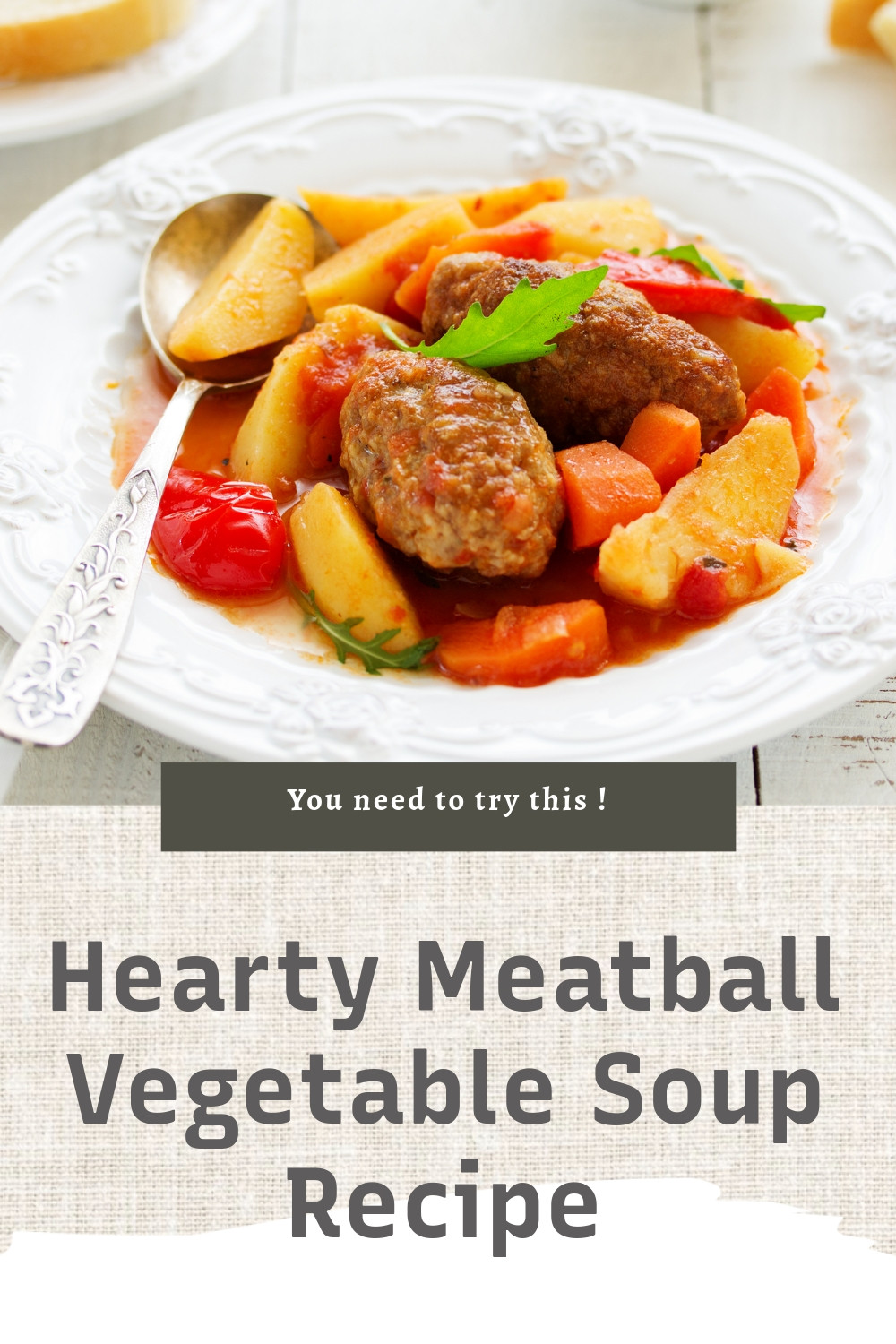
The Vegetables Don’t All Cook the Same Way.
Carrots, celery, and onion go in first — straight into the pot after the meatballs come out — and they get about 5 minutes in the residual oil before anything else happens. This isn’t optional. Raw celery in finished soup has a texture I find genuinely unpleasant.
Potatoes go in with the broth. Not before.
Cut them small — about half an inch — or they won’t be done in 20 minutes. I cut mine closer to three-quarters one time and spent an extra 12 minutes waiting for a potato to stop being crunchy in the middle. My neighbor Diane was at the table with me that night. She was polite about it. I was not.
The diced tomatoes go in with everything else. Don’t drain them — the liquid is acidic and it does something useful to the broth after 20 minutes of simmering. The soup tastes flat without it.
Bay leaves. Two. Pull them out before serving. I’ve never found one in my own bowl but I’ve found one in someone else’s, and the look on their face was enough.
It Looked Wrong the Whole Time It Was Simmering.
The broth goes a little murky around minute 10. The tomatoes break up, the starch from the potatoes clouds everything, and it stops looking like soup and starts looking like something you’d throw out.
Keep going.
By minute 20 it settles into itself — the broth deepens, the meatballs have absorbed some of that tomato-and-thyme liquid, and the whole thing finally smells like it was supposed to smell 15 minutes ago. The simmer is doing work even when it doesn’t look like it.
This is not a quick soup. 55 minutes start to finish is accurate, and that’s if you’ve already diced everything. If you’re cutting carrots and potatoes while the meatballs brown, add another 10.
Does yours go murky too, or is it just mine? I’ve never seen it addressed in any recipe I’ve read for this kind of soup, which is frustrating when you’re staring at it for the first time wondering if you did something wrong.
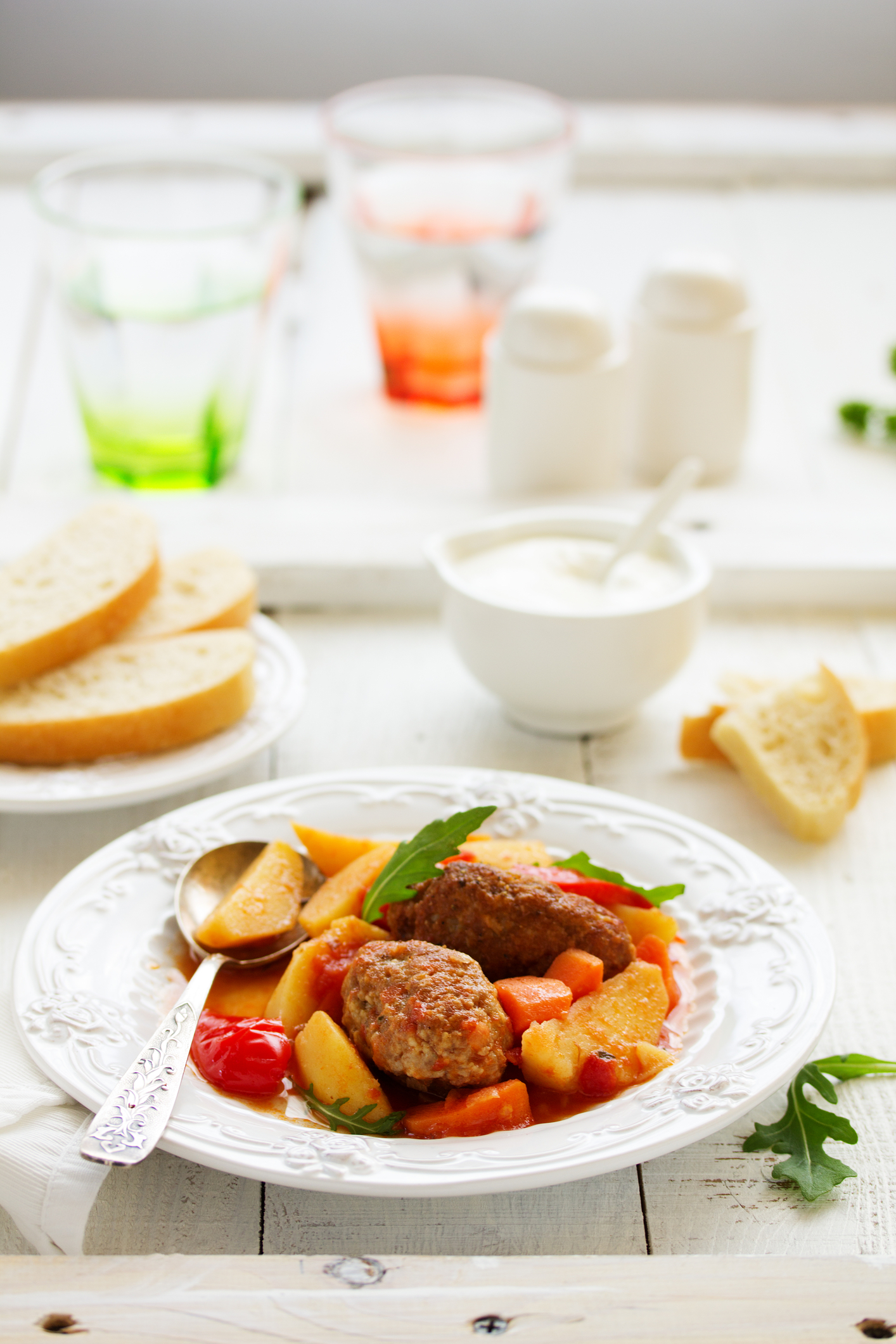
What the Finished Soup Actually Tastes Like.
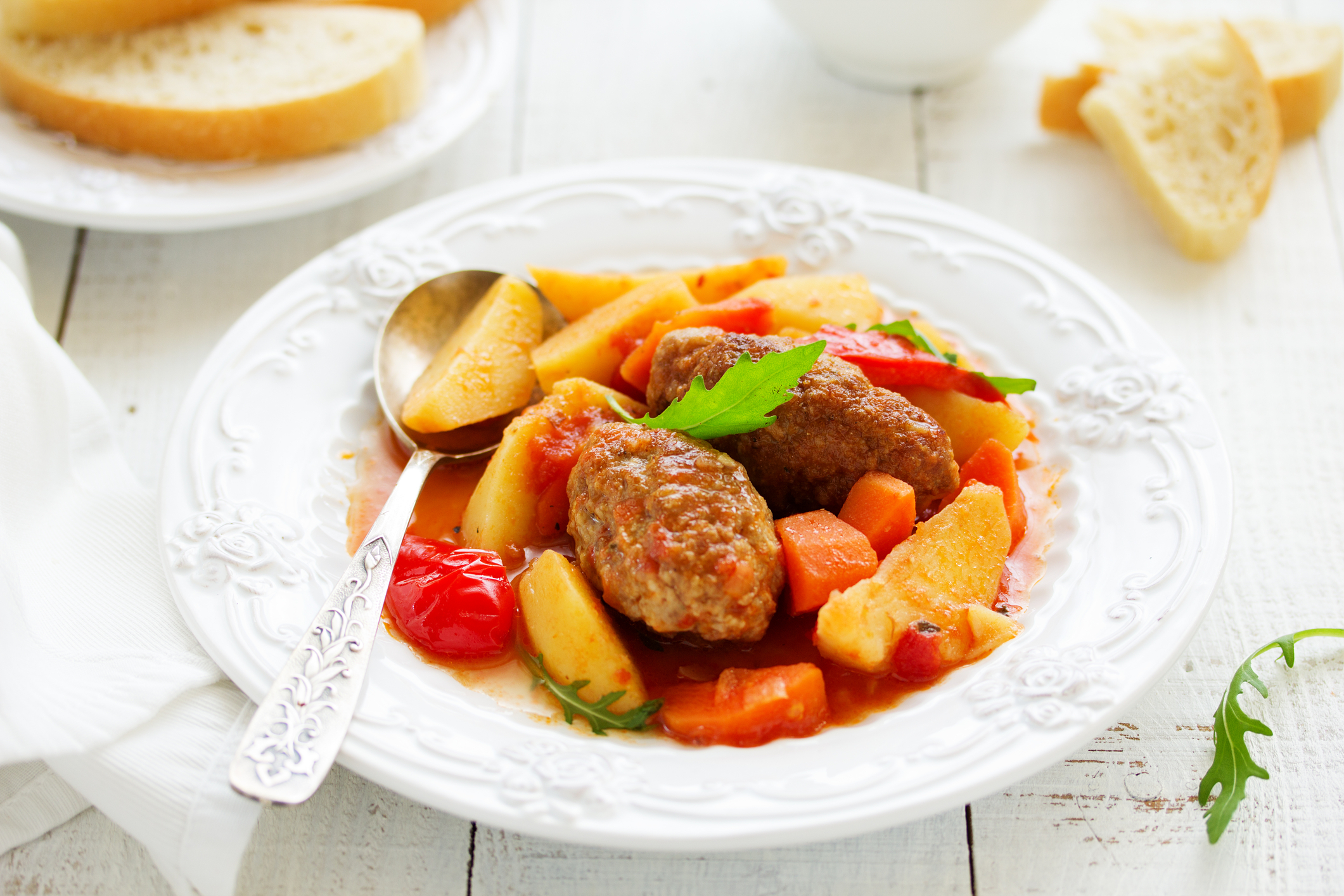
Not delicate. This is a thick, filling soup — the potatoes absorb broth as it sits, so the leftovers the next day are closer to a stew than a soup. I don’t mind that, but if you do, add more broth when you reheat.
The meatballs stay tender. That surprised me the first time. I expected them to get tough after 20 minutes of simmering but they don’t — they stay soft all the way through, and the Parmesan in the mix keeps them from tasting like plain ground beef floating in liquid.
Honest admission: I’ve made this six times now and I still don’t love the thyme. Half a teaspoon sounds small but it sits differently in a soup than in a sauce — it can get medicinal if the broth reduces too much. I usually add it at the 10-minute mark instead of the beginning, which gives it less time to steep.
The Italian seasoning, though. That one earns its place.
—Step by Step.
Step 1: Combine 1 lb ground beef, 1/2 cup breadcrumbs, 1 egg, 1/4 cup grated Parmesan, 2 minced garlic cloves, 1 teaspoon salt, and 1/2 teaspoon black pepper in a bowl. Mix until just combined — stop before it looks completely uniform. Roll into 1-inch balls. (If they keep cracking, your mix is dry; wet your hands slightly.)
Step 2: Heat 2 tablespoons of olive oil in a large pot over medium-high heat. Brown the meatballs in batches — don’t try to fit them all at once. About 8 minutes total per batch, rolling them to get color on most of the surface. Remove and set aside. They will not be cooked through yet. That is the point.
Step 3: In the same pot, with the heat still on medium, add 1 diced onion, 2 cups diced carrots, and 1 cup diced celery. Sauté for 5 minutes. The bottom of the pot should have browned bits — scrape them up as the vegetables release moisture. This is not a step to rush. I rushed it once and the soup tasted raw in a way I couldn’t fix later.
Step 4: Pour in 6 cups beef broth. Add 2 cups diced potatoes, 1 can diced tomatoes (with liquid), 1 teaspoon Italian seasoning, 1/2 teaspoon thyme, and 2 bay leaves. Stir to combine.
Step 5: Return the meatballs to the pot. Bring everything to a boil — this takes about 7 minutes on high heat — then reduce to a low simmer. Cover partially.
Step 6: Simmer for 20–25 minutes, until the potatoes are fully tender and the meatballs are cooked through. Don’t salt yet. (The Parmesan in the meatballs and the broth both carry sodium — taste first, adjust at the end, or you’ll end up where I ended up.)
Step 7: Remove the bay leaves. Taste the broth. Adjust salt and pepper. Serve hot. Did your meatballs hold together the whole time, or did any of them fall apart in the broth? Share below!
Ways to Change It Up
Try this: Swap the ground beef for a mix of beef and pork — equal parts. The pork fat keeps the meatballs softer and the broth gets a slightly richer flavor around the 15-minute simmer mark.
Try this: Add a handful of small pasta — ditalini or orzo — in the last 8 minutes of simmering. The starch thickens the broth noticeably and makes it feel heavier. Not better, necessarily. Different.
Try this: Stir in 2 cups of fresh spinach in the last 2 minutes. It wilts fast and adds something green without changing the flavor of the soup at all, which makes it feel slightly less like you’ve eaten the same bowl every night this week.
Which would you go for? Drop it in the comments.
How to Serve It
Crusty bread. Not for dipping — for tearing and eating alongside. The broth is thick enough that dipping makes a mess and the bread goes soggy in about 40 seconds.
Grated Parmesan at the table, directly on top of the soup just before eating. It melts slightly and makes the broth taste more rounded than it does straight from the pot.
A simple green salad with something acidic — a vinegar-dressed arugula, or even just sliced cucumbers with a little lemon. The soup is heavy and the acid cuts it without competing.
What would you pair it with?
—Storing It Without Ruining It
Refrigerate in an airtight container. It keeps for about 4 days, and the flavor improves on day two — the meatballs absorb more broth overnight and the seasoning distributes more evenly. The potatoes do get softer. That’s just what happens.
To freeze: let it cool completely, then portion into freezer bags or containers. It freezes well for up to 3 months. The vegetables soften a bit more when reheated from frozen but nothing falls apart completely.
Reheating on the stove over medium-low heat works better than the microwave — the microwave heats unevenly and the meatballs sometimes come out rubbery at the edges while the broth is still cold in the middle. Add a splash of water or extra broth if it’s gotten too thick overnight.
Don’t boil it when reheating. Simmer. Boiling breaks the meatballs apart after they’ve already been through one round of cooking.
Have you ever saved leftovers like this? Tell me below!
Mistakes I Made So You Don’t Have To
I once tried to skip browning the meatballs entirely — just dropped them raw into the simmering broth to save time. They cooked through, technically. But the broth was pale and flat, and the meatballs had a boiled texture that no amount of seasoning fixed.
I cut the potatoes too large. I already mentioned this, but it cost me 12 minutes of standing at the stove waiting, which felt longer than it was. Half an inch. Not three-quarters.
I added all the salt at the start, before I tasted anything. Both the meatballs and the beef broth already carry salt, and I ended up with soup I had to water down just to make it edible. There’s no fixing an oversalted broth once it’s reduced for 20 minutes. I tried adding a potato to absorb it. It did not work the way the internet said it would.
Did something like this happen to you?
Questions I Actually Get About This Soup
Can I use store-bought frozen meatballs? You can. But they’re usually pre-cooked, which means they won’t release anything into the broth during simmering. The soup will taste like soup with meatballs added at the end — which is fine, just different. Add them in the last 10 minutes, not from the start.
Can I make this in a slow cooker? Brown the meatballs first on the stove regardless — don’t skip that part even if everything else goes into the slow cooker. Then combine everything on low for 6–7 hours or high for 3–4. Potatoes go soft. That’s the trade with a slow cooker.
My broth seems too thin. What do I do? Simmer it uncovered for the last 10 minutes instead of covered. It thickens as it reduces. Or mash 2–3 potato pieces against the side of the pot — the starch dissolves into the broth and thickens it without changing the flavor. I tried this once and it worked better than I expected.
Can I use chicken broth instead of beef? It depends on the meatballs. Beef meatballs in chicken broth tastes slightly off to me — the flavors don’t quite line up. But if you’re using pork or turkey meatballs, chicken broth makes sense. And honestly, it depends how much you care. Some people don’t notice at all.
How do I keep the meatballs from falling apart? Two things: don’t undermix (the egg needs to be fully incorporated), and don’t stir aggressively once they’re back in the pot. They’re fragile for the first few minutes of simmering. After about 8 minutes they firm up enough to handle a stir without breaking.
Can I make it ahead? Yes. About 4 days in the fridge. But make it the day before if you’re serving guests — the flavor is noticeably better after a night in the fridge. Just add a cup of broth when you reheat because the potatoes will have absorbed most of the liquid. Don’t say I didn’t warn you.
Which answer helped you most?
Before You Close the Tab
This soup has been in my regular rotation for over a year now. Not because it’s extraordinary — it isn’t — but because it fits into evenings when I’m not trying to be a good cook, just trying to put something warm on the table that people will actually eat.
My kids ate it without commentary, which in my house means it succeeded.
The version I made last week was the best one. I still don’t know exactly why. Same ingredients, same pot, same timing. Sometimes that happens and I can’t reverse-engineer it, which is mildly annoying.
Will you make this soon?
The thyme is still bothering me. I keep meaning to try it without and I keep adding it anyway out of habit. Maybe the next batch.
Fun fact: Carrots were originally purple and yellow — the orange variety was selectively bred in the Netherlands in the 17th century, likely as a tribute to the Dutch royal family, the House of Orange.
Happy cooking! —Marina Caldwell
Hearty Meatball Vegetable Soup Comfort Recipe
Ingredients
- 1 lb ground beef
- 1/2 cup breadcrumbs
- 1 egg
- 1/4 cup grated Parmesan cheese
- 2 cloves garlic, minced
- 1 teaspoon salt
- 1/2 teaspoon black pepper
- 6 cups beef broth
- 2 cups diced carrots
- 2 cups diced potatoes
- 1 cup diced celery
- 1 medium onion, diced
- 1 can (14 oz) diced tomatoes
- 2 tablespoons olive oil
- 1 teaspoon Italian seasoning
- 1/2 teaspoon thyme
- 2 bay leaves
Instructions
- 1In a bowl, combine ground beef, breadcrumbs, egg, Parmesan, garlic, salt, and pepper. Mix until just combined.
- 2Roll mixture into 1-inch meatballs.
- 3Heat olive oil in a large pot over medium-high heat. Brown meatballs in batches, about 8 minutes total. Remove and set aside.
- 4In the same pot, sauté onion, carrots, and celery for 5 minutes until softened.
- 5Pour in beef broth and add potatoes, tomatoes, Italian seasoning, thyme, and bay leaves.
- 6Return meatballs to pot and bring to a boil.
- 7Reduce heat and simmer for 20-25 minutes until vegetables are tender and potatoes are cooked through.
- 8Remove bay leaves and adjust seasoning with salt and pepper.
- 9Serve hot in bowls.
Notes
See full recipe for nutritional information.