The Zucchini Went In Too Late
The broth was already simmering when I realized I’d forgotten the zucchini on the cutting board. It went in four minutes after everything else, and honestly I couldn’t tell the difference.
That’s the thing about this soup — it’s forgiving in a way I didn’t expect from something with this many components.
I’d made minestrone before, the long kind, the kind that sits on the stove for an hour and a half while you pretend you have patience. This wasn’t that.
Ravioli changes the whole equation. You’re not waiting for dried pasta to hydrate or for beans to soften from scratch. Everything that needs time has already had it.
About the Base.
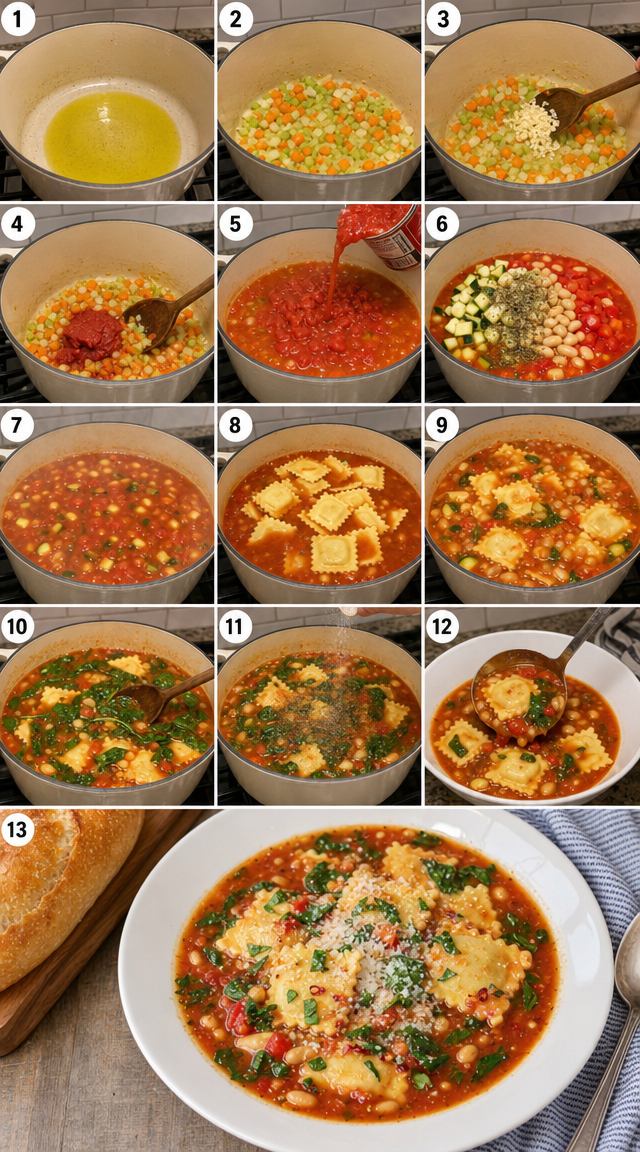
Onion, carrot, celery. Diced small, cooked in olive oil until the onion goes translucent and the carrot starts to give a little — about 7 minutes over medium heat.
I thought about adding a pinch of red pepper flakes here — actually no, I saved those for the bowl.
The tomato paste goes in next, straight onto the vegetables, and you let it cook for a full minute before you add anything liquid. It goes from bright red to a darker, slightly brick color. That minute matters more than people think.
Don’t rush it.
Most recipes tell you to stir the paste immediately into the broth. They’re wrong. It needs direct heat first, or you just end up with raw tomato flavor floating in the pot instead of something that actually tastes cooked.
Quick tip: Use a wooden spoon to press the tomato paste against the bottom of the pot for the full 60 seconds — you’re looking for it to darken slightly and stick just a little before you deglaze.
It Looked Like Too Much Liquid. It Wasn’t.
Crushed tomatoes plus broth in the same pot always looks excessive at first pour.
The first time I made this, I actually pulled about a cup of broth back out because I was convinced it would be thin. It wasn’t thin. Pulling that cup out made it thicker than I wanted, and the ravioli had nowhere to move properly.
Trust the volume. The vegetables absorb some of it. The ravioli absorbs more. By the time you’re ladling into bowls, it’s a soup, not a stew, but it has body.
Simmer the vegetables — zucchini, red bell pepper, cannellini beans — for a full ten minutes before the ravioli goes in. The bell pepper especially needs that time. Underdone bell pepper in soup has a sharpness to it that doesn’t belong.
Ten minutes. Not eight.
The Ravioli Question
Fresh or frozen — I’ve used both and I have opinions.
Fresh cooks faster, obviously, usually 3 to 4 minutes, and it has a softer texture that absorbs the broth a little too eagerly if you let it sit. Frozen takes closer to 6 to 7 minutes but holds its shape better as leftovers, which matters if you’re not eating the whole pot in one sitting.
Cheese ravioli specifically — not meat, not spinach-ricotta, not lobster — works best here. The filling stays neutral and lets the broth be the thing you’re actually tasting.
My neighbor Donna insisted I try it with spinach-ricotta once. She wasn’t wrong, exactly, but it made the whole soup feel muddier, like two green things competing.
Plain cheese ravioli. That’s my position and I’m keeping it.
Spinach Goes In Last, and I Mean Last
Two minutes. That’s all spinach needs in a hot broth.
I added it with three minutes left on the ravioli once — just to save time — and it turned that dark, dull army green that makes everything look like it’s been sitting since Tuesday.
Ravioli done, heat off, spinach in. Stir it twice. It wilts on its own from the residual heat and stays that bright, slightly grassy green that actually looks like food.
Salt and pepper after the spinach, not before. The broth concentrates as it cooks and what tastes right at the start can be too much by the end.
What It Looks Like Done
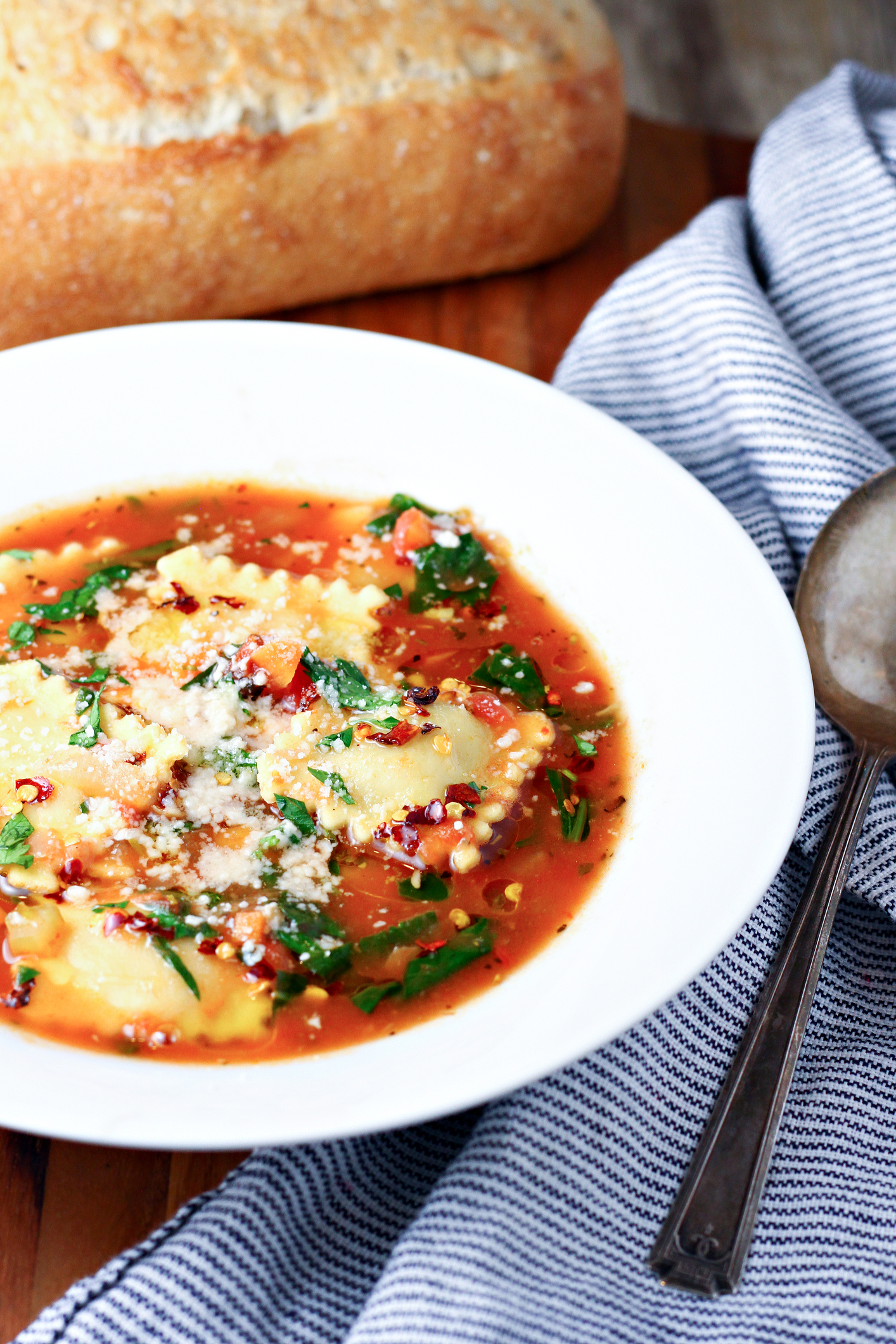
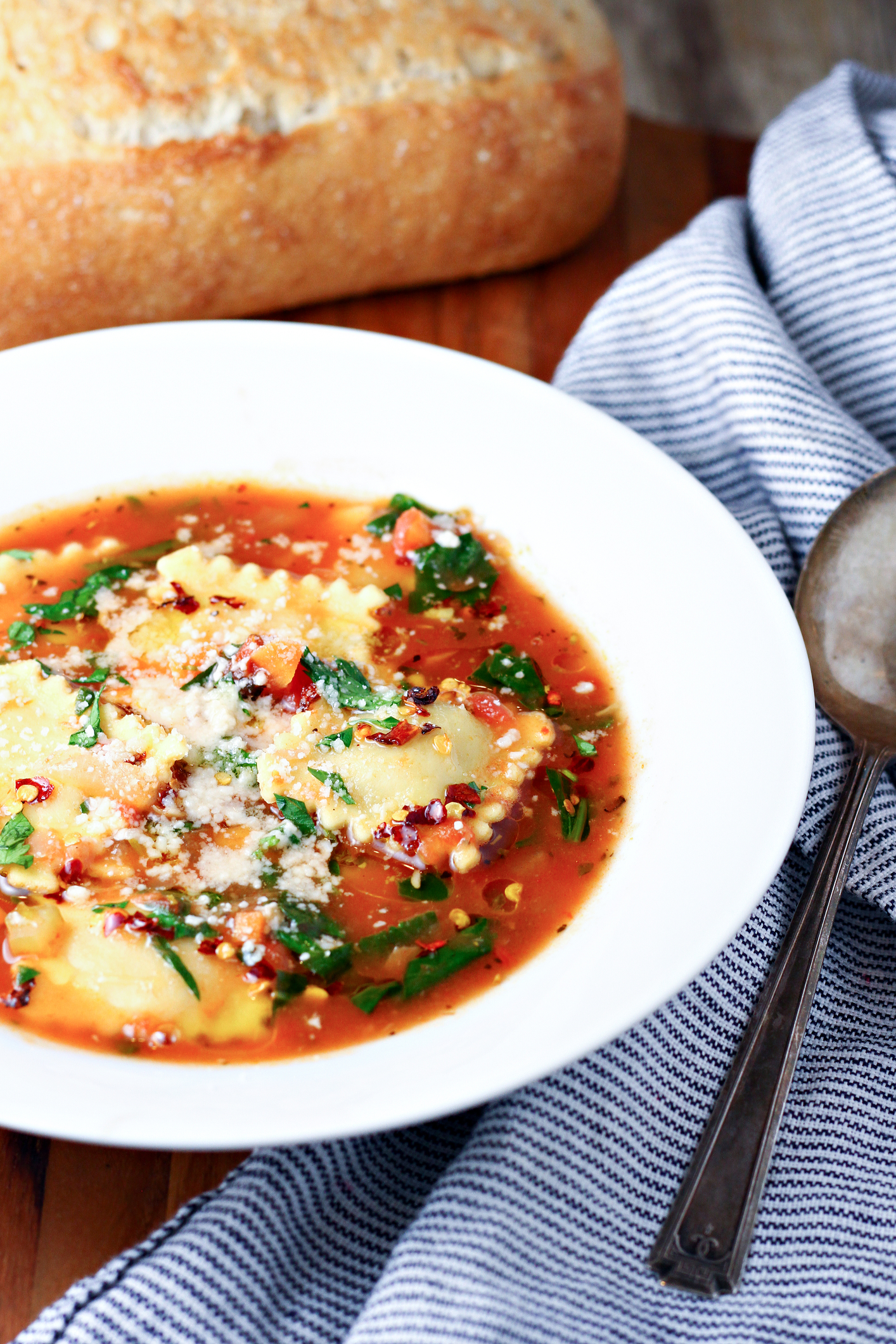
The broth goes deep orange-red, almost rusty.
The ravioli floats near the surface — not falling apart, just sitting there, slightly puffed. The cannellini beans hold their shape. The zucchini gets tender without going translucent.
I serve it with a heavy hand of Parmesan and a few torn basil leaves, plus a piece of crusty bread on the side that’s mostly for dragging through whatever’s left in the bowl. That bread is not optional, as far as I’m concerned.
Do yours end up with the ravioli breaking apart at the bottom? Mine did the first two times, and I’m still not entirely sure if I was stirring too aggressively or just cooking it a minute too long.
Probably both.
How to Make Hearty Ravioli Minestrone
Step 1: Heat 2 tablespoons of olive oil in a large heavy-bottomed pot over medium heat. Add 1 medium onion (diced), 2 medium carrots (diced), and 2 celery stalks (diced). Cook, stirring occasionally, until the onion is soft and translucent and the carrot has lost its raw crunch — about 7 minutes. (Don’t crank the heat to speed this up; vegetables that brown too fast here leave a bitter edge in the finished broth.)
Step 2: Add 3 cloves of minced garlic and 2 tablespoons of tomato paste directly to the vegetables. Stir and press the paste against the pot bottom for a full 60 seconds until it darkens slightly. This is the step I used to skip. The soup tasted flat. I stopped skipping it.
Step 3: Pour in one 28-ounce can of crushed tomatoes and 4 cups of vegetable or chicken broth. Stir to combine, scraping up any browned bits from the bottom. Bring to a gentle simmer over medium-high heat — this takes about 5 minutes.
Step 4: Add 1 medium zucchini (diced), 1 red bell pepper (diced), one 15-ounce can of cannellini beans (drained and rinsed), and 1 teaspoon of Italian seasoning. Stir everything in and let it simmer for a full 10 minutes. The bell pepper needs this time — don’t cut it short.
Step 5: Increase heat slightly to bring the soup to a moderate boil, then add 9 to 10 ounces of fresh or frozen cheese ravioli. Cook according to package directions — usually 3 to 4 minutes for fresh, 6 to 7 for frozen. Did your ravioli start sticking together in the pot? Try giving it one gentle stir right after it goes in — Share below!
Step 6: Turn off the heat. Add 2 large handfuls of fresh baby spinach and stir gently twice. Let it sit for 90 seconds — it will wilt without going grey. Taste and season with salt and freshly ground pepper. Serve immediately, topped with grated Parmesan and torn fresh basil.
Ways to Change It Up
Try this: Swap the cannellini beans for chickpeas and add a teaspoon of smoked paprika with the Italian seasoning. It pulls the soup in a slightly different direction — earthier, a little warmer in flavor.
Try this: Use meat-stuffed ravioli and add a handful of chopped kale instead of spinach. Kale needs a few more minutes to soften, so add it with 3 minutes left on the ravioli, not after.
Try this: Add a Parmesan rind to the broth when you pour in the tomatoes and let it simmer the whole time. Pull it out before serving. It deepens the broth in a way that’s hard to explain until you’ve tried it.
Which would you go for? Drop it in the comments.
How to Serve It
Ladle into wide, deep bowls — not shallow pasta bowls, not mugs. The ravioli needs room and you want to get broth, vegetables, and a ravioli or two in every spoonful.
A piece of crusty sourdough or ciabatta on the side. Bread that can take some abuse from dragging through tomato broth without immediately disintegrating.
A drizzle of good olive oil over the top right before serving makes a noticeable difference — not just for looks, it changes how the first bite lands.
What would you pair it with?
Storing It Without Ruining It
The soup keeps in the fridge for up to 3 days in a sealed container. The ravioli will continue absorbing broth as it sits, so by day two it’s thicker — closer to a stew — and the pasta is softer. Not bad, just different.
If you’re planning on having leftovers, cook the ravioli separately and add it to individual bowls when serving. Store the broth and the ravioli in separate containers. This is the only way to keep both in decent shape.
For freezing: freeze the broth without the ravioli and spinach. Both turn unpleasant after freezing — the pasta goes grainy and the spinach loses all texture. Cook fresh ravioli and add spinach when you reheat the thawed broth.
Reheat on the stovetop over medium-low, not in the microwave. The microwave makes the ravioli rubbery in a way that’s hard to fix once it happens. About 8 minutes on the stove, stirring occasionally, gets it back to where it should be.
Have you ever saved leftovers like this? Tell me below!
Mistakes I Made So You Don’t Have To
I once added the spinach at the same time as the ravioli because I was trying to get dinner on the table faster. The spinach went grey-green and slightly slimy by the time the pasta was done. I served it anyway and didn’t mention it. My kids ate it without a word, which tells you either they weren’t paying attention or they’ve learned not to comment.
I used a low-sodium broth once without checking the label first and the finished soup tasted flat no matter how much salt I added at the end. Seasoning the base matters more than adjusting at the finish. Check your broth before you buy it.
I stirred the ravioli too hard — full circular stirs like I was making risotto — and two of them split open and the filling clouded the broth. Gentle. One or two slow passes with a wide spoon. That’s all it needs. Did something like this happen to you?
Questions People Actually Ask
Can I use dried pasta instead of ravioli? You can, but it changes the soup entirely. Dried pasta needs to cook longer and absorbs more liquid — you’d need to add another cup of broth and adjust timing. It works, but it’s a different recipe. Honestly? It’s not that deep. Just use ravioli.
Can I make this ahead of time? The broth base, yes — up to 2 days ahead is fine. Keep it in the fridge and reheat before adding ravioli and spinach fresh. And the ravioli should absolutely go in right before serving. Full soup assembled ahead: I tried this once and the pasta had absorbed almost all the broth by morning.
What broth works best? Vegetable broth keeps it fully vegetarian and doesn’t compete with the tomato. Chicken broth adds a little more depth. It depends on what you have. But avoid beef broth — it’s too heavy here and pushes the flavor somewhere murkier than you want.
How much does this serve? About 4 people as a main, 6 if you’re serving it as a starter with other dishes. I’ve made it for 5 adults and it was exactly enough with no seconds possible, so keep that in mind if your crowd eats the way mine does.
Can I use frozen spinach? Technically yes. But frozen spinach releases a lot of water into the broth and changes the color to something less appealing. Squeeze it as dry as you possibly can before adding it. I tried it twice and went back to fresh both times.
Does the type of canned tomato matter? Yes. Crushed tomatoes give a thicker, textured broth. Diced tomatoes make it more watery with visible chunks. Whole peeled tomatoes work if you crush them yourself, but they take a bit longer to break down. About 5 minutes longer at the simmer stage. And whole peeled tend to be the best quality if you’re buying a good brand.
Which answer helped you most?
Before You Close This Tab
This soup takes about 40 minutes start to finish if you move at a reasonable pace. If you’re also trying to help with homework and answer two texts simultaneously — which is how I usually cook — closer to 50.
Fun fact: Cannellini beans have been cultivated in Tuscany since the 15th century and are one of the highest-protein legumes used in Italian cooking — about 8 grams of protein per half-cup serving.
The part I’m still not fully settled on is the Italian seasoning amount. One teaspoon feels right to me but it can tip toward herby-bordering-on-medicinal if your blend has a lot of dried oregano.
Start with half a teaspoon, taste the broth after the vegetable simmer, and add the rest if it needs it. Or don’t. Some batches I’ve made with less and preferred it.
Will you make this soon?
I’m making it again next week, probably Tuesday, and I’m still not sure if I’ll use fresh or frozen ravioli. I keep going back and forth.
Happy cooking! —Marina Caldwell
Hearty Ravioli Minestrone Ready in Minutes
Ingredients
Instructions
Notes
See full recipe for nutritional information.