The Cobbler I Made With a Can of Peaches and Zero Plans
It was a Tuesday, the kind where nothing was supposed to happen, and I found a 29-ounce can of sliced peaches sitting in the back of my pantry like it had been waiting for me.
I wasn’t planning to bake. I was procrastinating.
But forty-five minutes later my kitchen smelled like butter and cinnamon and something warm that I didn’t have a word for, and I was standing at the counter eating it straight from the dish with a spoon.
Why Canned Peaches Actually Work Here
I know. Your first instinct is to say fresh peaches are better. Maybe they are, in July, when they’re dripping down your wrist.
But canned peaches have something fresh ones don’t — syrup. That reserved syrup sinks into the batter as it bakes and does something almost caramel-like to the bottom layer.
It’s one of those things you only notice if you’ve made it both ways. And I have.
What Makes the Crust Do That Thing
The batter goes in first. Then the peaches go on top. You don’t stir it.
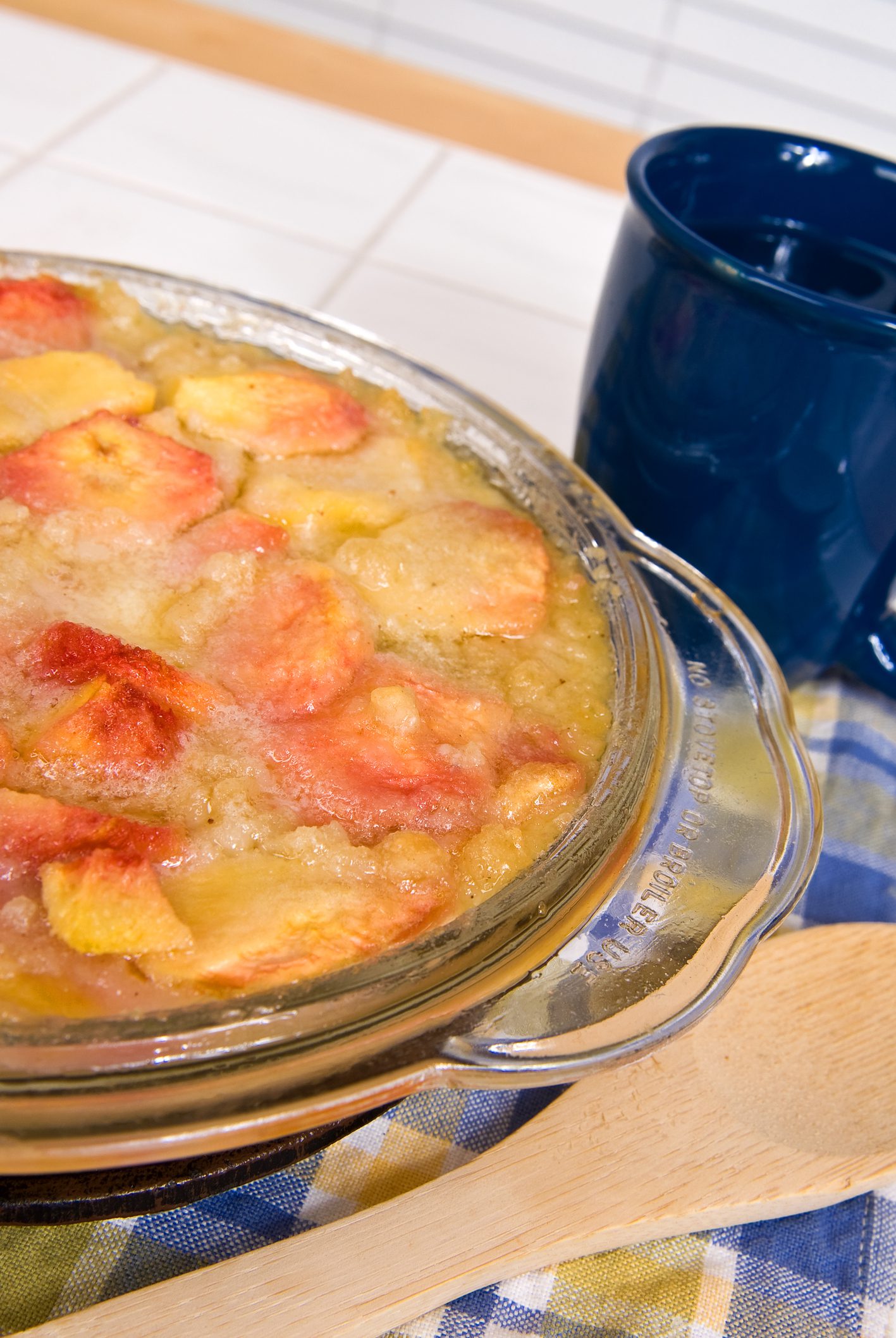
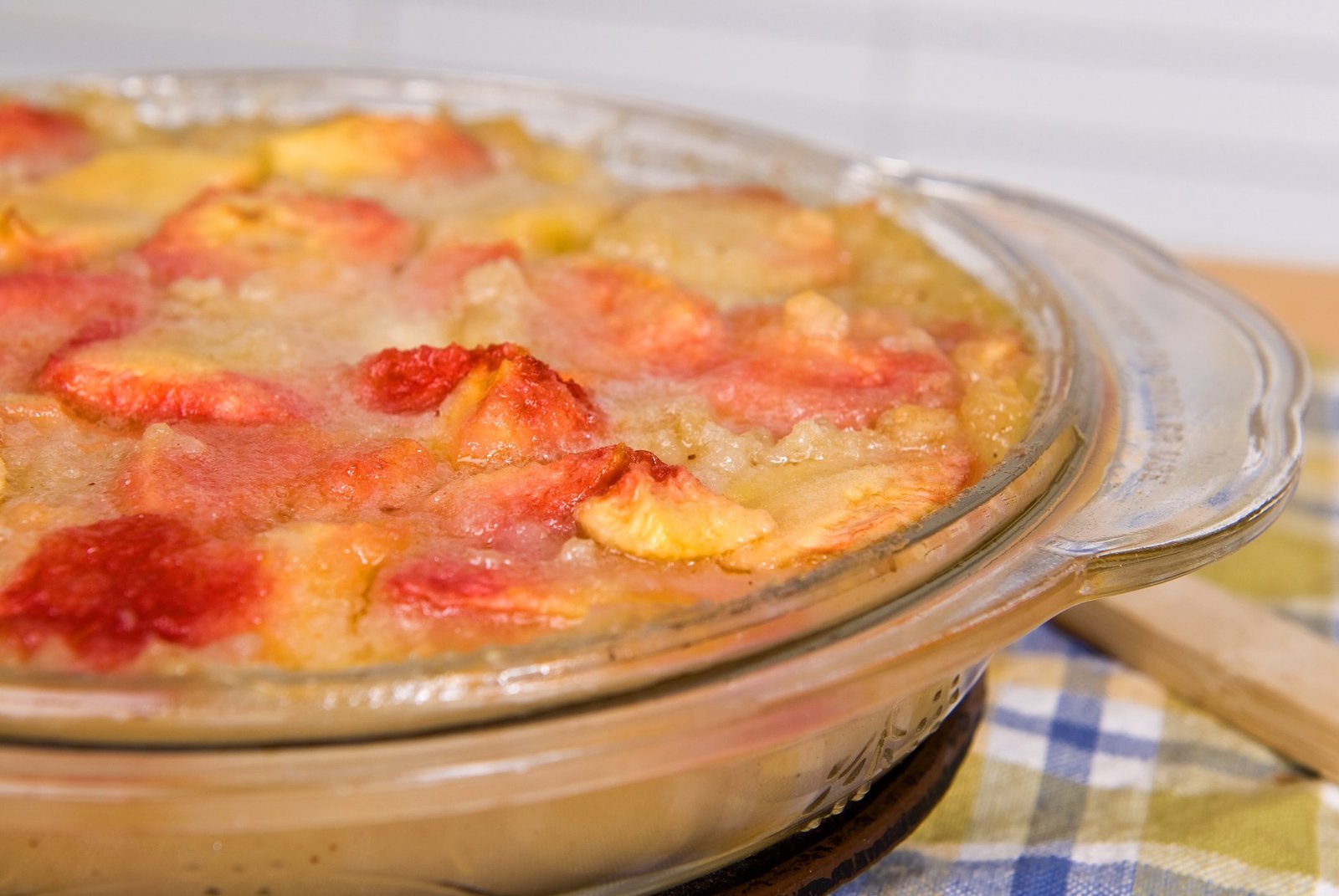
That feels wrong every single time I do it. But the batter rises up around the peaches in the oven and forms this golden, slightly crisp crust on the edges that gets soft toward the middle.
Quick tip: Watch the edges of the dish around the 38-minute mark — that’s where it turns golden first, and that’s your sign it’s almost done.
The Time I Burned It
The first time I made this, I left it in for 52 minutes because the center still looked a little pale and I got nervous.
The edges were almost crunchy. Not in a good way. The middle was fine but the outer crust had gone past golden into something darker that tasted bitter.
Pull it at 40–45 minutes. Trust the toothpick. The center will firm up as it rests.
A Few Things Worth Knowing Before You Start
Don’t skip the 10-minute rest. I know it’s hard when the dish is sitting there smelling like that.
The cinnamon and nutmeg are listed as optional but I’ve never made it without them. My sister tried a version without any spice and said it tasted a little flat — I think she’s right.
Have you ever made a cobbler with canned fruit and been surprised by how it came out? Because the first time genuinely caught me off guard.
What This Actually Is
It’s not fancy. It’s a pantry dessert that tastes like someone’s grandmother made it on purpose.
The butter melts in the dish, the batter goes over it, the peaches go on top, and the oven does everything else. That’s the whole thing.
Warm, with vanilla ice cream melting into the crust — honestly that’s one of the better things I’ve eaten this year.
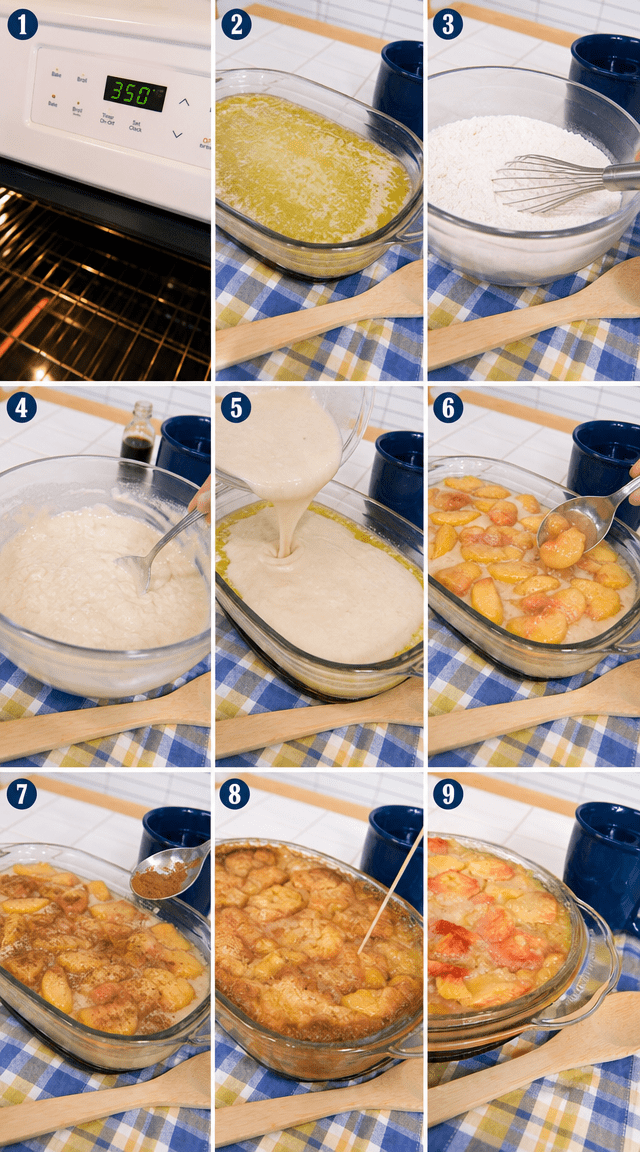
Step 1: Heat your oven to 350°F and place the butter — all half a cup of it, cut into pieces or left as a block — into your 9×13 baking dish. Set it in the oven and let it melt completely, which takes about 5 minutes. Watch it so it doesn’t brown. Pull the dish out and set it on the counter.
Step 2: Whisk together the flour, sugar, baking powder, and salt in a large bowl until everything looks evenly combined, no little pockets of baking powder hiding at the bottom. This takes maybe 30 seconds with a real whisk. Don’t skip the whisking — a fork doesn’t get it as even.
Step 3: Pour in the milk and vanilla extract, then stir gently until the batter is smooth. Stop the moment it comes together. (Overmixing makes the crust dense and a little rubbery — I learned this the hard way on my third attempt when I kept stirring because I thought I saw lumps.)
Step 4: Slowly pour the batter directly over the melted butter in the dish. Do not stir. Do not swirl. Just let it settle. The butter will pool at the edges and that is exactly what you want — it’s what creates the crisp outer crust.
Step 5: Open the can of peaches and pour about half the syrup off to the side into a small bowl or cup — don’t throw it out yet. Distribute the peach slices evenly over the batter, then pour that reserved syrup over the top. Leave it completely undisturbed. I genuinely love this step because it looks so wrong and chaotic right before it goes into the oven.
Step 6: Dust the surface with cinnamon and nutmeg if you’re using them. A light, even layer — not a pile in the center. It only takes a few seconds and it changes the whole flavor of the finished cobbler.
Step 7: Bake for 40–45 minutes. The crust will rise up around the peaches and turn golden, and a toothpick inserted into the thickest part of the center should come out clean. Don’t open the oven before 38 minutes — every time I’ve done that, the center sinks a little.
Step 8: Rest for 10 minutes before serving. The filling is extremely hot and needs time to settle. Spoon it into bowls while it’s still warm.
Did you manage to wait the full 10 minutes before digging in? Share below!
Ways to Change It Up
Try this: Use the full can of syrup instead of half. The cobbler comes out noticeably more caramelized at the bottom and the peach flavor is stronger throughout.
Try this: Swap the canned peaches for canned pears or a mix of peaches and cherries. The batter behaves the same way, and the cherry version turns a deep pink around the edges.
Try this: Add a tablespoon of brown sugar to the batter along with the granulated sugar. It gives the crust a slightly deeper, molasses-y note that works especially well with the cinnamon.
Which would you go for? Drop it in the comments.
How to Serve It
Warm from the dish with a scoop of vanilla ice cream sitting right on top — the ice cream melts into the crust within about a minute and it becomes its own sauce.
A dollop of cold whipped cream works if you want something lighter. The contrast between cold cream and the warm cobbler is its own thing entirely.
If you’re serving it to people who don’t want something sweet on top, a small pinch of flaky salt over the crust right before serving brings out the butter in a way that feels almost savory.
What would you pair it with?
Storing It Without Ruining It
Cover the dish tightly with plastic wrap or foil and put it in the fridge. It keeps well for up to 3 days and the flavor actually deepens a little by day two.
To reheat, microwave individual portions for about 60–75 seconds. The crust won’t be as crisp as fresh but it gets warm and soft in a way that’s still really good.
Freezing works but the crust texture changes — it gets a bit spongy after thawing. If you freeze it, wrap portions individually and reheat straight from frozen at 325°F for about 20 minutes in the oven rather than the microwave.
Have you ever saved leftovers like this? Tell me below!
Mistakes I Made So You Don’t Have To
I once poured the batter in and then stirred it into the butter because it felt weird not to. The crust came out flat and greasy instead of layered. The pouring-and-leaving-it-alone step is not optional.
I forgot to reserve the syrup one time and dumped the whole can — peaches and all the liquid — in at once. The cobbler was almost soupy in the middle and never fully set, even after an extra 10 minutes of baking. Half the syrup is the right amount.
I also put the butter in the dish and walked away from the oven, got distracted, and came back to find it had gone past melted into lightly browned. The cobbler tasted a little nutty that time — not bad, but not what I was going for. Set a timer for 5 minutes when the butter goes in.
Did something like this happen to you?
Questions I Get About This Cobbler
Can I use fresh peaches instead of canned? Yes, you can. Peel and slice about 4–5 medium peaches and toss them with 2 tablespoons of sugar and a splash of water or peach juice to replicate some of the syrup. The result is a little less sweet and the bottom won’t caramelize quite the same way, but the cobbler still bakes up with a good crust. Fresh peaches can be more watery depending on ripeness, so don’t be surprised if the center takes a few extra minutes to set.
Why does the batter go under the peaches instead of on top? It’s a classic Southern cobbler technique — the batter rises through and around the fruit as it bakes, which is what creates that uneven, bumpy golden crust instead of a flat uniform topping. The peaches sink slightly while the batter rises. It feels backward but the oven sorts it out in about 40 minutes. Stirring it ruins the whole thing, so resist the urge.
My center looks underdone at 45 minutes. What do I do? Check that your oven is actually at 350°F — a lot of ovens run 25 degrees low without people realizing it. If the edges are golden and the center is still jiggly, add 5 more minutes and check again with a toothpick. If the toothpick comes out with wet batter rather than just a little moisture, it needs more time. If it comes out with a few moist crumbs, pull it — it’ll finish setting up during the rest.
Can I make this in a smaller dish? An 8×8 pan works if you halve the recipe. Keep the same temperature and start checking at 35 minutes since the smaller volume bakes faster. The crust will be a bit thicker relative to the fruit, which some people actually prefer. Just don’t try to cram the full recipe into an 8×8 — it will overflow and you’ll be scraping burnt batter off the bottom of your oven.
Is the vanilla extract actually optional? Technically yes — the cobbler bakes up fine without it. But vanilla rounds out the flavor of the batter in a way that’s noticeable when it’s missing. I made a batch without it once when I was out, and my neighbor tasted both versions side by side and immediately asked what was different about the second one. It’s a small addition that takes two seconds. I’d keep it in.
Can I make this ahead of time? You can bake it a few hours ahead and leave it at room temperature covered with a clean towel. Reheat the whole dish at 325°F for about 15 minutes before serving. Making the batter in advance and refrigerating it before baking doesn’t work as well — the baking powder starts reacting as soon as it hits the liquid, so letting it sit for hours means you lose some of the lift and the crust comes out denser than it should be.
Which answer helped you most?
Make It on a Tuesday, Thank Yourself on Wednesday
This is one of those recipes I keep coming back to not because it’s impressive but because it works every single time with almost no effort.
One can of peaches, a handful of pantry staples, one dish. That’s it.
The leftovers the next morning, cold from the fridge with a cup of coffee — I’m not saying it’s breakfast, but I’m not saying it isn’t either.
Will you make this soon?
If you do, let me know how it goes. Especially if something goes sideways — those are always the best stories.
Fun fact: Peaches are part of the rose family — the same botanical family as apples, pears, and cherries — which is part of why they pair so naturally with warm spices like cinnamon and nutmeg.
Homemade Peach Cobbler With a Golden Butter Crust
Description
Golden Butter Crust Canned Peach Cobbler
Ingredients
Instructions
- 1. Heat oven to 350°F (175°C). Place butter in a 9×13-inch baking dish and set inside the oven until fully melted, then carefully remove.
- 2. Whisk together flour, sugar, baking powder, and salt in a large bowl until evenly combined.
- 3. Pour in milk and vanilla extract, stirring gently until a smooth batter forms. Avoid overmixing.
- 4. Slowly pour batter directly over the melted butter. Do not mix or stir the two together.
- 5. Distribute peach slices and reserved syrup evenly across the top of the batter. Leave undisturbed.
- 6. Dust the surface with cinnamon and nutmeg if desired.
- 7. Bake 40–45 minutes until the crust rises golden and a toothpick inserted into the center comes out clean.
- 8. Rest for 10 minutes before serving warm.
Notes
- Protein: 3g
- Fat: 12g
- Carbs: 46g NOTES: – For extra caramelized flavor, use the full can of peach syrup instead of half. – Serve topped with a scoop of vanilla ice cream or a dollop of whipped cream for an elevated presentation. – Leftovers store well covered in the refrigerator for up to 3 days and reheat beautifully in the microwave.