Mindset Shifts That Rewire How Students Learn Forever
I was a late bloomer academically. Not because I lacked ability, but because for years I genuinely believed some people were just born knowing things — and I wasn’t one of them.
That belief cost me years. And when I finally encountered the research around how mindset actually shapes learning, something in me quietly broke open.
These quotes aren’t here to decorate a classroom wall. They’re here because each one, when I sat with it long enough, changed how I think about struggle, effort, and what it means to actually learn something.
Where This Idea Comes From — And Why It Held Up
The framework most people know comes from Carol Dweck, a psychologist at Stanford who spent decades studying why some students bounce back from failure while others collapse under it.
Her conclusion was surprisingly clean: learners who believe their abilities can grow — through effort, strategy, and time — outperform those who see intelligence as fixed, even when raw ability is identical.
Dweck’s original research began not with high-achieving students, but with children who seemed to enjoy being confused — a trait she found almost unsettling at first, because it ran so counter to what most educators expected.
The quotes below come from thinkers separated by centuries, but they all circle the same truth Dweck uncovered in the lab: belief about learning shapes learning itself.
Five Quotes That Actually Rewire Something
These aren’t collected for volume. Each one earns its place because it points at something specific — a habit of mind that students (and honestly, most adults) get wrong.
“It does not matter how slowly you go, as long as you do not stop.” — Confucius
Most students measure themselves against speed — how fast they finish, how quickly they grasp something, how soon they can move on. This quote directly dismantles that comparison.
Showing up slowly and consistently builds far more than a frantic sprint ever does. The learner who keeps going quietly, even on bad days, is the one who actually gets somewhere.
“I have not failed. I have found 10,000 ways that will not work.” — Thomas Edison
This one changed how I think about failure entirely — not as a verdict on ability, but as data about method. Every mistake is information, if you’re willing to read it that way.
For students who shut down after a bad grade or a wrong answer, this reframe is genuinely useful. The question shifts from “what does this say about me?” to “what does this tell me about what to try next?”
“The only way to do great work is to love what you do.” — Steve Jobs
I used to roll my eyes at this one, honestly — it felt like advice only available to the lucky. But the more I watched learners up close, the more I noticed that the ones who found some genuine interest in the material, even a small corner of it, kept going when others quit.
Passion isn’t a prerequisite you either have or don’t. It’s often something that grows when you spend enough time inside a subject to see what’s actually interesting about it.
“Develop a passion for learning and you will never cease to grow.” — Anthony J. D’Angelo
What D’Angelo is pointing at here is curiosity as a sustaining force — not the excitement of being a beginner, but the deeper habit of always wanting to understand more. That distinction matters a lot.
Students who cultivate genuine curiosity don’t stop learning when the classroom ends. That’s the real long game of education.
“Challenges are exciting rather than threatening.” — Carol Dweck
This one is deceptively small. The biological stress response to a challenge and the excitement response are nearly identical — what changes is the story you tell yourself about what’s happening.
When a student can catch that moment and reframe it — “this is hard because it’s worth figuring out” — something shifts in how they engage. It doesn’t make the difficulty disappear, but it stops the difficulty from being the end of the story.
How to Actually Use These — In Real Life, Not Just On Paper
The worst thing you can do with quotes like these is laminate them. They need friction to work — actual conversation, reflection, repeated contact with the idea over time.
For educators: pick one quote, put it in front of students, and ask them which part they argue with. Disagreement is where the real thinking starts.
For students: keep a short running note — even just in your phone — of moments when you caught yourself thinking “I can’t do this.” Then ask what Edison would say about that moment.
For parents: don’t praise the outcome; praise the specific process. Not “you’re so smart” but “I noticed you went back and checked that — that’s the part that matters.”
And for anyone: pick one quote from this list that creates a small uncomfortable feeling. That discomfort is usually pointing at exactly where your own mindset still has room to shift.
What Actually Changed For Me When I Sat With These Ideas
The Edison quote did the most work on me, personally. I had spent years avoiding anything I might fail at visibly — which, looking back, is an embarrassingly effective way to stop growing entirely.
When I started treating failed attempts as drafts rather than verdicts, I started taking on harder things. Not because I became braver, but because the math changed — failure no longer ended the story.
The Dweck quote also landed differently than I expected. I thought mindset work was about positive thinking, which I’ve always been quietly skeptical of. But what she’s actually describing is a structural shift in how you interpret difficulty — not cheerfulness, just a different question.
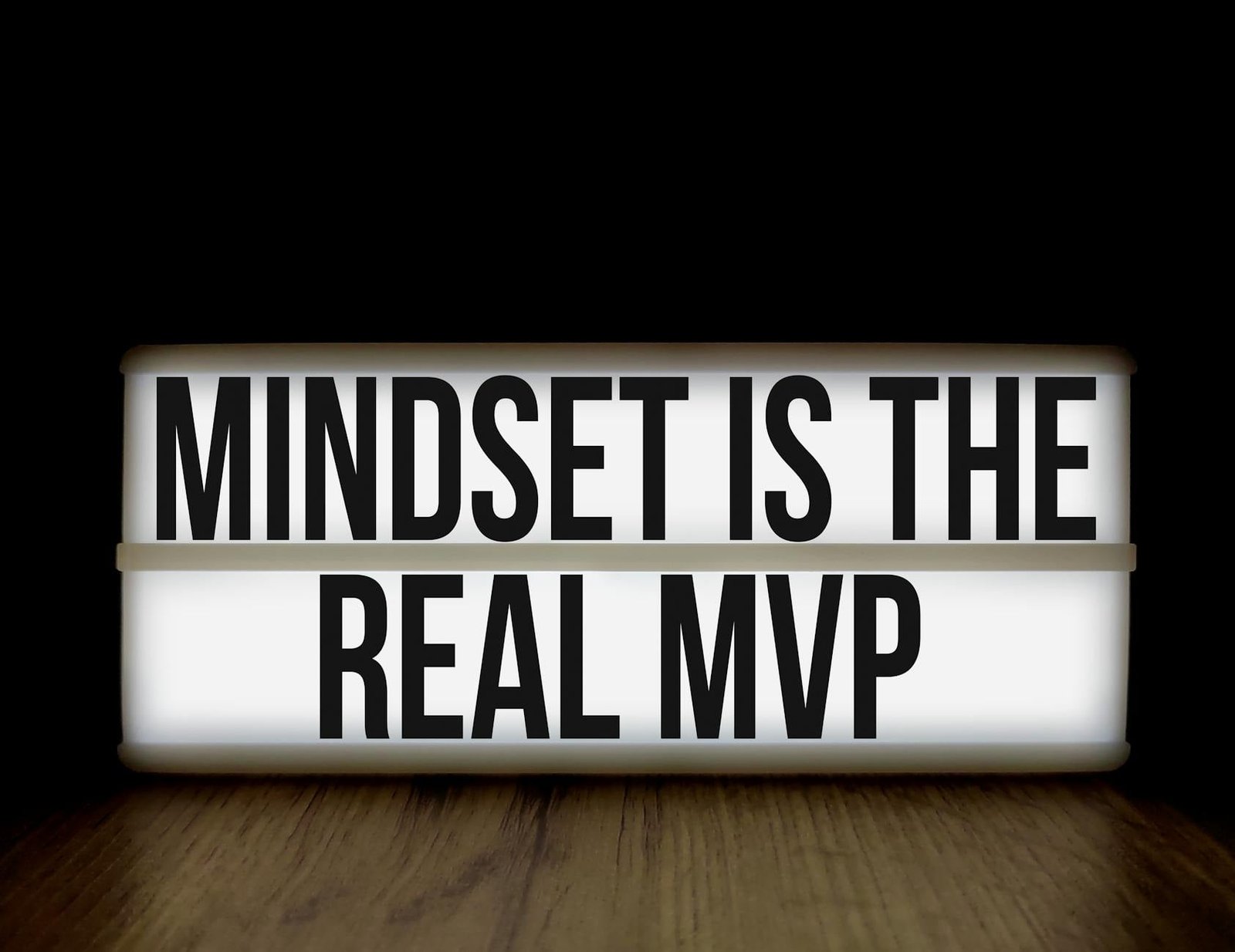
One Question Before You Go
If you’re honest with yourself — not performatively, but actually honest — which of these quotes creates a small resistance in you? Not the one that feels good. The one that slightly annoys you or feels a bit too close.
That’s usually the one worth spending time with.
Which quote resonated most with you? Tell me below!
Will you use any of these ideas?
—Marina Caldwell