My Husband Took One Bite and Pushed the Plate Closer to Himself
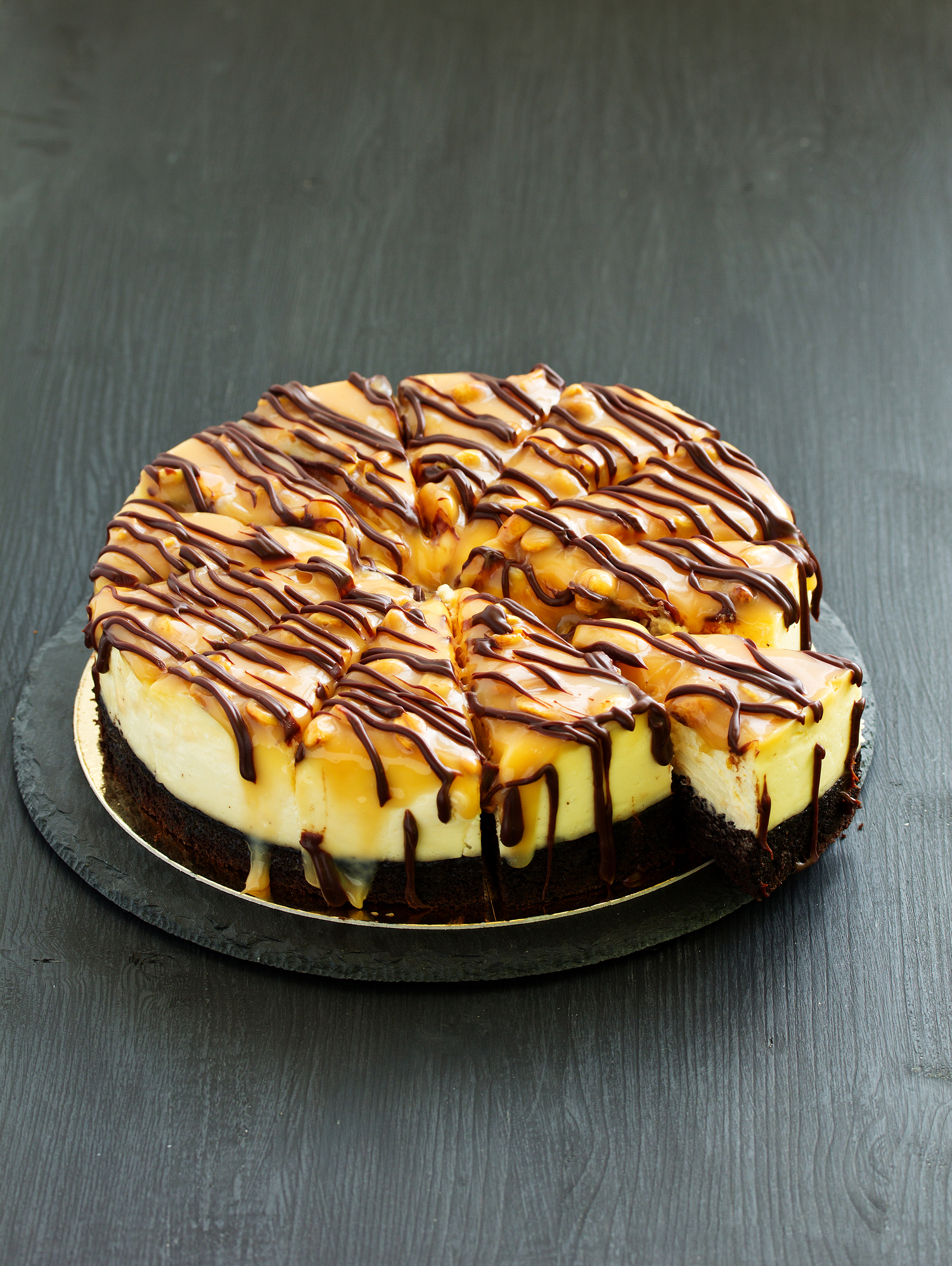
Not toward me. Closer to himself. He wasn’t sharing.
That’s the version I made on the third attempt. The first two were technically edible — dense through the middle, caramel too thin, chocolate pooled at the edges instead of sitting over the nuts. Nothing dramatic went wrong. It just wasn’t right.
I’d been making cheesecakes for years before this one. Plain ones, fruit-topped ones, a disastrous attempt at a matcha swirl I will not discuss. But this combination — salted caramel, toasted pecans, a drizzle of chocolate that actually sets — took me longer to land than I expected.
The water bath is non-negotiable. I know people skip it. They’re wrong.
Every crack I’ve ever gotten in a cheesecake happened without one. The water creates enough ambient moisture that the edges don’t set faster than the center, and that’s what causes the surface to split. I used to think the foil wrap was the fussy part. Now I double it without thinking twice.
Quick tip: Use two overlapping sheets of heavy-duty foil around the springform pan — the seam on a single sheet will let water in, and a waterlogged crust is not something you can fix at the table.
The Caramel Part Is Where Most People Get Hurt
Not literally. Usually.
The thing nobody tells you about making caramel from scratch is that the window between amber and burnt is about fifteen seconds. I know this because I’ve crossed it. The batch I made on attempt two went too dark — not black, but bitter — and I poured it over the cheesecake anyway, thinking it would mellow. It didn’t. My neighbor tried a slice and was polite about it, which told me everything.
Heat the sugar over medium. Stir constantly. The moment it turns the color of dark honey, pull it off the burner.
Adding the butter is the part that surprises people. It bubbles aggressively — that’s normal. Keep stirring. The cream goes in slowly, still stirring, and the whole thing will look like it’s threatening to seize. It isn’t. Give it another thirty seconds and it comes together into something smooth and dark and smelling like it should.
The sea salt goes in last. Don’t skip it — the caramel without it is sweet in a flat way, and flat sweet on a rich cheesecake is too much of the same thing.
Cool the caramel for at least 10 minutes before it touches the cheesecake. I thought about letting it go longer — actually no, 10 minutes is enough, any more and it starts to thicken past the point where it drapes nicely over the surface.
About the Crust
Graham crackers, butter, a little sugar. Baked for 5 minutes.
Most recipes skip the pre-bake. They’ll tell you it’s optional. It isn’t — an unbaked crust stays crumbly under the filling and falls apart when you slice. Five minutes in the oven sets it just enough to hold together without getting hard. You want it firm, not brittle.
Press it with the bottom of a measuring cup, not your fingers. Your fingers leave uneven patches. The measuring cup gives you a flat, even layer that actually bakes consistently.
Also worth knowing: the crust will look underdone when it comes out. That’s fine. It keeps cooking for a minute or two from the residual heat, and then it goes into a very wet environment for an hour, so you don’t want it overdone going in.
The Filling, Without the Drama
Cream cheese at room temperature. This matters more than almost anything else in this recipe.
Cold cream cheese doesn’t blend — it stays in small lumps that show up in the finished cheesecake as dense spots. I once rushed this step because I’d already started everything else. The filling looked smooth, but after baking, there were visible streaks through two slices. Not serving-guests streaks. Just enough to be annoying.
Beat the cream cheese with the sugar for about 3 minutes on medium. You’ll see it go from stiff and grainy to something genuinely smooth. Stop there. Overmixing at this stage whips too much air into the batter, and that air expands in the oven and then collapses — which is another crack culprit.
Eggs go in one at a time, on low. Low speed matters here. You’re not aerating. You’re just combining.
The vanilla and the quarter cup of cream go in last, stirred by hand if you’re being careful. The batter should look like thick, very pale silk — smooth enough to pour without any lumps catching the spatula.
Then into the pan, smoothed with an offset spatula, and straight into the water bath.
It Jiggles. Let It Jiggle.
The center of the cheesecake will not look done when you turn off the oven.
A two-inch ring around the edges will be set. Everything inside that ring will wobble when you nudge the pan. That’s what you want. It firms up completely during the cool-down — first in the oven with the door cracked, then on the counter, then in the fridge for at least two hours, though overnight is better.
The cracked-door step gets skipped a lot. I understand why — it feels fussy and unnecessary, standing there with the oven door propped open for an hour. But the slow temperature drop is what keeps the surface smooth. A sudden drop in heat causes the edges to contract faster than the center, and you get the surface tension that leads to cracks. An hour in a cooling oven is the difference.
Honestly? Waiting is the hardest part of this recipe, and I say that having also made the caramel.
The Top Layer, In Order
Caramel first. Half of it, spread across the chilled surface — not poured, spread, with a spoon or offset spatula. You want coverage, not a flood.
Nuts over the caramel while it’s still slightly tacky. They’ll hold in place instead of rolling off when you slice. Pecans and walnuts together give you different textures — the pecans stay a little softer, the walnuts have more bite. I wouldn’t swap them for anything pre-roasted from a bag, because those tend to be too uniform and slightly stale.
The chocolate goes on next. Melt it with the coconut oil — it keeps the chocolate fluid enough to drizzle without turning chalky when it sets. Use a spoon or a small piping bag, whatever you’re comfortable with. It doesn’t need to look professional. It needs to get into the gaps between the nuts.
Then the remaining caramel over everything.
Back in the fridge for at least one more hour. Do not skip this — the layers need to set before you remove the springform ring, otherwise the sides of the cheesecake have nothing holding them in shape when you slice.
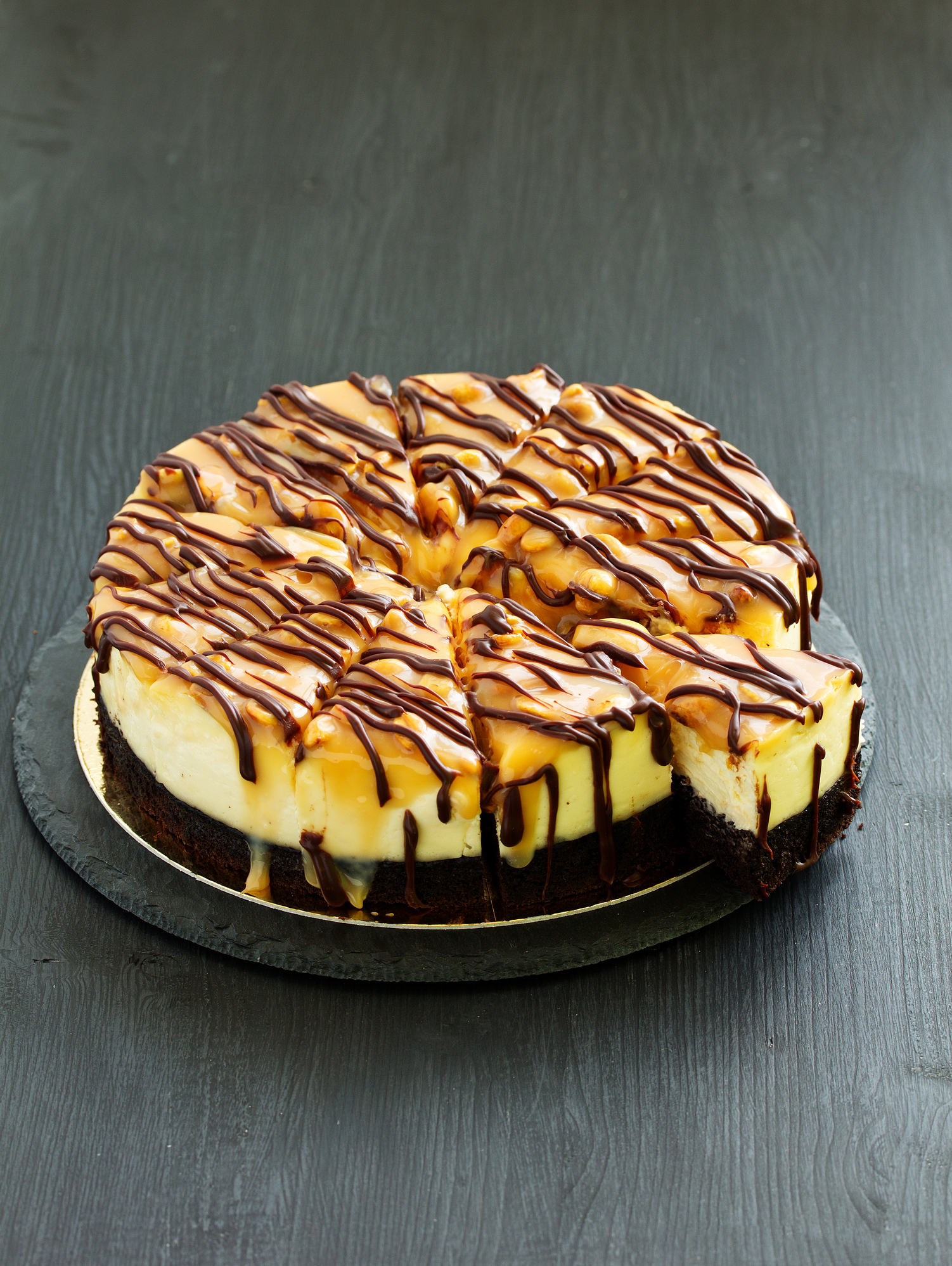
Run a warm knife around the inside edge of the pan before releasing the ring. A hot, damp cloth wrapped around the outside of the pan for thirty seconds helps too — especially if the caramel has set hard against the edge.
—The Full Instructions
Step 1: Preheat your oven to 325°F. Wrap the outside of a 9-inch springform pan with two overlapping sheets of heavy-duty foil — make sure there are no gaps at the seams, or the water bath will find them.
Step 2: Mix 2 cups of graham cracker crumbs with 6 tablespoons of melted butter and 3 tablespoons of sugar until the texture looks like wet sand. Press it firmly into the base of the pan using the flat bottom of a measuring cup. Bake for 5 minutes, then set aside. (Don’t skip the bake — an unbaked crust disintegrates under the filling.)
Step 3: Beat 32 oz of softened cream cheese with 1 cup of granulated sugar on medium speed for about 3 minutes, until the mixture is smooth and no lumps remain. Stop as soon as it looks uniform — you’re not going for fluffy here.
Step 4: Add 4 large eggs one at a time, beating on low speed after each one just until it’s incorporated. Overmixing at this stage is what causes cracking — I learned this the hard way on a birthday cheesecake that looked like a dry riverbed. Stir in 1 teaspoon of vanilla extract and ¼ cup of heavy cream by hand.
Step 5: Pour the batter over the crust and smooth the top with an offset spatula. Place the springform pan inside a larger roasting pan and pour hot water into the roasting pan until it reaches halfway up the sides of the springform.
Step 6: Bake for 50–60 minutes. The edges should be set and the center should still wobble when you nudge the pan — that’s correct. Turn off the oven, crack the door about 4 inches, and leave the cheesecake inside for 1 hour. Remove it, let it cool to room temperature, then refrigerate for at least 2 hours.
Step 7: Make the caramel. Heat 1 cup of sugar in a heavy-bottomed saucepan over medium heat, stirring constantly. It will clump before it melts — keep stirring. After about 10 minutes it should be fully melted and a deep amber color. Pull it off the heat immediately. Add 6 tablespoons of butter and stir until melted. Slowly pour in ½ cup of heavy cream, stirring continuously — it will bubble hard, that’s fine. Add 1 teaspoon of sea salt, stir, and cool for 10 minutes before using.
Step 8: Melt 6 oz of semi-sweet chocolate with 2 tablespoons of coconut oil in a double boiler or in the microwave in 30-second intervals, stirring between each. It should be smooth and thin enough to drizzle.
Step 9: Spread half the caramel over the chilled cheesecake. Scatter 1 cup of chopped mixed nuts evenly over the caramel. Drizzle the melted chocolate over the nuts, then drizzle the remaining caramel over everything.
Step 10: Refrigerate for at least 1 more hour. When ready to serve, run a warm knife around the inside edge of the pan, release the springform ring, and slice with a hot, wet knife for clean cuts. Did yours come out with a clean slice on the first try? Share below!
Ways to Change It Up
Try this: Swap the semi-sweet chocolate for dark chocolate — 70% or higher. It cuts through the sweetness of the caramel more assertively, and if you’re not a fan of very sweet desserts, this shift makes the whole thing feel more balanced.
Try this: Use all pecans instead of a mix, and add ½ teaspoon of cinnamon to the caramel while it’s still warm. It turns the whole topping in a slightly more autumnal direction without changing the process at all.
Try this: Skip the nut layer entirely and press crushed pretzels into the caramel instead. The salt hits differently — more up front, more crunch, and it holds up better in the fridge without softening the way nuts occasionally do.
Which would you go for? Drop it in the comments.
How to Serve It
This cheesecake is rich enough that smaller slices work better than you’d expect — 12 servings out of a 9-inch pan is not stingy. Serve it cold, straight from the fridge, so the caramel layers have their texture.
A small scoop of plain vanilla ice cream alongside cuts the intensity and gives you something to drag through the caramel that pools on the plate. Unsweetened whipped cream works too, especially if the caramel is on the sweeter side.
If you’re serving it at a table with coffee, go with something dark roasted — the bitterness is a better match than anything mild. Black tea works too. Anything sweetened just adds to what’s already there.
What would you pair it with?
—Storing It Without Ruining It
In the fridge, covered loosely with plastic wrap or under a cake dome, this keeps for about 4 days. After that the crust starts to soften noticeably and the caramel gets a little tacky in a less pleasant way.
You can freeze individual slices. Wrap each one tightly in plastic, then in foil, and freeze for up to 6 weeks. Thaw overnight in the fridge — not on the counter, or the caramel goes liquid and the texture of the filling gets slightly grainy. The nuts lose a little of their crunch after freezing, but not enough to ruin it.
There’s no good way to reheat this. Serve it cold. That’s the answer.
Have you ever saved leftovers like this? Tell me below!
Mistakes I Made So You Don’t Have To
I once poured the cream into the caramel too fast — not slowly, the whole half-cup at once — and it seized into a grainy mess instantly. I tried to save it by returning it to the heat. It did not save. Made a second batch.
The first time I made this, I skipped letting the cheesecake cool completely before refrigerating. Condensation formed under the plastic wrap and dripped back onto the surface, leaving water marks in the filling. Not a texture problem, just ugly. Cool it to room temperature on the counter before it goes in the fridge, every time.
I also used pre-chopped nuts from a canister once. They were fine. Just stale enough to be flat-tasting against the caramel, and the pieces were too uniform — all the same tiny size, which doesn’t give you the variation in bite that makes the topping interesting. Chop whole nuts yourself, unevenly. Some bigger pieces, some smaller. The texture difference matters.
Did something like this happen to you?
Questions I Actually Get About This One
Can I make this a day ahead? Yes — and it’s actually better that way. The flavors settle overnight and the caramel firms into a cleaner layer. Make it the day before, add the toppings, and refrigerate until serving.
Do I have to use a water bath? It depends on whether you care about cracks. Without one, you’ll likely get surface splits — especially in a home oven that runs hot or cycles unevenly. The water bath isn’t about the taste, it’s about the surface. I tried skipping it once. Crack ran straight through the middle.
My caramel hardened on top of the cheesecake. What happened? It was probably too cool when you spread it — below about 80°F it starts to set quickly. Warm it back up briefly in a small saucepan over low heat, about 2 minutes, just until it’s pourable again. But spread it fast; it’ll firm again quickly once it hits the cold surface.
Can I use store-bought caramel sauce? You can. I tried it once and the texture is thinner and sweeter in a different way. It doesn’t hold the nuts as well, and the flavor is less interesting. But it’s a legitimate shortcut if you’re short on time — use a high-quality brand, not the kind from a squeeze bottle.
How do I know when the cheesecake is done baking? The outer 2 inches should be set and the center should jiggle like Jell-O, not slosh like liquid. If the whole surface moves in a wave, it needs more time — check again in 5-minute increments. And the internal temperature, if you want a number, is around 150°F at the edge.
Can I use a different crust? An Oreo crust works here — scrape out the filling or leave it in, either way. The chocolate echoes the topping and holds up well. A shortbread crust is also good but more crumbly. Avoid anything too thin; the crust needs structural integrity to support the dense filling on top of it. And skip anything pre-made in a tin — wrong size, wrong depth.
Which answer helped you most?
A Few Last Things Before You Start
This is not a fast recipe. The active time is maybe 45 minutes, but the total — with baking, cooling, chilling, and setting — is around four and a half hours. Plan for that.
The caramel is the part most likely to give you trouble on the first try. Not because it’s complicated, but because sugar moves fast when it melts and the margin between right and wrong is narrow. Stay at the stove. Don’t walk away to check something else.
Fun fact: Cream cheese was invented in the United States in 1872 by dairyman William Lawrence, who was actually trying to replicate a French Neufchâtel cheese — and ended up with something richer and entirely different.
The slice you get on day two, after a full night in the fridge, is noticeably better than day one. The caramel sets differently, the layers consolidate, and the flavors even out. I almost never serve it the same day I make it anymore.
Will you make this soon?
I still haven’t figured out whether the chocolate is better drizzled thin or poured slightly thicker — the thicker version sets more definitively but makes slicing harder. I keep going back and forth on it. Haven’t landed on an answer yet.
Happy cooking! —Marina Caldwell
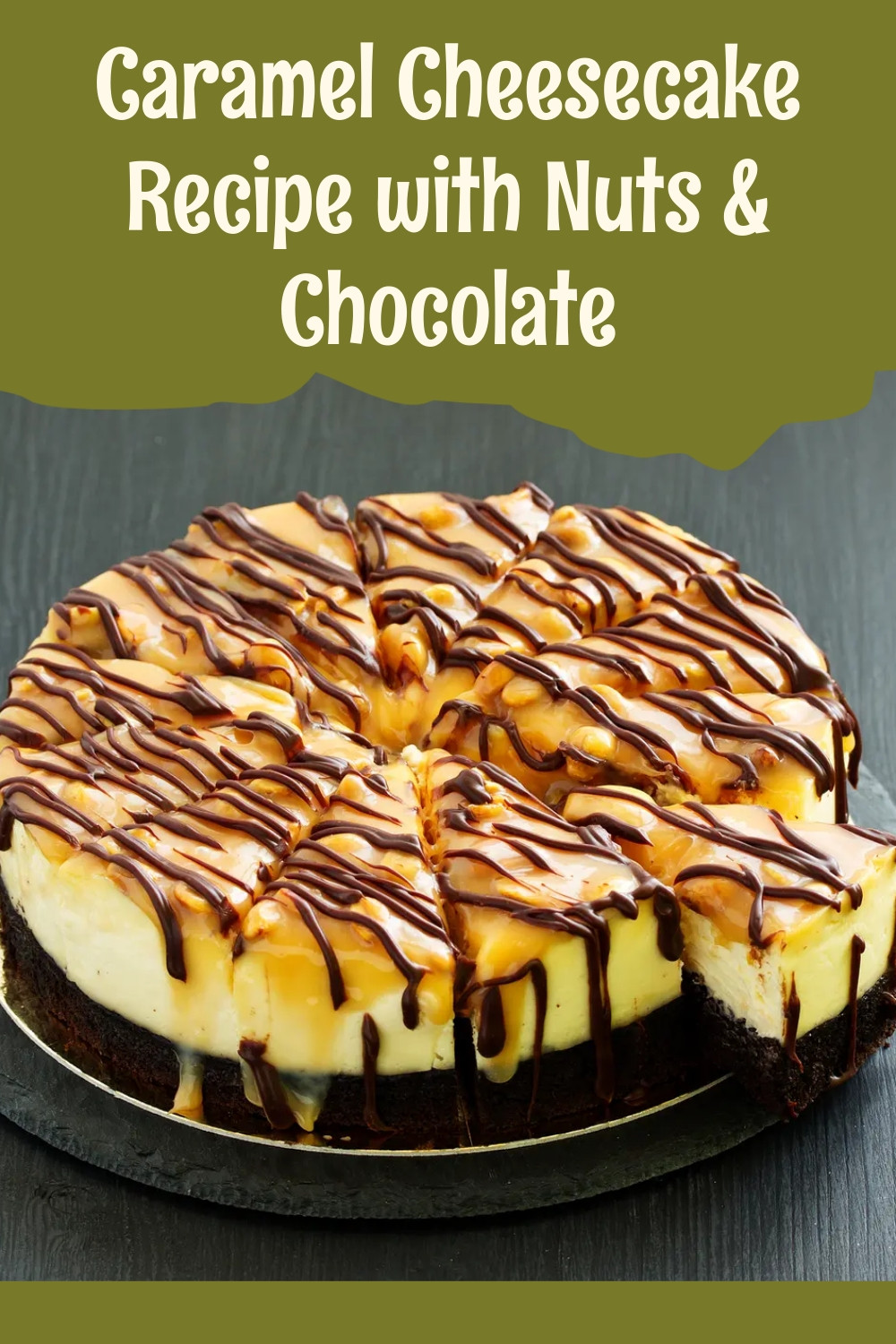
Perfect Caramel Cheesecake with Nuts and Chocolate
Ingredients
- 2 cups graham cracker crumbs
- 6 tablespoons melted butter
- 3 tablespoons sugar
- 32 oz cream cheese, softened
- 1 cup granulated sugar
- 4 large eggs
- 1 teaspoon vanilla extract
- 1/4 cup heavy cream
- 1 cup granulated sugar (for caramel)
- 6 tablespoons butter
- 1/2 cup heavy cream (for caramel)
- 1 teaspoon sea salt
- 1 cup mixed nuts (pecans, walnuts), chopped
- 6 oz semi-sweet chocolate, chopped
- 2 tablespoons coconut oil or butter
Instructions
- 1Preheat oven to 325°F. Wrap the outside of a 9-inch springform pan with foil.
- 2Combine graham cracker crumbs, melted butter, and 3 tablespoons sugar. Press firmly into the base of the springform pan. Bake for 5 minutes and set aside.
- 3Beat softened cream cheese with 1 cup sugar until smooth and creamy, about 3 minutes. Avoid overmixing.
- 4Add eggs one at a time, beating on low speed after each addition. Stir in vanilla extract.
- 5Pour cheesecake batter over the crust and smooth the top.
- 6Place the springform pan in a larger roasting pan. Add hot water to the roasting pan until it reaches halfway up the sides of the springform pan (water bath).
- 7Bake for 50-60 minutes, until the edges are set but the center still jiggles slightly. Turn off the oven and crack the door open 4 inches. Let the cheesecake sit for 1 hour.
- 8Remove from oven and cool completely, then refrigerate for at least 2 hours.
- 9For the homemade caramel: In a heavy-bottomed saucepan, heat 1 cup sugar over medium heat, stirring constantly until it melts and turns amber in color, about 10 minutes.
- 10Remove from heat and add 6 tablespoons butter, stirring carefully until melted.
- 11Slowly pour in 1/2 cup heavy cream while stirring continuously. The mixture will bubble—stir until smooth.
- 12Add 1 teaspoon sea salt and stir well. Cool for 10 minutes before using.
- 13Melt chocolate with coconut oil in a double boiler or microwave until smooth, stirring every 30 seconds.
- 14Spread half of the caramel sauce over the chilled cheesecake. Sprinkle chopped nuts evenly over the caramel.
- 15Drizzle the melted chocolate over the nuts in a decorative pattern.
- 16Drizzle the remaining caramel sauce over the top.
- 17Return to the refrigerator for at least 1 hour before serving.
- 18Run a warm knife around the edges before removing the springform ring. Slice with a hot, wet knife for clean cuts.
Notes
See full recipe for nutritional information.