Nobody Warned Me About the Dough
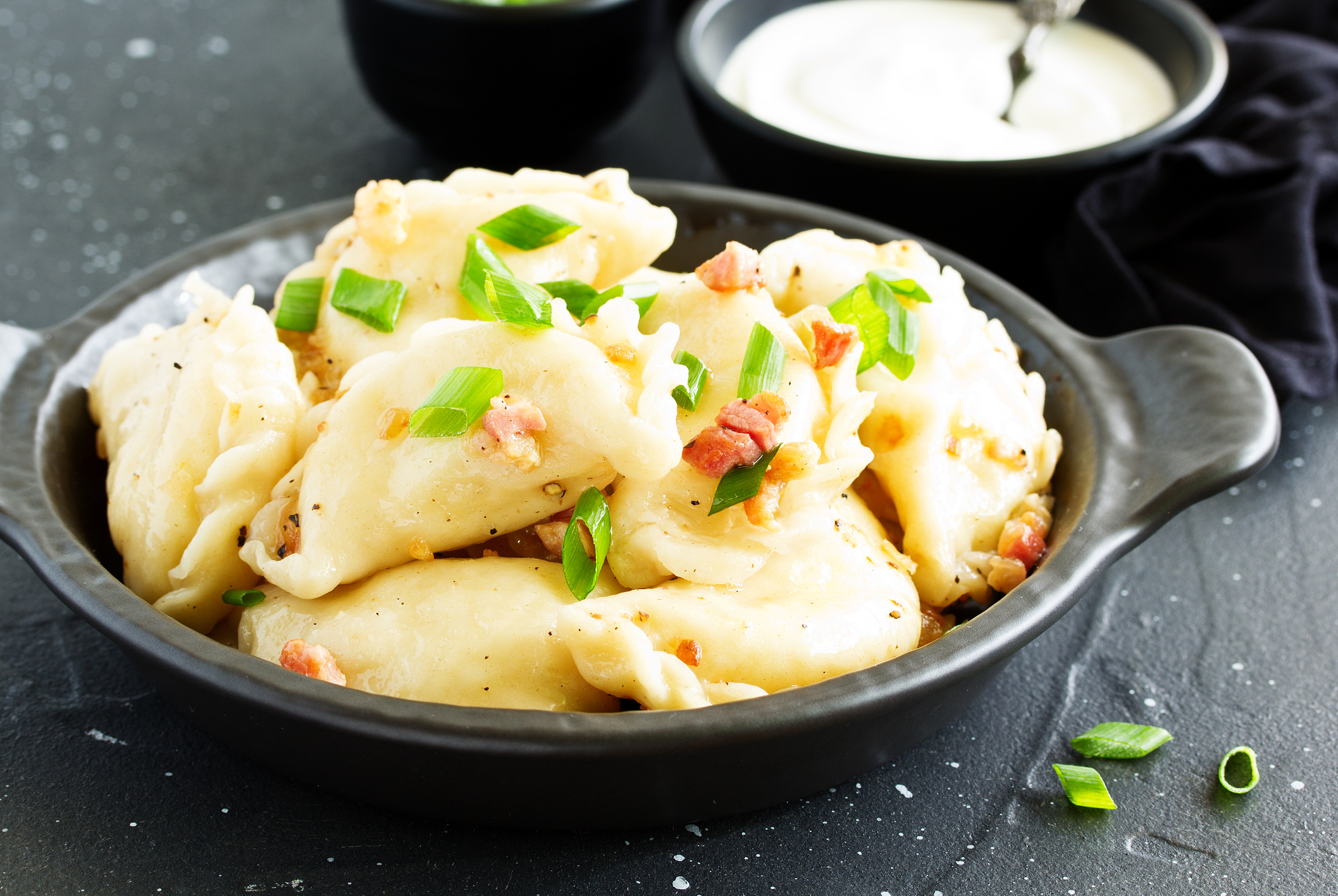
The first circle I cut was too thick, and I knew it immediately when the dumpling hit the water and sat there like a stone. It floated eventually — about four minutes later than it should have — and the edges were gummy in a way that wasn’t quite right.
I made thirty-two of them anyway.
Varenyky are not fast. I want to say that upfront, not as a warning but as a fact you should build your afternoon around. The dough needs to rest, the filling needs to cool, and the onions need a full fifteen to twenty minutes of actual attention before they get to where you want them.
Worth it. Deeply, stubbornly worth it.
The Filling Was Almost Too Soft.
Boil the potatoes until they fall apart when you poke them — not just tender, falling apart. Then drain them completely and let the steam escape for a few minutes before you mash.
If you mash while they’re still wet, the filling becomes paste, and paste leaks through dough seams.
I thought about using gruyère — actually no, I switched back to sharp cheddar halfway through grating, because gruyère melts differently and I didn’t want any surprises inside the dumpling.
The cheese should go in while the potatoes are still warm enough to melt it. Four tablespoons of butter, one teaspoon of salt, half a teaspoon of black pepper. Stir until it looks like mashed potatoes you’d eat on their own, because that’s basically what it is. Then let it cool completely before you touch the dough.
Quick tip: Spread the filling on a sheet pan to cool faster — if you leave it in the bowl, the center stays warm for a long time and you’ll end up waiting.
About the Dough, Actually.
Two cups flour, half a teaspoon salt, one egg, two tablespoons vegetable oil, half a cup of water added gradually. That’s it. The ratio isn’t fussy but the kneading matters more than people admit.
Eight to ten minutes. Not eight. Not a quick pass and then resting your hands. Ten full minutes, and the dough should feel smooth and slightly tacky but not sticky — if it sticks to your palm when you press and lift, add a small pinch of flour and keep going.
Then cover it and leave it alone for twenty minutes. The rest isn’t optional. The gluten needs to relax or the circles will shrink back when you cut them.
Most recipes tell you to roll it “thin.” They don’t tell you how thin. I roll mine to about an eighth of an inch — thin enough that you can almost see the shadow of your hand through it, but not so thin that it tears when you fold. A 3-inch circle holds about a tablespoon of filling comfortably. Any more and the seam won’t hold under water.
Press the edges. Then press them again. Then pinch and fold the pinch one more time if you want to be sure. The dumplings that burst in the pot were always the ones I sealed in a hurry.
The Onions Need More Time Than You Think.
Cook the bacon first, in a cold skillet brought up to medium. This renders the fat slowly and keeps the bacon pieces from curling into hard little knots. When it’s crispy — really crispy, not just cooked — pull it out and set it aside.
Leave all the fat in the pan.
Add the two tablespoons of butter directly into the bacon fat, then add all three onions at once. They’ll look like too many onions. They are not too many onions. Three large onions for four to six servings of dumplings is exactly right — they cook down to about a third of their volume and get sweet and deep in color, somewhere between amber and brown, after about eighteen minutes over medium-low heat.
Stir them every couple of minutes. Not constantly — constantly means you’re steaming them instead of letting them caramelize. Let them sit, get a little color on the bottom, then stir and let them sit again.
The garlic goes in during the last minute only. I added it too early the first time,
and it burned at the edges and turned the whole pan slightly bitter before the onions were even close to done.
When the onions are caramelized, stir the bacon back in, then add the half cup of sour cream off the heat — or on the lowest possible flame. Sour cream breaks if you’re not careful. Season with salt and pepper and keep it on low until the dumplings are ready. Don’t let it boil.

When They Float, You’re Not Done Yet.
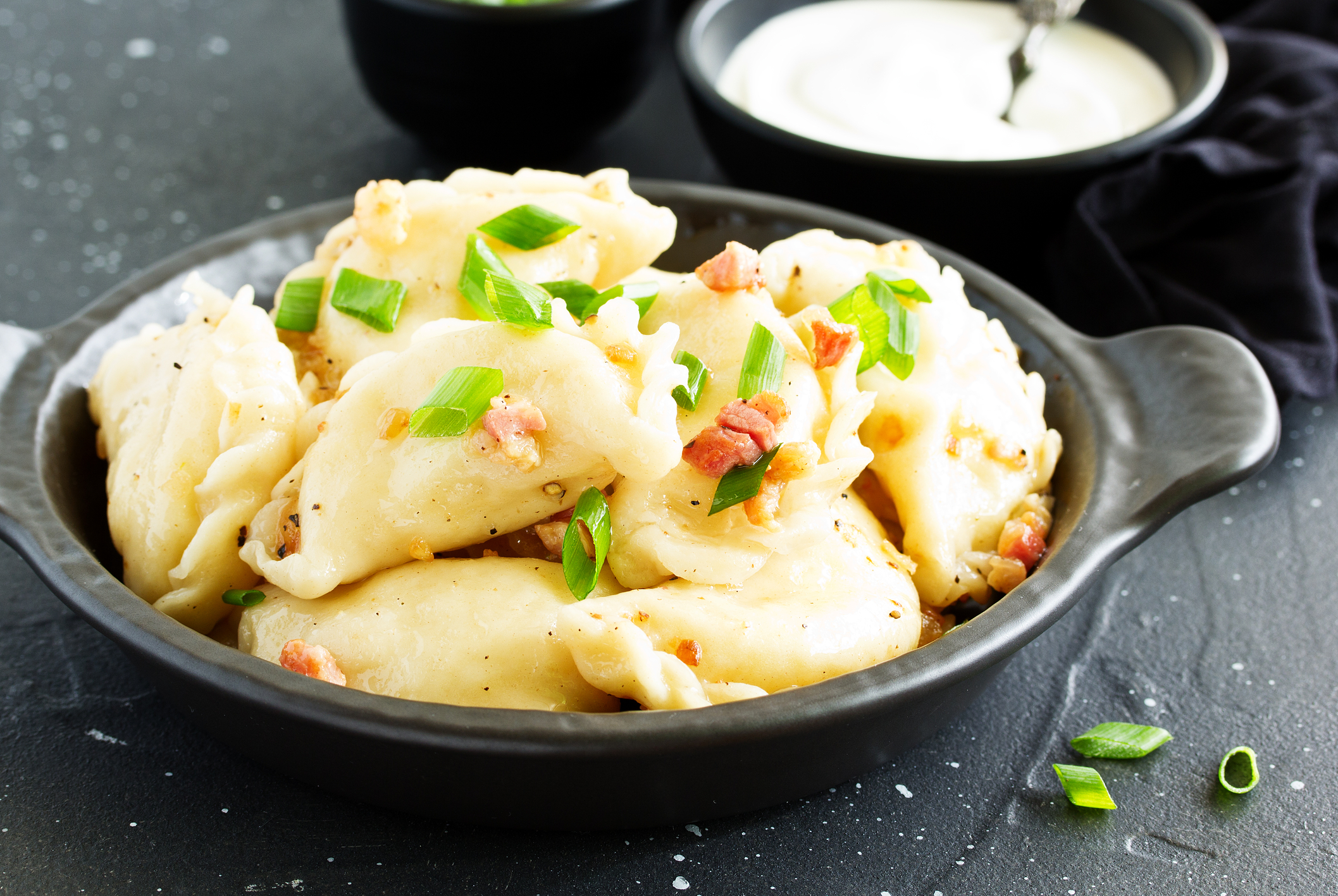
Salted boiling water, cooked in batches — no more than eight or ten dumplings at a time so the water temperature doesn’t drop too fast. They’ll sink, then float. That float means the dough is cooked through, but give them two to three more minutes after that before you pull them.
My neighbor Petra, who grew up making these, told me the float is a signal, not a finish line. I ignored her the first time and served dumplings that were slightly underdone in the center. You could tell because the dough had a faint chewiness that wasn’t comfortable to eat.
Pull them with a slotted spoon directly onto the serving platter. Don’t rinse them. Don’t toss them in butter first — the sauce has enough fat to keep them from sticking together if you serve immediately, which you should.
Honestly? These do not hold well. Make the sauce, cook the dumplings, eat them. That’s the whole plan.
It Looked Like Enough. It Wasn’t.
The first time I made this for four people, I thought two pounds of potatoes and two cups of flour would be generous. We ran out of dumplings before we ran out of sauce, and there was an awkward moment where everyone was spooning sauce over nothing.
Scale up if you’re feeding people who eat seriously. The dough recipe doubles cleanly.
Also — the sauce is the whole point. The dumplings are good on their own, but the caramelized onion and bacon and sour cream together is what makes this a meal instead of a side dish. Don’t shortchange the onions by rushing them, and don’t halve the bacon trying to make it lighter. I’ve tried. It’s not the same.
Do I think I’ll make a lighter version someday? Probably not.
—How to Make Potato Dumplings with Smoky Bacon Onion Sauce
Step 1: Combine two cups of all-purpose flour and half a teaspoon of salt in a large bowl. Make a well in the center, add one large egg and two tablespoons of vegetable oil. Begin mixing while adding half a cup of water gradually — you may not need all of it, stop when the dough comes together. Knead on a lightly floured surface for eight to ten minutes until smooth. Cover and rest for twenty minutes. (Don’t skip the rest — I once tried to roll immediately and every circle snapped back like a rubber band.)
Step 2: While the dough rests, boil two pounds of peeled, diced potatoes until completely tender — about fifteen minutes at a strong simmer. Drain well, let steam off for a few minutes, then mash with four tablespoons of butter, one teaspoon of salt, and half a teaspoon of black pepper. Stir in one cup of grated sharp cheddar while the potatoes are still warm. Spread onto a sheet pan and let cool completely before filling.
Step 3: Roll the rested dough on a floured surface to about one-eighth of an inch thick. Cut 3-inch circles using a glass or cookie cutter. Place one tablespoon of filling in the center of each circle. Fold the dough over into a half-moon shape, press the edges firmly to seal, then pinch and fold the edge one more time. Set assembled dumplings on a floured surface while you work.
Step 4: Cook eight ounces of diced bacon in a cold skillet brought to medium heat, stirring occasionally, until the pieces are fully crispy. Remove bacon and set aside. Leave the fat in the pan. Add two tablespoons of butter, then add three large thinly sliced onions. Cook over medium-low heat, stirring every few minutes, for fifteen to twenty minutes until deeply golden and caramelized. Add two cloves of minced garlic in the last minute only.
Step 5: Remove the pan from heat and stir in the crispy bacon and half a cup of sour cream. Season with salt and pepper to taste. Return to the lowest possible heat and keep warm. Don’t let it boil — the sour cream will separate if it does. Did your sauce come together smoothly? Share below!
Step 6: Bring a large pot of salted water to a full boil. Cook dumplings in batches of eight to ten, giving them room. They’ll sink, then float — wait two to three minutes after they float before removing with a slotted spoon. Transfer directly to a serving platter, top with the bacon onion sauce, and serve immediately.
Ways to Change It Up
Try this: Swap the sharp cheddar in the filling for smoked gouda. The flavor inside the dumpling gets noticeably deeper, and it plays well against the bacon in the sauce.
Try this: Add a handful of sautéed mushrooms to the sauce along with the onions. Cremini work fine, but dried porcini rehydrated in warm water and then chopped are worth the extra step.
Try this: Skip the sour cream in the sauce entirely and finish with a splash of heavy cream instead. The sauce becomes richer and less tangy — different, not better or worse.
Which would you go for? Drop it in the comments.
How to Serve It
Serve straight from the pot onto warm plates if you can — dumplings cool fast and the sauce thickens as it sits. A simple green salad with a sharp vinaigrette cuts through the fat well.
A cold glass of something acidic alongside — dry cider, a light beer, a sparkling water with lemon — makes the heaviness of the dish feel more balanced. I’ve served this with pickled beets on the side and it was the right call.
This also works as a late-dinner dish with nothing else on the table. Just the dumplings, the sauce, and bread to scrape the platter.
What would you pair it with?
—Storing It Without Ruining It
Cooked dumplings keep in the fridge for up to three days in an airtight container. Store the sauce separately if you can — dumplings left sitting in sauce overnight absorb too much of it and get soft in an unpleasant way.
To reheat, pan-fry the dumplings in a little butter over medium heat until the outsides get slightly golden and crisped. This is honestly better than reheating them in water, and the texture improves. Reheat the sauce gently in a small pan on low heat, adding a splash of water if it’s thickened too much.
For freezing: freeze uncooked, assembled dumplings on a sheet pan first until solid, then transfer to a bag. Cook from frozen — just add two to three extra minutes in the boiling water. Cooked dumplings freeze poorly. The dough gets spongy.
Have you ever saved leftovers like this? Tell me below!
Mistakes I Made So You Don’t Have To
I once tried to seal the dumplings with wet fingers, thinking the moisture would help the dough stick. It did not. The edges slid against each other and opened right up in the boiling water. Dry fingers, firm pressure, a pinched fold at the end — that’s what holds.
I rushed the onion caramelization twice before I stopped trying to speed it up. Twenty minutes at medium-low is not negotiable. Turned up to medium-high, the onions brown unevenly and the flavor is sharp instead of sweet. The sauce reads completely differently.
I added the sour cream while the pan was still on high heat the first time I made the sauce. It curdled immediately into small white clumps floating in bacon fat. I served it anyway because there was nothing else, and my husband ate it without commenting, which told me everything I needed to know. Did something like this happen to you?
Questions I Actually Get About This Recipe
Can I make the dough the night before?
Yes, wrap it tightly and refrigerate. Pull it out about twenty minutes before you roll it — cold dough is stiff and resists the rolling pin. Let it come to room temp first.
How many dumplings does this recipe make?
Roughly thirty to thirty-five, depending on how thick you roll and how much filling you stuff in each one. I get about thirty-two consistently. That feeds four adults as a main course without anyone going hungry.
Can I use a different cheese in the filling?
It depends on the melt. Soft cheeses make the filling too wet. Hard cheeses that don’t melt — like parmesan alone — stay grainy. Sharp cheddar or smoked gouda both work. I tried feta once and the filling was too salty and slightly crumbly.
What if my dumplings keep bursting?
Two things. Either the filling is too wet — make sure the potatoes are fully dried before mashing — or the seals weren’t pressed firmly enough. Press. Pinch. Press again. And cook at a steady boil, not a violent rolling boil that tosses them around.
Can I make these vegetarian?
Drop the bacon entirely and caramelize the onions in butter and a splash of olive oil. The sauce becomes simpler but still works. But — the smokiness is most of what makes this sauce interesting. Without it, you’re eating buttered onions with sour cream. Fine, but not the same dish.
How far ahead can I assemble the uncooked dumplings?
About four hours on a floured surface covered with a damp towel, or freeze them right away if you’re going longer. After about four hours at room temperature, the dough starts to dry at the edges and can crack when you pick them up.
Which answer helped you most?
A Few Last Things Before You Start
Strong fun fact: Potatoes weren’t introduced to Eastern Europe until the 18th century — which means varenyky existed long before the potato filling did, originally made with cherries, buckwheat, or cottage cheese.
This version, with potato and cheese, is the one that stuck. Probably because it’s the most filling, and filling mattered.
Clear your afternoon if this is your first time making them. Not because anything is complicated, but because the separate steps — dough, filling, sauce, boiling — all need attention in sequence. Trying to rush any one of them shows up on the plate.
The sauce especially. I can’t say it enough. The onions need to be genuinely caramelized — not just soft, not just translucent, but deep amber and sweet-smelling — or the whole dish falls flat. Everything else is forgiving. The onions are not.
Will you make this soon?
I still haven’t figured out the exact thickness that guarantees no bursting and a good chew at the same time. Some batches are better than others and I haven’t fully isolated why. Maybe the flour changes between bags. Maybe I knead less when I’m tired. I’m not sure yet.
Happy cooking! —Marina Caldwell
Potato Dumplings Meet Smoky Bacon Onion Sauce
Ingredients
- 2 cups all-purpose flour
- 1 large egg
- 1/2 cup water
- 1/2 teaspoon salt
- 2 tablespoons vegetable oil
- 2 pounds potatoes, peeled and diced
- 1 cup sharp cheddar cheese, grated
- 4 tablespoons butter
- 1 teaspoon salt for filling
- 1/2 teaspoon black pepper
- 8 ounces bacon, diced
- 3 large onions, thinly sliced
- 2 tablespoons butter for sauce
- 1/2 cup sour cream
- 2 cloves garlic, minced
- Salt and pepper to taste
Instructions
- 1Make dough: combine flour and salt in bowl. Create well, add egg and oil. Mix while adding water gradually until soft dough forms. Knead 8-10 minutes until smooth. Let rest 20 minutes covered.
- 2Prepare filling: boil potatoes until tender, drain and mash. Mix with cheese, butter, salt, and pepper. Cool completely.
- 3Roll dough thin on floured surface. Cut 3-inch circles with glass or cookie cutter.
- 4Place 1 tablespoon filling on each circle. Fold in half, press edges firmly to seal.
- 5Cook bacon in large skillet until crispy. Remove and set aside.
- 6In same skillet, sauté sliced onions in bacon fat and 2 tablespoons butter for 15-20 minutes until golden and caramelized. Add garlic in last minute.
- 7Stir in cooked bacon and sour cream. Season with salt and pepper. Keep warm on low heat.
- 8Bring large pot of salted water to boil. Cook dumplings in batches until they float, then 2-3 minutes more.
- 9Transfer cooked dumplings to serving platter. Top with bacon-onion sauce and serve immediately.
Notes
See full recipe for nutritional information.