The pan was already smoking when I remembered I hadn’t mixed the herb oil yet.
The pan was already smoking when I remembered I hadn’t mixed the herb oil yet. That first batch burned on one side and sat raw on the other, and I scraped it into the trash without even plating it.
I made it again the next afternoon.
These flatbreads — the ones that actually worked — became something I make more than I probably should. Mostly because they take under 30 minutes start to finish and I almost always have the ingredients already sitting in my kitchen.
About the dough. It’s simpler than you think.
No yeast. That’s the thing.
Just flour, salt, baking powder, warm water, and olive oil, and you knead it for about 5 minutes until it stops sticking to your hands. I thought about adding a pinch of sugar — actually no, I skipped it. The herbs carry enough.
You’ll know the dough is ready when it feels a little soft but springs back when you poke it.
The herb oil situation.
Rosemary, thyme, oregano, garlic, black pepper, and olive oil stirred together in a small bowl.
If you have 30 minutes to let it sit before you cook, do it. The garlic mellows out and the oil picks up the smell of the herbs in a way that’s genuinely different from just dumping it on at the end. I started doing this by accident once when I mixed it early and then got distracted by my daughter’s homework meltdown,
and I’ve done it on purpose ever since.
Quick tip: Keep your skillet dry — no extra oil pooling in the pan — so the flatbread gets that crispier, slightly charred exterior instead of just frying flat.
It looked wrong. It wasn’t.
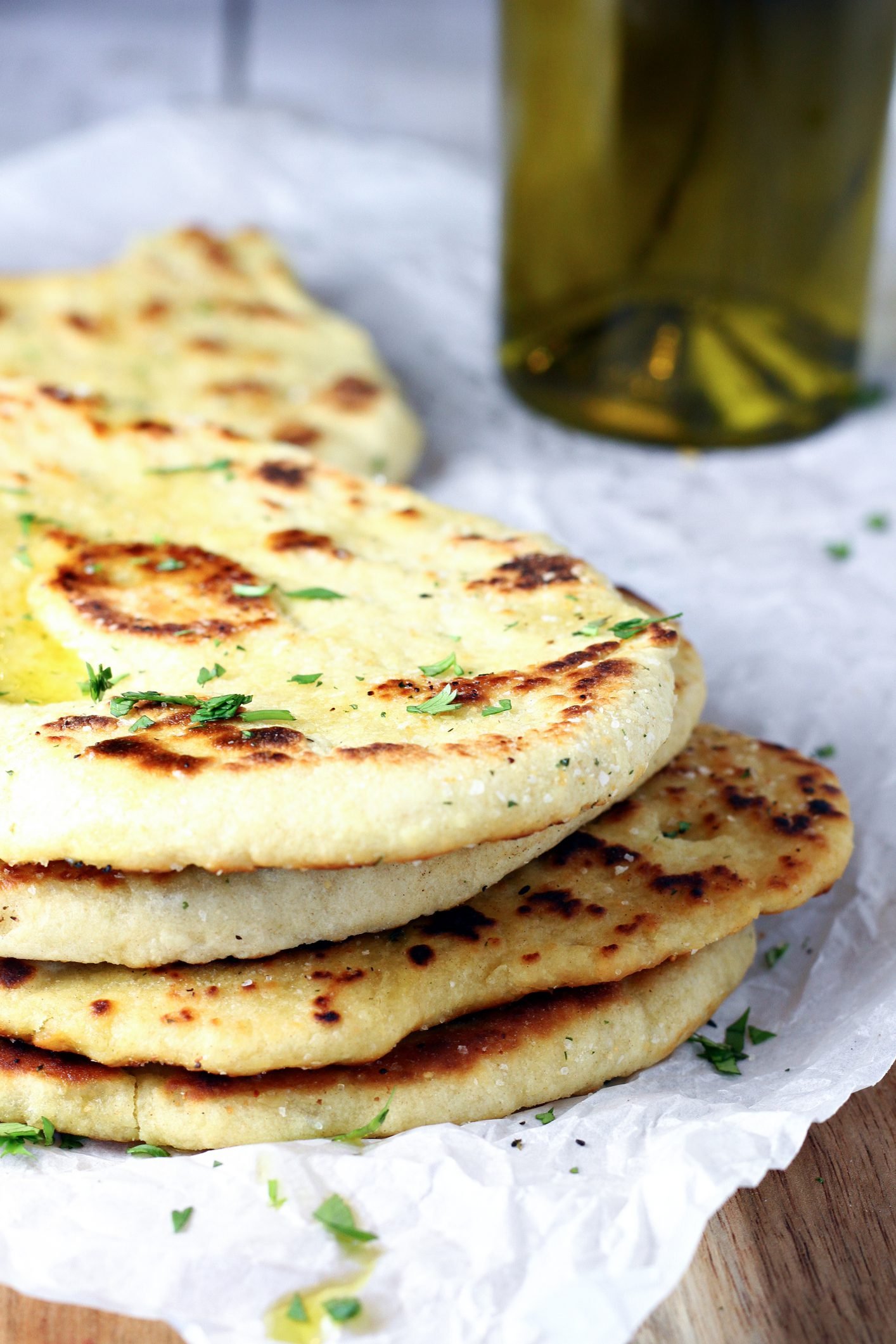
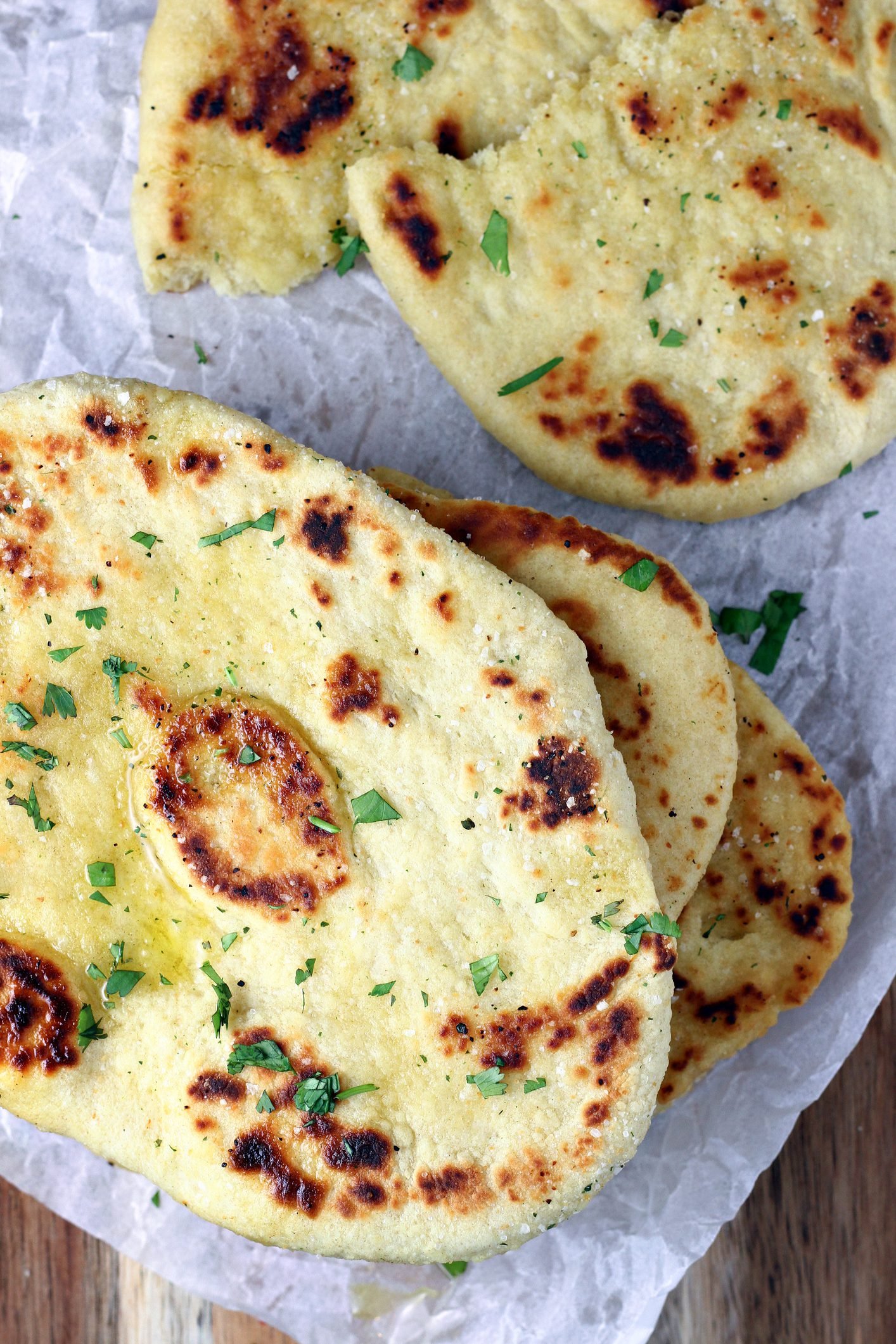
The first good batch came out of the pan looking a little uneven — some spots darker than others, edges a bit raggedy.
My husband looked at them and said “are those supposed to look like that?” and then ate three of them before dinner was even on the table. So.
The dark spots are the whole point. They taste like something you’d order at a restaurant and pay too much for.
What I wish I’d known the first time.
Two to three minutes per side on medium-high. That’s it. Don’t go lower trying to be careful — you’ll get pale, soft flatbread instead of something with actual bite to it.
Also: brush the herb oil on immediately when it comes out of the pan while the surface is still hot.
Have you ever let yours sit too long before adding the oil? Does it still soak in the same way? I genuinely don’t know — I’ve never managed to wait long enough to test it.
The one thing that still doesn’t work perfectly for me.
Keeping them warm while the rest cook.
I tried wrapping them in foil and they steamed soft. I tried a low oven and the edges dried out. I’ve just started serving them in rounds — cook two, eat those, cook the next two — and honestly? It’s not that deep.
Rustic Herb Flatbreads Sizzled in Cast Iron — Full Instructions
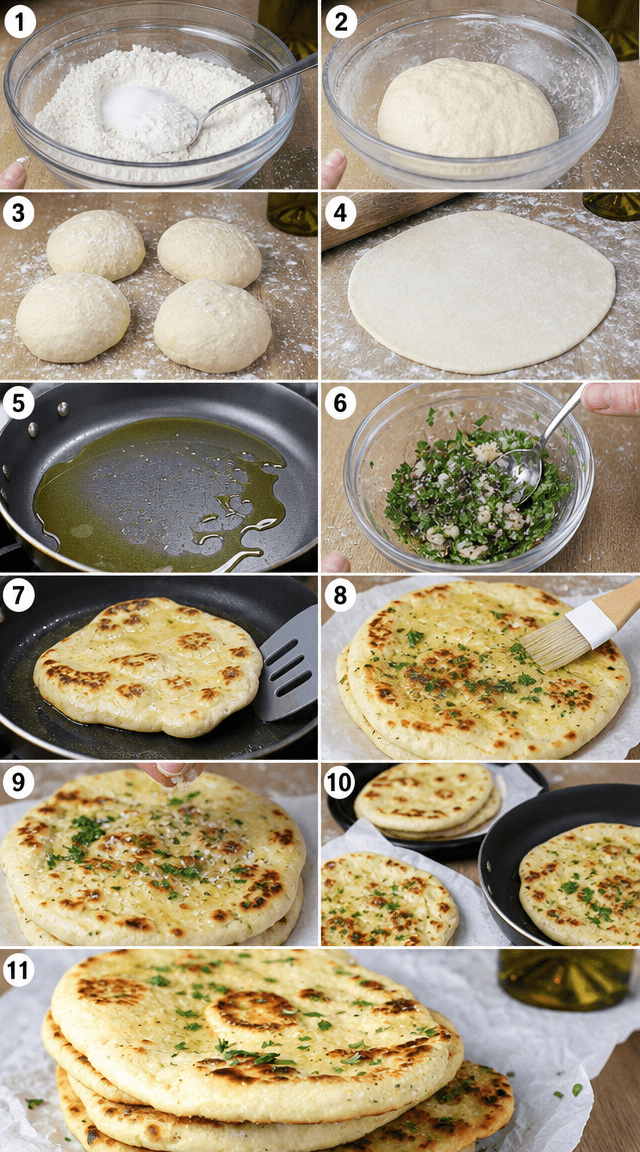
Step 1: Whisk together 2 cups all-purpose flour, 1 teaspoon salt, and 1/2 teaspoon baking powder in a large mixing bowl. Give it a good 30 seconds so the baking powder distributes evenly — I’ve skipped this before and ended up with one flatbread that puffed weird on one side.
Step 2: Pour in 3/4 cup warm water gradually while mixing, then add 1/4 cup olive oil. Knead until the dough is smooth and pliable, about 5 minutes. (Don’t add more flour if it feels sticky at first — give it 2 full minutes of kneading before you decide it needs adjusting.)
Step 3: Cut the dough into 4 equal pieces and let them rest for 5 minutes undisturbed. This matters more than it sounds — the gluten relaxes and the dough actually rolls out instead of snapping back at you every time you try to flatten it.
Step 4: On a lightly floured surface, press or roll each piece into a thin circle roughly 1/4-inch thick. They don’t need to be round. Mine never are.
Step 5: Stir together 2 tablespoons chopped fresh rosemary, 1 tablespoon fresh thyme, 1 tablespoon fresh oregano, 2 cloves minced garlic, 1/2 teaspoon black pepper, and the olive oil in a small bowl. If you’ve had time to let this steep for 30 minutes ahead of time, the garlic flavor settles into something softer and less sharp.
Step 6: Place your cast iron skillet over medium-high heat and add just a small drizzle of the herb oil — enough to barely coat the surface. Let it get hot before anything goes in. (A dry pan is better than an oily one here; too much oil and you lose the char.)
Step 7: Cook each flatbread 2–3 minutes per side. You’re looking for golden-brown patches and some slightly darker edges. I always feel like it’s not working until suddenly it is — the color comes fast in that last 30 seconds.
Step 8: Pull each flatbread out of the pan and brush it immediately and generously with the herb oil mixture while the surface is still hot. Do you do this step right away, or do you let it rest first? Share below!
Step 9: Scatter a pinch of flaky sea salt across the top. Not table salt — the flakes sit differently on the surface and you actually taste them instead of just salt-flavor everywhere.
Step 10: Cook the remaining flatbreads the same way, keeping the finished ones somewhere accessible so people can grab them as they come out. Serve warm or at room temperature — both work.
Ways to Change It Up
Try this: Swap the rosemary and thyme for za’atar and a little lemon zest stirred into the oil — the flatbreads come out tasting completely different, almost Middle Eastern in a way I really like.
Try this: Press a handful of very thinly sliced olives or sun-dried tomatoes into the dough right before it goes into the pan. They char a little at the edges and it adds something you can’t quite get from the oil alone.
Try this: After brushing with herb oil, add a thin layer of ricotta and a few torn basil leaves for a flatbread that works as an actual light meal rather than just a side.
Which would you go for? Drop it in the comments.
How to Serve It
Tear them into pieces and put them next to a bowl of hummus or whipped feta — the herb oil on the bread means you don’t even need a separate dipping sauce, but I’ve never seen anyone complain about having both.
Serve them alongside a tomato salad dressed with red wine vinegar, a little red onion, and olive oil. The acid from the salad cuts through the richness of the bread in a way that makes the whole thing feel lighter than it is.
Cut them into strips and lay them across a board with cheeses, olives, and sliced cucumbers. My neighbor Rosa does this every time she hosts and the flatbreads always go first.
What would you pair it with?
Storing It Without Ruining It
In the fridge, wrap them in a clean kitchen towel first and then loosely in foil. A zip bag makes them go soft overnight. They keep for about 3 days before the texture starts getting strange.
For freezing: stack them with a piece of parchment between each one, seal tightly, and freeze for up to 6 weeks. Thaw at room temperature for about 20 minutes before reheating.
Reheat in a dry skillet — 60 seconds per side on medium heat. The microwave turns them rubbery and a little sad. Oven works in a pinch but the skillet is faster and the texture comes back closer to fresh.
Have you ever saved leftovers like this? Tell me below!
Mistakes I Made So You Don’t Have To
I once rolled the dough so thin it was nearly translucent, convinced thinner meant crispier. It cooked in about 45 seconds, went straight to burnt on the bottom, and the center was still a little raw. Thinner is not always better here — 1/4 inch is actually the right call.
Adding too much oil to the pan. I thought more oil would prevent sticking and I ended up with something closer to fried dough — not bad exactly, but not what this is supposed to be. The pan needs to be mostly dry.
Waiting to brush the herb oil until after the flatbread cooled. It sat on top instead of soaking in, and the garlic tasted raw and sharp rather than fragrant. The hot surface is doing real work when you brush it — don’t skip that window. Did something like this happen to you?
Questions I Actually Get About This Recipe
Can I use dried herbs instead of fresh? You can. Use about a third of the amount — dried herbs are more concentrated and fresh rosemary in particular turns leathery and almost bitter when it hits a screaming hot pan. But dried thyme and oregano hold up reasonably well. I tried this once when my herb garden was basically dead in February and it worked fine.
Does it have to be cast iron? No. But cast iron holds heat evenly and gives you that char without hot spots. A heavy stainless pan works. A nonstick will cook the flatbread fine but you won’t get the same color on the edges — it depends on how much you care about that.
Can I make the dough ahead of time? Up to about 24 hours in the fridge, wrapped tightly. Let it come to room temperature for 20 minutes before you roll it out or it’ll be stiff and hard to work with. And yes, the texture after resting overnight is actually a little better — slightly chewier in the middle.
What if my flatbreads keep shrinking when I roll them? The gluten hasn’t rested enough. Give the dough pieces a full 5 minutes — don’t rush it. If they’re still snapping back after that, cover them and wait another 3 minutes. It sounds annoying but it genuinely fixes the problem.
How do I know when the pan is hot enough? Flick a drop of water in. If it evaporates immediately with a sharp sizzle, you’re ready. I used to just eyeball it and ended up with pale flatbreads more times than I’d like to admit. The water test takes 2 seconds.
Can I make these gluten-free? I haven’t tested it myself. A 1:1 gluten-free flour blend might work but the texture will be different — it depends on the blend and how it handles heat. And gluten-free doughs often don’t have the same pliability, so rolling to 1/4 inch might take more patience. I’d try a small test batch first before committing to all four.
Which answer helped you most?
Make it, mess it up a little, make it again.
That’s kind of the whole arc of this recipe for me.
The dough is forgiving. The herbs are flexible. The cast iron does most of the work once it’s hot.
Fun fact: Rosemary has been used as a culinary herb for over 5,000 years — ancient Greeks wore it during exams believing it strengthened memory, which feels very on-brand for a herb this aggressively fragrant.
The first time I made these I threw away half of them. The second time I made them I ate two standing over the sink before they even cooled down. That’s basically the whole endorsement I have to offer.
Will you make this soon? Drop a comment and tell me which herb combination you’re going with — I’m always curious what other people reach for first.
Happy cooking! —Marina Caldwell
Rustic Herb Flatbreads Sizzled in Cast Iron
Ingredients
- 2 cups all-purpose flour
- 1 teaspoon salt
- 1/2 teaspoon baking powder
- 3/4 cup warm water
- 1/4 cup olive oil
- 2 tablespoons fresh rosemary, chopped
- 1 tablespoon fresh thyme, chopped
- 1 tablespoon fresh oregano, chopped
- 2 cloves garlic, minced
- 1/2 teaspoon black pepper
- Sea salt for topping
Instructions
- 1Whisk together flour, salt, and baking powder in a large mixing bowl until evenly combined.
- 2Pour in warm water gradually, mixing and kneading the dough until smooth and pliable, roughly 5 minutes.
- 3Cut dough into 4 equal pieces and allow them to rest undisturbed for 5 minutes.
- 4On a lightly floured surface, flatten each piece into a thin circle approximately 1/4-inch thick.
- 5Stir together the minced garlic, chopped herbs, and black pepper with the olive oil in a small bowl.
- 6Place a large skillet over medium-high heat and add a drizzle of the herb oil.
- 7Cook each flatbread 2-3 minutes per side until beautifully golden with slight charred edges.
- 8Remove from pan and immediately brush each flatbread generously with the remaining herb oil mixture.
- 9Finish with a light scattering of flaky sea salt across the surface.
- 10Continue cooking remaining portions, keeping finished flatbreads warm.
- 11Serve immediately while warm or allow to cool to room temperature before serving.
Notes
– For extra flavor depth, let the olive oil, garlic, and herbs steep together for 30 minutes before cooking. – Keep your skillet dry with no excess oil when cooking to achieve a crispier, more charred exterior. – Leftover flatbreads reheat beautifully in a dry skillet for 60 seconds per side rather than using a microwave.