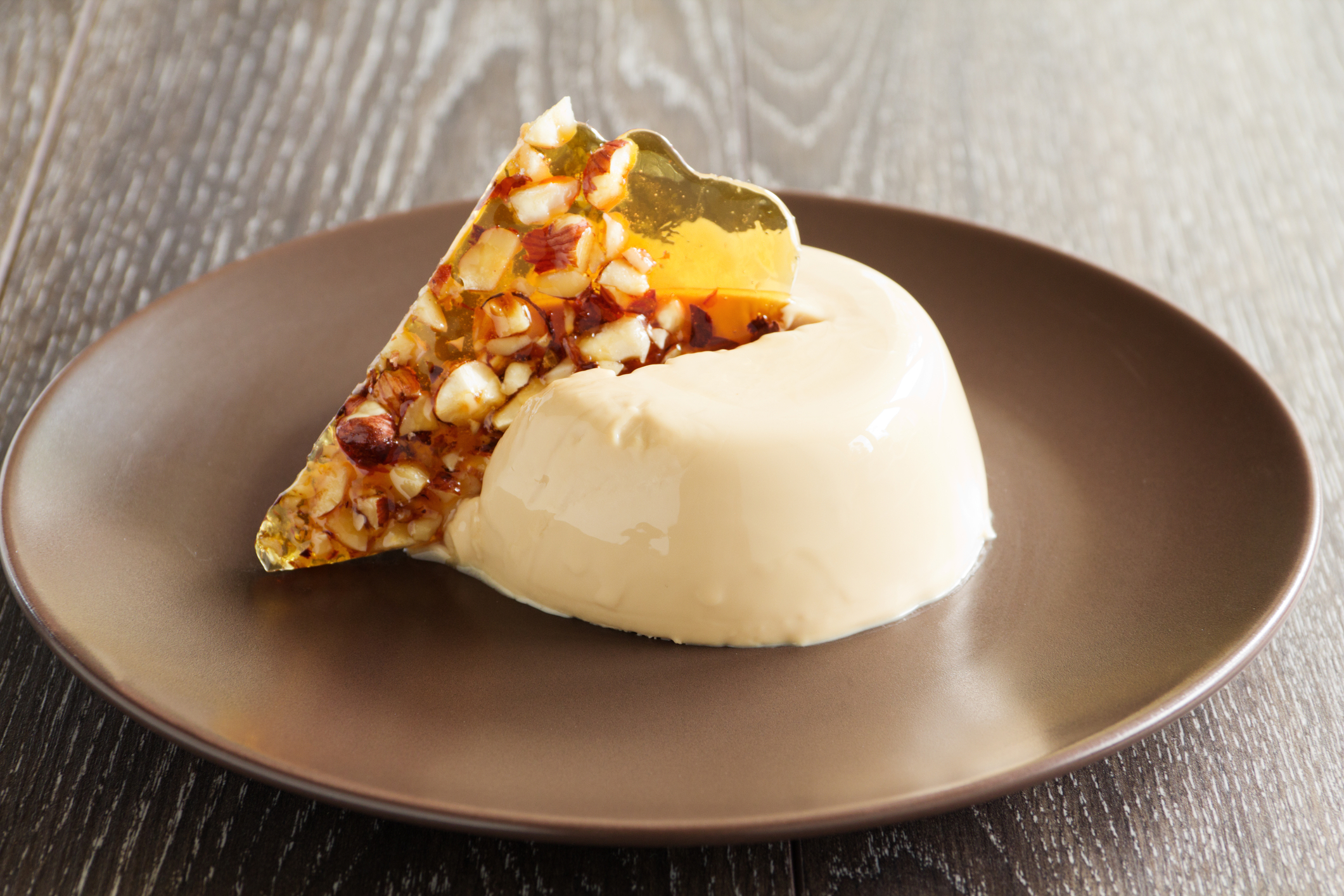
My husband took one bite and asked if I’d bought it somewhere.
I hadn’t. I’d made it at 11pm on a Thursday with espresso left over from that morning and a bag of peanuts I’d been meaning to roast for two weeks.
That compliment would have meant more if the first batch hadn’t failed completely. The gelatin didn’t dissolve all the way, and I ended up with rubbery little clumps suspended in what was otherwise a perfectly good cream base.
I poured that batch out. Started over.
The second time I was more careful about temperature — not obsessively so, just actually paying attention instead of multitasking — and the mixture came together cleanly in about six minutes. By morning, all four ramekins had set into something that looked almost embarrassingly elegant for a weeknight accident.
It wobbled when I tipped the ramekin.
The gelatin situation.
Bloom it in cold water. Not cool. Cold. That part matters more than most recipes acknowledge, and the five minutes is not approximate — I’ve rushed it to three and paid for it later.
You want the sheets fully softened, almost slack-looking, before they go anywhere near heat. If they still feel firm or springy, wait.
Once the cream mixture hits 160°F, pull it off the heat before adding the gelatin. I thought about adding it while the pan was still on the burner — actually no, I didn’t do that, because the first batch taught me what happens when the gelatin gets too much direct heat. It goes grainy. The texture never quite recovers.
Stir gently. Not aggressively. You’re dissolving, not emulsifying.
Quick tip: Run the mixture through a fine mesh sieve even if it looks smooth. There’s almost always something in there — a small gelatin fleck, a bit of undissolved sugar — and straining takes ten seconds.
The cream, the coffee, the ratio.
Most panna cotta recipes go heavy on cream and light on everything else. That’s fine if you want something neutral. I wanted coffee to actually show up in the flavor, not just hint at it.
Half a cup of strong espresso — cooled, not hot — goes in with the cream and milk. The cooled part matters because pouring hot liquid into cold bloomed gelatin causes problems, and you’re adding the gelatin shortly after.
The coffee liqueur is optional and I go back and forth on it. Some batches I add it. Some I don’t. The difference is subtle — maybe a slightly deeper, almost boozy edge to the finish — and honestly it depends on who I’m serving it to.
Whole milk in the mix keeps it from being too dense. The ratio of two cups cream to one cup milk gives you something that sets firmly but still has some give when you press a spoon into it. Not rubbery. Not loose. Something in between that I didn’t hit on my first try.
The first time, the texture was wrong. Too firm. I’d used 3 full gelatin sheets instead of 2.5, because I was worried it wouldn’t set. It set. Aggressively.
About the peanuts.
Raw peanuts, butter, honey, salt, 325°F. That’s all this is.
The stirring halfway through isn’t optional. Peanuts on a baking sheet don’t roast evenly without it — the ones near the edges go faster than the ones in the middle, and at 325°F the difference between golden and overdone is about ninety seconds of inattention.
They should smell toasty and the butter-honey coating should look slightly lacquered. Not wet. Not dark brown. If you pull them too early they’ll be pale and soft in the center, which defeats the whole point of having something crunchy on top of something that jiggles.
Let them cool completely on the pan before chopping. I know five minutes feels short, but the coating is still soft when they come out and they’ll clump if you move them too soon. I learned this by moving them too soon.
Rough chop only. You want pieces, not dust.
The part no one tells you about chilling.
Four hours is the minimum. Overnight is what I actually recommend, because the flavor deepens considerably — the coffee comes through more clearly, the sweetness settles, and the texture firms up evenly all the way through rather than just on the surface.
Covering the ramekins matters. Panna cotta absorbs fridge smells faster than you’d expect — I once left a batch uncovered next to a container of leftover onion soup and the result was confusing at best. Plastic wrap pressed lightly on the surface works fine.
Do not add the peanuts until you’re ready to serve. This sounds obvious but I’ve made the mistake of topping them an hour ahead, and by the time they hit the table the peanuts had absorbed moisture from the cream surface and gone soft. The whole appeal of this dessert is the contrast.
Cold cream. Warm-spiced peanuts. That gap is what you’re going for.
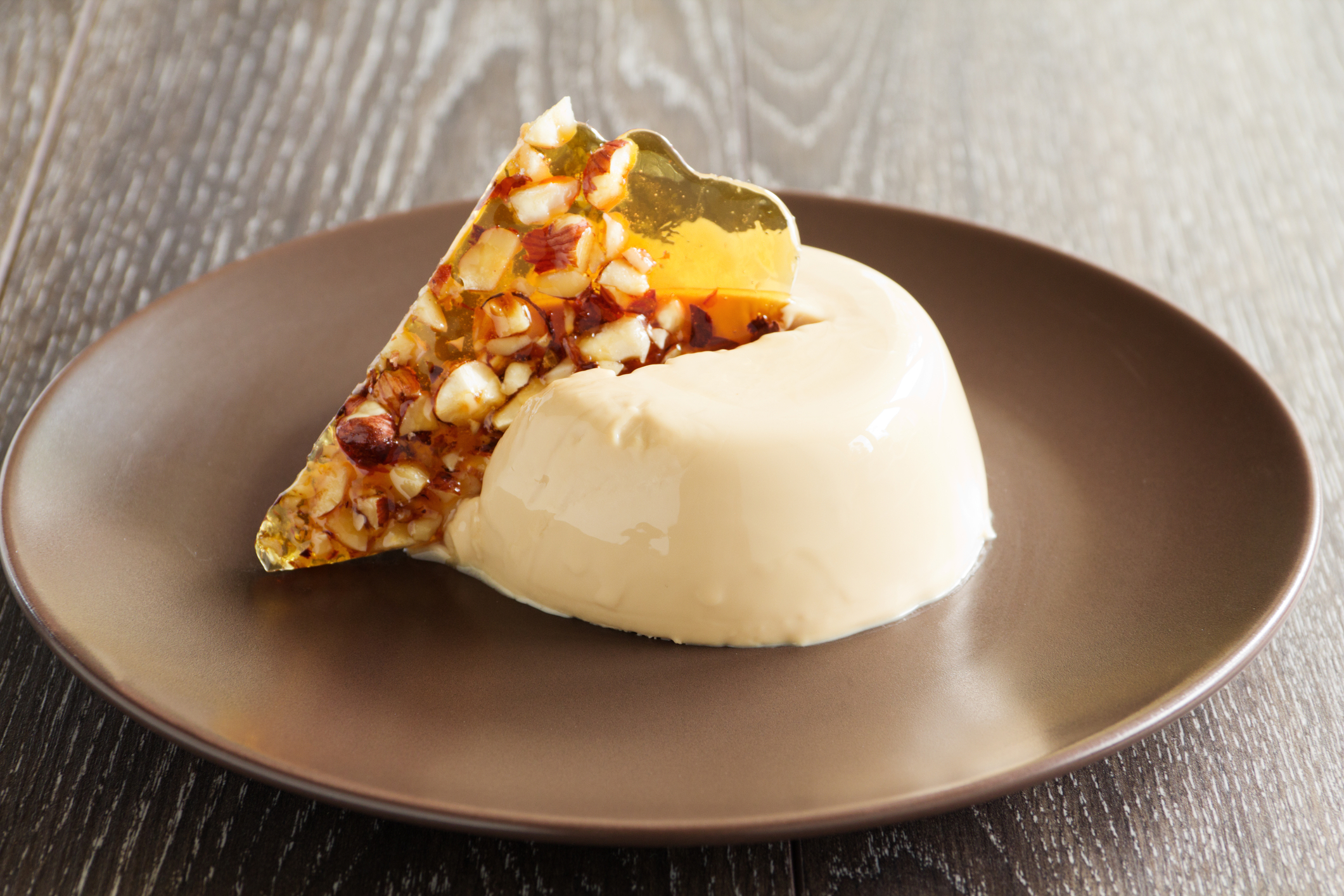
Unmolding, or not.
You don’t have to unmold these. I almost never do.
Serving in the ramekin or glass means there’s no risk of the panna cotta tearing, no anxious plate-flipping, no moment where you hold your breath hoping it comes out in one piece. Just top it and hand it over.
If you want to unmold — run a thin knife around the edge, set a plate on top, and flip quickly with confidence. Hesitation is when things go sideways. The panna cotta needs to feel the commitment.
Mine slid out cleanly about 70% of the time. The other 30%, the edge stuck and the top came out looking rough. I served those ones in the ramekins.
—Step 1: Bloom 2.5 gelatin sheets in 1/4 cup cold water for a full 5 minutes. They should look limp and translucent before you do anything else with them. (Don’t rush this — under-bloomed gelatin is why most panna cottas turn grainy or fail to set evenly.)
Step 2: Combine 2 cups heavy cream, 1 cup whole milk, 1/2 cup cooled espresso or brewed coffee, and 3/4 cup sugar in a medium saucepan over medium heat. Stir constantly and watch the temperature — you want 160°F, which takes about 5 to 6 minutes. The sugar should be completely dissolved before you pull it off the heat.
Step 3: Remove from heat. Add 2 teaspoons vanilla extract and the coffee liqueur if you’re using it. Then squeeze excess water from the bloomed gelatin sheets and stir them in gently until they dissolve — this took me about 30 seconds of steady stirring, not vigorous. If you see the mixture start to look stringy, you’re overstirring.
Step 4: Strain through a fine mesh sieve into a large measuring cup or pitcher. This makes pouring into ramekins much easier and catches anything the stirring missed. Have you ever skipped the sieve and regretted it? Share below!
Step 5: Divide evenly among four ramekins or serving glasses. I use a kitchen scale for this because eyeballing always gives me one slightly-too-full and one slightly-too-shallow. Let them cool to room temperature — about 20 minutes — then cover with plastic wrap and refrigerate for at least 4 hours, or overnight.
Step 6: Preheat your oven to 325°F. Toss 1 cup raw peanuts with 2 tablespoons melted butter, 1 tablespoon honey, and 1/2 teaspoon sea salt on a rimmed baking sheet. Spread them in a single layer — overlapping is what causes uneven roasting. Roast for 12 to 15 minutes, stirring once at the halfway mark, until they’re golden and the coating looks set.
Step 7: Pull the peanuts from the oven and let them cool on the pan for at least 5 minutes before touching them. Once cooled, roughly chop into uneven pieces. Top each panna cotta just before serving and eat immediately — these don’t hold once the peanuts are on.
Ways to Change It Up
Try this: Swap the peanuts for salted roasted almonds and add a thin drizzle of dark chocolate over the top. The bitterness of the chocolate against the coffee cream is sharper, less sweet.
Try this: Skip the espresso and use a strong chai concentrate instead — same quantity. The panna cotta takes on a spiced, almost floral quality that works well with the honey-glazed peanuts.
Try this: Add a small pinch of cayenne to the peanut coating before roasting. It doesn’t read as spicy — more like a warmth that shows up at the back of the throat after the first bite.
Which would you go for? Drop it in the comments.
How to Serve It
Straight from the ramekin, peanuts piled on just before it hits the table. That’s all it needs. A small spoon, not a dessert fork — the cream is soft enough that a fork feels wrong.
If you want to dress it up slightly: a tiny pour of coffee liqueur over the top right before serving, maybe a few flakes of sea salt scattered over the peanuts. It takes about four seconds and makes it look intentional.
This works well at the end of a dinner that was already rich — the coffee cuts through and it doesn’t feel heavy the way a chocolate dessert would. It’s cold, it’s bitter-sweet, and it ends on crunch. That’s a good note to close a meal on.
What would you pair it with?
—Storing It Without Ruining It
Panna cotta keeps in the fridge for up to 3 days, covered. After that the texture starts to weep slightly at the edges — not inedible, just not what it was.
Do not freeze it. I tried once. It separated on thawing and the cream had a strange granular texture that no amount of stirring fixed. Not worth it.
Store the peanuts separately in an airtight container at room temperature. They stay crunchy for about 4 days before the honey coating starts softening. Add them right before you eat, every time.
Reheating is not a thing here — this dessert is always cold. If yours has been in the fridge uncovered and the surface looks a little dull, just add the peanuts and it won’t matter.
Have you ever saved leftovers like this? Tell me below!
Mistakes I Made So You Don’t Have To
I once added the gelatin while the pan was still sitting on the warm burner — just barely off the heat, not even technically on. The gelatin seized in small clumps around the edges of the pan and I spent five minutes trying to press them through the sieve. Two made it through. The panna cotta set unevenly, firmer in some spots than others.
I also oversweetened the first version by assuming 3/4 cup of sugar was a suggestion rather than a ceiling. I added another tablespoon because the batter tasted slightly bitter warm, forgetting that panna cotta sweetness amplifies as it cools. By morning it was cloying. I ate it, but I was annoyed the whole time.
Third mistake: I roasted the peanuts at 375°F because I was in a hurry and thought I’d just watch them closely. I checked at 10 minutes and the edges had already gone past golden into something darker and slightly acrid. The honey had burned on the baking sheet. I scraped what I could off, but the bitter note stuck.
Did something like this happen to you?
Things People Actually Ask About This
Can I use powdered gelatin instead of sheets? Yes — about 1.5 teaspoons of powdered gelatin replaces 2.5 sheets. Bloom it the same way, in cold water, for the same amount of time. But the set is slightly different — sheets give a silkier texture in my experience, and the margin for error with powder is a bit narrower.
My panna cotta didn’t set after 4 hours. What happened? It depends. If the gelatin wasn’t fully bloomed or if it got too much direct heat when dissolving, it loses its setting strength. Another hour in the fridge sometimes helps. And sometimes it doesn’t — I tried this once and the batch stayed soft. I ate it as a pudding and moved on.
Can I make these a day ahead? Absolutely — overnight is actually better. Cover tightly. Make the peanuts the same day you plan to serve, not the day before, or they’ll go soft by morning.
Is the coffee liqueur necessary? No. The panna cotta is complete without it. I add it maybe half the time when I want a slightly more adult dessert. About 2 tablespoons is enough — more than that and it competes with the coffee flavor rather than deepening it.
Can I use decaf espresso? Yes. No functional difference in how it sets or how it tastes. Use strong decaf or it’ll be too mild. Weak decaf gives you a beige cream that tastes like memory of coffee. Not the same thing.
Do I need ramekins or can I use regular glasses? Regular glasses work fine, especially if you’re not planning to unmold. Short, wide glasses are easier to eat from than tall narrow ones. I’ve used everything from small glass bowls to shallow mugs. The shape changes the experience slightly but not the outcome. But don’t use plastic — it holds fridge smells and I noticed it the second time I tried.
Which answer helped you most?
Where I landed with this one.
This is a dessert I’ve made maybe eight or nine times now and I still don’t have a completely fixed version of it. The coffee liqueur goes in and out. Sometimes I add more salt to the peanuts. Once I tried brown sugar instead of white in the cream base and the result was darker and more caramel-forward, which I liked but my husband found confusing.
The core of it — cold cream, strong coffee, crunchy salt-sweet peanuts — that part doesn’t change. And that part is good enough that the variations feel like options rather than corrections.
Four servings go fast. I’ve thought about doubling it and then remembered that eight ramekins don’t fit in my fridge the way I imagine they will.
Fun fact: Peanuts aren’t actually nuts — they’re legumes, which means they’re more closely related to lentils and chickpeas than to almonds or walnuts. They grow underground, which is why they’re sometimes called groundnuts.
Will you make this soon?
I still haven’t figured out whether the coffee liqueur version or the plain version is better. I keep making both hoping one will pull ahead. So far it hasn’t.
Happy cooking! —Marina Caldwell
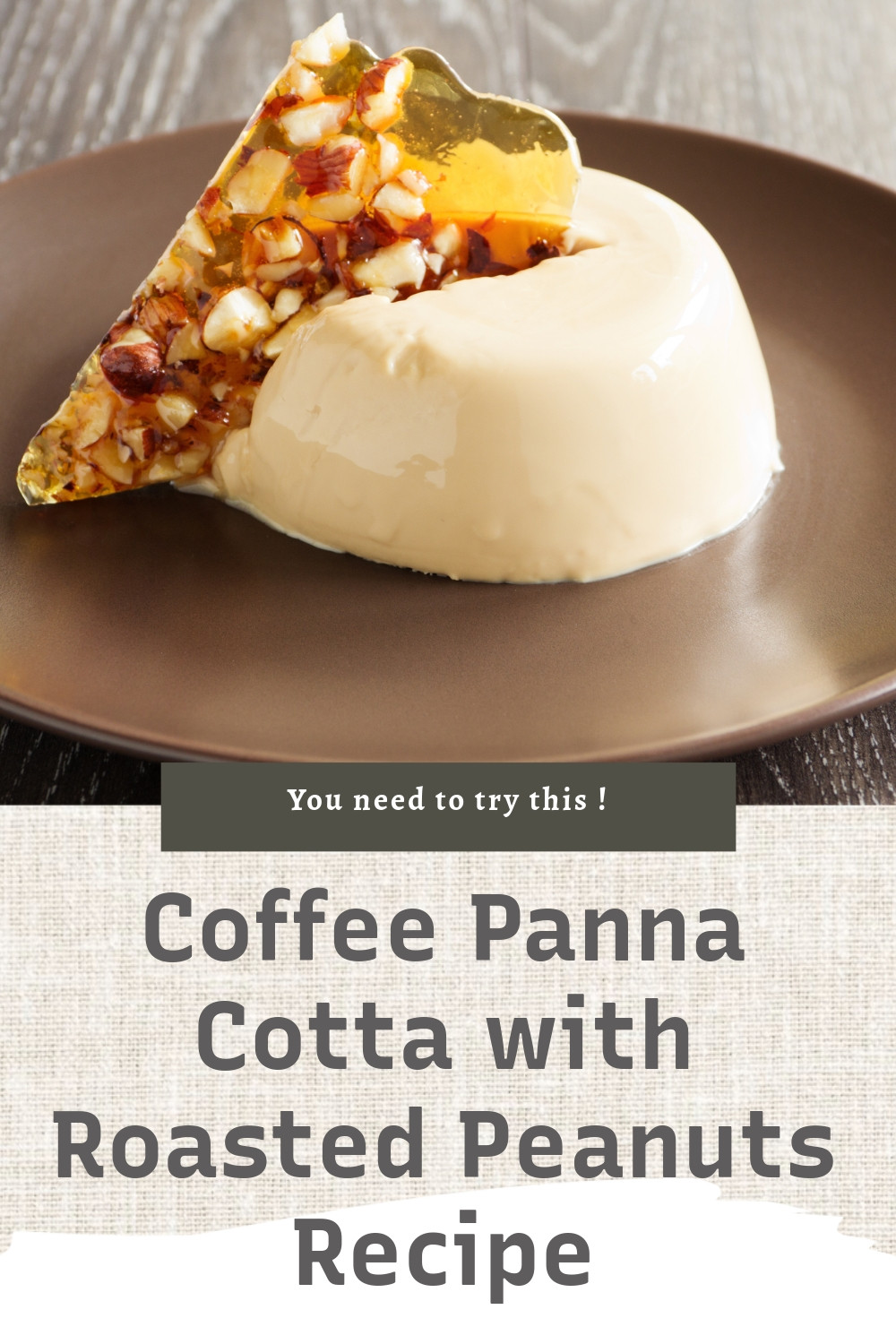
Smooth Coffee Panna Cotta Crunchy Roasted Peanuts
Ingredients
- 2 cups heavy cream
- 1 cup whole milk
- 1/2 cup strong espresso or brewed coffee, cooled
- 3/4 cup sugar
- 2 teaspoons vanilla extract
- 5 sheets gelatin, bloomed in cold water
- 1 cup raw peanuts
- 2 tablespoons butter
- 1 tablespoon honey
- 1/2 teaspoon sea salt
- 2 tablespoons coffee liqueur (optional)
Instructions
- 1Bloom gelatin sheets in 1/4 cup cold water for 5 minutes until softened
- 2Combine heavy cream, milk, cooled espresso, and sugar in a saucepan over medium heat
- 3Stir constantly until sugar dissolves and mixture reaches 160°F, about 5-6 minutes
- 4Remove from heat and add vanilla extract and coffee liqueur if using
- 5Gently stir in bloomed gelatin until completely dissolved
- 6Strain mixture through fine mesh sieve to remove any lumps
- 7Divide evenly among four ramekins or serving glasses
- 8Refrigerate for at least 4 hours or overnight until set
- 9Meanwhile, preheat oven to 325°F for peanut roasting
- 10Toss raw peanuts with melted butter, honey, and sea salt on a baking sheet
- 11Roast peanuts for 12-15 minutes, stirring halfway through, until golden and fragrant
- 12Cool roasted peanuts completely on baking sheet for 5 minutes
- 13Roughly chop cooled roasted peanuts into bite-sized pieces
- 14Top each chilled panna cotta with roasted peanuts just before serving
- 15Serve immediately and enjoy
Notes
See full recipe for nutritional information.