The Cream Looked Broken. It Wasn’t.
There’s a stage in this recipe where the mascarpone mixture goes slightly lumpy and you will absolutely think you’ve ruined it. You haven’t.
I panicked the first time and started over — which was a waste of about 40 minutes and one container of mascarpone. The second batch did the same thing, and I just kept folding, and it came together into something smooth and cold and a little too good to stop tasting with a spoon.
This charlotte is not a quick-afternoon project. It takes most of a morning if you count the chilling time, which you have to, because there’s no shortcut around 4 hours in the fridge. I’ve tried 2 hours. It unmolds in pieces.
Summer stone fruit. Cream that sets just firm enough to slice.
My neighbor Deb asked me three times what bakery I ordered it from, and I told her twice that I made it before she actually believed me. That felt better than it probably should have.
About the Ladyfingers.
Most recipes will tell you to dip the ladyfingers in liquid. Don’t do that here. You’re brushing them — specifically the flat side — with the jam mixture, and the difference matters because a dipped ladyfinger turns to mush against the mold before you even get to the filling.
Brushing keeps the outside dry enough to hold its shape, which means when you unmold the thing, the ladyfingers actually look like ladyfingers and not a wet wall of sponge.
Use a pastry brush, not a spoon. A spoon drags and tears.
I thought about adding a little orange zest to the jam mixture — actually no, I left it out. The apricot flavor was sharp enough without it, and anything more started tasting like something from a hotel breakfast buffet.
Quick tip: Warm the jam mixture a second time if it thickens while you’re working. Cold jam won’t absorb evenly and you’ll end up with sticky patches that slide during assembly.
The Fruit Situation.
Four hundred grams of apricots sounds like a lot until you start halving and pitting them and realize half of them are going inside the cream layer where no one will see them anyway.
The lemon juice and liqueur toss matters more than it sounds. Without it, the apricots taste flat inside all that cream — like canned fruit, almost. The lemon cuts through; the brandy adds something you can’t identify but would notice missing.
I used apricot brandy the first time and regular brandy the second. Both work. The apricot version is slightly more fragrant.
The mixed berries are mostly decorative at the top, but don’t skip the layer inside either. Raspberries in particular hold up well — blueberries go a little watery if the charlotte sits overnight.
Did yours have enough fruit in the middle layer, or did it all sink to the bottom? Because mine did, the first time.
I Skipped Lining the Mold Properly.
The plastic wrap is not optional. I thought it was, once, because I was out of wrap and the springform pan seemed secure enough.
The cream seeped into every gap between the ladyfingers and the pan edge. When I unlatched the springform it pulled the outer layer with it — not dramatically, just enough that the whole thing looked like it had been sitting in the sun. I served it anyway. It tasted fine. It looked like a problem.
Leave enough plastic wrap hanging over the sides of the mold so you can fold it over the top before refrigerating. That overhang is what you pull on when you unmold — it releases the whole thing in one clean lift instead of a slow, anxious peel.
Enough to fold over and then some.
What the Gelatin Is Actually Doing.
Bloom time: 5 minutes in cold water. Not warm. Cold water first, or it clumps.
After blooming, warm it gently — either in a small saucepan over low heat or 10 seconds in the microwave. You want it liquid and clear, not bubbling. Overheated gelatin loses its setting power.
Let it cool for about 2 minutes before you fold it into the cream mixture. Add it too hot and it melts the whipped cream on contact and you’re back to liquid.
Add it in a thin stream while folding. Not all at once.
One tablespoon of gelatin for 500ml of cream and 250g of mascarpone gives you a set that’s firm enough to slice but not rubbery. If you want it slightly softer — for spooning rather than slicing — use three-quarters of a tablespoon. I haven’t tested less than that.
The salt goes into the cream mixture, not the fruit. A pinch sounds unnecessary in a dessert. It isn’t.
After the Fridge.
Four hours is the minimum. Overnight is noticeably better — the ladyfingers absorb more moisture from the cream layer and the whole thing holds its shape more cleanly when sliced.
When you unmold it, do it onto the plate you’ll actually serve it on. Don’t try to transfer a charlotte. I moved mine once — from the unmolding plate to a prettier one — and a section of the ladyfinger wall came away with the spatula.
Arrange the fruit on top just before serving, not the night before. Berries bleed color onto the cream within a few hours, and by morning the whole surface looks bruised.
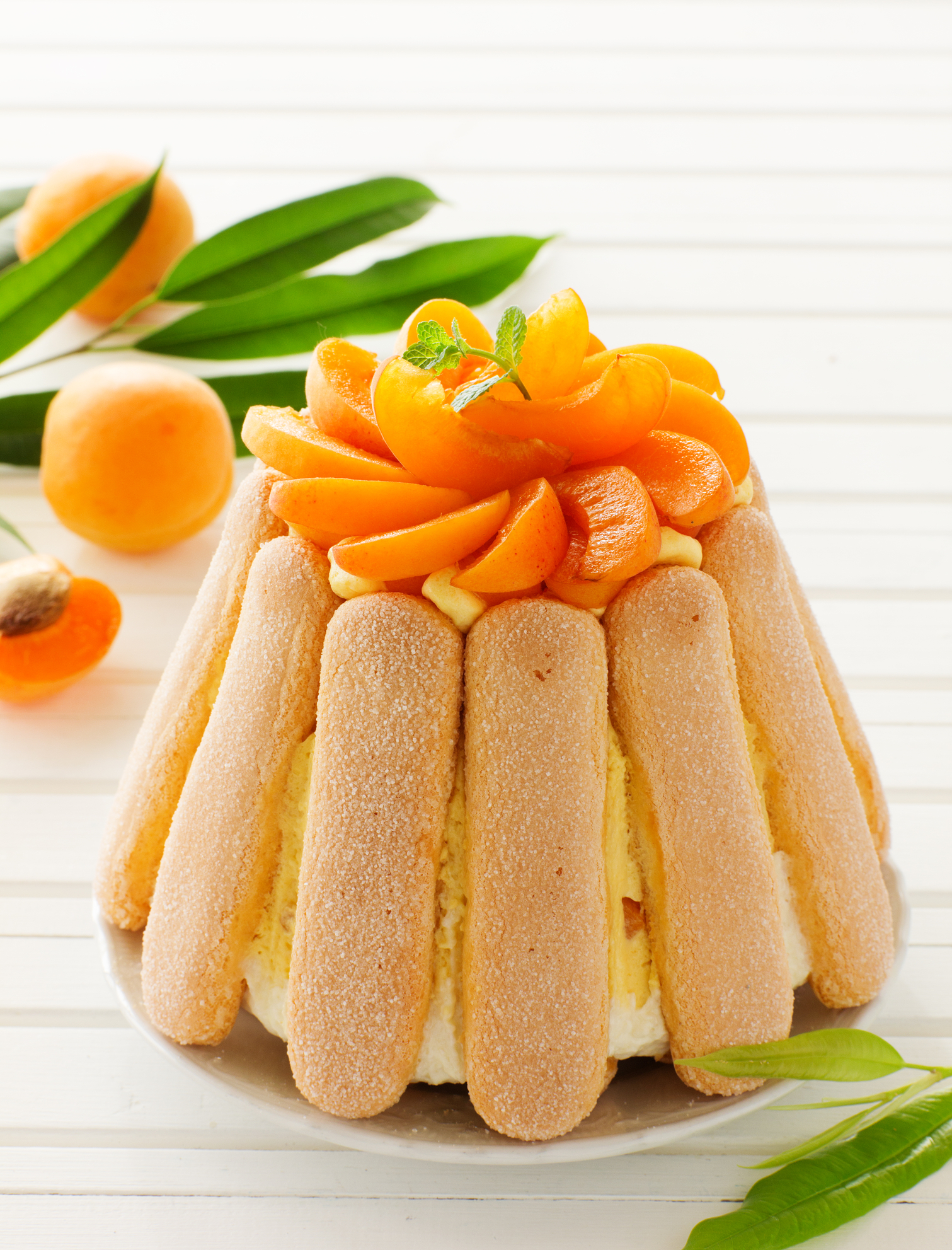
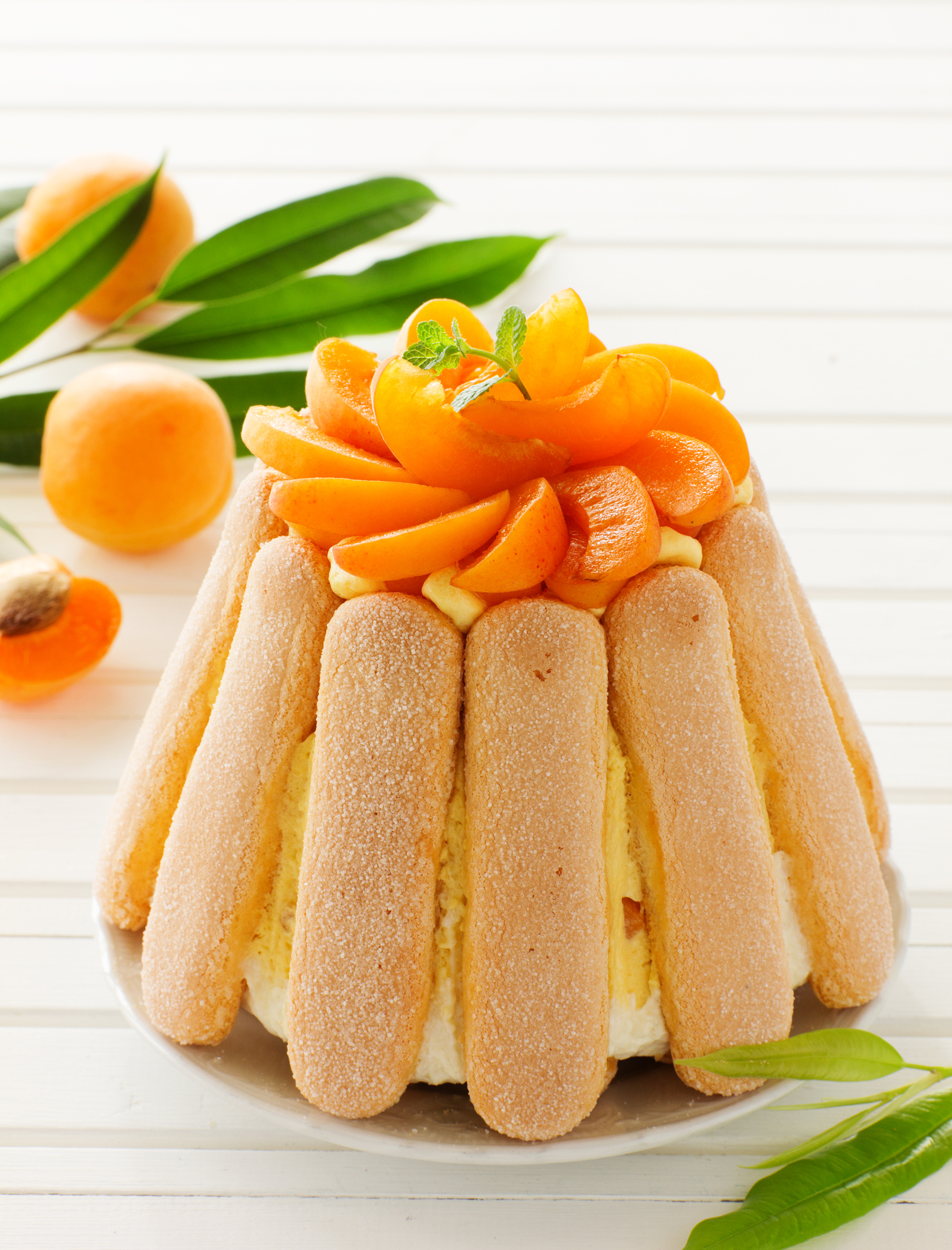
The finished charlotte, arranged with fruit on top and chilled,
looked better than I expected it to, honestly.
—
How to Make Summer Fruit Cake Charlotte with Apricots
Step 1: Combine the apricot jam with warm water and 2 tablespoons of sugar in a small bowl. Stir until the sugar dissolves and the jam loosens into a brushable consistency. If it’s still thick after stirring, warm it for 20 seconds. Brush this mixture onto the flat side of each ladyfinger biscuit — just enough to coat, not soak.
Step 2: Line your 8-inch charlotte mold or springform pan with plastic wrap, leaving a generous overhang on all sides. Arrange the jam-coated ladyfingers around the sides of the mold with the coated side facing outward, then lay a layer across the bottom. (Press them gently but don’t force them — gaps are fine; the cream will fill them.)
Step 3: Sprinkle the gelatin powder over 3 tablespoons of cold water in a small bowl. Let it sit for 5 full minutes without stirring. Then warm it gently — a small saucepan on the lowest heat setting works, or 10 seconds in the microwave. You want it liquid and clear. Set it aside to cool slightly before using.
Step 4: Whip the heavy cream in a large bowl until soft peaks form — not stiff, not glossy, just the point where it holds a gentle shape. In a separate bowl, beat the mascarpone with powdered sugar and vanilla extract until smooth. I always do the mascarpone by hand because a mixer can turn it grainy in about 30 seconds flat.
Step 5: Fold the whipped cream into the mascarpone mixture in two additions. Add the dissolved gelatin in a thin stream while continuing to fold. Add the pinch of salt. The mixture should look smooth and hold its shape when you lift the spatula — if it looks slightly broken, keep folding for another 30 seconds before you panic.
Step 6: Toss the halved apricots with lemon juice and apricot liqueur or brandy. Let them sit for about 5 minutes — they’ll soften slightly and release a little juice, which is fine. Fold half of the fruit directly into the cream mixture.
Step 7: Pour half the cream mixture into the prepared mold. Scatter the remaining apricots and the mixed berries across the surface in an even layer. Top with the remaining cream mixture and smooth the surface. (Don’t press down hard — you’ll push the fruit layer into one corner and it shows when you slice it.)
Step 8: Fold the plastic wrap overhang across the top to cover the surface. Refrigerate for at least 4 hours. Overnight if you can manage it. Did your gelatin set faster than expected in a cold fridge? Share below!
Step 9: When ready to serve, unfold the plastic wrap from the top. Place your serving plate upside down on top of the mold, then flip both together in one motion. Lift the mold away, then slowly peel off the plastic wrap. Do this slowly — rushing it pulls the ladyfinger layer.
Step 10: Arrange fresh apricot halves and berries on top immediately before serving. Serve cold, directly from the fridge. Once it’s been sitting at room temperature for 20 minutes the cream starts to soften at the base and the slices don’t hold as cleanly.
Ways to Change It Up
Try this: Swap the apricots entirely for white peaches and use peach schnapps in place of the apricot liqueur. The flavor is lighter and slightly floral — less sharp than apricot but still distinctly summery.
Try this: Replace half the mascarpone with cream cheese for a slightly tangier filling. It sets firmer and the flavor cuts through the sweetness of the jam-coated ladyfingers more noticeably.
Try this: Add a thin layer of lemon curd between the two cream layers instead of just fruit. About 4 tablespoons spread directly on the first cream layer before adding the fruit. It makes the interior look intentional when you slice it.
Which would you go for? Drop it in the comments.
How to Serve It
Serve it as the only dessert on the table — it’s large enough for 8 and holds attention on its own without needing anything beside it. A sharp knife dipped in hot water between slices keeps the layers clean.
Alongside a small pitcher of cold heavy cream — not whipped, just poured — it balances the sweetness better than any sauce would.
If you’re serving it at a gathering where the table will sit for a while, unmold it no more than 30 minutes before people sit down. After that the base softens noticeably.
What would you pair it with?
—Storing It Without Ruining It
Keep it in the fridge, still in the mold if possible, covered with plastic wrap. It holds well for up to 2 days — after that the ladyfingers get too soft and the cream starts tasting faintly of fridge.
Once unmolded, cover it loosely with plastic wrap and keep it cold. Don’t press the wrap against the surface or it pulls the fruit garnish when you remove it.
Freezing: technically possible but I wouldn’t. The mascarpone layer separates slightly on thawing and the ladyfingers go from soft to something closer to wet cardboard. I tried it once and didn’t try again.
Reheating isn’t a concept that applies here. It’s a cold dessert. Eat it cold.
Have you ever saved leftovers like this? Tell me below!
Mistakes I Made So You Don’t Have To
I once skipped the plastic wrap because I was impatient and the pan looked fine without it. The unmolding took 8 minutes of slow, anxious negotiation with a palette knife, and the outer ring of ladyfingers still came away uneven on one side. Not catastrophic. Just annoying.
Adding the gelatin while it was still hot. I was in a hurry and didn’t let it cool the full 2 minutes. The whipped cream deflated on contact and the filling never set properly — it sliced more like soft mousse than a charlotte. I served it in bowls and called it a deconstructed situation. No one questioned it.
Putting the berry garnish on the night before. By morning the blueberries had leaked purple-gray juice across the cream surface and the raspberries had softened to the point of collapsing on the first slice. It didn’t affect the taste but it looked like something went wrong even when it hadn’t. Did something like this happen to you?
Questions I Actually Get About This One
Can I use canned apricots instead of fresh?
Drain them very thoroughly — I mean press them gently between paper towels — or the extra liquid will make the cream layer weep after a few hours. And the flavor is flatter. It depends on what time of year it is; in winter, canned is the only option and it works, but don’t expect the same brightness.
What if I can’t find ladyfinger biscuits?
Savoiardi are the same thing, just the Italian name — most grocery stores carry them near the coffee or baking aisle. In a pinch, thin sponge cake cut into finger-width strips works, but it absorbs the jam mixture faster so move quickly and don’t brush too heavily.
Does this need to be in a charlotte mold specifically?
No. I use a springform pan the majority of the time. The unmolding is easier because you can unlatch the side ring rather than inverting the whole thing. A charlotte mold gives slightly cleaner sides on the finished shape, but the difference is mostly aesthetic.
Can I make this the day before?
Yes. Actually better. About 18 hours in the fridge gives the filling time to set fully and the ladyfingers time to soften into the cream layer in a way that reads as intentional rather than soggy. Just don’t add the top fruit until the day you serve it.
Is the liqueur necessary?
Not necessary. But without it, the apricot filling tastes noticeably sweeter and flatter. I tried orange juice once as a substitute — it wasn’t the same. If you’re skipping alcohol entirely, a few extra drops of lemon juice and a small amount of apricot nectar get you closer than plain citrus alone.
My cream mixture looks grainy after adding the mascarpone. What happened?
The mascarpone was probably overbeaten or too cold when you added it. It shouldn’t be straight-from-the-fridge cold. Let it sit out for about 10 minutes first. And beat it by hand — mascarpone turns grainy fast under a stand mixer. But if it’s already grainy, keep folding. About 60 seconds of firm folding usually smooths it out enough that it doesn’t show in the finished texture.
Which answer helped you most?
A Few Last Things Before You Start
Read through the gelatin steps before you do anything else. That’s the part most people rush and then regret. The timing isn’t complicated but it has to happen in the right order or the whole filling structure is compromised from the start.
The assembly moves faster than you’d expect once you begin — probably 20 minutes start to finish once all the components are ready. The prep and chilling are where the time actually goes.
Fun fact: Apricots are one of the few fruits that become more intensely flavored when dried — the fresh fruit loses a significant amount of water content, concentrating the sugars and acids into a flavor that’s almost unrecognizable compared to the fresh version.
The first time I made this I thought I’d made something impressive. The second time I realized where I’d cut corners. There’s probably a third version I haven’t made yet that’s better than both.
Will you make this soon?
I’m still not sure the berry layer in the middle is worth the extra step or whether the cream alone would hold more cleanly. Haven’t decided.
Happy cooking! —Marina Caldwell
Summer Fruit Cake Charlotte with Apricots
Ingredients
- 200g ladyfinger biscuits
- 100ml apricot jam
- 50ml warm water
- 2 tablespoons sugar
- 1 tablespoon gelatin powder
- 500ml heavy cream
- 250g mascarpone cheese
- 100g powdered sugar
- 1 teaspoon vanilla extract
- 400g fresh apricots, halved and pitted
- 200g mixed summer berries
- 3 tablespoons apricot liqueur or brandy
- 2 tablespoons lemon juice
- Pinch of salt
Instructions
- 1Combine apricot jam with warm water and 2 tablespoons sugar. Brush this mixture on the flat side of ladyfinger biscuits.
- 2Line a 8-inch round charlotte mold or springform pan with plastic wrap. Arrange jam-coated ladyfingers, coated side facing outward, around the sides and bottom of the mold.
- 3In a small bowl, sprinkle gelatin over 3 tablespoons cold water. Let sit for 5 minutes, then warm gently until dissolved.
- 4In a large bowl, whip heavy cream until soft peaks form. In another bowl, beat mascarpone with powdered sugar and vanilla extract until smooth.
- 5Fold whipped cream into mascarpone mixture gently. Add dissolved gelatin and fold until combined.
- 6Toss fresh apricots with lemon juice and apricot liqueur. Fold half into the cream mixture.
- 7Pour half the cream mixture into the prepared mold. Layer remaining apricots and berries. Top with remaining cream mixture.
- 8Refrigerate for at least 4 hours or overnight until set.
- 9Carefully unmold onto a serving plate. Remove plastic wrap.
- 10Arrange fresh apricots and berries on top for garnish. Serve chilled with additional fresh fruit on the side.
Notes
See full recipe for nutritional information.