The Afternoon I Accidentally Made My Favorite Thing
It was a Tuesday in March, and I had four lemons on the counter that were about to turn, so I did what any reasonable person does — I started baking something I hadn’t made in two years.
These lemon bars came out of that afternoon. Not fancy. Not planned.
Why These Bars Hit Different Than Regular Lemon Bars
Most lemon bars I’ve had are either too eggy or too sweet, with that weird powdered sugar cloud that makes you sneeze when you bite in. These are dense, almost fudgy in the center, with a glaze instead of a dusting.
The zest in both the batter and the glaze is what does it. You get the lemon twice — once warm and baked-in, once bright and fresh on top.
My neighbor Linda tried one and immediately asked if I’d used lemon extract, which I hadn’t — it’s just the zest doing its thing.
What You’ll Need
For the bars: 1½ cups all-purpose flour, ½ teaspoon salt, 1 cup unsalted butter, 1½ cups granulated sugar, 1 tablespoon fresh lemon zest, 4 large eggs, and 2 tablespoons fresh lemon juice.
For the glaze: 1 cup powdered sugar, 2 tablespoons fresh lemon juice, 2 teaspoons fresh lemon zest.
Nothing unusual in this list, but please use fresh lemons. Not the little plastic squeezy bottle. Fresh.
One Thing I Wish Someone Had Told Me
Zest your lemons before you juice them. Every single time.
I forgot this once and stood there trying to zest an already-squeezed lemon like a sad person. It doesn’t work. The skin collapses and the zester just slides around.
Quick tip: Zest all your lemons first, then roll them firmly on the counter before cutting — it loosens the juice inside and you get almost double the yield.
An Honest Admission
The first time I made these, I baked them until a toothpick came out completely clean — like, bone dry — and they were overbaked. Slightly rubbery at the edges and dry through the middle.
The center should look just barely set when you pull them out, almost like it’s not quite done. It finishes as it cools on the rack.
Have you ever pulled something out too early and panicked? I’ve been there too, but with these, earlier is safer than later.
What Makes the Glaze Worth It
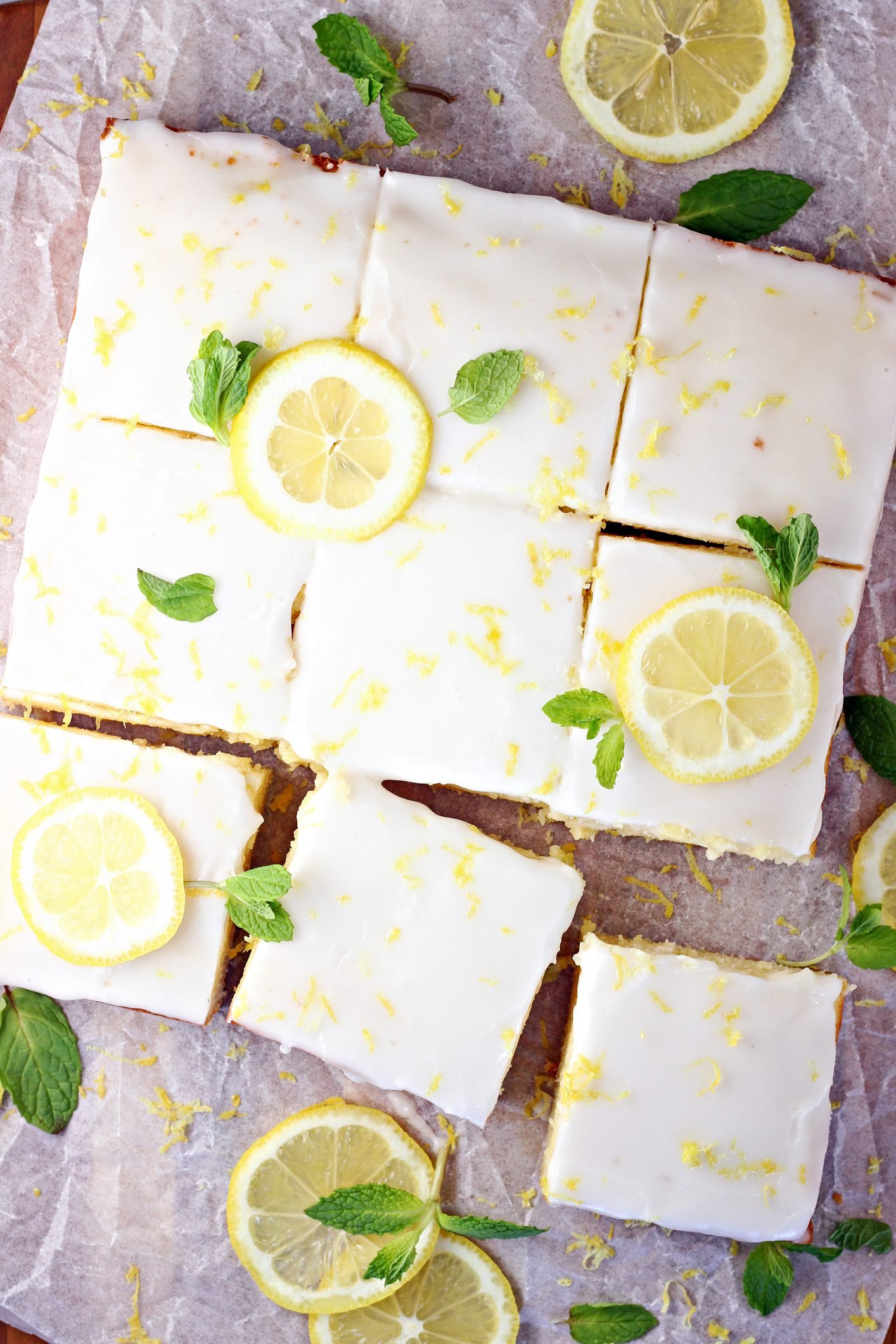
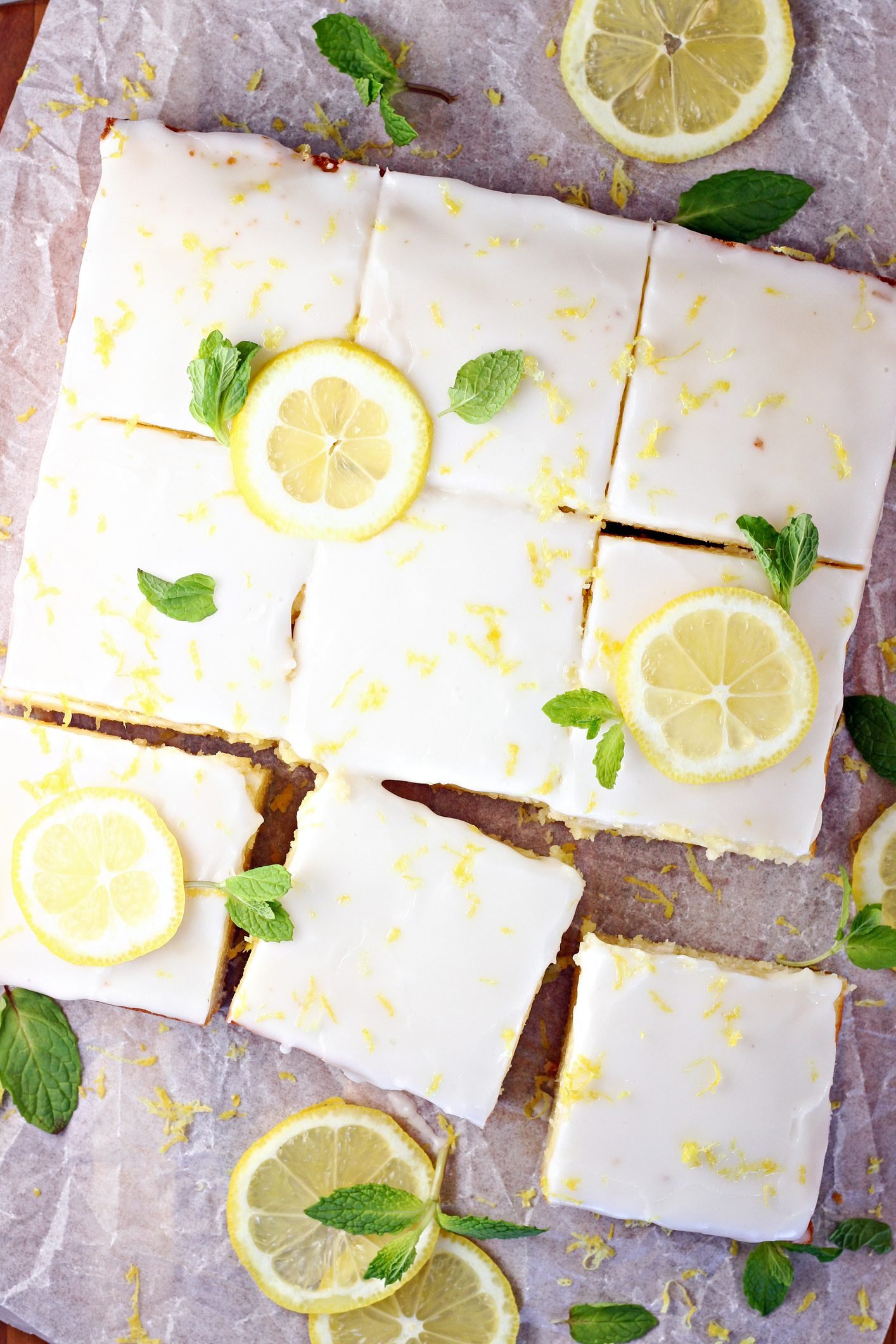
The glaze sets into this thin, slightly crackly layer that keeps the bars moist underneath. It’s not thick fondant-style — it’s a drizzle that webs across the top and firms up in about 10 minutes.
My sister thought the glaze needed more lemon the first time I made it, so I bumped the zest up to a full two teaspoons and that’s the version I’ve kept.
Don’t skip letting it set before you slice. I know. It’s hard. But cutting too early smears the glaze into the bar and it loses that distinct top layer.
—
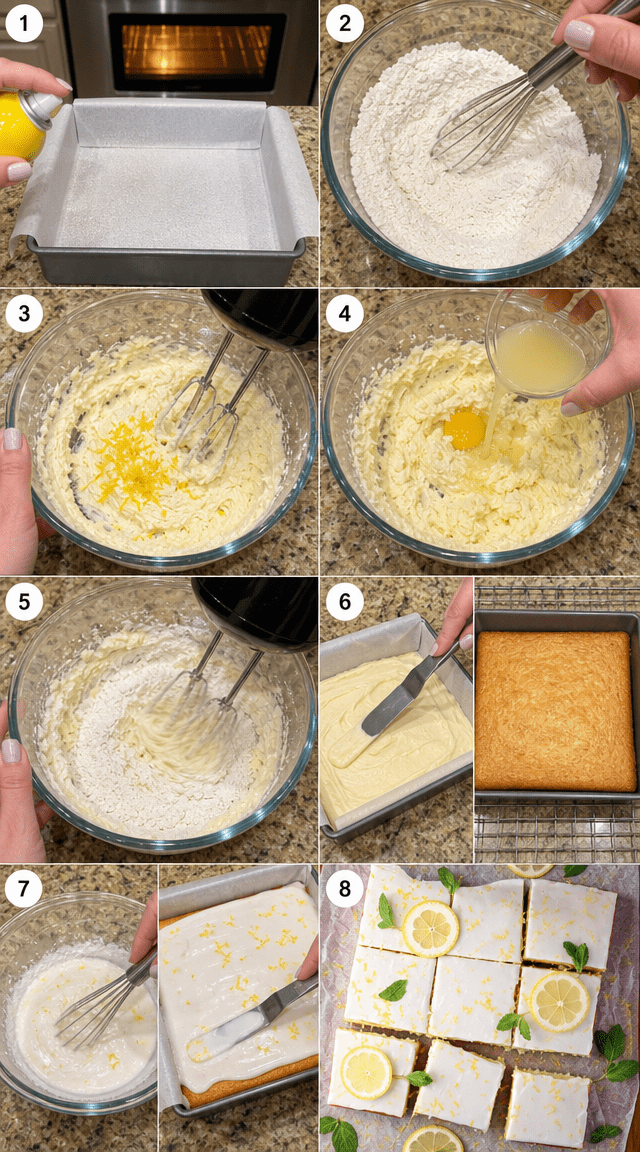
Step 1: Heat your oven to 350°F and grease your 9-inch square pan generously — sides and bottom. I use butter and go heavy on the corners because that’s where bars stick and tear.
Step 2: Whisk together the flour and salt in a bowl and set it aside. This takes about 30 seconds. Just do it now so it’s ready when you need it.
Step 3: Beat the butter, sugar, and lemon zest together with a hand or stand mixer until the mixture turns pale and looks almost fluffy, about 3 minutes. It goes from yellow and grainy to a lighter, creamier color — that’s when you know it’s ready.
Step 4: Add the eggs one at a time, fully mixing each one in before adding the next. Then pour in the lemon juice and mix again. (Don’t rush the eggs — if you dump them all in at once the batter can look curdled and it affects the texture of the finished bar.)
Step 5: Switch to low speed and slowly add the flour mixture until it’s just combined. I genuinely love this moment — the batter goes from glossy and loose to something that looks like thick cake batter, pale and smooth.
Step 6: Pour the batter evenly into your prepared pan and bake for 30 to 35 minutes. Pull it when a toothpick comes out clean but the center still has a very slight jiggle — it’ll firm as it cools. Not jiggly like liquid. Just not rock solid yet.
Step 7: Set the pan on a wire rack and let it cool completely to room temperature before touching the glaze step. Completely. This takes about an hour. I know that feels long.
Step 8: Whisk the powdered sugar, lemon juice, and lemon zest together until it’s smooth with no lumps. Drizzle it over the cooled bars in a back-and-forth pattern, then let it set for 10 minutes before slicing into squares.
How do you usually handle the waiting part — do you cut early and regret it, or are you patient? Share below!
Ways to Change It Up
Try this: Add 1 teaspoon of orange zest alongside the lemon zest in the batter for a slightly rounder, less sharp citrus flavor. It softens the edge without losing the brightness.
Try this: Press a thin layer of shortbread dough into the bottom of the pan before adding the batter to create a firmer, cookielike base underneath the soft bar.
Try this: Stir two tablespoons of poppy seeds into the batter right before pouring it into the pan — it adds a subtle crunch and makes the bars look a little more interesting when sliced.
Which would you go for? Drop it in the comments.
How to Serve It
Cut them into small squares — about 2 inches — and serve on a white plate so the glaze shows up. They look better than they have any right to for how simple they are.
A cup of black tea or an unsweetened iced tea alongside cuts through the sweetness really well. My mom drinks hers with strong Earl Grey and she’s not wrong.
They also work at room temperature on a dessert table next to something chocolate — the contrast keeps people going back for one more piece of each.
What would you pair it with?
—
Storing It Without Ruining It
At room temperature, covered loosely, these keep well for up to 3 days. The glaze stays intact and the bars don’t dry out if you cover them properly.
In the fridge they’ll last about a week — just store them in an airtight container and let them sit out for 10 minutes before eating so they’re not cold-hard.
For freezing, wrap individual bars in plastic wrap and then put them all in a zip bag. They thaw at room temperature in about 30 minutes and taste almost exactly like fresh.
Have you ever saved leftovers like this? Tell me below!
Mistakes I Made So You Don’t Have To
I once made these and forgot to grease the corners of the pan, just kind of swiped butter across the middle. Half the bars tore when I lifted them out and I had to eat the broken pieces standing over the counter, which honestly wasn’t the worst outcome.
I also poured the glaze on while the bars were still warm once — it melted straight in and disappeared completely. You could barely tell it was there. Let them cool. Fully.
The third mistake: making the glaze too thick by using too little lemon juice, thinking it would be easier to drizzle. It clumped in patches instead of flowing evenly. If it doesn’t run smoothly off your whisk, add juice a few drops at a time until it does.
Did something like this happen to you?
Questions I Actually Get About These Bars
Can I use bottled lemon juice instead of fresh? You can, but the flavor difference is noticeable in a recipe where lemon is the entire point. Bottled juice is flat and slightly bitter in a way that baking doesn’t fix. Fresh juice is bright and clean. If you only have bottled, use it — the bars will still be good — but try fresh when you can and you’ll see what I mean immediately.
Why did my bars come out dense and gummy? Most likely they were underbaked, or the batter was overmixed at the flour stage. Once you add flour to this kind of batter, mix only until you don’t see dry streaks. Overworking it develops gluten, which makes bars tough and chewy in a bad way. Also make sure your butter was at actual room temperature before you started — cold butter doesn’t cream properly and the texture suffers throughout.
Can I make these in a 9×13 pan instead? Yes, but the bars will be thinner — about half the height — and will bake faster, so start checking around the 20-minute mark. The texture will be a little more delicate and less fudgy in the center, which some people actually prefer. You’ll also want to increase the glaze by about 50% to cover the larger surface area without it looking sparse.
Do I have to use unsalted butter? I always recommend unsalted so you control the salt yourself, since butter brands vary a lot in their salt content. If salted is all you have, just leave out the ½ teaspoon of added salt in the recipe. The bars won’t suffer. They might actually have a tiny bit more depth from the extra salt, depending on your butter, though I wouldn’t bank on that.
My glaze soaked in and disappeared — what happened? The bars were still warm when you glazed them. Even if they feel cool on the outside of the pan, the interior can still be holding heat, and that warmth melts the glaze right in. Give them the full cool-down on a wire rack, at least an hour at room temperature. Running your hand along the bottom of the pan is a good test — if it’s warm at all, wait longer.
Can I add more lemon to make these more tart? Definitely. You can increase the lemon juice in the batter by an extra tablespoon and add a half teaspoon more zest without changing the structure. Going beyond that starts to affect the moisture balance of the batter. If you want really sharp tartness, the glaze is your best lever — reduce the powdered sugar slightly and bump the juice up, and the top layer will hit much more citrusy and bright.
Which answer helped you most?
Okay, Make These Already
I’ve made these at least a dozen times now, and they always disappear faster than anything else I put on the table.
They’re the kind of thing that looks like you tried harder than you did. The glaze helps with that.
If you make them and the center comes out fudgy and the glaze cracks slightly when you bite in, you did it right.
Will you make this soon? Drop a comment and tell me which version you’re going for — classic, orange-lemon, shortbread base, or poppy seed.
I’d love to know how yours turn out.
Fun fact: Lemon zest contains most of the fruit’s essential oils, which means it carries up to four times more flavor per gram than the juice itself — that’s why using both in the same recipe hits so much harder than juice alone.
Happy cooking! —Marina Caldwell
Sunshine Lemon Bars Drizzled With Zesty Citrus Glaze
Description
Bright and tangy lemon bars with a buttery crumb base and a sweet zesty citrus glaze drizzled on top.
Ingredients
**Bars:**
**Glaze:**
Instructions
- Heat oven to 350°F and generously grease a 9-inch square baking pan.
- Whisk together flour and salt in a bowl and set aside.
- Beat butter, sugar, and lemon zest with a mixer until pale and fluffy, about 3 minutes.
- Add eggs one at a time, fully incorporating each before adding the next, then mix in lemon juice.
- Switch mixer to low speed and slowly blend in the flour mixture until just combined.
- Pour batter evenly into prepared pan and bake 30-35 minutes until a toothpick pulls out clean.
- Transfer pan to a wire rack and cool completely to room temperature.
- Whisk glaze ingredients together until smooth, drizzle over cooled bars, and allow to set 10 minutes before slicing.
Notes
- See full recipe for nutritional information.