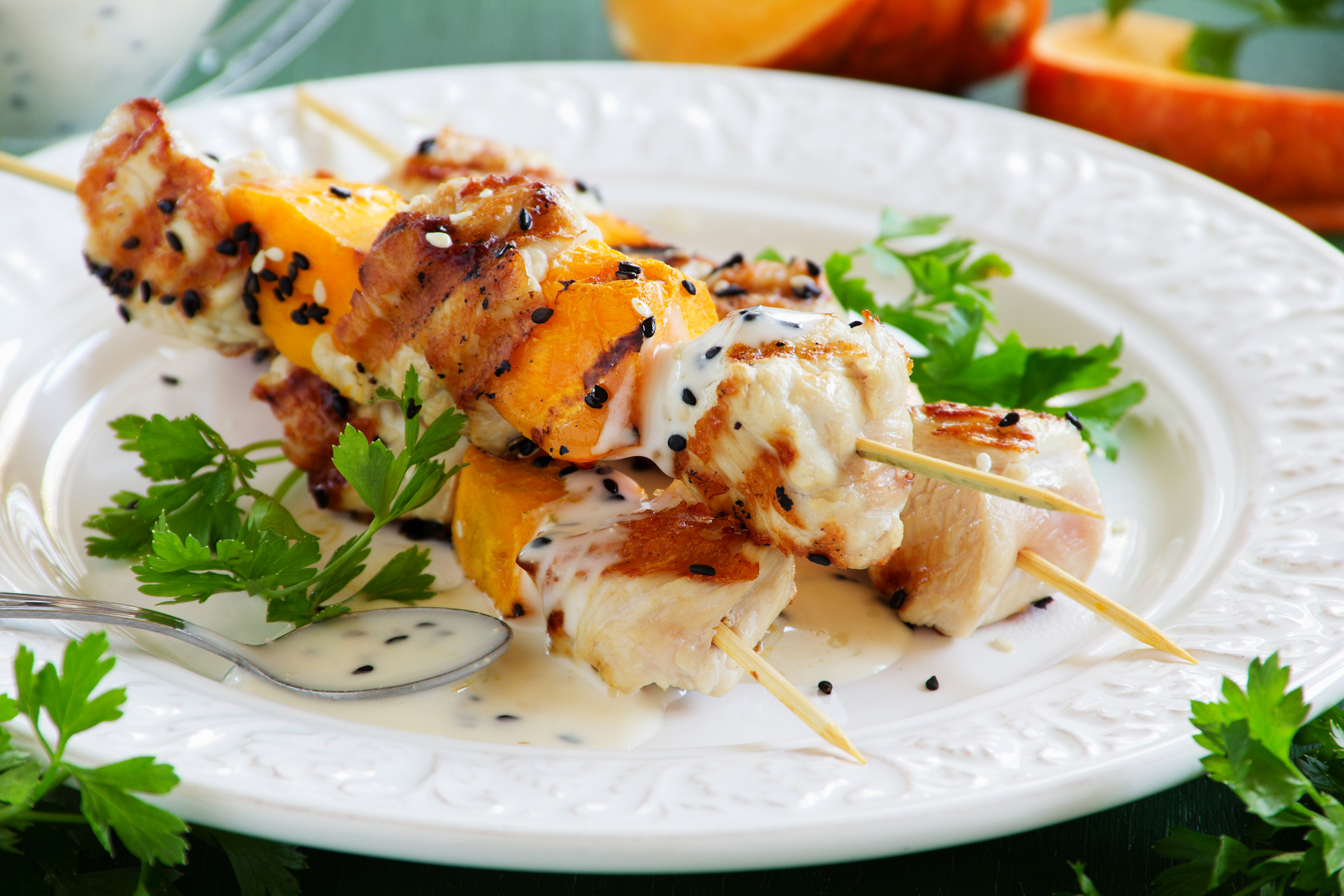
The skewers were too crowded. I knew it before I even lit the grill.
I’d threaded everything on in this optimistic, slightly chaotic way — meat, pumpkin, pepper, onion, repeat — and by the time I was done, I had maybe a centimeter of space between each piece. The pumpkin didn’t char. It steamed.
First attempt at this combination, and honestly I wasn’t sure pumpkin had any business being on a skewer in the first place. That skepticism turned out to be misplaced, but the crowding issue? That one was just me not paying attention.
I’d been making standard shish kebab for years — lamb with peppers, the usual — and adding pumpkin felt like a detour I wasn’t entirely sold on. My neighbor Dina had made something similar at a dinner last fall and I’d spent most of the evening trying to figure out what the orange cubes were before I asked. She told me. I went home and immediately wanted to try it differently.
The sumac is what makes it.
Not the cumin, not the paprika — those are just doing their job. But sumac has this dry, almost citrusy bite that gets into the fat of the lamb in a way lemon juice doesn’t quite manage on its own. I thought about skipping it the second time — actually no, I kept it, and the difference between the two batches was obvious enough that I wouldn’t make this without it now.
Quick tip: Cut your pumpkin a half-size larger than the meat, not the same. It shrinks faster on the grill and if you start equal, you end up with collapsed pumpkin next to underdone lamb.

About the marinade.
Four tablespoons of olive oil, three of lemon juice, four cloves of garlic minced fine, and then the dry spices: two teaspoons cumin, one each of paprika, sumac, and dried oregano, one teaspoon salt, half a teaspoon black pepper. That’s it. Mix it in a bowl.
Split it in half before anything goes in. Half for the meat, half for the pumpkin. They marinate separately — the meat needs to sit with it for at least 20 minutes in the fridge, and the pumpkin just needs a coat and a wait while you’re threading everything else. Do not combine them in the same bowl at any point. The pumpkin releases water quickly and you’ll end up with a thin, watery mess that doesn’t cling to anything.
Most recipes tell you to marinate the meat overnight for full flavor. For this one, that’s overkill. The sumac and lemon juice are acidic enough that past 45 minutes, the outer layer of the lamb starts to go mealy. Twenty minutes is enough. I’ve tested longer and regretted it.
Mealy lamb on a skewer. Not what anyone wants.
It looked curdled. It wasn’t.
When you first combine the olive oil, lemon juice, and garlic, it separates. Looks wrong. Just whisk it for thirty seconds and it comes together enough to coat the meat evenly — it doesn’t need to be an emulsion, it just needs to not be pooling at the bottom of the bowl.
The pumpkin goes in last, tossed in the second half of the marinade, and set aside at room temperature while the meat chills. Room temperature pumpkin hits the grill more evenly than cold. I learned this by accident — I’d left the bowl on the counter and forgot to refrigerate it, and that batch cooked more consistently than the one I’d carefully chilled.
Threading order: meat, pumpkin, pepper, onion. Then repeat. Leave a small gap between each piece — not a dramatic gap, just enough that the heat can move around each cube. Onion goes next to meat when possible because the fat dripping from the lamb keeps the onion from drying out before it softens.
Does yours stick to the grill in the first two minutes? That’s normal — don’t force it.
The skewer will release when it’s ready to be turned, usually after about five to six minutes on the first side. If you’re pulling at it before that point, you’re tearing the crust off the meat and that’s where most of the flavor lives.
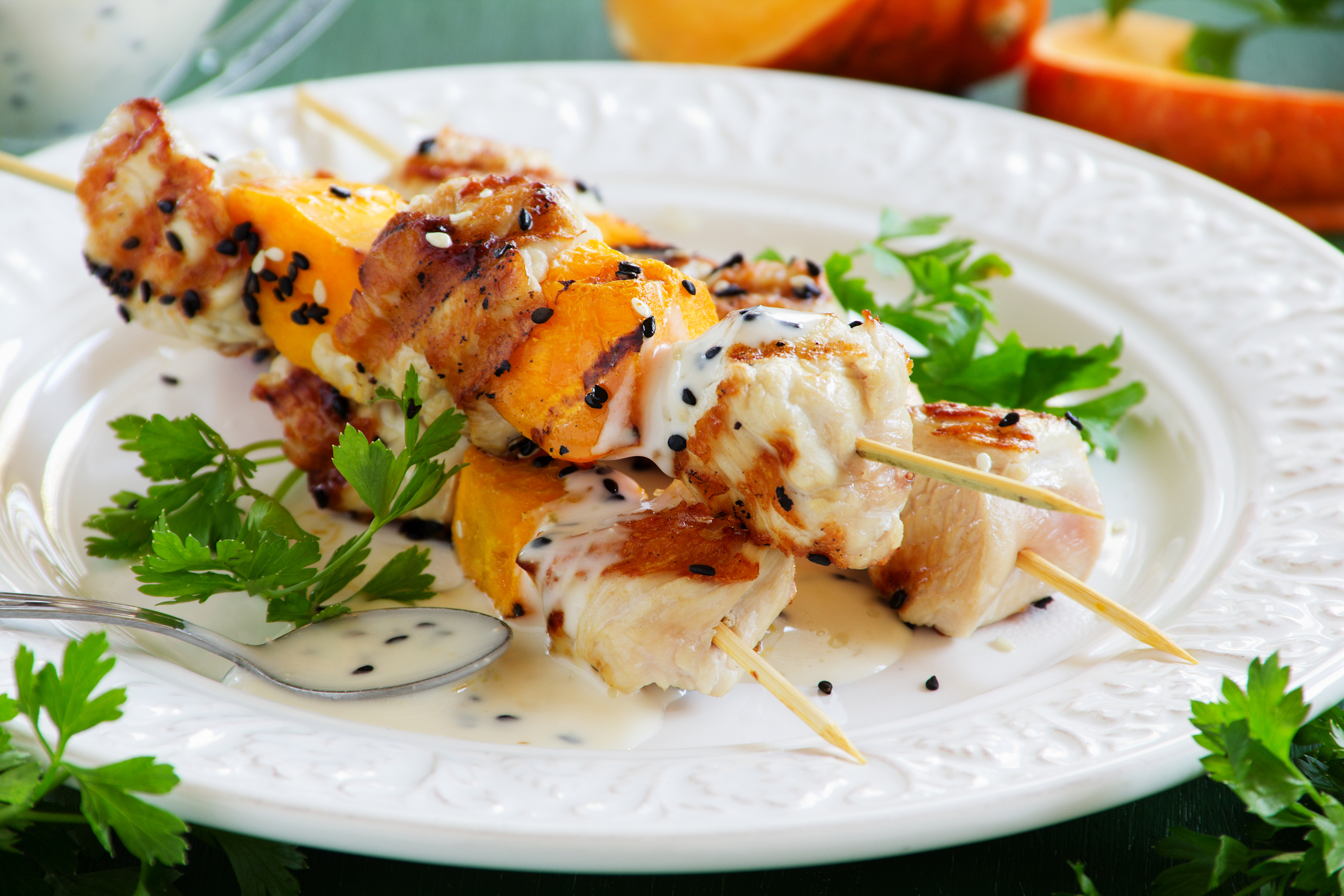
I skipped the resting step once.
Two minutes off the grill before serving. It sounds pointless on something this small but it isn’t. I skipped it when I was rushing to get food on the table before a friend arrived late — already annoyed about that — and the lamb was noticeably drier than it should have been. Two minutes. Just leave it alone.
The pumpkin at this point will be slightly caramelized on at least two sides if you turned the skewers consistently, tender but not falling apart. If it is falling apart, your cubes were too small or your heat was too high. Medium-high means the grill surface is hot but you can hold your hand six inches above it for about four seconds before pulling away.
Serve it with flatbread, a few lemon wedges, and whatever fresh herbs you have — flat-leaf parsley is what I use, but I’ve also done it with fresh mint when that was all I had left, and it worked fine. The herbs aren’t decorative here; the fresh bitterness cuts through the fat in a way that actually changes the last few bites.
Honestly? The flatbread is non-negotiable. Don’t skip it.
—How to Make It
Step 1: If you’re using wooden skewers, submerge them in water for a full 30 minutes before you do anything else. Set a timer. I’ve started this step late more times than I’ll admit, and a skewer that hasn’t soaked long enough will catch flame on the grill and char in a way that affects the taste of whatever’s threaded near the ends.
Step 2: Combine 4 tablespoons olive oil, 3 tablespoons lemon juice, 4 cloves minced garlic, 2 teaspoons cumin, 1 teaspoon paprika, 1 teaspoon sumac, 1 teaspoon dried oregano, 1 teaspoon salt, and ½ teaspoon black pepper in a bowl. Whisk until it stops separating. Divide evenly into two portions.
Step 3: Toss 2 lbs of meat cubes in one portion of the marinade until fully coated. Cover and refrigerate for 20 minutes — not longer than 45 (the acid will start breaking down the surface texture of the meat in a way you’ll notice). While it chills, toss 2 cups pumpkin cubes in the second marinade portion and set aside at room temperature.
Step 4: Thread meat, pumpkin, bell pepper squares, and onion chunks alternately onto skewers, leaving a small gap between each piece. (The crowded skewer problem is real — I cannot stress this enough. Steam is not char, and steam is what you’ll get if the pieces are flush against each other.) How many skewers did you end up with? I always make more than I think I will — share below!
Step 5: Heat your grill or grill pan to medium-high. Place skewers down and don’t touch them for five to six minutes. Turn, and repeat on each remaining side, cooking a total of 20 to 25 minutes until the meat is cooked through and the pumpkin has taken on color. The lamb should read at least 145°F internally; the pumpkin should give when pressed with the back of a spoon but still hold its shape on the skewer.
Step 6: Pull the skewers off the heat and rest for 2 minutes before serving. Plate with flatbread, fresh herbs, and lemon wedges alongside.
Ways to Change It Up
Try this: Swap the lamb for chicken thighs, not breasts. Thighs handle the acid in the marinade better and they won’t dry out over 20-plus minutes on the grill the way breast meat will.
Try this: Add a tablespoon of pomegranate molasses to the marinade for the meat portion. It deepens the color on the grill and adds a faint tartness that plays well against the sumac without doubling up aggressively.
Try this: Replace the bell peppers with thick slices of red onion and halloumi. The halloumi chars at the edges in about the same time as the meat, and the onion sweetens considerably once it gets some heat on it.
Which would you go for? Drop it in the comments.
How to Serve It
Lay the skewers directly on top of warmed flatbread on a large plate — the bread catches the juices as the meat rests and becomes its own thing entirely. It’s not a side at that point, it’s part of the dish.
A simple yogurt sauce on the side works well — plain strained yogurt with a little salt, a drizzle of olive oil, and dried mint rubbed in your palm first to wake it up. Nothing more elaborate than that.
A plate of sliced raw tomatoes with sumac dusted over them is the other thing I always put out. The acidity from the raw tomato against the char on the meat is the contrast that makes the whole meal feel finished rather than heavy.
What would you pair it with?
—Storing It Without Ruining It
Slide everything off the skewers before you store it. Storing on the skewer means uneven contact with the container and the pieces on the ends dry out faster than the ones in the middle.
In the fridge, airtight container, up to three days. The pumpkin softens further by day two — it’s still edible, just more of a mash situation than a cube situation. If that bothers you, store the pumpkin separately.
Freezing works for the meat but not really for the pumpkin. The pumpkin turns watery when it thaws and there’s no recovering the texture. Freeze the meat alone in a sealed bag with a little of the leftover marinade pressed around it. Thaw overnight in the fridge, not on the counter.
Reheating: a dry skillet on medium, not the microwave. The microwave makes the lamb rubbery and the pumpkin collapses completely. Two to three minutes in a pan gets you most of the way back to what you had the first day.
Have you ever saved leftovers like this? Tell me below!
Mistakes I Made So You Don’t Have To
I once marinated the lamb overnight thinking more time meant more flavor. The outside of every cube had this soft, almost mushy texture — not raw, just broken down in a way that felt off. The inside was fine. The outside was not. Twenty minutes is genuinely enough with this amount of acid in the marinade.
The first time I made this, I used butternut squash instead of pumpkin because that’s what was in the fridge. It cooked faster than the meat by almost four minutes, came off the skewer before anything else was done, and I had to fish the pieces out of the grill grate. Butternut squash is softer and smaller-celled than pumpkin. They are not interchangeable on a grill at high heat.
I tried using a grill pan on a small electric burner once when the outdoor grill wasn’t an option. The pan couldn’t maintain consistent heat across all four skewers, so two cooked correctly and two sat in their own steam. Rotate skewers between the hot center and the cooler edges of the pan every few minutes if you’re indoors — don’t just set them down and walk away.
Did something like this happen to you?
Questions I Actually Get About This Recipe
Can I use beef instead of lamb? Yes. Chuck or sirloin cut into 1.5-inch cubes both work. Beef doesn’t carry the sumac flavor quite as readily as lamb — the fat in lamb is more receptive — but it’s a solid result. I tried this once with a cheaper cut and it was fine, just chewier. Go for sirloin if you can.
What if I don’t have sumac? It depends on how committed you are to the flavor profile. A small amount of extra lemon zest and a pinch of dried za’atar gets you part of the way there. But sumac is not a difficult spice to find anymore — most grocery stores carry it. And without it, this tastes like a decent kebab, not this specific one.
How long do leftovers last? About 3 days in the fridge if stored properly. The meat holds up better than the pumpkin. By day three, assess before committing. I’ve eaten day-three leftovers and been fine; I’ve also thrown them out. Depends on how cold your fridge runs.
Can I prep the skewers the night before? Thread them and lay them in a single layer in a baking dish, covered with plastic wrap. But marinate the meat and pumpkin separately and only thread just before refrigerating overnight. If the pumpkin sits on the skewer in marinade overnight it goes soft and won’t hold on the grill. 8 hours max, threaded.
My pumpkin keeps falling off the skewer. What’s wrong? Cubes too small, or you’re turning too early. Wait the full five to six minutes before the first turn. And cut the pumpkin no smaller than 1.5 inches — smaller than that and there isn’t enough mass to stay impaled once it softens. Also check that you’re threading through the center of each cube, not near the edge.
Is this spicy? No. Paprika adds color, cumin adds warmth, sumac adds acid. None of it is hot. If you want heat, add half a teaspoon of Aleppo pepper to the marinade — it gives a slow mild burn without overwhelming anything else. But it changes the dish. It’s still good. Just different.
Which answer helped you most?
Where I’m At With This Recipe Now
I’ve made this six times since that first over-crowded attempt. It’s consistent now, which is more than I can say for a lot of things I’ve tried to nail down over the years.
The pumpkin-on-a-skewer thing still looks slightly wrong to me every time I thread it. I don’t know why. It just looks like it shouldn’t work, and then it does, and I move on.
I haven’t tried it with the pomegranate molasses variation yet — I keep meaning to and keep running out of the molasses before I get to it. That one’s still sitting in a note on my phone as a pending experiment.
Will you make this soon?
The last time I made it, I pulled the skewers a minute early because I was distracted, and the lamb was still slightly pink at the center of two pieces. I ate them anyway. I probably shouldn’t tell you that. But there it is.
Fun fact: Sumac berries have been used as a souring agent in Middle Eastern cooking for thousands of years — long before lemons were widely available in the region. The dried, ground spice comes from the berry clusters of the Rhus coriaria shrub, and a single teaspoon carries more acidity than you’d expect from something that looks like dark red dust.
Happy cooking! —Marina Caldwell
Turkish Shish Kebab and Pumpkin Roast Harmony
Ingredients
- 2 lbs lamb or beef, cut into 1.5-inch cubes
- 2 cups pumpkin, cut into 1.5-inch cubes
- 3 bell peppers, cut into squares
- 2 large onions, cut into chunks
- 4 tablespoons olive oil
- 3 tablespoons lemon juice
- 4 cloves garlic, minced
- 2 teaspoons cumin
- 1 teaspoon paprika
- 1 teaspoon sumac
- 1 teaspoon dried oregano
- 1 teaspoon salt
- 5 teaspoon black pepper
- Wooden or metal skewers
Instructions
- 1Soak wooden skewers in water for 30 minutes if using
- 2Mix olive oil, lemon juice, minced garlic, cumin, paprika, sumac, oregano, salt, and pepper in a bowl
- 3Place meat cubes in a large bowl and coat with half the marinade, refrigerate for 20 minutes
- 4Toss pumpkin cubes in remaining marinade and set aside
- 5Thread meat, pumpkin, peppers, and onions alternately onto skewers
- 6Heat grill or grill pan to medium-high heat
- 7Place skewers on grill, turning every 5-6 minutes for even cooking
- 8Cook for 20-25 minutes until meat is cooked through and pumpkin is tender
- 9Remove from heat and let rest for 2 minutes
- 10Serve hot with flatbread, lemon wedges, and fresh herbs
Notes
See full recipe for nutritional information.