This Is Not a Forgiving Recipe
I’ve made this four times now, and two of those times it didn’t set right.
Not dramatically wrong — not soup — but that soft, uncertain wobble that makes you question whether you actually dissolved the gelatin all the way or just convinced yourself you did.
The first time I served it to my neighbor Deb, I unmolded it onto a plate and watched the center slowly lose its shape over about 90 seconds. I called it “rustic.” She was kind enough to pretend that was a real category.
Underdissolved gelatin.
I’d stirred it in quickly and assumed the residual heat would do the rest. It didn’t. Now I stir for a full two minutes after it goes in, even after the mixture looks smooth, because the first time it looked smooth too.
About the Cream — and the Eggs
Most panna cotta recipes skip the egg yolks entirely. They’re not wrong to do that, but they’re also making something thinner, something that tastes more like sweet cream than custard.
The yolks here pull it toward something denser. Silkier in a way that coats the back of a spoon before it even sets. If you’ve ever had a panna cotta that felt almost too light, like eating cold milk, this fixes that.
The trade-off — and I thought about leaving this out, actually no, you need to know — is that you have to temper them carefully. Pour the hot cream too fast and you’ll scramble the yolks. The mixture will look fine for about 30 seconds and then you’ll see little yellow specks floating. That’s egg. That’s not what we want.
Pour slowly. A thin, steady stream while whisking constantly. It takes about 45 seconds longer than you think it should.
Quick tip: If you see any specks before straining, don’t panic — the fine-mesh sieve will catch them. But if your whole mixture looks curdled and grainy, that batch is gone. Start the custard portion again.
The Vanilla Bean Situation
You can use extract. I’ve done it.
But the bean is where the visual difference lives — those dark specks suspended in pale cream look intentional in a way that extract never quite achieves. The flavor difference is real but subtle. The appearance difference is not subtle at all.
Split it lengthwise and scrape out the seeds with the back of a knife. Drop both the seeds and the pod into the cream as it heats. Pull the pod before you strain, or the sieve will catch it anyway, but don’t let it sit in the warm mixture longer than about 15 minutes or it starts tasting slightly medicinal.
I left a pod steeping for almost 40 minutes once while I got distracted answering a phone call,
and the whole batch had this faintly bitter aftertaste that I couldn’t explain until I thought back through what I’d done differently. It wasn’t ruined, exactly, but it wasn’t what it should have been.
The Apricots Take More Attention Than You’d Expect
Fresh apricots vary more than almost any other fruit.
A perfectly ripe one breaks down in 5 minutes with the jam and honey and becomes this glossy, deeply flavored compote that’s almost jammy at the edges. An underripe one — firm, slightly chalky — needs closer to 9 or 10 minutes and still tastes a little flat. Taste as you go. Add more honey if it needs it, more lemon if it’s too sweet.
The apricot jam in the compote isn’t just for flavor. It thickens the liquid and gives the whole thing a consistency that stays put on the panna cotta rather than pooling around the base. I tried making it once without the jam — just fruit, honey, and lemon — and the sauce slid right off every spoonful.
Cool it completely before you serve it alongside.
Warm compote on cold panna cotta melts the top layer just enough to make the texture weird. Not dramatically — but you’ll notice, and once you notice you can’t stop noticing.
What the Set Should Actually Look Like
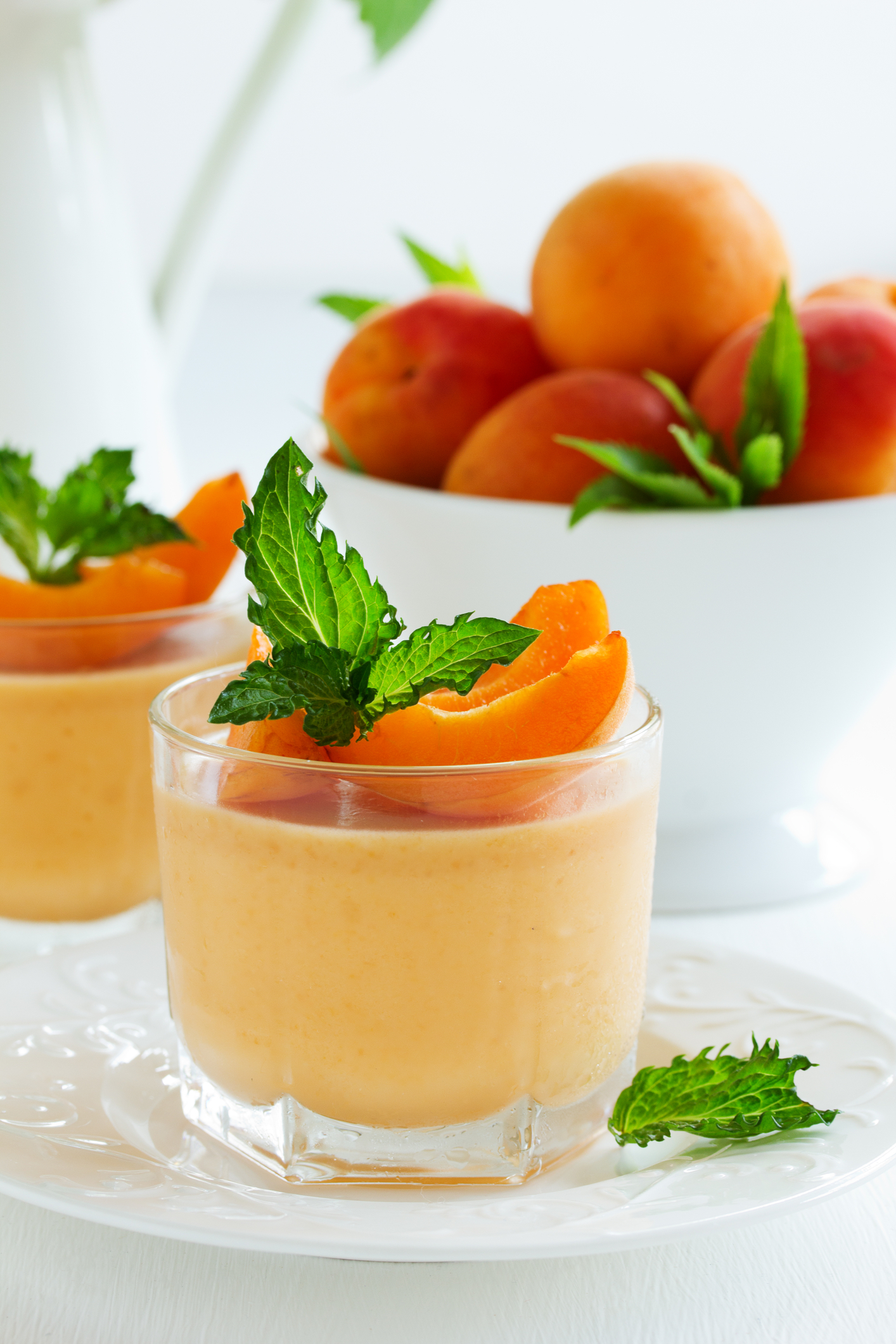
After 4 hours in the fridge, the edges should be fully firm and the center should wobble like very thick jello when you shake the glass gently.
Not liquid. Not rigid. A sustained, slow wobble that recovers its shape.
If it’s still liquid at the center after 4 hours, your gelatin didn’t dissolve properly. You can’t fix it at that point. If it’s completely rigid with no give at all, you used too much gelatin or your 1.5 teaspoons was packed rather than level. Either way, it’ll still taste good — it’ll just feel more like eating a gummy than a custard.
I serve mine in glasses rather than unmolded onto plates now, specifically because the set is less critical when no one’s watching it hold a shape.
Honestly? After the Deb situation I’m not unmolding anything in front of company again.
Step by Step
Step 1: Measure 3 tablespoons of cold water into a small bowl and sprinkle 1.5 teaspoons of gelatin powder over the surface. Don’t stir it. Let it sit undisturbed for 5 full minutes. It should look swollen and slightly translucent when it’s ready — if it still looks like dry powder on top, give it another minute.
Step 2: Combine 2 cups heavy cream and 1 cup whole milk in a medium saucepan. Split and scrape your vanilla bean, adding both seeds and pod to the pan. Heat over medium heat, stirring occasionally, until the mixture is steaming and small bubbles are forming at the edges — about 6 to 8 minutes. Do not let it boil. (If it boils even briefly, remove from heat, let it cool for 2 minutes, and proceed — it won’t ruin it, but boiling changes the milk proteins slightly and the texture suffers.)
Step 3: Whisk 5 egg yolks and 1/4 cup granulated sugar in a medium bowl until the mixture is pale yellow and thick enough to fall from the whisk in a slow ribbon, about 2 minutes of steady whisking. Don’t rush this step — under-whisked yolks and sugar won’t absorb the hot cream evenly.
Step 4: Remove the vanilla pod from the cream. With one hand whisking the yolk mixture constantly, pour the hot cream in a thin, steady stream with the other hand. This should take at least 45 seconds. I usually start with just a few tablespoons, whisk those in completely, then continue pouring. Did your mixture stay smooth the whole time? Tell me in the comments below! Share below!
Step 5: Pour the combined mixture back into the saucepan and set over low heat. Stir constantly with a heatproof spatula, scraping the bottom and sides, until the mixture reaches 160°F (71°C). This takes 2 to 3 minutes. It will thicken slightly and coat the spatula. Don’t walk away from this. (If you go even slightly over 165°F, the yolks can begin to scramble at the bottom — pull it off the heat immediately if it starts looking grainy.)
Step 6: Remove the pan from heat and add the bloomed gelatin. Stir slowly and steadily for a full 2 minutes — not until it looks dissolved, but for the full 2 minutes regardless. Then strain the entire mixture through a fine-mesh sieve into a clean bowl or large measuring cup with a pour spout.
Step 7: Divide the strained mixture evenly between 4 glasses or ramekins. Let them cool at room temperature for 20 minutes, then cover loosely with plastic wrap and refrigerate for at least 4 hours. Overnight is fine and actually produces a slightly firmer set that I prefer.
Step 8: While the panna cotta chills, combine 1 lb halved and pitted fresh apricots, 1/4 cup apricot jam, 2 tablespoons honey, 1 tablespoon lemon juice, and a pinch of salt in a small saucepan. Simmer over medium heat, stirring occasionally, for 5 to 7 minutes until the apricots soften and the liquid thickens slightly. Transfer to a bowl and cool completely to room temperature before serving.
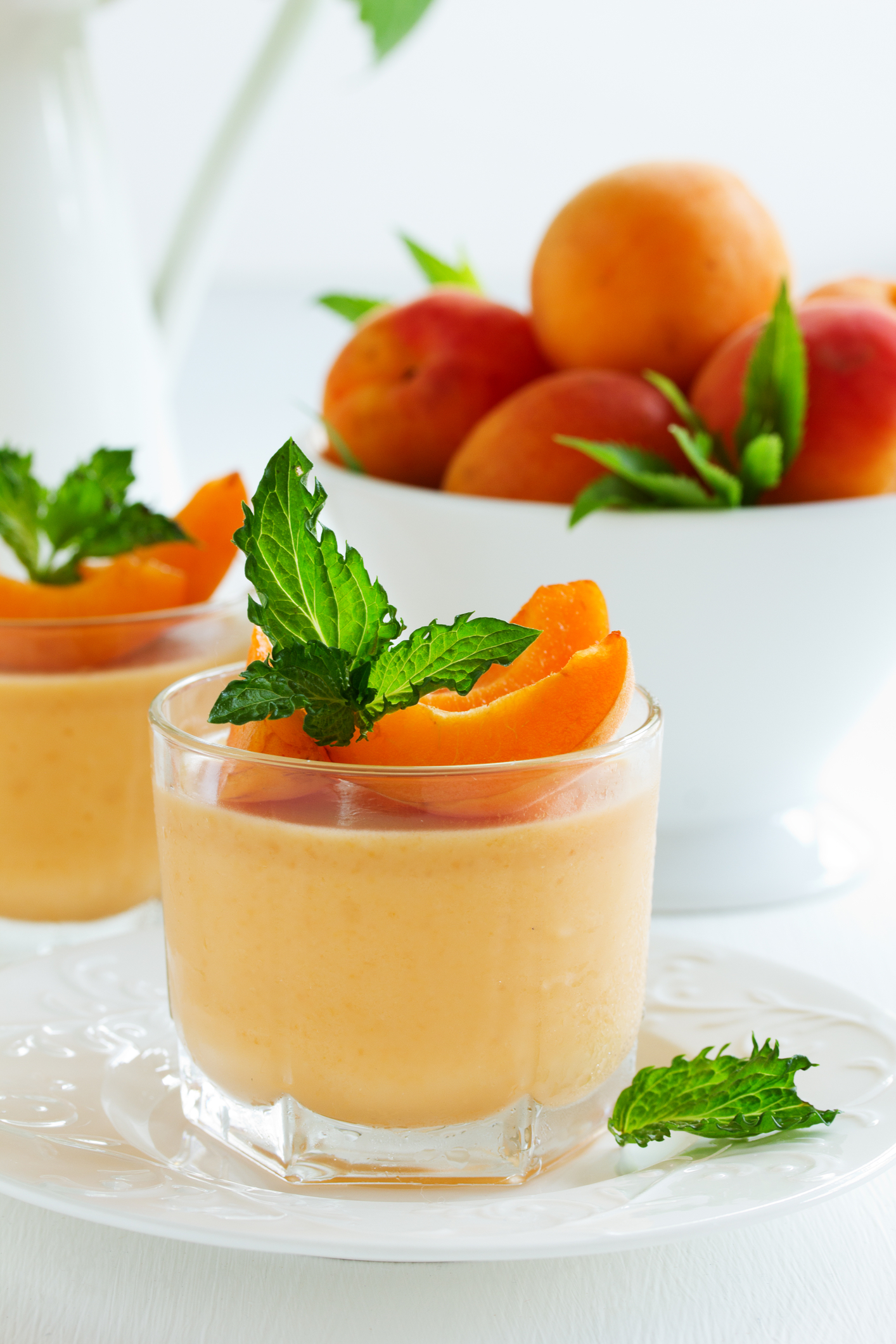
Ways to Change It Up
Try this: Swap the apricots for fresh peaches cut into thin wedges. Use the same compote method — the peach jam substitute works fine, or just increase the honey by a tablespoon and add an extra squeeze of lemon.
Try this: Add 1/4 teaspoon of cardamom to the cream as it heats, removing it with the vanilla pod before straining. The cardamom sits underneath the vanilla rather than competing with it and changes the whole character of the dish without announcing itself.
Try this: For a slightly less rich version, replace 1/2 cup of the heavy cream with more whole milk. The set will be softer — closer to that uncertain wobble I mentioned — so keep it in the glass rather than attempting to unmold it.
Which would you go for? Drop it in the comments.
How to Serve It
Spoon the cooled compote directly over the top of each glass just before serving, not in the kitchen before you bring them out. The apricots release a little more liquid as they sit and the presentation holds better if you time it right.
If you’ve set them in ramekins and want to unmold, run a thin knife around the edge, place your serving plate on top, and flip in one motion. Have a paper towel ready. It will either release cleanly or it won’t, and no amount of gentle coaxing after the fact improves the situation.
A few crushed pistachios on top add crunch and color. A small handful of fresh thyme leaves — not dried — scattered over the compote looks better than it sounds and cuts the sweetness.
What would you pair it with?
Storing It Without Ruining It
Set panna cotta keeps in the fridge for up to 3 days, covered tightly with plastic wrap pressed directly onto the surface. If condensation forms on the wrap and drips back down, it creates a watery layer on top that doesn’t look great.
Keep the compote separate in a sealed container. It holds for about 4 days in the fridge and actually improves slightly on day two once the flavors have had time to meld.
Freezing the panna cotta doesn’t work. Gelatin-set desserts break down after thawing and the texture becomes grainy and weepy. I tried it once out of stubbornness. The result was not edible.
The compote freezes fine for up to 2 months if you have a surplus of fresh apricots and want to get ahead of the season. Thaw overnight in the fridge, not at room temperature.
Have you ever saved leftovers like this? Tell me below!
Mistakes I Made So You Don’t Have To
I once pulled the panna cotta from the fridge at the 3-hour mark because I was impatient and had people coming over. The center was still liquid under a set top layer, which only became obvious when the first spoon broke through. I served it as a “deconstructed” version. Nobody was fooled.
The second mistake is adding the gelatin to a mixture that’s too hot. If the base is still above 140°F when the gelatin goes in, the proteins that allow it to set can partially break down. The panna cotta will still set, but not as firmly as it should. Let the custard cool to just warm — around 120°F — before stirring the gelatin in if you have time.
Third: measuring gelatin with a wet spoon. It clumps on contact with moisture before it even hits the water, and those clumps never fully dissolve. Dry spoon, level measure, every time.
Did something like this happen to you?
Questions I Get About This One
Can I use gelatin sheets instead of powder?
Yes. Use about 2.5 sheets of silver-grade gelatin in place of the 1.5 teaspoons of powder. Soak in cold water for 5 minutes, squeeze out excess water, then stir directly into the hot custard. The set is often slightly cleaner with sheets, but the difference is minor.
What if my compote is too runny?
Simmer it longer — another 3 to 4 minutes uncovered over medium-low. It thickens significantly as it cools too, so don’t overcorrect on the stove. I tried to thicken a thin batch by adding more jam mid-simmer once, and the whole thing ended up cloyingly sweet.
Can I make this without egg yolks?
You can. Omit the yolks and the tempering step entirely — just heat the cream and milk with the vanilla, dissolve the gelatin in, strain, and set. It depends on what you’re after: the yolk-free version is lighter and faster, but it’s a different dessert. Thinner. Less custardy.
How do I know if it’s set enough to unmold?
After 4 hours, shake the ramekin gently. The whole thing should move as one unit with a slow wobble. If only the center moves, give it another hour. And if you’re serving for company, just leave it in the glass. Not worth the risk.
Can I use canned apricots for the compote?
It depends on the quality. Canned apricots in juice — not syrup — work reasonably well if you drain them thoroughly. Reduce the honey to 1 tablespoon since they’re already sweet. But they break down faster than fresh, so cook them for only about 3 to 4 minutes or you’ll end up with apricot puree instead of compote.
Why do I need to strain the custard?
Bits of cooked egg, the vanilla pod, any skin that formed on the surface. About 4 minutes of patience that stands between you and a smooth result. And if you skipped the straining and your panna cotta has little flecks of cooked egg suspended in it — yes, that’s what happened.
Which answer helped you most?
Before You Put It in the Fridge
There’s a 20-minute window between straining the custard and refrigerating it where you can actually taste and adjust. Use it.
If it tastes flat, add a pinch of salt — not more sugar, salt. It sharpens the vanilla without making the dessert taste savory. I skipped this step on three consecutive batches because the mixture tasted fine warm and I assumed it would translate. It does, mostly. But the batch I salted at the end was noticeably better.
Once it’s in the fridge, the flavor doesn’t change much — it just firms up. What you taste warm is roughly what you’ll serve cold, minus some of the sweetness intensity, since cold mutes sweetness slightly.
Fun fact: Vanilla beans are the seed pods of a climbing orchid — Vanilla planifolia — and each flower must be hand-pollinated within 12 hours of opening, which is part of why real vanilla is one of the most expensive spices in the world.
Will you make this soon?
I still haven’t fully decided whether the egg yolks are worth the extra attention every time. Sometimes I want the faster version and sometimes I want this one and I don’t always know which until I’m already standing in the kitchen.
Happy cooking! —Marina Caldwell
Velvety Vanilla Panna Cotta With Apricots
Ingredients
- 2 cups heavy cream
- 1 cup whole milk
- 1 vanilla bean, split and scraped
- 5 egg yolks
- 1/4 cup granulated sugar
- 5 teaspoons gelatin powder
- 3 tablespoons water
- 1 lb fresh apricots, halved and pitted
- 1/4 cup apricot jam
- 2 tablespoons honey
- 1 tablespoon lemon juice
- Pinch of salt
Instructions
- 1Bloom gelatin in cold water for 5 minutes until softened.
- 2Heat cream and milk with vanilla bean and seeds in a saucepan until steaming, do not boil.
- 3Whisk egg yolks and sugar in a bowl until pale and thick.
- 4Slowly pour hot cream mixture into egg mixture while whisking constantly.
- 5Return mixture to saucepan and cook over low heat, stirring constantly, until it reaches 160°F (71°C), about 2-3 minutes.
- 6Remove from heat and stir in bloomed gelatin until completely dissolved.
- 7Strain mixture through a fine-mesh sieve into a bowl.
- 8Divide into serving glasses or ramekins and refrigerate for at least 4 hours until set.
- 9Combine apricots, jam, honey, lemon juice, and salt in a saucepan.
- 10Simmer over medium heat for 5-7 minutes until apricots soften slightly.
- 11Cool compote to room temperature before serving alongside panna cotta.
Notes
See full recipe for nutritional information.