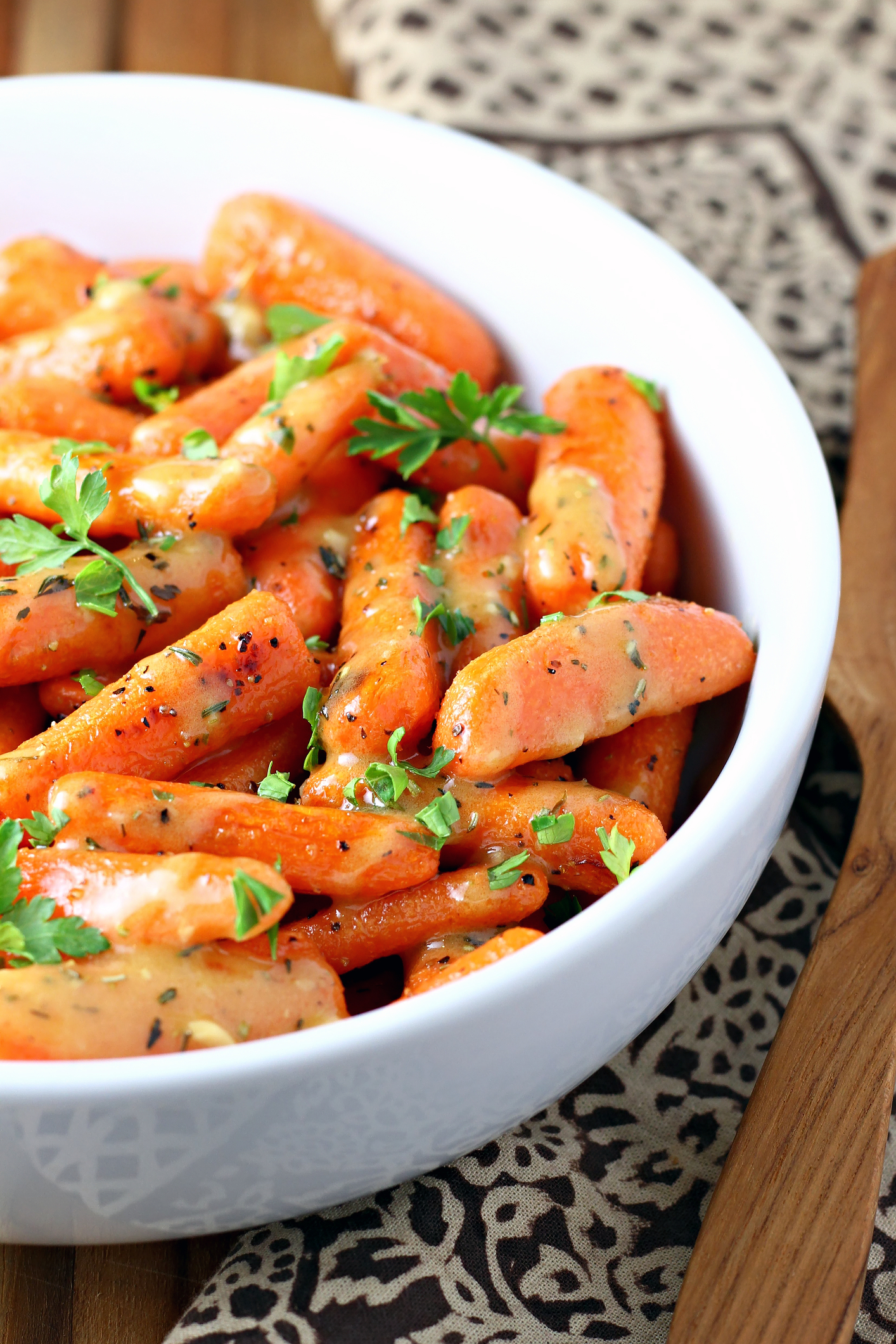
I Oversalted the Water. Twice.
I oversalted the water. Twice. The first time I made these carrots, they came out tasting like the Dead Sea in vegetable form, and I had to dump the whole batch and start over at 9pm on a Tuesday.
That’s the thing nobody tells you about a dish this simple — there’s nowhere to hide.
No sauce thick enough to cover a mistake, no cheese to melt over the top. The carrots either taste like carrots or they taste like your bad judgment.
I’d been ignoring this recipe for weeks, actually. My neighbor Deb made something similar at a dinner last spring, and I kept thinking I’d just ask her for the dressing recipe. I never did. So I reverse-engineered it from memory, which is probably why my first three attempts were all wrong in slightly different ways.
Batch one: too salty. Batch two: the dressing split and pooled at the bottom. Batch three: I finally got it.
Barely.
The Carrots Before the Dressing Even Matters.
Most recipes tell you to boil carrots until “tender.” They’re not being helpful. Tender means different things to different people, and for this dish, it means something specific: the carrot should give when you press a fork against it but not collapse.
Ten minutes in salted water — lightly salted, I’m serious — gets you there for standard 2-inch batons. Twelve minutes if your carrots are thick or if you cut them uneven, which I always do.
I thought about cutting them on a bias for this — actually no, I kept them straight batons. The diagonal looks nicer but they cook unevenly at the ends, and this dish doesn’t benefit from crunch in some bites and mush in others.
Drain them fast. Don’t let them sit in the water.
The residual heat matters here. You want the carrots hot when the dressing goes on — not warm, not room temperature. Hot. The heat opens them up just enough to absorb some of the vinegar before everything cools down, and you can taste the difference. I tested this by accident when I got distracted by a phone call and dressed them 8 minutes late. Flat. Completely flat.
Quick tip: Peel your carrots but don’t over-trim them. Leaving the tapered end intact gives you some variation in texture across the dish, which is more interesting than a bowl of identical sticks.
About the Dressing.
Three tablespoons of Dijon is a lot. It should feel like a lot. This dressing isn’t a whisper of mustard — it’s the whole point.
Whisk the Dijon with 2 tablespoons red wine vinegar and 1 tablespoon sherry vinegar before anything else goes in. The sherry vinegar is not optional, despite what your pantry situation might suggest. Red wine vinegar alone makes this flat and a little harsh. The sherry rounds it.
Add the honey — 1 teaspoon, no more — and the 2 minced garlic cloves. Then the oil goes in slowly. A thin, slow drizzle while you whisk. This is the part where most people rush and then wonder why their dressing looks like something separated in a jar.
¼ cup olive oil. Emulsified. That’s it.
The dressing should look creamy and hold together when you tilt the bowl. If it looks oily on top, keep whisking. If it’s still not coming together, you poured the oil too fast and you’ll need to start the emulsification again — take a small spoonful of the broken dressing and whisk it into a fresh teaspoon of Dijon in a clean bowl, then slowly add the rest back in. It works about 70% of the time.
Season with ½ teaspoon salt and ¼ teaspoon black pepper only after it’s emulsified. Adding salt before can sometimes interfere with how the oil binds — I read that somewhere once, tested it, and I’m still not sure I believe it, but I stopped doing it anyway.
It Looked Curdled. It Wasn’t.
When the warm dressing hits the hot carrots, it’s going to look wrong for about 30 seconds. The emulsion loosens from the heat, the vinegar steams slightly, and the whole thing appears to be breaking apart.
Keep going. Toss gently and let it settle.
I panicked the first time this happened and started whisking the dressing again right in the bowl with the carrots, which just made everything worse and bruised a third of the carrots in the process. The dressing re-emulsifies as it cools slightly — the five-minute rest is not decorative.
Five minutes. Then herbs.
The 2 tablespoons of parsley go in first, then the tablespoon of chives, then — and this part matters — the tarragon last. Tarragon is aggressive. It takes over if you mix it too early or if the dish is still very hot when it goes in. Add it at the end, toss once, and stop fussing.
Do not substitute dried tarragon. I know some people will. The flavor is completely different — dried tarragon tastes medicinal in cold-dressed dishes and just disappears in warm ones. Fresh only.
The Part I Always Skip and Then Regret.
Letting this dish sit at room temperature before serving. Not the five-minute rest — that’s mandatory — but the extra ten minutes after that, if you can stand it.
Served immediately, the dressing is sharp and the herbs taste like they were just thrown on. After fifteen minutes total, everything settles into something more coherent. The garlic mellows a little. The tarragon stops fighting everything else.
I served it too early at a dinner last fall — my friend Clara was over and she’s the kind of person who comments on everything she eats, which is either charming or exhausting depending on the night. She said it tasted “a little aggressive.” She wasn’t wrong. I’d rushed it out of the oven after a 6-minute rest and the mustard was still announcing itself very loudly.
At room temperature, given enough time, it’s a different dish.
Honestly? I still usually serve it too early. Patience is not my strong suit with food I’m proud of, and I’m impatient on the nights I make this because it usually means I’ve been cooking for a while and I just want to sit down.
I’ve made worse calls.
I Skipped the Sherry Vinegar Once.
Ate it. Didn’t enjoy it. Didn’t tell anyone at the table what was different. They probably didn’t notice but I noticed and it bothered me more than it should have for a Tuesday side dish.
The dish works — it’s a functional, good-looking, fast side that goes with roast chicken, pork, a grain bowl, a cheese plate if you’re doing something casual. It takes about 25 minutes start to finish if your knife work is decent.
But it only tastes like itself when you use both vinegars, dress the carrots while they’re still hot, and add the tarragon last. Remove any one of those and you have a fine carrot dish. Just not this one.
Whether it becomes a regular in your rotation — I genuinely don’t know. It did for me, but I also have a particular thing about mustard-dressed vegetables that not everyone shares.
—How to Make Warm Carrots Dressed in Dijon Herb Sauce
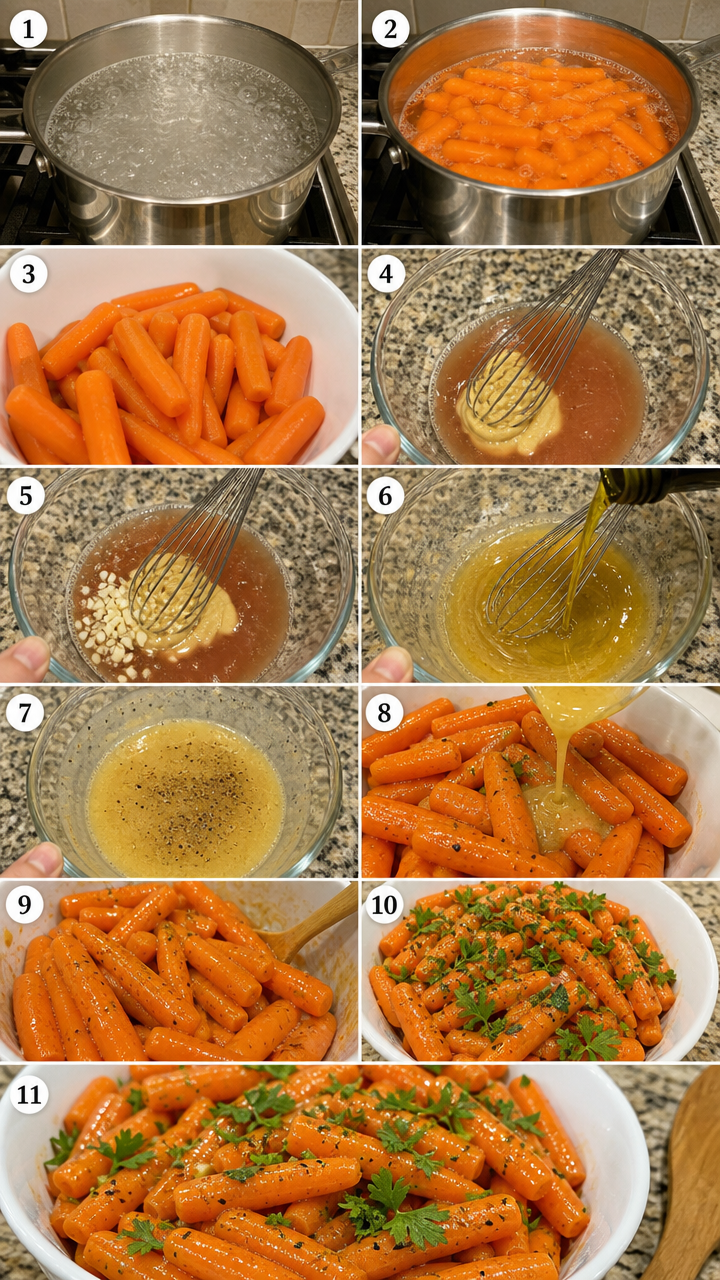
Step 1: Peel 1.5 pounds of fresh carrots and cut them into 2-inch batons, keeping the thickness as consistent as you can manage. Bring a pot of lightly salted water to a boil — lightly, I mean a small pinch, not the usual pasta water salting. Add the carrots and boil for 10 to 12 minutes until just tender when pressed with a fork. (Hard-learned: start checking at 9 minutes. Overcooked carrots don’t recover once the dressing goes on.)
Step 2: While the carrots boil, make the dressing. In a medium bowl, whisk together 3 tablespoons Dijon mustard, 2 tablespoons red wine vinegar, and 1 tablespoon sherry vinegar until smooth. Add 1 teaspoon honey and 2 minced garlic cloves and whisk again. Then drizzle in ¼ cup extra virgin olive oil in a slow, thin stream while whisking continuously. The dressing should emulsify and look creamy, not oily. Season with ½ teaspoon salt and ¼ teaspoon black pepper.
Step 3: Drain the carrots immediately and transfer them to a serving bowl while still hot. Pour the dressing over right away and toss gently to coat. The dressing may look like it’s separating for a moment — that’s normal, just keep tossing. I always hold my breath at this stage and it always rights itself.
Step 4: Let the dressed carrots rest for 5 minutes. Don’t skip this. (If you dress them and immediately serve, the vinegar is still too sharp and the garlic hasn’t had time to mellow into the oil.) The rest is what turns a good bowl of carrots into something that actually tastes finished.
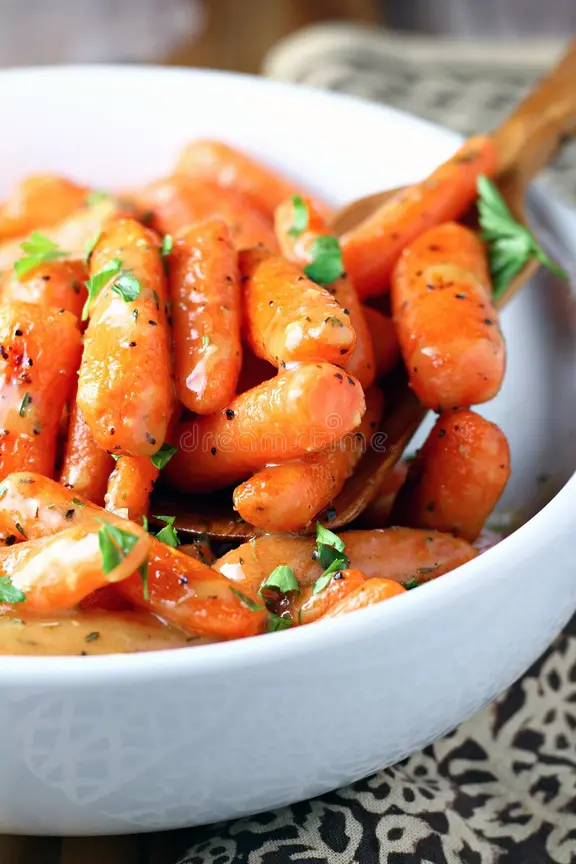
Step 5: Add 2 tablespoons chopped fresh parsley and 1 tablespoon chives, toss, then add 1 tablespoon fresh tarragon last. Toss once more. Serve warm or at room temperature. Did your dressing emulsify smoothly on the first try? Share below!
Ways to Change It Up
Try this: Swap the tarragon for fresh dill and reduce the red wine vinegar to 1 tablespoon. The dill version is softer and works better alongside fish or anything with cream in it.
Try this: Add ¼ cup toasted walnuts after the herbs. The crunch breaks up the texture in a way that makes this feel more like a salad than a side, which is useful if you’re serving it as part of a mezze-style spread.
Try this: Roast the carrots at 425°F for 20 to 22 minutes instead of boiling them. The edges caramelize and the dressing soaks into the slightly wrinkled surface differently — more concentrated, more sticky. It takes longer but the flavor is deeper.
Which would you go for? Drop it in the comments.
How to Serve It
Next to roast chicken — this is the obvious pairing, and it’s obvious for good reason. The acidity cuts through the fat and the herbs echo anything you’ve stuffed in the cavity.
On a grain bowl with farro or freekeh, a fried egg on top, and maybe some labneh on the side. The dressing doubles as the dressing for the whole bowl, which is one of those accidental efficiencies that makes a recipe worth keeping.
At room temperature as part of a vegetable spread alongside roasted beets, something green, and good bread. It holds well for about two hours out, longer if your kitchen isn’t warm.
What would you pair it with?
—Storing It Without Ruining It
Fridge: store in an airtight container for up to 3 days. The carrots will continue to absorb the dressing as they sit, so by day two they’re more intensely flavored and slightly softer. Not worse, just different.
I wouldn’t freeze these. The texture after thawing is unpleasant — waterlogged and limp in a way that no reheating fixes. The dressing also separates completely in the freezer and doesn’t come back together well.
To reheat: low heat in a small saucepan for 3 to 4 minutes, stirring gently. Or just eat them cold straight from the fridge — honestly, day-two cold carrots in Dijon dressing on a piece of toast with a soft-boiled egg is one of my better accidental lunches.
Don’t microwave. The herbs turn gray and the emulsified dressing goes oily and unappetizing in about 45 seconds.
Have you ever saved leftovers like this? Tell me below!
Mistakes I Made So You Don’t Have To
I once used whole-grain mustard instead of Dijon because I ran out mid-recipe and thought it would be close enough. It wasn’t. The texture turned grainy and the dressing never emulsified properly — it stayed chunky and thick in a way that clumped on the carrots instead of coating them.
Adding all three herbs at the same time. The tarragon overwhelmed everything and the dish tasted vaguely like licorice. Layering the herbs in order — parsley first, chives second, tarragon last — is what keeps each one present without any one taking over.
Dressing room-temperature carrots. I thought I was being efficient by boiling them ahead and dressing them when I was ready to serve. The dressing just sat on the surface instead of absorbing in at all. Cold carrots don’t take up dressing. Hot ones do. That’s the whole mechanism and I ignored it for two batches.
Did something like this happen to you?
Questions I Actually Get About This Recipe
Can I use baby carrots instead of full-size?
It depends on the size of your baby carrots. The small thin ones cook in about 7 minutes and get mushy fast, so you’d need to watch them closely. The larger “baby” carrots that are really just cut-down full carrots work fine — treat them the same as batons. But the texture of a proper 2-inch baton is different from a rounded baby carrot, and I think the batons hold the dressing better.
Do I have to use both vinegars?
I tried this once with only red wine vinegar. Flat and a little sharp at the edges. The sherry vinegar adds something nutty and round that the red wine alone doesn’t have. And honestly, a bottle of sherry vinegar costs about the same as a bottle of wine vinegar and lasts forever. Buy it.
Can I make the dressing ahead?
Up to about 4 days in the fridge in a sealed jar. It will separate — that’s fine. Shake or re-whisk before using. But don’t make the full dish ahead and expect it to stay exactly the same. The carrots keep absorbing dressing over time, and by day three it’s a different ratio than what you started with.
My dressing broke. Now what?
Start with a clean bowl and a fresh teaspoon of Dijon. Add a small spoonful of the broken dressing and whisk it in. Keep adding the broken dressing slowly, whisking the whole time. It comes back together about 70% of the time. The other 30%, you pour it on anyway and accept that it’ll be a little oily. Still tastes fine. Not a disaster.
Is this dish served hot or cold?
Warm or room temperature. Served straight-from-the-pot hot, the mustard is too sharp and the garlic bites. Cold from the fridge, the olive oil solidifies slightly and the texture gets a bit dull. The window is about 15 to 45 minutes after dressing — that’s when it’s at its best. But I’ve eaten it cold and I’ve eaten it very warm and it’s fine either way.
Can I add protein to make it a full meal?
Sliced hard-boiled eggs work well — they absorb the dressing and add weight without competing with the herbs. Canned white beans tossed in with the carrots is another option; add them after the 5-minute rest so they don’t fall apart during tossing. I haven’t tried it with meat, but I imagine thin-sliced leftover chicken would be fine. Just keep the flavors simple around it.
Which answer helped you most?
Where I Land With This One
This is a recipe I return to when I want something that looks like I tried without requiring that I actually tried very hard. Twenty-five minutes, one pot, one bowl. That’s the whole operation.
The herb combination is specific enough that it doesn’t taste like a default vegetable side, and the Dijon gives it an edge that most carrot dishes don’t have. It’s not a neutral dish. Some people find the mustard too forward — my neighbor Deb, whose version inspired all of this, actually uses half the Dijon I do. So there’s a range.
Fun fact: Carrots were originally purple and white — the familiar orange variety was developed in the Netherlands in the 17th century, likely as a tribute to the House of Orange. Orange carrots also happen to have a higher beta-carotene content than the older purple varieties.
I still haven’t asked Deb for her actual recipe. Part of me doesn’t want to know if mine is better or worse — I’ve gotten used to the version I ended up with, and knowing hers might just create a problem I don’t need.
Will you make this soon?
If you do, dress them hot and add the tarragon last. Everything else you can adjust. Those two things — I’d leave alone.
Happy cooking! —Marina Caldwell
Warm Carrots Dressed in Dijon Herb Sauce
Ingredients
Instructions
Notes
See full recipe for nutritional information.