Nobody Warned Me About the Juice
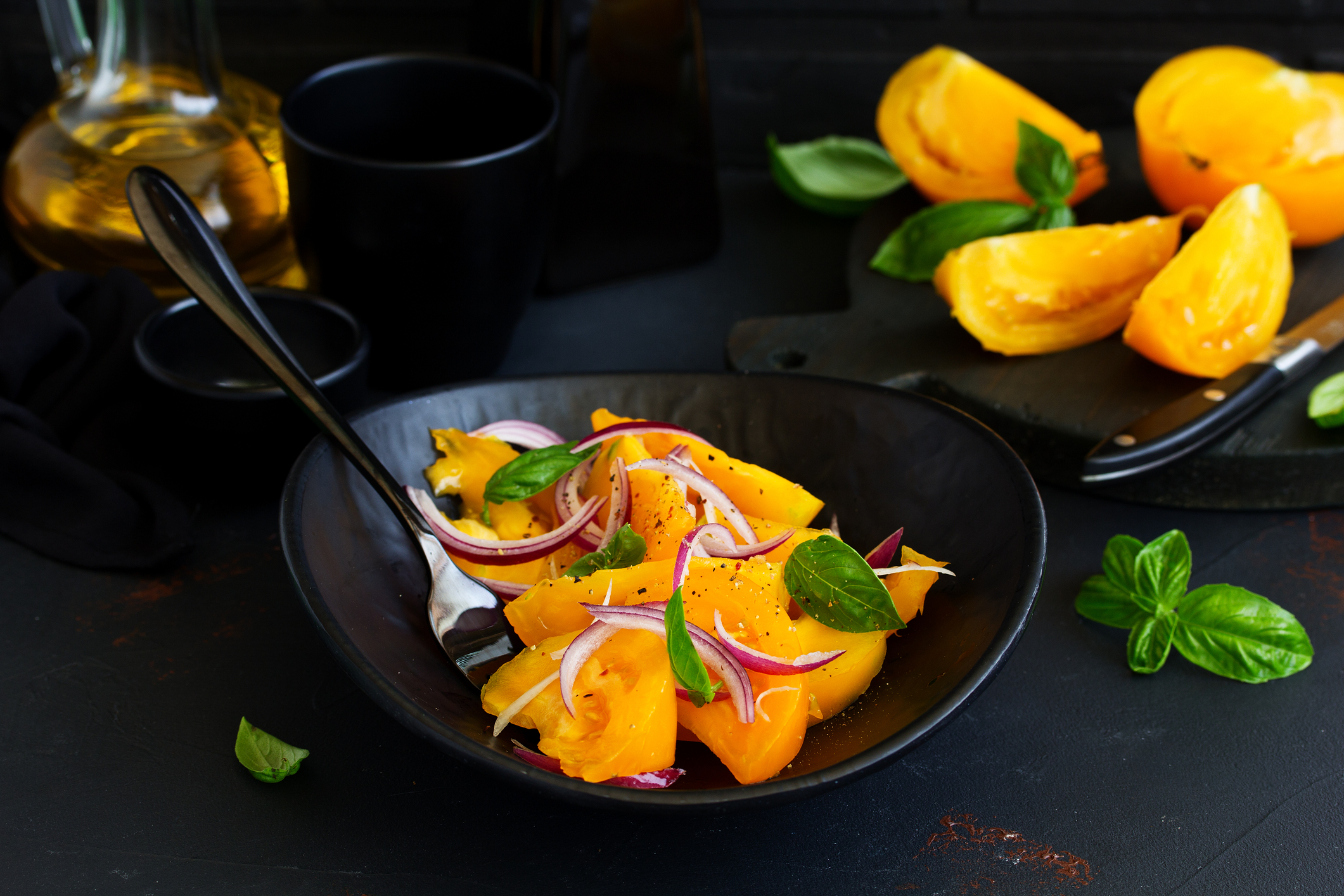
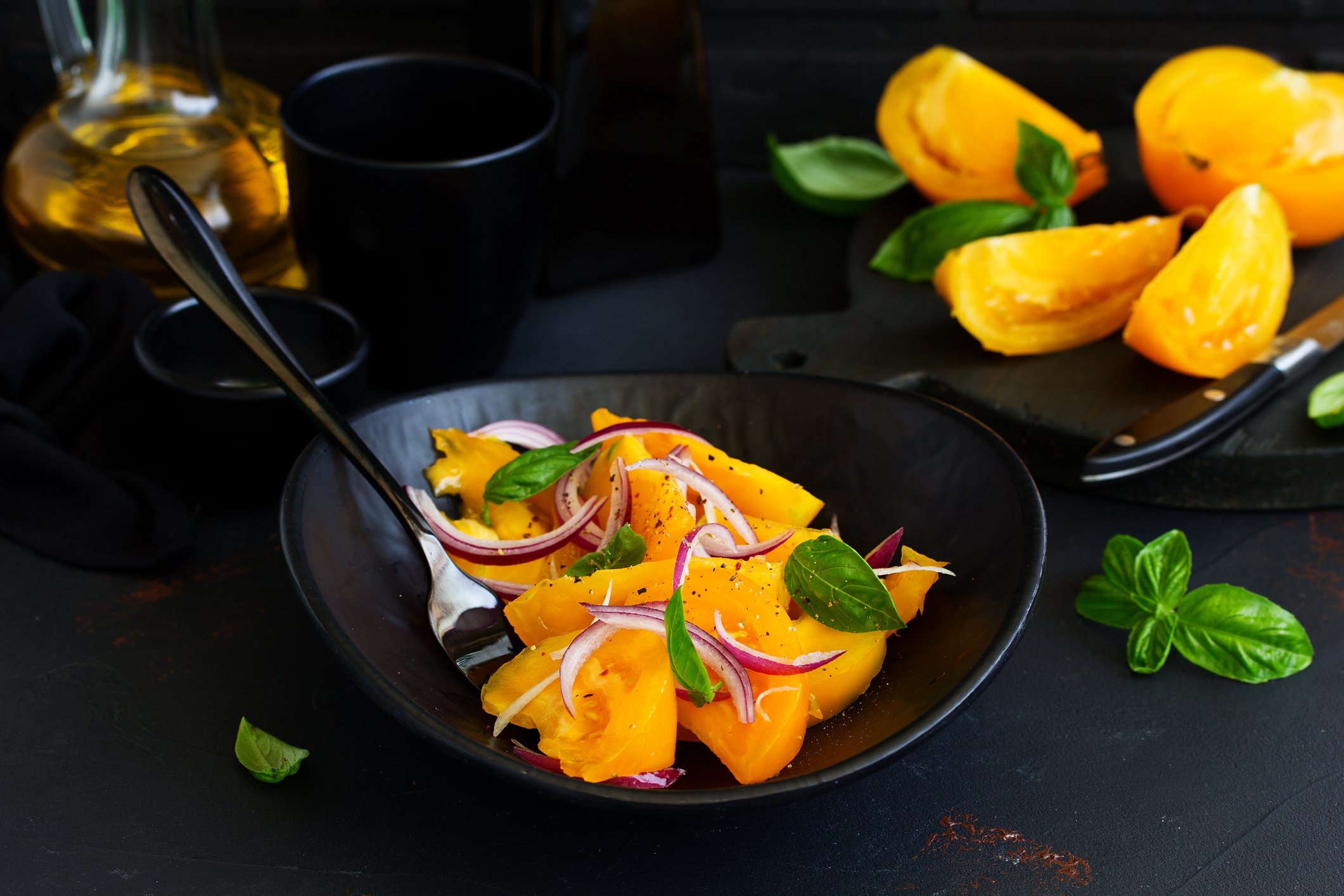
Yellow tomatoes bleed differently than red ones — less aggressively, but they still go. I cut two pounds of them into wedges and had a small lake on my cutting board before I even got the dressing made.
That’s not a complaint. It’s just something nobody mentions, and it matters, because that pooled juice is going into your bowl whether you plan for it or not.
I made this on a Tuesday evening when I had exactly no desire to cook anything that required heat. The tomatoes had been sitting on the counter for three days — not overripe, just finally ready — and I needed to use them before that window closed.
Not a special occasion. No one I was trying to impress.
The Dressing Took Me Longer Than the Salad
Dijon and lemon together read as sharp on paper, and the first time I made this I thought I’d overshot it. The ratio felt off — too bright, not enough oil.
Then it sat for five minutes and the whole thing settled. The mustard pulled back, the garlic came forward, and whatever was fighting in the bowl stopped fighting.
I thought about adding a pinch of honey to soften it — actually no, I skipped it. Yellow tomatoes are already sweeter than red, and adding honey would’ve made the whole thing taste like something from a hotel breakfast bar.
Most dressing recipes for tomato salads call for red wine vinegar. That’s the wrong move here. Lemon juice reads lighter and doesn’t compete with the tomatoes’ own mild acidity the way vinegar tends to.
Quick tip: Mince the garlic fine — as fine as you can get it. Chunky garlic in a raw dressing is aggressive in a way that doesn’t balance out, especially on something as delicate as yellow tomatoes.
What the Onion Does (And Why It’s Worth It)
The red onion is not optional, even if the recipe doesn’t put it in bold. It’s doing something specific: it’s the sharp edge the salad needs so everything else doesn’t blur into sweetness.
Slice it thin. Thin enough that you can almost see through it. A thick onion slice in a no-cook salad is just raw onion, and that’s not what you want.
If you’re worried about bite, soak the slices in cold water for ten minutes before they go in. I’ve done it both ways. The soaked version is milder but you lose a little of the sharpness that makes the salad interesting, so honestly, I usually skip the soak and just slice thinner.
One bowl. That’s it.
About the Mozzarella
It’s listed as optional and I mean it. I’ve made this with and without, and the version without mozzarella is sharper, more direct. You taste the tomatoes more clearly.
The version with mozzarella is creamier and more filling — it tips the salad toward something you’d call a light meal instead of a side dish. Neither is better. They’re different salads that happen to share a bowl.
Tear it, don’t slice it. Sliced mozzarella sits on top of things. Torn mozzarella tucks into the tomatoes and catches dressing in a way sliced pieces never quite manage.
My neighbor Diane makes a version of this without the cheese and adds a handful of arugula at the end. I tried it. The arugula wilted into the dressing within about six minutes and went limp. Would not recommend unless you’re eating immediately — and I mean immediately.
The Five Minutes Matter
Step 8 in the recipe says to let the salad rest five minutes before serving. I know it sounds like filler instruction. It isn’t.
The tomatoes release a little more juice into the dressing as they sit, which dilutes the lemon-mustard sharpness just enough. Without the rest, the dressing tastes sharp and separate. After five minutes it tastes like it belongs.
I skipped this step the first time I made it. The salad tasted fine, but the dressing was sitting on top instead of becoming part of the bowl. Five minutes is not a long time to wait.
Don’t refrigerate it during that rest. Cold dulls everything — the basil goes flat, the tomato flavor drops, and the olive oil can go slightly waxy. Room temperature, five minutes, then serve.
Does the resting time change if you’ve added mozzarella? I’m honestly not sure — the cheese seems to slow down the juice release slightly, but I haven’t tested it side by side carefully enough to say.
Basil at the End, Not the Beginning
Torn basil goes in after the dressing, not before. This is not negotiable.
Basil that sits under dressing for more than a few minutes bruises — it goes dark at the edges and tastes slightly metallic. Add it late, toss gently, serve quickly.
I once added the basil while the dressing was still warm from sitting in a sun-heated bowl. Every single leaf went dark before I got the salad to the table. The flavor was still there but it looked like I’d been careless, which — I had been.
Flat leaves, not chiffonade. Chiffonade is fine for garnish but the thin strips disappear into the dressing and stop being basil — they become a green fleck. Torn leaves give you actual bites of herb.
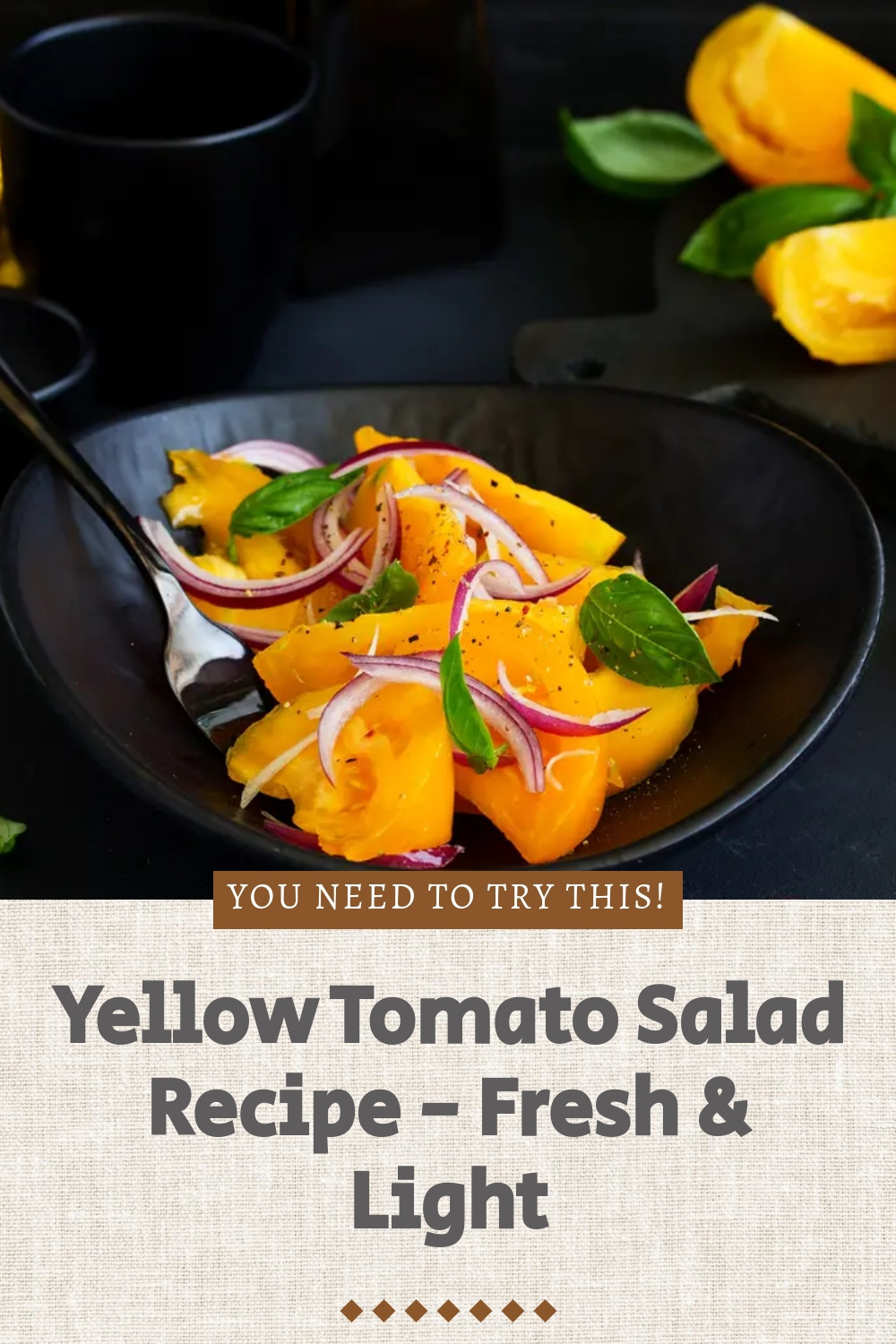
Yellow Tomato Salad: Step by Step
Step 1: Wash and dry the yellow tomatoes thoroughly. Wet tomatoes dilute the dressing before it even gets started. Pat them dry with a clean towel — not paper towels, which tend to leave lint on cut edges — and set them aside on a dry surface.
Step 2: Cut the tomatoes into wedges and place them in a large bowl. I usually do six wedges per medium tomato — smaller ones get quartered. The goal is pieces that hold together when you toss them but still have enough surface area to catch dressing. (Don’t cut them too small or they’ll fall apart during the toss and you’ll end up with tomato pulp.)
Step 3: In a small bowl, whisk together 2 tablespoons olive oil, 1 tablespoon fresh lemon juice, ½ teaspoon Dijon mustard, and the 2 cloves of minced garlic. Whisk until the olive oil and lemon juice stop separating — about 30 seconds of actual whisking, not just stirring.
Step 4: Add ¼ teaspoon sea salt and ⅛ teaspoon black pepper to the vinaigrette. Mix again. Taste it on its own — it should be sharp and a little aggressive at this stage. Once it hits the tomatoes it will mellow.
Step 5: Pour the dressing over the tomatoes and gently toss to combine. Use your hands or a large spoon, but gently — yellow tomatoes are softer than red and the wedges break if you’re impatient. I rushed this once and ended up with about a third of the bowl as mush.
Step 6: Add ¼ red onion, thinly sliced, and the ¼ cup torn basil leaves. Toss gently again — two or three turns, no more. Are you adding the mozzarella? Share below!
Step 7: Let the salad rest for 5 minutes at room temperature before serving. If you’re adding the 2 ounces of torn fresh mozzarella, add it now — after the rest, right before serving. It shouldn’t sit in the acidic dressing longer than it has to.
Step 8: Serve immediately at room temperature. This salad does not hold. It does not pack well for lunch. It is a make-and-eat-now situation, and that’s the only version of it that works.
Ways to Change It Up
Try this: Swap the mozzarella for crumbled feta and add a few Kalamata olives. The saltiness goes in a completely different direction — more Mediterranean, less Italian. Use the same dressing.
Try this: Add a handful of halved cucumber slices along with the tomatoes for more crunch and volume. The cucumber absorbs dressing quickly so this version needs to be eaten faster than the plain tomato version.
Try this: Replace the basil with fresh mint and swap the lemon juice for a small amount of white wine vinegar. It reads cooler and slightly more unusual — good if you’re making it alongside something spicy.
Which would you go for? Drop it in the comments.
How to Serve It
Alongside grilled fish — particularly anything white and mild like halibut or branzino. The acidity in the dressing does what lemon wedges usually do, but more evenly.
On top of thick-sliced toasted sourdough with a little extra olive oil. Press the bread down slightly so it absorbs some of the tomato juice from the bottom of the bowl. That’s not a recipe instruction. It’s just what I do.
As part of a spread — with hummus, olives, and flatbread. It doesn’t need to be the center of anything. It holds its own as one of several things on the table without competing.
What would you pair it with?
Storing It Without Ruining It
This salad doesn’t store well, and I’m not going to pretend otherwise. The tomatoes keep releasing juice, the basil continues to bruise, and within about two hours the whole bowl has gone watery and soft.
If you have to store it, pull out any mozzarella before covering and refrigerating — the cheese goes rubbery and sour in acid overnight. The tomato-and-dressing portion will last in the fridge for maybe one day before it’s unpleasant. Use it as a pasta sauce at that point — cook it down briefly in a pan with whatever’s around.
Freezing is not a realistic option here. Frozen tomatoes become cells full of ice — when they thaw, they’re water with a skin. Don’t freeze this.
The dressing, on its own, keeps in a jar in the fridge for about four days. Make a double batch of the dressing and use it on other things through the week — roasted vegetables, grain bowls, anything that needs brightness.
Have you ever saved leftovers like this? Tell me below!
Mistakes I Made So You Don’t Have To
I once used underripe yellow tomatoes because they were what the store had. They were mealy and chalky and the dressing couldn’t fix it. Yellow tomatoes need to be fully ripe for this — give them a gentle squeeze at the store and don’t buy anything that feels hard. The color should be deep yellow, not pale or greenish at the shoulders.
Made the dressing with bottled lemon juice once. It tasted flat and slightly chemical. Fresh lemon only — it takes thirty seconds to squeeze and it’s not the place to cut a corner.
I overdressed it on my third attempt. Two tablespoons of olive oil sounds like very little for two pounds of tomatoes, but the tomatoes add their own juice and the whole thing multiplies. Go by the recipe measurement, not by eye, until you’ve made it enough times to know what it should look like in the bowl. Did something like this happen to you?
Questions People Actually Ask
Can I use red tomatoes instead of yellow? You can, but the salad changes character entirely — red tomatoes are more acidic and the lemon-Dijon dressing will feel sharper against them. And it’s not a yellow tomato salad anymore, which, sure, fine. I’d reduce the lemon slightly if going red.
How long does the dressing last? About 4 days in a sealed jar in the fridge. The garlic gets stronger as it sits, which some people like and some people don’t. Give it a shake before using because the olive oil will have separated.
Can I make this ahead for a party? Not really. I tried this once — assembled everything two hours early and covered it in the fridge. By the time it came out the tomatoes had gone soft and the basil was dark at every edge. Prep the dressing ahead, slice the onion, have everything ready, but combine it within 15 minutes of serving.
Is this actually filling enough to be a meal? With mozzarella and bread, yes, for lunch. Without the cheese it’s a side. It depends entirely on what else is on the table and how hungry you are. I’ve eaten a bowl of it alone at my counter and been fine. But I’d eaten a late breakfast.
What if I can’t find yellow tomatoes? Orange tomatoes work and have a similar mild sweetness. Heirloom varieties in that color range also work. Don’t substitute cherry tomatoes — they have a different skin-to-flesh ratio and the texture is off for this style of salad.
Does the Dijon really matter or can I skip it? It matters. It’s not there for flavor primarily — it’s an emulsifier. Without it the oil and lemon juice won’t hold together and you’ll have a separated dressing sitting in puddles on the tomatoes. But just a little. The half teaspoon is correct. More and you taste it too directly.
Which answer helped you most?
Where I’m Still Not Sure About This Recipe
I’ve made this salad six times now. Five of them were good. One — the one with the underripe tomatoes — was genuinely bad, and not in a recoverable way.
The thing I keep coming back to is the garlic. Raw minced garlic in a no-cook dressing is bold. On good tomatoes, that boldness balances. On mediocre ones, it just tastes like garlic dressing with some tomato in it.
I’ve thought about using garlic-infused olive oil instead to get something milder — actually, I haven’t tried it yet. It might work. It might make the whole thing too soft.
Will you make this soon?
Fun fact: Yellow tomatoes get their color from a different balance of carotenoids than red ones — they contain more beta-carotene and less lycopene, which is also why they tend to taste less acidic.
The version I made last Tuesday was the best one so far. I still don’t know exactly what I did differently. The tomatoes were riper than usual, maybe, or I was less impatient with the resting time. I haven’t been able to replicate it exactly since.
Happy cooking! —Marina Caldwell
Yellow Tomato Salad Simple Light Summer Recipe
Ingredients
- 2 lbs yellow tomatoes, cut into wedges
- 1/4 cup fresh basil leaves, torn
- 2 tablespoons extra virgin olive oil
- 1 tablespoon fresh lemon juice
- 1/2 teaspoon Dijon mustard
- 2 cloves garlic, minced
- 1/4 teaspoon sea salt
- 1/8 teaspoon black pepper
- 2 ounces fresh mozzarella, torn (optional)
- 1/4 red onion, thinly sliced
Instructions
- 1Wash and dry the yellow tomatoes thoroughly.
- 2Cut tomatoes into wedges and place in a large bowl.
- 3In a small bowl, whisk together olive oil, lemon juice, Dijon mustard, and minced garlic.
- 4Add salt and pepper to the vinaigrette and mix well.
- 5Pour dressing over tomatoes and gently toss to combine.
- 6Add sliced red onion and torn basil leaves.
- 7Toss gently again to distribute ingredients evenly.
- 8Let salad rest for 5 minutes before serving.
- 9Top with fresh mozzarella if desired.
- 10Serve immediately at room temperature.
Notes
See full recipe for nutritional information.